Table of Contents >> Show >> Hide
- Quick primer: who are you missing, and where are they from?
- 1) Te extraño
- 2) Me haces falta
- 3) Te echo de menos
- 4) Te echo en falta
- Bonus: upgrades that sound natural (not robotic)
- Common mistakes (and how to dodge them)
- Which one should you use?
- Experiences: how these phrases show up in real life (and what they teach you)
- 1) The “airport text” that’s short for a reason
- 2) Missing a friend group (and avoiding the “oops, I singled you out” problem)
- 3) The first week after someone leaves a job
- 4) When you miss someone’s presence, not just the person
- 5) The “I miss seeing you” upgrade that sounds mature
- 6) The “regional reality check” moment
English makes it easy: three words, one meaning, done. Spanish is a little more like a taco bar:
same main idea, but you get choicesand the “right” choice depends on where the Spanish is from,
who you’re talking to, and how intense you want to sound.
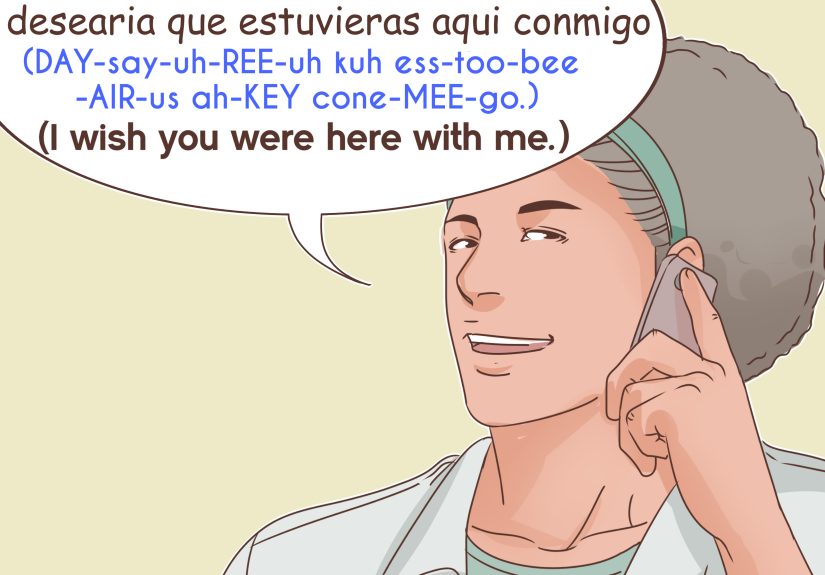
The good news: once you know the four go-to options below, you’ll be able to say “I miss you” in Spanish
without accidentally sounding like a dramatic soap-opera monologue (unless that’s the vibe you’re going for).
We’ll cover what each phrase means, where it’s most common, and copy-and-paste examples you can actually use.
Quick primer: who are you missing, and where are they from?
Spanish changes slightly depending on formality and region. These phrases are widely understood, but some are
more natural in Spain, while others are more common in Latin America. Also, Spanish has different “you” forms:
tú (informal) and usted (formal). You’ll see both below.
| What you want to say | Most natural options | Where it’s especially common |
|---|---|---|
| I miss you (one person, informal) | Te extraño / Me haces falta / Te echo de menos / Te echo en falta | Te extraño, Me haces falta (Latin America); Te echo de menos, Te echo en falta (Spain) |
| I miss you (one person, formal) | Lo extraño / La extraño / Me hace falta | General |
| I miss you all (group) | Los extraño / Las extraño / Me hacen falta / Os echo de menos | Os is most common in Spain |
Now, let’s get into the four best “I miss you” phraseswhen to use them, and how to make them sound natural.
1) Te extraño
If you learn only one phrase from this article, make it Te extraño.
It’s one of the most common, widely understood ways to say “I miss you,” especially in Latin America.
What it means (without the word-by-word trap)
The verb extrañar means “to miss” (as in “to miss a person” or “to miss something”).
Fun twist: extraño can also mean “strange” as an adjective (“That’s weird!”),
which is why beginners sometimes do a double-take. Context saves the day.
Examples you can copy
- Te extraño. I miss you.
- Te extraño mucho. I miss you a lot.
- Te extraño desde que te fuiste. I’ve missed you since you left.
- Los extraño a todos. I miss you all. (group)
Make it formal or more specific
If you’re speaking formally (to usted) or you want to be extra clear, Spanish often uses
direct-object pronouns:
- Lo extraño. I miss you (sir/you, formal masculine) / I miss him.
- La extraño. I miss you (ma’am/you, formal feminine) / I miss her.
- Extraño verte. I miss seeing you. (More on this style later.)
Natural-sounding tip: If you’re texting, adding a simple time marker makes it feel more real:
Te extraño hoy (I miss you today), Te extraño últimamente (I’ve been missing you lately),
or Ya te extraño (I miss you already).
2) Me haces falta
Me haces falta is a heartfelt way to say “I miss you,” with a slightly different flavor:
it emphasizes that the person’s absence is being feltlike something important is missing from your day.
Why it feels different
Literally, it’s built from hacer falta, a common expression meaning “to be needed” or “to be lacking.”
So the vibe can lean closer to “I need you here” than “I’m thinking about you from afar.”
That’s why it often sounds more emotionaleven in completely non-romantic situations.
Examples you can copy
- Me haces falta. I miss you.
- Me haces mucha falta. I miss you a lot.
- Nos haces falta. We miss you. (A group misses one person.)
- Me hace falta hablar contigo. I need/miss talking with you.
Grammar that keeps you from mixing it up
Here’s the sneaky part: in Me haces falta, the verb agrees with the thing that’s “missing.”
So if you are the missing one, the verb is “you do/make”: haces.
If it’s a group, the verb becomes plural:
Me hacen falta (I miss you all / I need you all).
Everyday-life bonus: This same structure works for things too:
Me hace falta mi llave (I’m missing my key / I need my key),
Me hace falta café (I need coffee). Your Spanish is now officially practical.
3) Te echo de menos
If your Spanish leans Spain (or you’re talking to someone from Spain), Te echo de menos
is the classic, most natural way to say “I miss you.”
Don’t translate it word-for-word
This phrase is idiomatic. If you translate it literally, you’ll end up with nonsense.
That’s normal. Languages are allowed to be weird. (English has “I’m down” meaning “I agree,” so we should probably sit this one out.)
Examples you can copy
- Te echo de menos. I miss you.
- Te echo mucho de menos. I miss you a lot.
- Te echamos de menos aquí. We miss you here.
- Os echo de menos. I miss you all. (Spain: vosotros)
Regional tip: People across Latin America will usually understand Te echo de menos,
but it may sound a bit “Spain-coded.” That’s not badjust like saying “cheers” in the U.S. isn’t wrong,
it just has a certain passport stamp.
4) Te echo en falta
Another Spain-friendly option is Te echo en falta. It’s similar to Te echo de menos,
and many speakers use them interchangeably. When people do make a distinction, echar en falta
can lean a bit more toward “noticing someone’s absence” (missing them because they’re not there),
while echar de menos can feel more purely emotional.
Examples you can copy
- Te echo en falta. I miss you.
- Te echo en falta en la oficina. I miss you at the office. (Your absence is noticeable.)
- Os echo en falta. I miss you all. (Spain)
Use-case tip: If you’re talking about missing the “presence” of someone in a specific placeclass, work,
the neighborhood group chatthis phrase can fit nicely.
Bonus: upgrades that sound natural (not robotic)
Once you pick your base phrase, you can customize it with a few simple add-ons. Think of these as the “seasoning,”
not the whole meal.
Common intensifiers
- mucho a lot (e.g., Te extraño mucho)
- tanto so much (e.g., Te extraño tanto)
- un montón a ton (e.g., Te echo de menos un montón)
- ya already (e.g., Ya te extraño)
- últimamente lately (e.g., Últimamente te extraño)
How to reply when someone says they miss you
If someone tells you they miss you, you don’t need a perfect poetic speech. These replies are short, natural, and common:
- Yo también. Me too.
- Y yo a ti. And I miss you too. (Literally: “And I, you.”)
- ¡Igualmente! Same here!
- Ojalá nos veamos pronto. Hopefully we see each other soon.
Common mistakes (and how to dodge them)
1) Forgetting the ñ in extraño
Extraño has an ñ. Swapping it for n isn’t a cute shortcut; it’s a different letter in Spanish.
If your keyboard fights you, install a Spanish keyboard layout. Future-you will be grateful.
2) Mixing up echo and hecho
In Te echo de menos / Te echo en falta, echo comes from
the verb echar. It is not hecho (“done/made”).
Spanish spelling is basically a precision sport.
3) Overdoing it with dramatic extras
Spanish has wonderfully emotional expressions, and it’s easy to copy something from a song and accidentally text it to a classmate.
If you’re unsure, stick to the basics: Te extraño or Me haces falta for Latin America,
Te echo de menos for Spain. Simple is still sincere.
Which one should you use?
Here’s a quick, practical rule of thumb:
-
If you want the most universal, beginner-friendly choice:
Te extraño. -
If you want “I miss you” with a “your absence is felt” vibe:
Me haces falta. -
If you’re speaking to someone from Spain (or your Spanish is Spain-leaning):
Te echo de menos. -
If you want a Spain-friendly alternative that highlights someone’s absence in a place or routine:
Te echo en falta.
Pick one that matches the person you’re talking to, keep it simple, and your Spanish will sound humanbecause it is.
(Even if your autocorrect tries to sabotage your ñ. Fight back.)
Experiences: how these phrases show up in real life (and what they teach you)
Language sticks best when it’s attached to moments, not flashcards. Here are a few real-world style scenarios
that show how Spanish speakers actually use these phrasesplus the tiny choices that make them sound natural.
If you’ve ever stared at a message draft thinking, “Why does this feel stiff?”, you’ll recognize yourself in at least one.
1) The “airport text” that’s short for a reason
Someone you care about has just boarded a plane. You want to be warm, but not dramaticbecause they’re literally about to turn on airplane mode.
A quick Te extraño or Te echo de menos is perfect here because it’s compact and clear.
A lot of learners try to add too much (“since the dawn of time,” “my soul is empty,” etc.). In real life, people often go simple:
Te extraño. Avísame cuando llegues. (“I miss you. Let me know when you arrive.”)
The second sentence makes it feel caring and natural.
2) Missing a friend group (and avoiding the “oops, I singled you out” problem)
You’re in a group chat with friends, and you want to say you miss everyone. This is where plural forms matter.
In Latin America, Los extraño (or Las extraño if it’s an all-women group) is common.
If you’re talking to friends in Spain, Os echo de menos is the natural group version.
The “experience lesson” here is that Spanish makes you choose: one person or many. That tiny decision helps you sound like you actually mean it.
3) The first week after someone leaves a job
Workplace Spanish is a great place to use Te echo en falta because it can highlight someone’s absence in a routine:
Te echo en falta en la oficina (“I miss you at the office”).
It’s warm without being personal in a way that might feel awkward at work. Learners often love this phrase once they realize it can be both kind and professional.
It’s like saying, “Your presence mattered here,” without writing a whole farewell speech.
4) When you miss someone’s presence, not just the person
Me haces falta shines when the feeling is “something is missing from my day.”
People use it with family, close friends, teammatesanyone whose absence changes the atmosphere.
A simple example: Nos haces falta (“We miss you”) said to someone who moved away or stopped coming around.
The lesson: Spanish gives you a way to emphasize the gap someone leaves behind, and that’s why it can feel extra heartfelt.
5) The “I miss seeing you” upgrade that sounds mature
If you want to sound specific (and a little more advanced) without adding drama, use Extraño verte:
“I miss seeing you.” It’s great when you haven’t met up in a while and you want to steer toward making plans.
A very normal text is: Extraño verte. ¿Tienes tiempo esta semana?
(“I miss seeing you. Do you have time this week?”) That second sentence turns emotion into action, which is often the point.
6) The “regional reality check” moment
Many Spanish learners have a moment where they say Te extraño to someone from Spain and get a friendly correction like,
“Aquí decimos Te echo de menos.” It’s not that your Spanish was wrongit’s that it had an accent.
That experience is actually a win: you’re learning Spanish that’s alive, regional, and human.
The best takeaway is to keep one “default” phrase you’re confident in, then collect regional alternatives like souvenirs.

![18 Best Types of Charts and Graphs for Data Visualization [+ How to Choose]](https://corkopencoffee.org/wp-content/uploads/2026/05/18-best-types-of-charts-and-graphs-for-data-visualization-how-to-choose-qKM1PBYG-thumb.jpg)