Table of Contents >> Show >> Hide
- Meet the “What’s Wrong With Your Cat” Online Group
- Why Do Cats Act So Weird, Anyway?
- Ten Classic “What’s Wrong With Your Cat” Moments (Out of 45)
- When “What’s Wrong With Your Cat” Might Actually Be a Serious Question
- How to Support Your Lovably Malfunctioning Feline
- Real-Life Experiences: Humans Living With “Broken” Cats
- Final Thoughts: Your Cat Is Probably Fine (And Definitely Funny)
If you live with a cat, you probably already know this truth: dogs have jobs, but cats have vibes. One minute they’re a graceful predator, the next they’re staring at the wall at 3 a.m. like they’re buffering in low resolution. It’s exactly this chaotic energy that fuels the wildly popular “What’s Wrong With Your Cat” online community and all the Bored Panda–style roundups of malfunctioning felines.
In this article, we’re diving into the world behind those “my cat is broken” photos: why cats act so weird, how to tell the difference between harmless oddball behavior and something that needs a vet, and why sharing 45 perfectly confusing cat moments online makes so many people feel less alone (and a lot more entertained). Along the way, we’ll lean on real insights from veterinarians, animal-welfare organizations, and behavior experts to decode the mystery behind the madness.
Meet the “What’s Wrong With Your Cat” Online Group
The phrase “What’s wrong with your cat?” has become its own mini-meme empire. There are Facebook groups where people post their cats mid-glitch, Reddit communities dedicated to “malfunctioning” felines, and multiple Bored Panda features showcasing the funniest submissionscats folded like origami, cats sitting like people, cats staring into the middle distance as if they’ve just remembered a tax deadline.
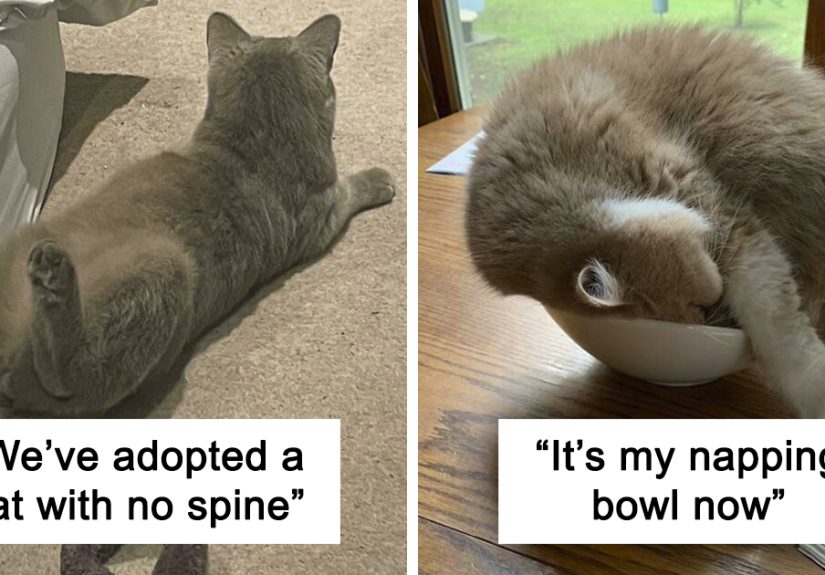
What makes these images so addictive is that they perfectly capture the gap between what we think a cat should besleek, elegant, mysteriousand what our actual cat looks like right now, which is… upside down in a laundry basket with one paw sticking straight up.
For many pet parents, sharing a photo in one of these groups is a love language. It says, “My cat is weird. Please observe.” And the comments always deliver:
- “Your cat has transcended earthly form.”
- “That’s not a bug; that’s a software feature.”
- “No thoughts, only static.”
Under the jokes, though, there’s something wholesome: people are proudly showing off their pets exactly as they arequirks, glitches, and all.
Why Do Cats Act So Weird, Anyway?
While social media calls them “broken,” most of these cats are just being very… cat. A lot of the behavior that seems confusing to humans is actually rooted in normal feline instincts and body language.
1. The “If I Fits, I Sits” Syndrome
From mixing bowls to tiny cardboard boxes, cats love squeezing into spaces that look at least two sizes too small. Behaviorists explain that cramped spaces help cats feel securethey’re both hidden from “predators” and in the perfect ambush spot if “prey” (read: a dust bunny or your ankles) happens to pass by.
So that photo of a cat folded into a salad bowl with a proud, slightly smug face? Totally on brand.
2. Cat Loaf, Broken Spine, or Perfectly Normal?
Many posts in the “What’s Wrong With Your Cat” threads show cats who seem to have left Euclidean geometry behindspines twisted, paws tucked, head upside down on the couch. As strange as it looks, most of these positions are simply variations on comfortable resting or temperature regulation. Cats are incredibly flexible; their spine has more vertebrae than ours, and their joints allow a wider range of motion, which is handy when you’re a hunter who needs quick, agile movement.
When your cat’s shape looks like a typo, it usually just means they’ve discovered a new favorite nap configuration.
3. Zoomies and Midnight Parkour
Many “broken cat” photos are captured mid-zoomie: wide eyes, puffed tail, claws dug into the sofa as the cat rockets across the house. Vet-backed resources explain that cats are crepuscular, meaning they’re most active at dawn and dusk. What looks like random chaos is actually your cat burning off stored energy and practicing their predator skillsjust on your hallway rug instead of the savanna.
To you, it’s “my cat sprinted across my sleeping body at 4 a.m.” To your cat, it’s “I bravely defended us from invisible threats.”
4. Staring at Nothing (Or So You Think)
Cats staring at corners, walls, or ceilings are a staple of the “What’s wrong with your cat” aesthetic. But their senses are far sharper than oursespecially hearing. Your cat may be locking onto faint sounds of pipes, insects, or street noise that you can’t detect. Animal-welfare groups note that many “creepy” staring sessions are really just a cat being hyper-attuned to tiny environmental changes.
Of course, it still feels a little spooky when they do it at night. That’s just part of the charm.
5. Screaming, Chirping, and Other Audio Glitches
From chirps at birds in the window to long dramatic yowls in the bathroom, cats make a whole soundboard of noises. PetMD and other veterinary sources explain that chattering often happens when a cat is excited but frustratedlike when they see prey they can’t reachand drawn-out vocalizations may be used to get your attention, express discomfort, or just comment loudly on the state of the world.
Online, these strange sounds get captioned as existential crisis speeches. In reality, your cat might just be saying, “Hey, the food bowl is half-empty. This is unacceptable.”
Ten Classic “What’s Wrong With Your Cat” Moments (Out of 45)
We can’t show you all 45 new pics in this article, but we can walk through some of the most iconic categories of chaos you’ll see in the “What’s Wrong With Your Cat” universe.
1. The Liquid Cat
Cat fully melted into a glass baking dish, eyes half-closed, tail hanging off the edge like a garnish. Physically impossible, emotionally correct.
2. The Upside-Down Thinker
Head hanging off the sofa, back paws touching the wall, staring calmly at nothing. You have questions. Your cat does not.
3. The Cone of Dramatic Shame
Fresh from the vet, the cat in the plastic cone looks like it has unlocked a new tragic theater persona. Online communities love these picturesespecially when there’s a second cat sitting just outside the cone, clearly judging.
4. The NPC Idle Animation
Cat sitting in the middle of the room, front paws perfectly aligned, staring straight ahead with the blank look of a video-game character waiting for the player to hit “A.”
5. The If-I-Fits Laptop Edition
Why lie on the soft, plush bed you bought when you can stretch completely across a warm keyboard and accidentally send 47 blank emails?
6. The Glitched Shadow
Captured mid-leap, the cat looks like they’re hovering horizontally over the couch. No wings, no explanation, just gravity politely taking a break.
7. The Curtain Goblin
Two paws and one suspicious face sticking out from the shower curtain. This is where jump scares are born.
8. The Fake Plant Enthusiast
Cat gently gnawing on plastic greenery despite having premium cat grass available nearby. Vet sources note that chewing odd items can be boredom or anxiety-relatedowners post the photos online, and the comments section diagnoses them with “leaf-based chaos disorder.”
9. The Synchronized Weirdos
Two cats sitting in the exact same contorted pose, staring at the same random spot. Individually strange. Together? Art.
10. The Existential Litter Box Moment
Cat standing with all four paws in the litter box, staring out the door like they’re rethinking every life choice that led to this point. It’s silly, but also a reminder to keep an eye on bathroom behaviorsudden changes can signal health issues.
When “What’s Wrong With Your Cat” Might Actually Be a Serious Question
Most of the photos in these online groups are 100% harmless weirdness. But veterinarians stress that sometimes “odd” behavior is a cat’s way of signaling pain, stress, or illness. The trick is knowing when to laugh and when to call the clinic.
Red Flags to Watch For
- Sudden changes in appetite or thirst – Eating far less or far more, or drinking excessively, can be linked to conditions like kidney disease, diabetes, or thyroid problems.
- Litter box changes – Straining, frequent trips, accidents outside the box, or blood in urine or stool need prompt veterinary attention.
- Hiding, aggression, or unusual withdrawal – Cats are experts at masking pain; a previously social cat hiding more than usual or acting defensive could be hurting.
- Excessive vocalization – Especially if it’s new, this can be a sign of discomfort, anxiety, cognitive changes in older cats, or other issues.
- Repeated, intense grooming of one area – Could indicate skin problems, parasites, or joint pain underneath.
If you capture a “what’s wrong with my cat” moment and something in your gut feels offconfusion, disorientation, stumbling, heavy breathing, or repeated vomitingthat’s not a meme, that’s a message. When in doubt, most experts say it’s better to call your vet and describe what you’ve seen, ideally with a short video.
How to Support Your Lovably Malfunctioning Feline
The best part about these online groups is that they encourage people to celebrate their cats’ quirks instead of trying to “fix” them. Animal welfare organizations and vets generally agree that understanding your cat’s needsand meeting themgoes a long way toward keeping your furry weirdo both healthy and happy.
1. Give Them a Cat-Friendly Environment
- Vertical space: Cat trees, shelves, or window perches let them climb, hide, and survey their kingdom.
- Safe hiding spots: Boxes, caves, and cozy beds help nervous cats feel secure.
- Scratching options: Posts and boards protect your furniture and give your cat an appropriate outlet.
2. Play Into the “Predator Mode”
Those 3 a.m. zoomies are your reminder that your cat is a tiny hunter stuck in a domestic setting. Short, daily play sessions using wand toys, laser pointers (used safely), or treat puzzles let them chase, pounce, and “win,” which can reduce destructive or restless behavior.
3. Reward, Don’t Punish
Experts repeatedly warn against yelling at or punishing catsit usually makes behavior problems worse and damages your bond. Instead, reward the behaviors you like (calm sitting, using the scratcher) and redirect the ones you don’t with toys or environmental changes.
In other words, don’t scold your cat for sitting in the fruit bowl. Just remove the fruit, take a picture, and join the internet in collectively asking, “What’s wrong with your cat?”
Real-Life Experiences: Humans Living With “Broken” Cats
To really understand why these 45 confusing cat moments resonate so much, it helps to zoom out and look at the experience of living with a cat that constantly seems like it missed a software update.
The Cat Who Sleeps Only on Receipts
One owner describes their cat ignoring every soft surface in the home to curl up exclusively on crinkly receipts and junk mail. At first it seemed like pure chaos. Looking closer, it actually fit what behaviorists say about cats loving novel textures, rustling sounds, and items that smell like their humans’ hands. The cat wasn’t brokenit was basically sleeping in a scented, self-selected nest made of “human paper.”
Still, the picture of a cat blissfully snoozing on a pile of tax forms? Straight to the “What’s Wrong With Your Cat” hall of fame.
The Bathroom Opera Singer
Another common story: a cat who walks into the bathroom, looks into the bathtub or toilet, and begins a dramatic solo that would put theater majors to shame. People post the videos online with captions like, “He’s summoning something, should I be concerned?”
Veterinary and behavior sources point out that enclosed spaces can echo, making the cat’s own voice sound bigger and more interesting to them. Some cats also vocalize more when they’re seeking attention, exploring new places, or responding to household routines (like the sound of running water).
So no, your cat is probably not opening a portal in the bathtub. They might just be really impressed with their own acoustics.
The Laptop Bodyguard
Then there’s the cat who appears every time a laptop opens and immediately plants itself on the keyboard or in front of the screen. These photos are peak “broken cat” energy: the human trying to work, the cat staring into the camera like an overconfident supervisor.
From an expert perspective, it’s classic attention-seeking and warmth-seeking behavioryour cat has noticed that when the laptop is open, you’re focused on it, not them. Plus, laptops are warm. To a cat, that’s like a heated throne that also competes for your affection, so naturally they have to conquer it.
The Cat Who Forgets How to Cat
Many “What’s Wrong With Your Cat” pictures show a cat mid-failed jump, misjudged step, or clumsy slide off the windowsill. We tend to think of cats as perfectly graceful, but like humans, they have off days, slippery surfaces, and moments of distraction. Vet clinics and pet-care resources remind us that age, vision changes, or joint stiffness can also make a cat clumsierso if your feline suddenly miscalculates jumps often, it might be worth asking your vet to check their eyes and joints.
Sometimes, though, it’s just the universal experience of tripping over absolutely nothing. We’ve all been there.
Why We Keep Posting These 45 (and 4,500 More) Moments
In a way, every new batch of “What’s Wrong With Your Cat” photos is a crowdsourced love letter to cats. We’re not mocking them; we’re documenting the ridiculous, charming, inexplicable things they do and saying, “Look at this tiny chaos gremlin I’m lucky enough to live with.”
Sharing those 45 confusing cat photos creates instant community. A stranger across the world replies, “Mine does that too,” and suddenly you’re not just laughing; you’re learning, comparing notes, and sometimes even getting gentle nudges to check out a behavior that might be medical instead of silly.
That mix of humor, empathy, and real information might be the secret sauce that keeps these posts going viral year after year.
Final Thoughts: Your Cat Is Probably Fine (And Definitely Funny)
If you’ve ever looked at your pet and thought, “This can’t be normal,” congratulationsyou’re officially part of the club. The “What’s Wrong With Your Cat” online group and its Bored Panda–style compilations exist because millions of people are having the same experience.
Most of the time, your cat’s baffling behavior is just the natural result of a highly sensitive, highly athletic predator trying to live in an apartment with Wi-Fi. When we understand the instincts and signals behind the weirdnessand when we keep an eye out for genuine red flagswe can laugh at the chaos while keeping our furry roommates safe and healthy.
So go ahead: snap the photo of your cat crammed into a mixing bowl, asleep in a shoe, or mid-meow with eyes half-closed. Post it with the caption, “What’s wrong with my cat?” Deep down, you already know the answer:
Absolutely nothing. They’re just being a catand that’s exactly what’s right with them.