Table of Contents >> Show >> Hide
- What You’ll Find Here
- Before We Start: What “Winter Blooming” Really Means
- At-a-Glance Comparison
- 1) Hellebores: The “I Bloom When I Feel Like It” Perennial
- 2) Snowdrops: Tiny Bells With Serious Winter Guts
- 3) Winter Aconite: Sunshine Coins on Cold Ground
- 4) Hardy Cyclamen (Cyclamen coum): Winter Flowers With Fancy Leaves
- 5) Winter Heath: The Groundcover That Brings Its Own Confetti
- How to Help Winter-Blooming Perennials Survive Frost (and Keep Blooming)
- Common Mistakes That Make Winter Bloomers Quit
- Conclusion
Winter gets a bad rap. People act like it’s just a long, gray hallway you have to speed-walk through until spring shows up with coffee and hope.
But your garden? Your garden can absolutely refuse to participate in that bleak narrative.
The trick is choosing winter-blooming perennials that don’t panic at the first frosty morning. Some of these plants are
old prosbuilt to flower when temperatures dip, when pollinators are scarce, and when your neighbors are convinced “nothing blooms in winter.”
(They’re wrong. Delightfully, confidently wrong.)
Below are five frost-hardy perennials that can keep blooming through cold snapsespecially in late winterplus practical,
zone-aware tips so your winter garden color looks intentional, not accidental.
[1]
Before We Start: What “Winter Blooming” Really Means
In gardening, “winter bloom” depends on where you live. In milder regions, some perennials truly flower in December and January.
In colder zones, the same plants often bloom in late winter (think February into March) and may even pop up through snow.
That still countsbecause winter doesn’t stop at New Year’s. It stops when it stops.
The other key: USDA Hardiness Zones describe average annual extreme minimum winter temperaturesnot every detail of your winter.
Wind, winter sun, ice, and soggy soil can matter just as much as the number on the map.
[1]
Two Winter Problems That Ruin Blooms (and How to Outsmart Them)
- Freeze-thaw cycles: Warm daytime sun + freezing nights can damage buds. Use mulch and pick protected microclimates.
- Winter wet: Many bulbs and tubers tolerate cold better than they tolerate soggy soil. Drainage is your winter MVP.
At-a-Glance Comparison
Use this as your “winter bloom cheat sheet.” Then keep scrolling for the fun details.
| Perennial | Best Zones (Typical) | Bloom Window | Light | What Helps It Bloom Through Frost |
|---|---|---|---|---|
| Hellebores (Lenten/Christmas Rose) | Zones ~4–9 | Mid-winter to early spring (varies by climate) | Part shade | Nodding flowers + evergreen habit; thrives in sheltered shade |
| Snowdrops | Cool climates; often ~Zones 3–7 | Late winter to early spring | Sun to part shade | Bulbs push up early; naturalize into tough colonies |
| Winter Aconite | Zones ~3–7 | Late winter to very early spring | Sun to part shade | Low-growing blooms hug warmer ground layer; dorms in summer |
| Hardy Cyclamen (Cyclamen coum) | Around Zone 5+ (site-dependent) | Late Dec to March (often late winter in cold zones) | Dappled shade | Tuber stores energy; winter-active growth in cool seasons |
| Winter Heath (Erica carnea) | Cooler-summer regions; often ~Zones 4–7 | Late winter to early spring (some Dec–Mar) | Sun | Evergreen groundcover with buds that can open under snow |
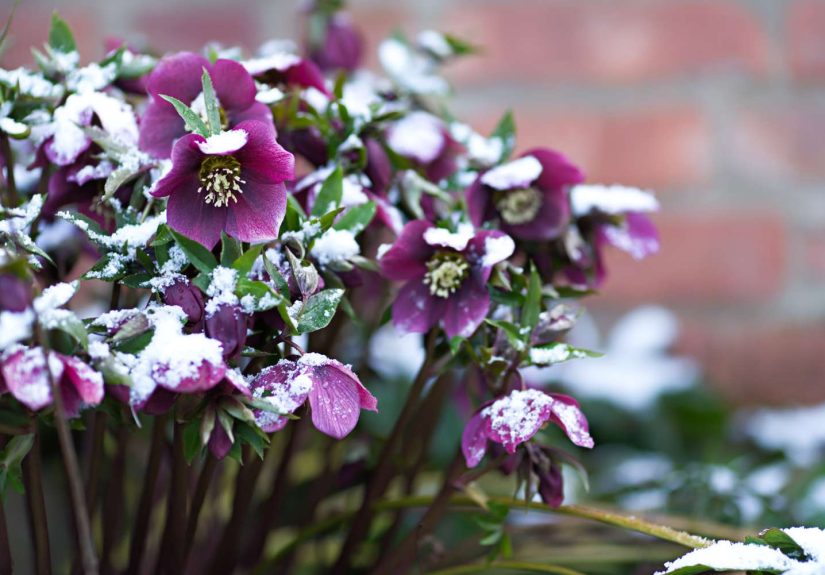
1) Hellebores: The “I Bloom When I Feel Like It” Perennial
Hellebores are the headliners of the winter garden. They’re evergreen (in many climates), shade-tolerant, and famous for blooms that show up
when most plants are still in pajama mode. Depending on your zone and the species/hybrids you grow, hellebores can bloom from mid-winter into early spring.
[2][3]
Why It Can Bloom Through Frost
The flowers often hang (politely nod) downward, which helps protect pollen and delicate inner parts from weather. Snow can even act like an insulating blanket.
Translation: hellebores don’t mind a little winter drama.
[3]
Where It Thrives
- Common range: Many popular types are hardy roughly in Zones 4–9 (varies by species and cultivar). [2][3]
- Best spot: Dappled shadeespecially under deciduous trees where they get winter sun and summer protection. [2]
Care Tips That Actually Matter
- Drainage first: Rich soil is great, but soggy soil is not. Aim for well-drained, humus-rich ground. [3]
- Clean-up timing: Remove old, tattered leaves in late winter so flowers show and airflow improves (helps reduce leaf spot issues). [3][4]
- Mulch wisely: Mulch to stabilize soil temps, but don’t bury the crown like you’re hiding it from the IRS.
Design Ideas
Pair hellebores with snowdrops and winter aconite for a layered “winter-to-spring runway show,” or plant them near a path where you’ll actually see
the blooms on gray days. They’re also deer-resistant in many areas (a rare and beautiful sentence).
[3][4]
2) Snowdrops: Tiny Bells With Serious Winter Guts
Snowdrops (Galanthus) are early-blooming bulbs that often flower when snow can still be on the groundhence the name.
They’re small, but they’re not fragile. In the right conditions, they naturalize and return in bigger drifts every year.
[5][6]
Why They Bloom Through Cold
Snowdrops are adapted to push growth during cold periods and can bloom incredibly early. In many northern gardens, they’re among the first flowers you’ll see.
[6]
Best Conditions
- Light: Sun to part shadeespecially great under deciduous trees (full sun early, shade later). [5]
- Soil: Moist, humusy, well-drained soil. [5]
- Climate note: Snowdrops prefer cooler climates and can be short-lived in warmer areas (especially far south of Zone 7). [5]
Planting & Long-Term Care
- Plant in fall: Typical bulb depth is a few inches; plant in groups for a natural look. [5]
- Leave the leaves: Let foliage yellow naturally so bulbs recharge for next year.
- Want more? Many gardeners divide clumps after flowering (“in the green”) to spread them around.
Design Ideas
Snowdrops look best in drifts. Think “snowfall of flowers,” not “three lonely bulbs auditioning for a bigger role.”
Tuck them along woodland edges, under shrubs, or in a lawn area you won’t mow early.
[7]
3) Winter Aconite: Sunshine Coins on Cold Ground
Winter aconite (Eranthis hyemalis) blooms in late winter with bright yellow flowers that look like tiny buttercups.
It’s the botanical equivalent of flipping on a lamp when the sky has been gray for 19 straight days.
[7][8]
Why It Can Handle Frost
Winter aconite stays lowclose to the warmer boundary layer near the soilso it often dodges the worst wind chill.
It’s also built to finish its show early, then go dormant when summer arrives.
[8]
Where It Thrives
- Typical hardiness: Often listed around Zones 3–7 (depending on local conditions). [7][8]
- Light: Full sun to part shadewoodland edges are perfect. [7]
- Soil: Humus-rich and well-drained, with consistent moisture during growth. [8]
Planting & Care Tips
- Fall planting: Plant tubers in autumn so they’re ready to wake up early. [7]
- Don’t panic if foliage disappears: Summer dormancy is normal. Mark the spot so you don’t “accidentally” dig it up in July.
- Naturalizing: Happy aconite can spread over time into cheerful colonies.
Design Ideas
Combine winter aconite with snowdrops for a classic late-winter look: white bells + yellow buttons.
It also shines at the base of deciduous trees where spring sun reaches the ground before leaves fill in.
4) Hardy Cyclamen (Cyclamen coum): Winter Flowers With Fancy Leaves
If you want winter bloom and gorgeous foliage, hardy cyclamen is your plant. Cyclamen coum can bloom from late December through March
in many gardens, often peaking in late winter where winters are colder. The flowers look like tiny butterflies hovering just above the soil.
[9][10]
Why It Keeps Going When It’s Cold
Cyclamen grow from a tuber that stores energybasically a built-in battery pack. In the right site (drained, sheltered, not baked by winter sun),
those buds can keep coming even when frosts roll through.
[9]
Best Conditions
- Hardiness: Often grown successfully around Zone 5 and up with good site selection. [10]
- Light: Dappled shade under trees or shrubs is ideal. [9]
- Soil: Well-drained soil rich in organic matter (winter wet is the enemy). [9]
Care Tips
- Planting: Plant tubers where they won’t sit in standing water. Slight slopes and raised beds help.
- Hands-off wins: Once established, hardy cyclamen can be long-lived and low-maintenance. [9]
- Let leaves do their job: The leaves are part of the winter show and also feed the tuber for next season.
Design Ideas
Plant cyclamen near stepping stones or a front door bed where you’ll notice the flowers at eye level.
It also plays well with helleboresone provides height and structure, the other provides a sparkly ground layer.
[9]
5) Winter Heath: The Groundcover That Brings Its Own Confetti
Winter heath (Erica carnea) is a low evergreen groundcover with small urn-shaped blooms that can cover the plant in late winter to early spring
and some cultivars bloom as early as December. It’s one of the best ways to get real color when the rest of the landscape is just… beige.
[11][12]
Why It Can Bloom Through Frost
Winter heath sets buds that can open in cold conditions, and in parts of its growing range it can bloom even with snow around.
[11]
Where It Thrives
- Climate preference: It tends to perform best where summers aren’t scorching; some guidance warns against growing it far south of Zone 7. [11]
- Light: Sun (or bright part sun) for best flowering. [12]
- Soil: Moist but well-drained, often acidic-leaning soils. Avoid heavy clay that stays wet. [12]
Care Tips
- Don’t over-fertilize: It’s not trying to become a tree. Steady growth beats soft, floppy growth in winter.
- Prune after bloom: If you trim, do it right after flowering so you don’t remove next year’s buds. [11]
- Think drainage + air: Good airflow and drained soil reduce winter stress.
Design Ideas
Use winter heath as a sunny-border carpet. It looks especially sharp next to rocks, evergreen shrubs, and pathsplaces where winter light can catch
the flowers and make them look brighter than they have any right to be in February.
How to Help Winter-Blooming Perennials Survive Frost (and Keep Blooming)
1) Plant for Microclimates, Not Just Zones
South-facing foundations can be warmer. Windy corners can be brutally colder. A spot that stays soggy in winter can rot bulbs faster than cold ever will.
Use your yard’s quirks to your advantageand avoid planting winter bloomers where ice lingers for weeks.
2) Mulch Like a Professional: For Stability, Not Smothering
Mulch is less about “making things warm” and more about preventing repeated freeze-thaw swings that stress roots and crowns. Aim for a light, even layer.
Keep crowns and stems from being buried too deeply.
3) Water MattersEven in Winter
Evergreen perennials can lose moisture through leaves on windy days. If your winter is dry and the ground isn’t frozen solid,
a deep watering during a warm spell can prevent stress. The goal isn’t soggy; it’s steady.
4) Use Simple Freeze Protection When You Need It
During extreme cold snaps, a breathable fabric cover can protect blooms. The key word is “breathable.”
Plastic can trap moisture and cause more harm than goodlike putting your plant in a sweaty raincoat.
Common Mistakes That Make Winter Bloomers Quit
- Planting in wet soil: Many winter-blooming bulbs/tubers tolerate cold better than poor drainage.
- Overexposed sites: Cold wind + winter sun can desiccate foliage and buds.
- Cutting foliage too early: Bulbs and tubers need leaves to recharge for next season.
- Assuming “hardy” means “invincible”: Hardiness is realbut extreme events still call for smart siting and occasional protection.
Conclusion
A winter garden doesn’t have to be a blank page. With hellebores for structure, snowdrops and winter aconite for early sparkle,
hardy cyclamen for flowers-plus-foliage, and winter heath for sunny-season color, you can build a landscape that looks alive long before spring.
Focus on drainage, sheltered microclimates, and steady careand frost becomes an inconvenience, not a shutdown.
Experience Notes: of Winter-Bloom Reality (With a Wink)
Winter-blooming perennials have a funny way of teaching humility. On paper, the plant is “hardy,” the zone matches, the tag says “easy,” and you feel like
a gardening wizard. Then the weather does that thing where it’s 55°F on Tuesday and 12°F by Friday, and suddenly you’re outside squinting at a hellebore bud
like you’re reading tea leaves.
Here’s what tends to hold true in real gardens: the “best” winter blooms usually come from the most boring decisions. Drainage, for example, is not exciting.
It’s not “Instagrammable.” Nobody puts “great drainage” on a mug. But winter bulbs and tubers adore it. Snowdrops and winter aconite will forgive a lot,
but they will not forgive being planted in a low spot that turns into a seasonal pond. If you’re unsure, a slight slope, raised bed, or amended planting area
can turn “meh” performance into a reliable late-winter show.
Microclimates are the other big secret. A bed near a walkway or foundation often blooms earliernot because the plant is braver, but because the site is kinder.
Meanwhile, that gorgeous open corner of the yard that looks “so natural” in summer? It might be a wind tunnel in February. Put winter bloomers where you’ll see
them and where they’re protected: under deciduous trees, beside evergreen shrubs that break wind, or in a spot that gets morning sun and afternoon shade.
Another reality: winter blooms are sometimes subtle. Hardy cyclamen flowers can look like tiny butterflies hovering just above the soiland that’s the charm.
If you want impact, group plants. A drift of snowdrops reads like a deliberate design choice; three snowdrops read like you dropped groceries and didn’t notice.
Massing is the difference between “cute” and “wow.”
Finally, the most consistent winter color often comes from combining flowers with evergreen texture. Hellebores do that naturally, and winter heath is basically
a cheerful green rug that happens to throw a confetti party of blooms when it’s cold. When you mix evergreen foliage, early bulbs, and a few mid-height bloomers,
you get a winter border that looks intentional even when nothing is “peaking.” And that’s the real win: your garden doesn’t have to be loud in winter.
It just has to be alive.