Table of Contents >> Show >> Hide
- Start With the Problem: The House Looked at the Lake but Didn’t Live Like It
- Let the View Be the Main Character
- Brighten the Mood Without Scrubbing Away the Character
- Design for Real Family Life, Not Fantasy Brochure Life
- Make the Kitchen the Social Engine
- Create Multiple Gathering Zones So Everyone Isn’t Sitting on Top of Each Other
- Bring the Outdoors In, Then Send the Indoors Back Outside
- Skip the Theme Park Nautical Look
- The Best Part of the Redesign: It Changes the Experience, Not Just the Photos
- Living the Lake House Dream: What the Experience Feels Like After the Makeover
- Final Thoughts
- SEO Tags
Some houses whisper. This one, before the redesign, practically sighed.
The lake was gorgeous. The setting was dreamy. The bones were decent. But inside? The home felt like a time capsule that had been accidentally sealed with dark paneling, awkward traffic flow, heavy finishes, and a few too many reminders that “rustic” can sometimes be code for “please turn on another lamp.” What should have felt breezy and welcoming instead felt cramped, dim, and a little too precious for actual family life.
That is exactly where a smart designer comes in. Not to erase the soul of a lake house, but to rescue it from old habits. The best lake-house renovations don’t just swap out furniture and call it a day. They rethink how the home works. They brighten the spaces that deserve to glow, open rooms to the water views that were there all along, and choose materials that can survive wet swimsuits, snack raids, sunscreen smudges, sandy feet, and the occasional dog doing a full-body shake in the entryway. In other words, they make the house beautiful enough for a magazine and practical enough for a real family.
That balance is what turns an outdated lake house into a chic family escape. It is not about stuffing every room with anchors, oars, and striped pillows until the house looks like it joined a yacht club against its will. It is about creating ease. A polished lake retreat should feel relaxed, layered, and quietly luxurious. It should let the view be the show-off while the interiors do the supporting work with confidence.
Here is how that transformation happens, and why the best results feel less like a flashy makeover and more like the house finally became what it should have been from day one.
Start With the Problem: The House Looked at the Lake but Didn’t Live Like It
Many older lake homes have the same issue: they sit in a spectacular setting but act weirdly shy about it. The layout may ignore the view. The kitchen may face the wrong direction. The living room may be full of visual clutter. The entry may offer nowhere to drop towels, tote bags, flip-flops, or fishing gear. It is a classic case of excellent location, questionable follow-through.
A designer approaching this kind of home usually begins with one big question: What should daily life here feel like? Not just how the rooms should look, but how they should function on a busy Saturday when cousins are visiting, someone is making sandwiches, someone else is inflating paddleboards, and two kids are sprinting in and out every six minutes because they forgot something. A chic family lake house has to support that kind of joyful chaos without looking defeated by lunch.
That is why the smartest redesigns often focus first on layout, circulation, and light. In one recently featured project, a designer team transformed a dark lakeside retreat by unifying mismatched wood finishes with a creamy palette, expanding gathering areas, and converting a former patio into a heated four-season room. In another, the kitchen was relocated to better capture lake views and connect more naturally to outdoor living. Those choices are not cosmetic. They change how the house is experienced minute by minute.
Let the View Be the Main Character
Every successful lake house makeover shares one unbreakable rule: the water gets top billing.
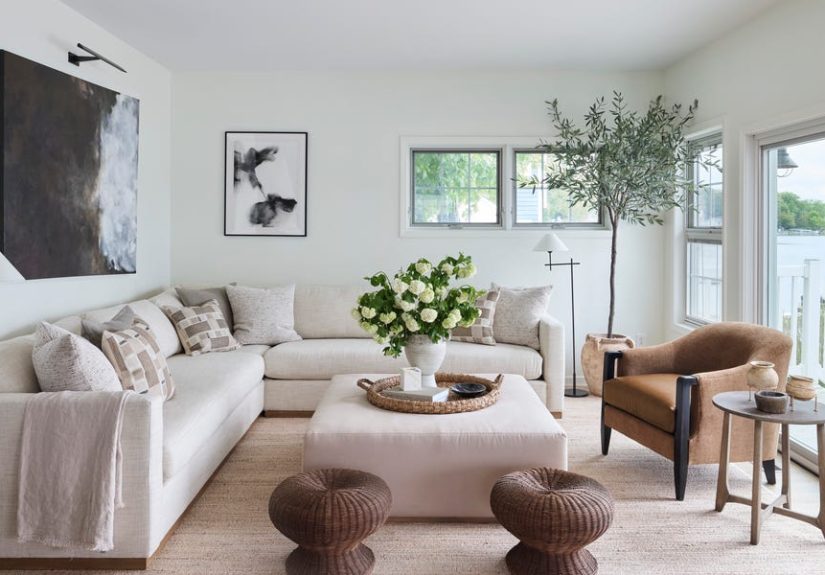
If you have a sweeping shoreline, sparkling cove, or tree-lined lake beyond the windows, the interior should not compete with it. It should frame it. That often means simplifying the palette, reducing visual noise, and arranging furniture so the eye naturally lands on the outdoors. Neutral walls, soft textures, and better sightlines can work harder than a dozen expensive decorative flourishes.
Designers also know that view-driven spaces are not just about giant windows. They are about orientation. A breakfast nook facing the lake feels different from one facing a wall. A kitchen island becomes more social when it overlooks the water. A primary bedroom feels more retreat-like when the first thing you see in the morning is light reflecting off the surface outside, not an overbuilt armoire that looks like it has opinions.
Sometimes the fix is dramatic, such as opening ceilings, removing bulky walls, or enclosing an underused patio as a sunroom. Sometimes it is as simple as stripping back fussy window treatments and reworking the furniture plan so the conversation area also enjoys the view. Either way, the lesson is the same: in a lake house, the scenery is free luxury. Use it.
Brighten the Mood Without Scrubbing Away the Character
Outdated lake houses often suffer from a heavy-handed idea of coziness. Dark beams, stained ceilings, brick features, knotty wood everywhere, and over-the-top “cabin” details can make a home feel gloomy instead of grounded. A talented designer knows the solution is not to turn everything sterile and flat. It is to lighten strategically.
That might mean painting overly dark paneling or trim in warm whites, soft creams, or muted mineral tones. It might mean keeping some original wood where it feels special, but editing back the rest so the architecture can breathe. Several standout lake-home renovations in recent design coverage followed this exact playbook: they kept the soul, lost the heaviness, and let natural light do its thing.
The result is chic because it feels intentional. Fresh paint, pale limewash, softer stains, and cleaner lines can make an older home feel current without making it feel generic. The difference matters. Nobody wants a lake house that looks like a waiting room with better views.
How Designers Keep It Warm, Not Washed Out
To avoid that blank-box effect, designers layer in texture. Think flat-weave rugs, wicker or rattan accents, vintage woods, linen drapery, grass cloth, ceramic lighting, slatted details, or handmade tile. A green kitchen, a moody study, a plank ceiling, or a painted laundry room can all add personality without dragging the whole house back into darkness.
In short, the trick is simple: brighten the backdrop, then add soul back in with texture, craft, and a little restraint.
Design for Real Family Life, Not Fantasy Brochure Life
A chic family escape is still a family escape. That means the finishes have to work harder than they would in a city apartment where nobody enters carrying a dripping inner tube.
One of the biggest ideas shaping lake-house design right now is durability dressed as elegance. Composite oak flooring, quartz countertops, performance fabrics, flat-weave rugs, washable slipcovers, and fuss-free seating all show up again and again for a reason: they can take a hit and still look pulled together. Wet towels, sunscreen, dogs, and snack crumbs are not design flaws. They are the plot.
The smartest rooms welcome that reality. Banquettes upholstered in performance fabric invite lingering breakfasts. Upholstered pieces are chosen in tones and textures that forgive life. Deck areas get hooks and hidden storage. Entry zones become hardworking landing pads instead of decorative dead space. Guest rooms add extra beds or bunk arrangements without feeling like summer camp in a costume.
And yes, you can absolutely have all that and still be stylish. In fact, true style here comes from making the house feel effortless. When every room is too delicate, everyone behaves like they are one popsicle away from losing their security deposit. When the materials are smart, the whole place relaxes.
Make the Kitchen the Social Engine
In most family retreats, the kitchen becomes command central. It is where someone slices peaches, someone opens a cooler, someone pours coffee, and someone inevitably asks where the bug spray went. So a designer reworking an outdated lake house almost always gives the kitchen extra attention.
The modern lake-house kitchen is less about formal perfection and more about warm function. It opens to dining. It talks to the deck. It supports grazing, gathering, and the kind of long conversation that starts with breakfast and somehow ends at sunset. Designers increasingly use oversized islands, integrated dining tables, layered lighting, natural wood tones, handmade tile, and cabinetry colors inspired by the landscape, from studio greens to driftwood grays to creamy neutrals.
Some recent projects even reimagined the kitchen as a furnished room rather than a strictly utilitarian zone, adding table lamps on islands, softer finishes, and sightlines that make it feel connected to the rest of the home. That approach matters in a lake house, where guests rarely stay politely out of the way and family members move through the space all day. The kitchen should work like a host, not a hallway traffic cop.
Create Multiple Gathering Zones So Everyone Isn’t Sitting on Top of Each Other
One of the sneakiest problems in older vacation homes is that they either have too many disconnected little rooms or one giant room that asks everyone to do everything in the same place. Neither is ideal.
A chic family escape needs variety. It needs a main room for the whole crew, a cozy nook for coffee, a screened porch for late-night card games, maybe a den for movie marathons, and at least one quiet corner where a person can read without hearing a cannonball splash review in real time.
This is where designers earn their keep. They break big spaces into usable zones with furniture placement, lighting, rugs, wall treatments, and millwork. They also rethink smaller rooms so they feel intentional rather than leftover. A snug study can become a cocooning hideaway. A former patio can become a four-season sunroom. An upstairs landing can double as an artful pass-through and conversation perch. Even a hallway can become charming when it gets personality instead of neglect.
The goal is not more rooms for the sake of more rooms. It is more ways to inhabit the house.
Bring the Outdoors In, Then Send the Indoors Back Outside
Lake houses are at their best when they blur the boundary between inside and out. That can be done architecturally with sliding doors, walls of glass, and connected decks, or decoratively with natural materials, relaxed color palettes, and furniture choices that make the inside feel in conversation with the setting.
Screened porches, sunrooms, covered patios, and outdoor dining spaces are especially valuable because they extend the usable life of the home. A well-designed porch can host morning coffee, afternoon naps, dinner with friends, and even overflow sleeping in the right setup. That kind of flexibility is catnip for families.
Landscaping and exterior details matter, too. Fire pits make evenings linger. Walkways and covered connectors make movement between the house and outbuildings feel graceful. Storage for lake gear prevents the deck from looking like a sporting goods explosion. A few container plants, wicker seating pieces, and proper lighting can take an ordinary outdoor area from “there are chairs here” to “nobody wants to go inside.”
Skip the Theme Park Nautical Look
There is a fine line between lakeside charm and decorative overkill. A designer turning an outdated lake house into a chic family retreat usually avoids obvious gimmicks in favor of subtler references. The water can be echoed in the palette, in the reflectivity of materials, in soft blues and greens, in natural fibers, in weathered woods, or in the quiet rhythm of repeated shapes. It does not need to be announced by a fleet of decorative sailboats lined up like they are waiting for roll call.
The most stylish lake houses borrow from camp nostalgia, coastal ease, modern simplicity, and traditional comfort without becoming costume-y. That is how they stay timeless. They feel connected to their setting, but they also feel like homes people actually know how to live in.
The Best Part of the Redesign: It Changes the Experience, Not Just the Photos
What makes this kind of transformation so satisfying is that it improves more than appearances. A designer does not just deliver prettier rooms. They improve the rhythm of the weekend.
Morning light reaches farther into the house. The kitchen becomes a place where people naturally gather. The kids know where to dump wet gear. The adults do not panic when someone sits on the good furniture in a damp swimsuit. The bedrooms feel calm. The porch gets used. The view is part of daily life instead of something trapped behind awkward architecture.
That is the real definition of chic in a family lake house. Not stiffness. Not showiness. Just a home that has been edited, lightened, and organized so beautifully that everybody can relax more inside it.
Living the Lake House Dream: What the Experience Feels Like After the Makeover
Once the redesign is done, the biggest change is not the paint color or the tile or the new lighting over the island. It is the feeling. The house no longer asks people to behave carefully around it. It invites them in.
A family arrives on Friday evening after a long drive, and instead of stepping into a dark interior that smells faintly like old wood and stubborn memories, they walk into a space that feels open, fresh, and ready. Bags land in the right spot. Shoes come off without blocking the doorway. Someone heads straight to the kitchen because the island is big enough for chopping vegetables, opening chips, and leaning dramatically while telling a story at the same time. Someone else opens the doors to the porch. The lake comes into view immediately, and the whole house feels like it exhales.
Saturday morning has its own rhythm. Early risers drift into the kitchen with bedhead and coffee ambitions. The light hits the countertops. The breakfast nook fills up one person at a time. Kids move between inside and out without causing a domestic crisis because the floors, fabrics, and furniture were chosen by someone wise enough to understand that lake life is half relaxation and half controlled mess. There are hooks for towels, room for bags, and surfaces that do not flinch at a little moisture. That alone is luxury.
By afternoon, the house is doing what a great family retreat should do: offering options. One group is reading in the sunroom. Another is playing cards at the table. Somebody is napping in a bedroom that feels quiet and tucked away rather than like an afterthought. A teenager has claimed the coziest corner chair and is pretending not to enjoy the absence of city noise. The adults can host lunch without disappearing into a back room because the kitchen, dining area, and living spaces are connected in a way that keeps everyone part of the same scene.
Then evening rolls in, which is when a lake house really earns its keep. The porch glows. Drinks appear. Towels dry. Someone lights the fire pit. The air cools off just enough to justify a sweater. Conversations stretch because nobody is uncomfortable, crowded, or trying to balance a plate on their knees in a badly planned room. The house supports togetherness, but it also leaves room for small moments: a quiet talk on the dock, a child falling asleep on a banquette, a parent standing at the sink and catching the last stripe of sunset across the water.
That is the thing stylish photos cannot fully capture. A well-designed lake house makeover changes how memory gets made inside the home. It turns inconvenience into ease. It turns dead space into favorite space. It turns a once-dated property into the place where people want to gather again and again, not because it looks expensive, but because it feels good.
And maybe that is the chicest outcome of all. The house becomes less about proving anything and more about making life sweeter. It looks polished, yes. It photographs beautifully, absolutely. But more important, it works when the weekend gets real. It handles muddy feet, sleepy mornings, overstuffed guest lists, dripping dogs, second helpings, and long lazy evenings without losing its cool. That is not just good design. That is design with emotional intelligence.
When a designer turns an outdated lake house into a chic family escape, the true reveal is not the furniture plan. It is the moment the family realizes they can finally use the house the way they always imagined they would. Easy. Warm. Comfortable. Beautiful. Not perfect in a museum sense, but perfect in the way a favorite summer memory is perfect.
Final Thoughts
The most memorable lake house renovations are never only about style. They are about clarity. They remove heaviness, sharpen the relationship to the view, honor the architecture that deserves to stay, and replace fussy choices with beautiful, durable ones that support real living. The result is a home that feels lighter, smarter, and far more welcoming.
So yes, a designer can turn an outdated lake house into a chic family escape. But the real magic is this: the finished home does not feel overly designed. It feels inevitable, like the lake had been waiting for the house to catch up all along.