Table of Contents >> Show >> Hide
- What “Water Four Times a Year” Really Means
- The Foundation of a Ultra-Low-Water Garden
- The Irrigation Strategy That Makes This Work
- How to Build a Garden That Can Be Watered Rarely
- What This Looks Like in Different U.S. Climates
- Common Mistakes That Ruin Low-Water Gardens
- How to Know You’re Succeeding
- Experience Section: What a “Four-Times-a-Year” Mindset Looks Like in Real Life
- Conclusion
- SEO Tags
If that title sounds like garden fiction written by an overly optimistic hose salesperson, I get it. “A garden you water four times a year” sounds like the landscaping version of “I only check my email once a month.” But here’s the truth: in the right climate, with the right design, and after plants are established, a dramatically low-water garden is absolutely possible. Not everywhere. Not with every plant. And definitely not on day one. But possible? Yes.
The real magic is not a secret plant, a mysterious fertilizer, or a moonlit watering ritual. It’s smart design. Water-wise gardening is mostly about planning: choosing climate-adapted plants, grouping them by water needs, improving soil where needed, mulching like you mean it, and watering deeply instead of lightly and constantly. In other words, less “spritz and panic,” more “plan and relax.”
This guide breaks down exactly how to build a low-water garden that can thrive on very little irrigation once established. We’ll also be honest about the fine print: a brand-new garden needs more attention early on, hot-weather spikes happen, and your local climate matters more than internet bravado. If you live in an arid or Mediterranean climate, the “four times a year” idea may be realistic for parts of your garden. If you live in a humid region, the same principles still save wateryou’ll just use them differently.
What “Water Four Times a Year” Really Means
First, let’s decode the phrase. It doesn’t mean every garden everywhere can survive on four random soakings and a pep talk. It means a mature, well-designed, climate-adapted garden can need little to no supplemental irrigation for long stretchesespecially in regions that use drought-tolerant or desert-adapted plants.
Think of it as a design target, not a universal rule. In many water-wise landscapes, some zones may get watered more often (like a small lawn or veggie bed), while other zonesnative shrubs, perennials, and hardy ornamental grassesmight only need deep irrigation during prolonged dry periods. That’s the key idea: different zones, different schedules.
Also, there’s a second “four times” idea that’s surprisingly practical: many irrigation experts recommend adjusting your watering schedule at least four times a year (seasonally). That simple habit alone can save a huge amount of water because what plants need in July is not what they need in November.
The Foundation of a Ultra-Low-Water Garden
1) Start with Design, Not the Plant Shopping Cart
Water-wise gardens are won on paper before they’re planted in soil. The most reliable guidance from extension programs and water agencies repeats the same idea: plan first. Pay attention to sunlight, shade, wind exposure, slope, soil, and how you actually use the space.
That means asking practical questions:
- Where is the hottest, driest part of the yard?
- Where does runoff collect after rain?
- Which areas need to look lush because you use them often?
- Which areas can be more natural and low-maintenance?
If you skip this step, you usually end up with thirsty plants in harsh spots and drought plants stuck in soggy corners. That’s when the hose starts working overtime and everybody blames the weather.
2) Use Hydrozones Like a Pro
Hydrozoning is the superstar concept behind successful low-water landscapes. It simply means grouping plants with similar water needs together and irrigating by zone, not by individual plant mood.
For example:
- Oasis zone: higher-use area near a patio or entry, where you may keep a few showier plants.
- Transition zone: moderate-water plants that still look great with less frequent watering.
- Low-water zone: native or drought-tolerant plants that need little supplemental irrigation once established.
This is how you stop overwatering your desert sage because it happens to live next to a hydrangea. (They are not friends. They are roommates with very different needs.)
3) Pick the Right Plants for the Right Place
If you want a garden that gets watered rarely, plant selection is everything. The best candidates are plants adapted to your local climate, rainfall pattern, and soilnot just plants that looked “drought tolerant” on a tag at the garden center.
In many U.S. regions, native plants are a strong starting point because they’re adapted to local conditions and often need less water and fewer inputs once established. But “water-wise” does not have to mean “all native, all the time.” You can mix in non-invasive, climate-adapted plants if they fit the site and your irrigation zones.
What matters most is this:
- Choose plants adapted to your region.
- Match plants to your microclimate (sun, shade, wind, reflected heat).
- Group plants by water need.
- Separate low-water plants from lawn irrigation.
A plant can be “low-water” in one state and a high-maintenance diva in another. Climate context is everything.
4) Mulch Is Not Decoration. It’s Infrastructure.
If your soil is exposed, water evaporates faster, weeds compete for moisture, and temperatures swing more wildly around roots. Mulch fixes all of that. It’s one of the easiest, cheapest, highest-impact upgrades in a water-wise garden.
For most landscape beds, a mulch layer in the 2–4 inch range works well (depending on material and plant type). Organic mulches like bark or wood chips help reduce evaporation, moderate soil temperature, and improve soil over time. In desert-style plantings, gravel mulch may also be useful for certain plants and design styles.
Mulch is the garden equivalent of a good insulated water bottle: same water, less waste.
5) Water Deeply, Then Back Off
The most common watering mistake is light, frequent watering. It feels responsible because you’re “doing something” every day. But shallow watering often trains roots to stay near the surface, where soil dries out quickly. Then plants become more dependent on frequent irrigation. It’s a cycle. A soggy, expensive cycle.
In established landscapes, the goal is usually deep, infrequent watering so moisture reaches the root zone and plants develop stronger, deeper roots. That doesn’t mean one rigid schedule for every plant. It means watering thoroughly, then waiting until the soil actually needs water again.
And yes, check the soil before watering. Don’t irrigate based only on habit, the calendar, or the fact that your neighbor is outside holding a hose and looking confident.
The Irrigation Strategy That Makes This Work
Drip Irrigation Wins Most of the Time
For shrubs, perennials, and mixed planting beds, drip irrigation is usually the MVP. It puts water at the root zone, reduces evaporation, and helps you avoid spraying sidewalks, fences, and the occasional innocent squirrel.
But drip is not “install and forget.” Even efficient systems waste water if they’re clogged, leaking, cut, or badly designed. Check emitters, look for broken lines, and make sure each zone matches the plants in it.
Use Cycle-and-Soak to Prevent Runoff
On slopes or compacted soils, long irrigation runs can cause runoff before water has time to soak in. A better method is cycle-and-soak: run irrigation in shorter bursts with breaks in between. Same total watering time, better infiltration, less waste.
This is especially useful with sprinklers and in places where water tends to race downhill instead of soaking into the root zone.
Water in the Morning
Early morning is the gold standard for most garden watering, especially if you’re using sprinklers or anything that wets foliage. Cooler temperatures and lower wind reduce evaporation, and leaves dry faster, which helps reduce disease risk.
For drip systems and soaker hoses, you’ve got a little more flexibility, but morning is still a great default. Midday watering is basically paying premium rates for evaporation.
Adjust the Controller Seasonally
One of the smartest habits in a low-water garden is adjusting irrigation settings at least seasonallyroughly four times a year. Plants don’t use the same amount of water in spring, summer, fall, and winter, and your controller should not pretend otherwise.
If you want even more help, a smart irrigation controller can adjust watering based on weather or soil moisture. It’s not mandatory, but it can be a big upgrade if you tend to “set it and forget it” (we’ve all been there).
How to Build a Garden That Can Be Watered Rarely
Step 1: Shrink the Thirstiest Areas
Lawn is often the biggest water user in a yard. You don’t have to remove all turf, but you should be honest about how much you actually use. Keep lawn where it serves a real purpose (play area, dog path, gathering space), and reduce it elsewhere.
Replace unused turf with layered planting beds, groundcovers, native grasses, or mulched zones. Even a small reduction in turf can make a big difference in water use and maintenance.
Step 2: Create a “Pretty and Tough” Plant Palette
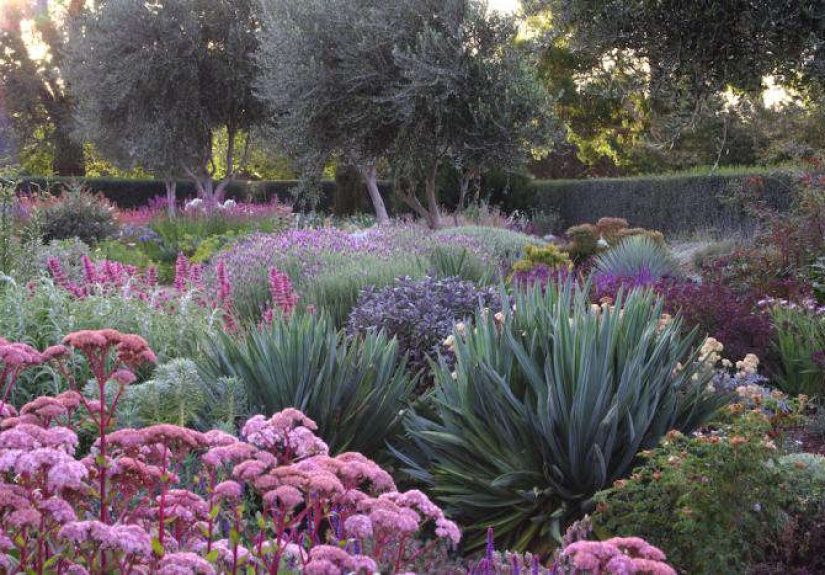
A low-water garden does not have to look sparse, rocky, or like a cactus convention (unless that’s your thing). The best water-wise gardens mix texture, bloom timing, height, and foliage color. Think in plant groups and drifts, not one lonely specimen every six feet.
Use a balanced mix of:
- Structural evergreens or shrubs
- Drought-tolerant flowering perennials
- Ornamental grasses
- Native plants for pollinators and habitat
- Groundcovers to shade soil
The result can be lush-looking without being water-hungry. That’s the sweet spot.
Step 3: Improve Soil Thoughtfully
Soil preparation matters, but more is not always better. Some drought-adapted plants prefer leaner soils, while others benefit from organic matter. The goal is not to turn every bed into fluffy compost cake. The goal is to understand your soil and match plants to it.
If you’re not sure what you’re working with, a simple soil test is worth it. It helps you avoid guessing and over-amending.
Step 4: Establish Plants Correctly
This is the part many people skipand then they declare water-wise gardening “doesn’t work.” New plants need regular watering while roots establish. That establishment period can last weeks for perennials and much longer for shrubs and trees.
In fact, watering during establishment varies by region and plant type. Some guidance for trees and shrubs recommends frequent watering early, then tapering off. In hot, arid climates, desert-adapted plants may still need a structured establishment schedule before they can thrive with very infrequent watering.
Translation: don’t expect “four times a year” in month one. Think “train now, coast later.”
Step 5: Monitor, Don’t Micromanage
Once the garden matures, your job shifts from constant watering to observation. Watch for plant stress, check soil moisture, and adjust when weather gets weird (because weather always gets weird eventually).
A mature low-water garden is not a zero-attention garden. It’s a lower-input, smarter-input garden.
What This Looks Like in Different U.S. Climates
Arid and Desert Regions
This is where the “water four times a year” idea is most believable for certain established zones. Desert-adapted shrubs and perennials, planted in the right soil and watered deeply, can go long stretches between irrigations, especially outside peak heat.
The caveat: establishment takes time, and even desert plants may need supplemental water during extreme heat waves.
Mediterranean Climates
Regions with wet winters and dry summers are ideal for climate-adapted, water-wise landscapes. Many Mediterranean and California native plantings can be designed for very low summer irrigation once established, especially if turf is minimized and hydrozones are used well.
Humid or Mixed-Rainfall Regions
In the Southeast, Midwest, or Northeast, the same principles still workjust with a different outcome. You may not literally water only four times a year, but you can still cut waste dramatically by mulching, choosing climate-appropriate plants, watering deeply, and irrigating only when needed.
In these regions, the win is often not “almost no water,” but “far less water than a conventional landscape.” That still counts. Your water bill agrees.
Common Mistakes That Ruin Low-Water Gardens
- Mixing plant types with opposite water needs on the same irrigation zone.
- Watering shallowly and frequently instead of deeply.
- Skipping mulch and then wondering why the soil dries out fast.
- Overwatering native plants because they “look thirsty” in afternoon heat (some naturally droop and rebound).
- Not adjusting irrigation seasonally and running summer settings all year.
- Ignoring runoff and leaks, especially on slopes or older systems.
- Expecting instant maturity from a newly planted garden.
How to Know You’re Succeeding
You’re on the right track if:
- Your plants need fewer interventions over time.
- You water based on soil and plant signals, not panic.
- Your low-water zones stay healthy with longer intervals between irrigations.
- You’re adjusting your controller by season.
- Your yard still looks good (because ugly is not a conservation strategy).
A truly successful low-water garden feels calm. You’re not dragging hoses every evening. You’re not replacing plants constantly. You’re not fighting your climate. You’re working with it.
Experience Section: What a “Four-Times-a-Year” Mindset Looks Like in Real Life
Here’s the most helpful way to think about this idea in practice: not as a strict number, but as a mindset shift. Gardeners who succeed with ultra-low-water landscapes usually stop asking, “How often should I water everything?” and start asking, “Which parts of my garden actually need water right now?” That one change is huge.
A common experience goes like this: someone replaces a large patch of unused lawn with mixed planting beds, keeps a smaller turf area for kids or pets, and installs drip irrigation for shrubs and perennials. In the first season, they water more than expected because plants are getting established. They worry they “failed” the low-water plan. But by year two, the roots are stronger, mulch is doing its job, and the irrigation schedule gets stretched out. By year three, parts of the garden are only getting supplemental water during long dry spells or extreme heat. Suddenly, the yard is easier, not harder.
Another frequent experience is learning that plants can look dramatic in late afternoon and still be fine. New water-wise gardeners often see a little droop at 4 p.m., assume disaster, and water immediately. Then they discover the plant looks perfect again the next morning. That’s not always true for every species, but it’s common enough that observation becomes your best tool. In low-water gardening, patience is often more useful than a hose nozzle.
People also notice that hydrozoning solves argumentsboth in the yard and in their own heads. The front entry can still be colorful and polished. The side yard can be tougher and lower maintenance. A small herb bed can get more frequent water. The back slope can be planted with hardy, deep-rooted plants that mostly fend for themselves. Once everything is not on one schedule, the whole system becomes more logical.
Mulch is another “why didn’t I do this sooner?” moment. Gardeners often describe it as the turning point. Before mulching, soil dries quickly and weeds pop up everywhere. After mulching, moisture lasts longer, weeds are easier to manage, and plants stop looking stressed so fast. It’s not glamorous, but it makes the garden feel stable.
And then there’s the controller habit. People who start adjusting irrigation settings four times a year usually realize they had been overwatering for months at a time. Summer settings were running in cool weather. Spring rains were ignored. Once they begin making seasonal changes, water use drops without sacrificing plant health. It’s one of the simplest upgrades with the biggest payoff.
The best part? A low-water garden often becomes more beautiful over time. Plants settle in, fill out, and create a layered look that feels natural and intentional. Pollinators show up. Maintenance becomes more about pruning and seasonal cleanup than emergency watering. The garden starts to feel like it belongs to the place, not like it’s fighting it.
So yes, “a garden you water four times a year” is a bold phrase. In some climates and zones, it can be real. In others, it’s a useful goalpost. Either way, the lesson is the same: design for your climate, plant smart, mulch generously, water deeply, and let the garden grow into its independence.
Conclusion
A garden that needs very little irrigation is not a fantasyit’s a design strategy. The phrase “water four times a year” works best as a reminder to build a landscape that depends less on constant watering and more on smart planning. Use hydrozones, choose locally adapted plants, reduce thirsty turf, mulch well, and water deeply but only when needed. Do that consistently, and your garden becomes easier to maintain, more resilient in heat, and far more efficient with water.
In short: don’t chase a magic number. Build the kind of garden that makes that number possible.