Table of Contents >> Show >> Hide
- What Exactly Is a “Mini Pacemaker”?
- Meet the Tiny Giants: Today’s Leadless Pacemakers
- How a Mini Pacemaker Gets Installed (Spoiler: Not Through Your Chest)
- Who Might Benefit From a Leadless “Mini” Pacemaker?
- Why the Hype? The Practical Upsides of Going Leadless
- The Trade-Offs: Mini Pacemakers Still Have Real Risks
- Battery Life and the Big Question: “What Happens When It Runs Out?”
- Mini Pacemakers in the Real World: Specific Examples
- What’s Next: Dual-Chamber Leadless, Smarter Sensing, and Even Self-Charging Ideas
- Living With a Teeny-Tiny Mini Pacemaker: Real-World Experiences (About )
- Conclusion: Small Device, Big Shift in Cardiac Care
If you think “pacemaker” sounds like a chunky little gadget tucked under someone’s collarbone, you’re not wrongat least historically.
For decades, most pacemakers have come with two “extras”: a chest pocket (where the generator lives) and thin wires called leads (that run through veins into the heart).
It works beautifully for many people… but it’s also a setup that can bring its own set of annoyances and risks.
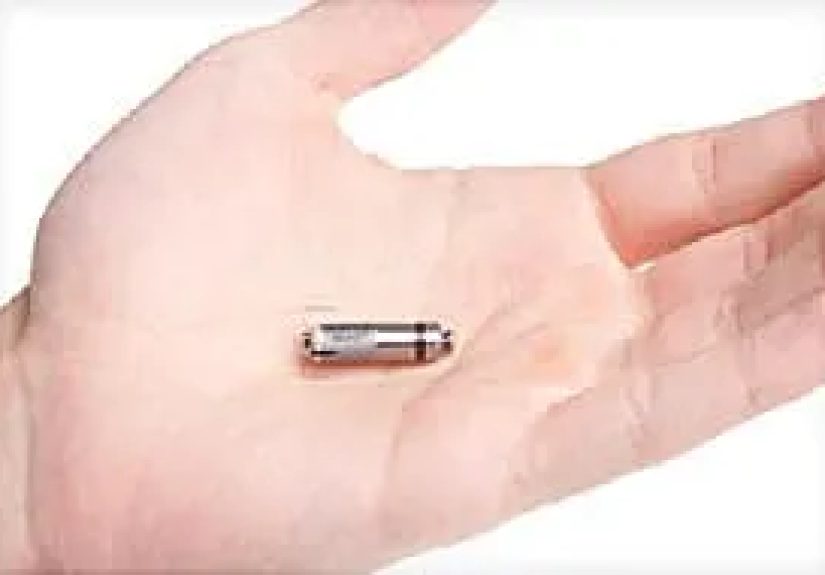
Enter the teeny-tiny mini pacemaker, better known as a leadless pacemaker.
It’s a modern cardiology magic trick: a self-contained device placed inside the heart through a catheter, with no chest incision for a device pocket and no leads snaking through veins.
The result is a pacemaker that’s literally smaller, often simpler to live with, andin the right patientcan reduce certain complications.
Let’s take a closer look at what these mini pacemakers are, how they work, who they’re for (and who they’re not), and why the future of pacing is starting to look like something you could accidentally lose in a jacket pocket.
(Please don’t. Your cardiologist will not laugh.)
What Exactly Is a “Mini Pacemaker”?
Traditional pacemakers: the classic two-part setup
A traditional pacemaker usually has:
- A pulse generator (the “computer + battery” unit) placed under the skin in the chest.
- One or more leads (wires) threaded through a vein into the heart to deliver pacing impulses.
This setup is proven and widely used. But leads can occasionally fracture, shift position, or cause vein-related issues over time.
The generator pocket can sometimes get infected or become uncomfortable. And if a device infection happens, treating it can be a big deal.
Leadless pacemakers: one tiny device, living rent-free in your heart
A leadless pacemaker is a single, self-contained device placed directly into the hearttypically the right ventricleusing a catheter inserted through a vein in the upper leg.
No chest pocket. No leads. No visible bump under the skin.
It’s “mini” not because it’s cute (though… it kind of is), but because it’s engineered to do the job with far less hardware.
Most leadless pacemakers are designed for people who need pacing support in specific scenariosoften single-chamber ventricular pacing.
Newer systems, however, are expanding what leadless pacing can do, including dual-chamber leadless options.
Meet the Tiny Giants: Today’s Leadless Pacemakers
When people say “mini pacemaker,” they’re usually talking about a handful of leadless systems that have shaped modern pacing.
Two names come up a lot in real-world cardiology conversations: Medtronic’s Micra family and Abbott’s Aveir platform.
Medtronic Micra: the headline act for “world’s smallest pacemaker”
The Micra line helped popularize leadless pacing by proving you could deliver reliable pacing without a chest pocket or leads.
Newer-generation devices like Micra AV2 and Micra VR2 (FDA-approved in 2023) were designed to improve longevity and usability while keeping the same “tiny device, big job” philosophy.
One especially interesting Micra feature is AV synchrony in certain models (like Micra AV versions).
Without an atrial lead, how can it coordinate timing with the atrium?
By using an internal sensor (an accelerometer) that detects mechanical signals related to atrial contraction and then times ventricular pacing to match.
It’s not identical to a traditional dual-lead system, but for some patients it can provide a more coordinated rhythm than basic single-chamber pacing.
Battery life matters because replacing a device (any device) is still a medical procedure.
In public manufacturer communications and published analyses, next-gen Micra devices are projected around the mid-teens in years for many typical settingsoften discussed in the neighborhood of ~16–17 years, depending on how much pacing a person needs and how the device is programmed.
Real life always varies, but the trend is clear: leadless pacing is pushing longevity forward.
Abbott Aveir: designed with retrieval and expansion in mind
Abbott’s Aveir platform is another major player, and it’s notable for two reasons:
(1) the system was designed with retrievability as a core concept, and
(2) it has expanded into dual-chamber leadless pacing.
The Aveir DR Dual Chamber Leadless Pacemaker System became the first FDA-approved dual-chamber leadless system in 2023.
Instead of one device trying to “guess” atrial activity, a dual-chamber leadless system places one device in the right atrium and another in the right ventricle, using wireless communication between the two to coordinate timing.
In clinical study results published in a major medical journal, the system met prespecified early safety and performance endpoints and demonstrated high levels of atrioventricular synchrony at short-term follow-up.
Aveir’s single-chamber ventricular device has also been discussed for long projected battery life in many use cases.
As always, projections depend on pacing needs, settings, and real-world conditionsbut the direction is consistent: mini pacemakers are not just smaller; they’re designed for fewer replacements over a lifetime.
How a Mini Pacemaker Gets Installed (Spoiler: Not Through Your Chest)
The implantation story is one of the biggest “wow” factors for patients.
A leadless pacemaker is typically placed via a catheter-based procedure:
- Access: A doctor enters a vein in the upper leg (often the femoral vein).
- Navigation: Using imaging guidance (like fluoroscopy), a delivery catheter is advanced to the heart.
- Placement: The device is positioned in the right ventricle (and for dual-chamber systems, a second device is placed in the right atrium).
- Fixation: The device anchors to heart tissue using a fixation mechanism (for example, tines or a helix design, depending on the system).
- Testing: The team confirms stable positioning and good electrical performance before releasing the device.
- Wrap-up: The catheter is removed, and the access site is closed.
Many patients stay overnight for monitoring; some may go home the same day depending on the clinical situation and hospital protocol.
Because there’s no chest pocket incision, recovery can feel different than traditional pacemaker implantationespecially when it comes to upper-body restrictions.
(No “don’t lift your arm above your head” lecture… at least not for the device pocket.)
Who Might Benefit From a Leadless “Mini” Pacemaker?
Leadless pacing isn’t “better for everyone.” It’s better for the right person.
Doctors consider a leadless pacemaker when the pacing need and anatomy match the device’s strengths.
Common situations where leadless pacing may shine
- Need for single-chamber ventricular pacing (for example, certain bradycardia scenarios).
- Higher infection risk or history of device infection, where avoiding a chest pocket and leads can be attractive.
- Limited venous access (scarred veins, prior procedures, dialysis access considerations).
- Preference to avoid a visible device bump or reduce pocket-related discomfort.
- Some patients after specific heart procedures where pacing is needed and a minimally invasive approach is desirable.
When leadless may not be the best tool
Traditional pacing still has major advantages for people who need:
- Defibrillation (a pacemaker is not an ICD).
- Cardiac resynchronization therapy (CRT/biventricular pacing) for certain heart failure patterns.
- “Physiologic pacing” approaches like conduction system pacing, which currently rely on leads and specific positioning strategies.
- Complex multi-chamber requirements that exceed what a given leadless system is designed to do.
The short version: leadless pacing is a powerful option, but it’s not a universal replacement for all pacemakers.
It’s more like a specialized, high-performance toolamazing when it fits the job.
Why the Hype? The Practical Upsides of Going Leadless
The biggest advantage of mini pacemakers is what they remove from the equation: the device pocket and the leads.
That matters because many traditional pacemaker complications involve either the leads or the pocket.
Potential benefits patients often care about
- No chest pocket (no “bump,” no pocket scar in the usual spot, and fewer pocket-specific issues).
- No leads (reducing risks tied to lead fracture, lead dislodgement, and some lead-related infections).
- Often fewer activity restrictions involving the shoulder/upper body immediately after implant (because there’s no chest pocket healing).
- Cosmetic simplicity (it’s not a fashion statement under your skin).
- MRI-conditional use for many systems under specific conditions, which can be a big deal over a lifetime.
In the medical literature, leadless pacemakers are often associated with lower rates of certain major complications compared with transvenous systems,
particularly those tied to the pocket and leads.
That said, the story is nuanced: leadless systems can have their own risks, and some analyses highlight trade-offs (more on that next).
The Trade-Offs: Mini Pacemakers Still Have Real Risks
Smaller does not mean consequence-free.
Leadless pacemaker implantation is still an invasive heart procedure, and the risks deserve respect.
More common (usually manageable) issues
- Bleeding or bruising at the leg access site.
- Groin discomfort for a few days.
- Vascular complications related to catheter access (uncommon, but part of the risk profile).
Less common but more serious complications
- Perforation of the heart with bleeding into the pericardial space (a medical emergency when it happens).
- Pericardial effusion/tamponade (fluid or blood compressing the heart).
- Device dislodgement (rare, but possible).
- Clot-related events (risk varies by patient factors and clinical context).
The key is that doctors weigh these risks against the risks of a traditional system in that specific person.
For someone with a very high infection risk, avoiding a chest pocket and leads can be a meaningful advantage.
For someone who needs advanced pacing strategies, a transvenous system may be safer and more effective overall.
Battery Life and the Big Question: “What Happens When It Runs Out?”
Every pacemaker has a battery clock ticking in the background.
The goal is not “forever,” but “as long as possible with predictable monitoring.”
How long do leadless pacemakers last?
Longevity depends on how much pacing you need (pacing burden), the programmed settings, and how the heart behaves over time.
Many public summaries and published analyses discuss projected battery life for newer devices in the range of the mid-teens in years for common settings.
Some patients may have shorter longevity if they require frequent pacing; others may go longer.
Replacement: swap the job, not necessarily the old device
When a leadless pacemaker reaches end-of-life, a common approach is:
- Implant a new leadless device,
- Turn the old device off (so it stops pacing),
- Leave the old one in place if removal isn’t needed.
In some cases, retrieval is possibleespecially for systems designed with that goal in mind.
But retrieval decisions depend on timing, device design, tissue response, and clinical need.
The practical reality is that many patients can safely have more than one device in the right ventricle over a lifetime, if required.
Mini Pacemakers in the Real World: Specific Examples
Example 1: The “high infection risk” patient
Imagine a patient with multiple prior procedures or a history of device infection.
For them, avoiding a new chest pocket and transvenous leads can reduce exposure to the very complications they’re most worried about.
A leadless pacemaker may be considered because it eliminates a common infection foothold: the generator pocket and the lead track.
Example 2: The “limited venous access” problem
Now imagine someone whose upper-body veins are not good candidates for new leadsdue to scarring, blockages, or dialysis access considerations.
A leadless approach through the femoral vein can sidestep some of those access constraints.
Example 3: The “I just want fewer moving parts” perspective
Some patients simply prefer a design that avoids leads, especially if they’re active and want to reduce long-term lead-related issues.
While activity recommendations are always individualized, the absence of a chest pocket changes the recovery conversation for many people.
What’s Next: Dual-Chamber Leadless, Smarter Sensing, and Even Self-Charging Ideas
The mini pacemaker story is still being written.
The biggest leap in recent years has been dual-chamber leadless pacinga major expansion because so many pacing indications involve coordination between atrium and ventricle.
Another exciting area is device intelligence:
better sensing, better rhythm interpretation, and better personalization of how pacing responds to activity.
Researchers have also explored early concepts like energy harvestingcapturing some mechanical energy from heart motion to help recharge a device.
That’s not everyday clinical reality yet, but it’s a glimpse of where mini pacemakers could go.
At the same time, traditional pacing is not standing still.
Techniques that mimic the heart’s natural activation pattern (like conduction system pacing) are advancing too, and right now they often rely on leads.
In other words, the future probably isn’t “leadless replaces everything.”
It’s “the right pacing technology for the right heart.”
Living With a Teeny-Tiny Mini Pacemaker: Real-World Experiences (About )
Because I’m not you (and you’re not a clinical trial), it helps to talk about what people commonly experience around a leadless pacemakeremotionally, practically, and day-to-day.
These aren’t personal anecdotes from me; they’re a realistic blend of what patients and clinicians often describe in clinics, discharge instructions, and follow-up visits.
Before implant: the “So… it’s going in my heart?” moment
The first reaction many people have is disbelief. A pacemaker inside the heart sounds like science fiction.
The second reaction is usually relief: “Wait, no chest incision? No bump?”
People often ask whether they’ll feel it moving (they won’t), whether airport scanners will scream (usually not, but you should follow your device card instructions),
and whether they’ll become a human Wi-Fi hotspot (sadly, also no).
Procedure day: small device, big choreography
Implant day typically feels more like a specialized catheter procedure than “surgery” in the traditional sense.
There’s a pre-op routine, monitoring stickers everywhere, and a team that seems to communicate in acronyms at Olympic speed.
Many patients remember the moment they’re told to lie still afterwardbecause the access site in the leg needs time to seal.
The weirdest part isn’t usually the heartit’s realizing your leg is temporarily the VIP of the entire operation.
The first week: feeling better, but also hyper-aware
When pacing fixes a too-slow rhythm, some people notice improvement quickly: fewer dizzy spells, more stamina, less “why do I feel like my battery is at 2%?” fatigue.
Others improve gradually, especially if symptoms were subtle.
It’s also normal to be extra alert to every flutter, twinge, or thumpyour brain is basically running a background app called “Is That Normal?”
Follow-up checks help, because the device can often record rhythm data that reassures both patient and clinician.
Back to real life: the surprisingly boring victory
A lot of people describe the best outcome as “boringly normal.” You walk, you sleep, you do errands, and you stop thinking about your heartbeat every five minutes.
Some patients enjoy the cosmetic simplicity: no chest lump, no scar in the usual spot, no discomfort from a pocket under a seatbelt strap.
If you’re active, you may appreciate that recovery doesn’t revolve around protecting a healing chest pocketthough your clinician will still give individualized activity guidance.
Caregivers and family: calmer once the plan is clear
For family members, the experience is often a roller coaster: fear before the procedure, cautious optimism after, and relief once follow-up visits confirm stable function.
Many caregivers say the most helpful thing is having a simple plan: signs to watch for, when to call, and what “normal healing” looks like.
The device may be tiny, but peace of mind is not.
If you’re considering a mini pacemaker, the most important “experience” to chase is clarity:
What rhythm problem is being treated, what device type fits that problem, and what the trade-offs look like for your health story.
Tiny technology is impressive. Smart decision-making is the real superpower.
Conclusion: Small Device, Big Shift in Cardiac Care
A teeny-tiny mini pacemaker is more than a cool gadgetit’s a meaningful redesign of how pacing can be delivered.
By removing the device pocket and the leads, leadless pacemakers can reduce certain complications and simplify life for many patients.
At the same time, they aren’t a universal replacement. The best choice depends on your rhythm diagnosis, anatomy, overall health, and the pacing features you actually need.
If you’re curious about whether leadless pacing is right for you (or someone you care about), bring the question to a cardiologistespecially an electrophysiology specialist.
The goal isn’t just a smaller pacemaker. It’s the right pacing strategy for a safer, steadier heartbeat.