Table of Contents >> Show >> Hide
- First, what does “SARS coronavirus” actually mean?
- What “highly fatal” means in the real world (and why it’s complicated)
- The headline trap: when “100% fatal” is real… but also not what you think
- So what’s the “potential discovery” people are worried about lately?
- How scientists assess spillover risk without panic-selling the internet
- Why “deadly SARS virus discovered” stories keep going viral (pun intended)
- What would actually signal a serious, immediate human threat?
- So… should you worry about a “highly fatal SARS coronavirus” right now?
- How to stay informed without becoming a full-time doomscroll intern
- Experiences related to the topic: what it feels like when “highly fatal SARS virus” hits your feed
If you’ve ever opened your phone to a headline like “Scientists find a new SARS virus that could be deadly!”,
you already know the emotional arc: curiosity → dread → ten minutes of frantic scrolling → a group chat message that
starts with “Ummm… are we doing this again?”
Here’s the good news (yes, we’re starting with good news on purpose): most “highly fatal SARS coronavirus” stories
don’t mean a new human outbreak is happening. They usually mean one of two things:
(1) researchers found a coronavirus in animals that has some human-compatible features in the lab, or
(2) a lab study in specialized mice got translated into an alarm-bell headline that forgot to mention the words
“mouse,” “engineered,” and “preprint.”
This article breaks down what’s real, what’s hyped, and what “highly fatal” can (and cannot) meanwithout pretending
every new virus is the sequel nobody asked for.
First, what does “SARS coronavirus” actually mean?
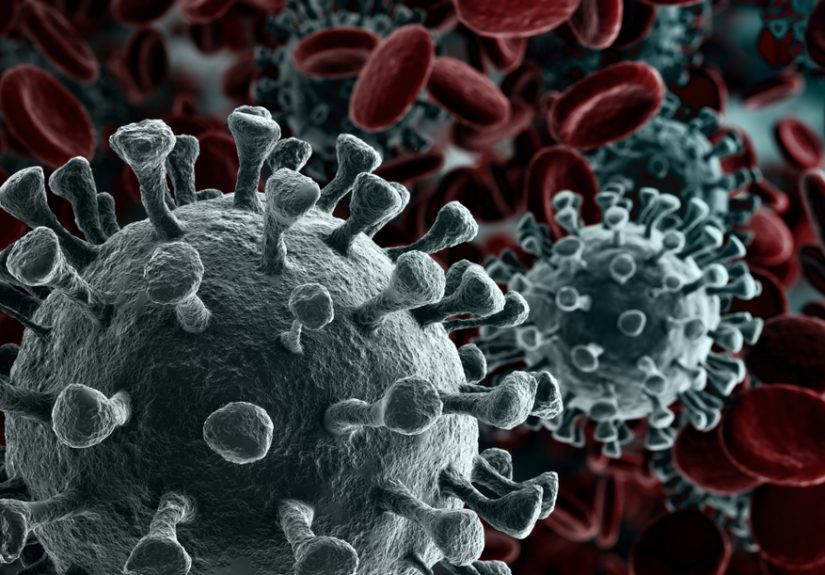
“SARS coronavirus” is often used loosely online, but scientists and public health agencies are usually more specific.
You’ll see several related terms that sound similar but matter a lot:
- SARS-CoV: the virus behind the 2002–2003 SARS outbreak.
- SARS-CoV-2: the virus that causes COVID-19.
-
SARS-related coronaviruses (SARSr-CoVs): a broader family of virusesmany found in batsthat are
genetically related to SARS-CoV and sometimes have features that could support spillover. -
MERS-CoV (a “merbecovirus”): a different branch of coronaviruses known for causing severe disease
in humans, with most transmission linked to camel-to-human exposure.
Why does this terminology matter? Because “SARS-like” can mean anything from “shares an evolutionary cousin” to
“could plausibly infect humans under certain circumstances.” Those are very different levels of concern.
What “highly fatal” means in the real world (and why it’s complicated)
When people hear “highly fatal,” they picture a single, fixed number. But real-world fatality isn’t a label a virus
wears on a name tagit depends on context.
Historical reality check: SARS vs. MERS
The original SARS outbreak (SARS-CoV) caused thousands of illnesses worldwide and was seriousits overall case fatality
rate was roughly around 10% based on global totals often cited by public health authorities.
MERS has been deadlier among recognized cases (often cited at about 35%), but it has not shown the same sustained,
efficient human-to-human spread as pandemic influenza or early COVID-19 did.
Fatality can shift with age, healthcare access, and detection
A virus can look “more lethal” if mild cases are missed (which shrinks the denominator), or “less lethal” when
detection improves and treatment protocols get better. A scary number from a limited setting doesn’t automatically
translate to the general population.
Bottom line: when you see “highly fatal,” your next question should be: highly fatal in whathumans, mice, cells, or headlines?
The headline trap: when “100% fatal” is real… but also not what you think
One major source of “highly fatal SARS coronavirus” chatter comes from studies that use specially engineered animals
especially humanized or transgenic mice.
What are humanized mice?
In coronavirus research, scientists may use mice engineered to express a human receptor (often the human ACE2 receptor)
so a virus can enter cells in a way that resembles human infection. This is useful for studying disease mechanisms and
testing countermeasuresbut it’s not a miniature human in a tiny lab coat.
A real example: a pangolin-related coronavirus and misread takeaways
In early 2024, online claims spread that scientists had “created” a “mutant COVID” virus with a “100% kill rate.”
In reality, widely shared summaries and headlines were criticized by fact-checkers for overstating what the work meant
for humans. The study involved a coronavirus associated with pangolins (not a descendant of SARS-CoV-2), tested in a
very specific mouse model. Researchers and independent experts emphasized that results in engineered mice do not prove
the same outcome would occur in humans.
The lesson isn’t “ignore lab studies.” It’s “don’t confuse a specialized model with a prediction of human destiny.”
Lab studies are early warning systems and hypothesis generatorsnot crystal balls.
So what’s the “potential discovery” people are worried about lately?
Separate from the mouse-study misinformation cycle, there has been legitimate scientific reporting about newly
described animal coronaviruses with features that deserve attention.
Case study: HKU5-CoV-2an animal coronavirus that can use a familiar doorway
In 2025, researchers reported a bat coronavirus called HKU5-CoV-2 that can use the human
ACE2 receptor in laboratory settings. That’s noteworthy because ACE2 is the same receptor SARS-CoV-2
uses to enter human cells. Reports about this research emphasized important qualifiers:
the virus infected certain human cells and tissue models in the lab, but it did not enter human cells
as readily as SARS-CoV-2, and there was no evidence of it spreading in humans.
In other words: scientifically interesting, worth monitoring, but not an automatic “new SARS apocalypse unlocked.”
Why receptor usage is only one piece of the puzzle
Being able to enter cells is like having the right key shape. It helps, but it doesn’t guarantee the car starts, the
engine runs, and the vehicle can drive from one person to another through real-world biology and behavior.
To become a human outbreak threat, a virus generally needs to clear multiple hurdles:
- Efficient replication in human tissues (not just entry)
- Transmission that works outside the lab (airway dynamics, viral shedding, stability)
- Immune evasion sufficient to spread in real populations
- Opportunity: frequent contact between infected animals (or intermediates) and humans
How scientists assess spillover risk without panic-selling the internet
A careful risk assessment is usually a layered approachnot a single “danger score.”
Here are the common steps researchers and public health experts look at.
1) Genomic clues and family trees
Sequencing helps identify whether a virus belongs to a group known to have jumped into humans before (for example,
SARS-related coronaviruses in certain bat species). It also helps spot recombinationwhen viruses swap genetic material,
sometimes creating new combinations of traits.
2) Cell-entry and receptor binding studies
Studies may test whether viral proteins can bind to human receptors like ACE2. This is useful, but it’s still an early
stage signalcloser to “possible” than “probable.”
3) Lab models: cells, organoids, and animals
Human airway or gut “organoid” models can hint at tissue tropism. Animal studies can reveal potential severity, but
different species (and engineered models) can exaggerate or mute effects compared to humans.
4) Real-world surveillance and serology
The most meaningful evidence of spillover risk is often found outside the lab:
monitoring wildlife, people with frequent wildlife exposure, and unexplained clusters of severe respiratory illness.
Surveillance also highlights gapssome regions and species are sampled far less than others, which can leave blind spots.
Why “deadly SARS virus discovered” stories keep going viral (pun intended)
The internet is a machine that rewards certainty, and biology is a discipline that produces nuance. That’s a mismatch
made in algorithm heaven.
Hazard vs. risk: the missing distinction
A virus can be a hazard (capable of harm under certain conditions) without being a near-term
risk (likely to cause harm in real life soon). Headlines often skip that distinction because “it’s a
hazard” doesn’t spike adrenaline like “it could kill us all.”
Preprints are usefuland easy to misunderstand
Preprints let scientists share data quickly, which is valuable during outbreaks. But preprints can be incomplete,
lack peer review, and be misread by people (and sometimes outlets) looking for a simple takeaway. “Early data” can
become “final verdict” in the time it takes to refresh your feed.
Markets and memory
After COVID-19, public attention is primed. Even measured scientific updates can trigger strong reactionsbecause the
last time the world heard “novel coronavirus,” it didn’t end with a soothing cup of tea and a normal Tuesday.
What would actually signal a serious, immediate human threat?
If you want a practical filter for future headlines, look for evidence that moves beyond lab plausibility.
Signals that raise concern include:
- Confirmed human infections linked to the new virus (not just antibodies with unclear meaning)
- Clusters of cases suggesting human-to-human transmission
- Severe disease patterns that repeat across unrelated people and settings
- Rapid geographic spread unexplained by travel alone
- Clear signs of adaptation to human airways and efficient transmission
Without these, “potential” usually stays in the category of vigilance, not emergency.
So… should you worry about a “highly fatal SARS coronavirus” right now?
Based on publicly reported evidence, there is no confirmed new “highly fatal SARS coronavirus” spreading in humans.
What we do have is a steady drumbeat of scientific discovery:
animal coronaviruses are being detected, sequenced, and tested for traits that could matter if spillover ever occurs.
That’s exactly what surveillance is supposed to dospot possibilities early, before they become crises.
The healthier posture is alert, not alarmed:
support monitoring, fund preparedness, and demand responsible communication that doesn’t turn every lab finding into a
movie trailer.
How to stay informed without becoming a full-time doomscroll intern
Use a three-question checklist
- Where was the virus found? (bats, pangolins, people?)
- What evidence exists beyond the lab? (human cases? clusters?)
- Who is summarizing it? (public health agencies and experienced science reporters vs. “trust me bro”)
Follow sources that correct themselves
Science evolves. Trust outlets and institutions that update stories, clarify uncertainties, and don’t treat fear as a
business model.
Experiences related to the topic: what it feels like when “highly fatal SARS virus” hits your feed
Even when the risk is low, the experience of encountering these headlines can be intensebecause many people
now carry a kind of “pandemic muscle memory.” The body remembers what the calendar did in 2020, and it doesn’t wait
politely for peer review.
The everyday-reader experience is usually the fastest: you see the headline, your brain fills in the
worst-case scenario, and suddenly you’re mentally reorganizing your pantry like it’s a competitive sport. People often
describe a jolt of déjà vulike the world briefly tilts back toward masks, cancellations, and uncertaintybefore you’ve
even clicked the article. The emotional whiplash is real: one minute you’re checking the weather, the next you’re
wondering whether “ACE2 receptor” is something you need to block with a strong cup of coffee (sadly, it is not).
The healthcare and public-health experience tends to be slower and more procedural. Clinicians and
communicators often start by asking boringbut essentialquestions: Is this in humans? Is there sustained transmission?
What’s the denominator? Where is the data posted? That’s not because they’re ignoring danger; it’s because they’ve
learned that premature certainty causes its own harm. In practice, a lot of their work becomes translation: turning a
technical finding (“binds ACE2 in vitro”) into a human message (“interesting, but not evidence of an outbreak”).
The challenge is that calm explanations don’t always travel as fast as alarming summaries.
The researcher experience can be oddly bittersweet. On one hand, discovering a new virus lineageor a
new property like receptor usageis scientifically significant and can guide preparedness. On the other hand, many
scientists describe frustration when careful, qualified language gets flattened into “new killer virus discovered.”
Lab scientists know that models are imperfect by design: you simplify reality to learn something specific. But when a
simplified model result escapes into the public arena without context, it can create needless fear, conspiracy theories,
and even harassment directed at researchers. That social fallout is not a side note; it’s part of the modern landscape
of outbreak science.
The community experience often shows up in small behaviors: friends texting “is this real?”, parents
scanning school emails, coworkers joking nervously about “round two,” and people quietly recalculating their tolerance
for crowded indoor spaces. Even if the headline is overblown, it can still prompt helpful reflectionlike updating
vaccinations, thinking about ventilation, or realizing how much misinformation spreads during uncertainty.
The healthiest outcome isn’t panic or dismissal; it’s a better collective habit of asking, “What’s the evidence, and
what’s the context?”
If there’s one experience many people share now, it’s this: we don’t want to be caught off guard again, but we also
don’t want to live inside a permanent emergency. The middle pathstaying informed, demanding accuracy, and supporting
preparednessisn’t as dramatic as a headline. It’s also the path that actually works.