Table of Contents >> Show >> Hide
- Why the Dutch Version Feels Different
- What Makes a Tiny Garden Cabin Work
- Design Details That Fit the Dutch Mood
- Comfort Matters More Than Cute
- How the Cabin Connects to the Garden
- Specific Inspirations Behind the Idea
- Who This Kind of Cabin Is Perfect For
- Experience: Spending Time in a Tiny Garden Cabin in the Netherlands
- Final Thoughts
There is something almost unfairly charming about the idea of a tiny garden cabin in the Netherlands. Maybe it is the way Dutch landscapes make even modest spaces feel poetic. Maybe it is the cultural talent for making compact living look intentional instead of cramped. Or maybe it is because a cabin tucked behind hedges, near a canal, beneath moody skies and a very opinionated cloud, sounds like the sort of place where stress politely removes its shoes at the door.
Whatever the reason, the tiny garden cabin has become more than a cute fantasy. It represents a smart, stylish answer to modern life: less clutter, more calm, a smaller footprint, and a deeper connection to the outdoors. In the Netherlands, where space is precious and design is rarely accidental, these cabins often blend practical planning with quiet beauty. They are part retreat, part workspace, part guest room, part secret hideout for anyone who has ever wanted to drink coffee while pretending they are the main character in a very tasteful European film.
This is also why the topic resonates far beyond Dutch borders. A tiny garden cabin in the Netherlands offers lessons in efficient design, natural light, built-in storage, weather-aware construction, and indoor-outdoor flow. It shows how a small footprint can still feel expansive when every choice has a purpose. The result is not just a tiny structure. It is a way of living with a little more intention and a lot less junk mail energy.
Why the Dutch Version Feels Different
Tiny cabins exist everywhere, but the Dutch approach has a special rhythm. In many Dutch residential settings, outdoor space is treated as an extension of the home rather than an afterthought. Gardens are not just decorative leftovers. They are living rooms without roofs, green buffers between public and private life, and places where architecture is meant to sit lightly instead of showing off.
That is why a garden cabin in the Netherlands often feels so well-balanced. It may be small, but it rarely feels random. The structure is usually carefully placed for views, sunlight, privacy, and circulation. A path matters. A window matters. The relationship between the cabin and the surrounding planting matters. Even the exterior color matters, because in a compact structure, every detail speaks louder.
Dutch design also tends to avoid unnecessary drama. You are more likely to see clean lines, natural wood, dark cladding, pale interiors, large panes of glass, and storage that disappears into the architecture. Instead of stuffing a tiny space with “cozy” objects until it starts to resemble a decorative panic attack, the best cabins create warmth through texture, light, and proportion.
What Makes a Tiny Garden Cabin Work
1. Natural light does most of the heavy lifting
In a tiny cabin, square footage is limited, so light has to act like extra real estate. Oversized windows, glass doors, clerestory openings, and carefully placed glazing can make a compact interior feel dramatically larger. This is especially important in the Netherlands, where gray skies are common and daylight becomes an architectural asset rather than a nice bonus.
Large windows do more than brighten the room. They visually connect the cabin to the garden, which tricks the eye in the best possible way. Suddenly the interior does not end at the wall. It flows into grasses, gravel paths, flower beds, and whatever charmingly crooked little tree lives just outside. In other words, the garden becomes part of the floor plan without demanding a permit.
2. Built-ins save the day
A tiny cabin without built-in storage is just a polite way of saying you plan to trip over your belongings. Smart Dutch-inspired cabins make use of benches with hidden storage, integrated shelving, wall niches, window seats, fold-down tables, and compact millwork that keeps necessities close without making the room feel crowded.
The beauty of built-ins is not only function. They also create visual calm. When furniture is integrated instead of scattered, the room feels less fragmented. That matters in a small retreat where too many loose pieces can make the whole place feel like a clearance sale with a roof.
3. The layout must do at least two jobs at once
Multifunctionality is the golden rule. A tiny garden cabin might serve as a reading retreat by day, a guest room at night, and a work studio whenever deadlines start breathing down your neck. The best layouts embrace this reality. A bench becomes a bed. A table becomes a desk and dining surface. A wall of storage becomes the visual backbone of the entire room.
Rather than fighting the limits of size, great design uses those limits to force better decisions. Every square foot earns its keep. That is not restrictive. It is liberating, because it eliminates the weird habit humans have of filling empty space with things they forgot they bought.
Design Details That Fit the Dutch Mood
Dark exteriors, bright interiors
One striking look often associated with modern Dutch cabins is the contrast between a moody exterior and a soft, light-filled interior. Dark timber cladding or stained wood helps the cabin recede into the garden and gives it a sculptural quality. Then, once inside, pale wood, white walls, warm neutrals, and natural textiles prevent the space from feeling heavy.
That contrast is effective because it creates a sense of surprise. From the outside, the cabin can look modest and quiet. Inside, it opens up into an airy retreat. It is the architectural equivalent of meeting someone reserved at first, only to discover they are delightful once you get past the weather small talk.
Simple materials with texture
A tiny cabin does not need expensive finishes to feel elevated. It needs honest materials used well. Wood slats, limewash, linen curtains, brushed metal fixtures, compact tile, wool throws, and matte surfaces can add depth without visual chaos. Texture becomes especially important when the palette is restrained. If the room is mostly neutral, then grain, weave, and shadow need to create the richness.
Windows framed like artwork
In a garden cabin, the view is part of the decor. That is why window placement matters as much as furniture placement. A window above a desk frames greenery while you work. A low horizontal window near a bed brings in soft morning light. A glass door aligned with a path creates a sense of ceremony every time you enter. In a small cabin, windows are not just holes in the wall. They are editing tools for the landscape.
Comfort Matters More Than Cute
Many people fall in love with the look of tiny cabins and forget the less glamorous truth: if the building is cold, damp, stuffy, or poorly insulated, the romance fades faster than a candle in a draft. A tiny garden cabin in the Netherlands has to respect climate. Rain happens. Moisture happens. Seasonal temperature swings happen. The structure needs to be more than photogenic.
Insulation and air sealing
Even a small retreat benefits from proper insulation in the walls, roof, and floor. Good air sealing reduces drafts and makes the cabin usable through more of the year. Because the building is compact, the quality of the envelope becomes even more noticeable. A tiny space heats up quickly, but it also loses comfort quickly if the shell is sloppy.
Ventilation and condensation control
Cabins with generous glazing need to think about moisture. Fresh air, operable windows, and sensible ventilation are essential. No one dreams of a serene Dutch cabin only to discover the windows are constantly fogged and the interior smells faintly of damp socks and bad decisions. Comfortable cabins balance tight construction with controlled airflow.
Window performance
Because windows do so much visual work in small spaces, they also need to perform well. Good glazing can improve comfort, reduce condensation risk, and make the cabin feel more stable across seasons. This matters in the Netherlands, where the weather can shift quickly and a garden retreat needs to feel inviting whether the day brings pale sunshine or sideways rain.
How the Cabin Connects to the Garden
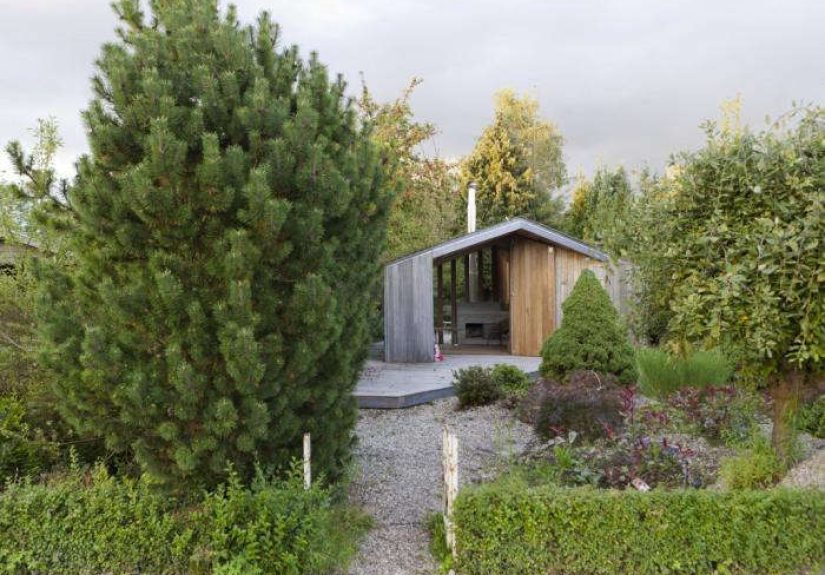
A tiny garden cabin is not successful just because the interior looks good. It succeeds when the garden and structure feel like one composition. That may mean a gravel path leading to the door, a small deck for morning coffee, native planting that softens the edges, or a bench positioned to catch evening light.
In Dutch-inspired garden design, there is often a strong sense of editing. Planting can be lush, but the layout usually feels intentional. That helps a small cabin breathe. Tall grasses, clipped hedges, climbing plants, and layered perennials can make the structure feel settled into its environment instead of dropped there like a last-minute apology gift.
Outdoor lighting also matters. Warm, subtle fixtures can turn the cabin into a lantern after dark. When interior light spills outward through glass, the garden becomes atmospheric and the cabin feels larger than its footprint. That visual glow is part of the magic. Tiny buildings often win not by being bigger, but by being more memorable.
Specific Inspirations Behind the Idea
Real-world examples help explain why this design language is so appealing. Some Dutch and Netherlands-based tiny retreat projects highlighted by design publications feature dark exterior cladding with airy interiors, movable layers that open the structure to nature, or compact forms placed carefully within landscapes. Others show how modern prefab cabins can sit next to older homes without competing with them. The common thread is restraint paired with ingenuity.
One project may emphasize sliding shells and transformable openness. Another may lean into lakeside calm with minimal interiors and carefully framed views. Yet another may use a tiny prefab footprint as a backyard workspace or garden retreat. Together, these examples reveal a consistent lesson: the best tiny cabins are not simply smaller houses. They are tailored experiences.
That is what makes a tiny garden cabin in the Netherlands so interesting from a lifestyle and design perspective. It is not about shrinking life. It is about distilling it.
Who This Kind of Cabin Is Perfect For
This sort of space works beautifully for writers, remote workers, gardeners, artists, weekend hosts, and anyone craving a little separation without a dramatic relocation. It also suits people who want a retreat close to home but distinct from daily routines. Walking twenty steps through a garden can feel surprisingly therapeutic when those twenty steps lead to a dedicated room with quiet, order, and a view of swaying green things.
It is also ideal for those drawn to slower travel and compact living. A tiny cabin encourages simpler habits. You bring fewer things. You notice the weather more. You pay attention to where the light lands. You sit down more deliberately. You stop acting like every moment needs a screen, a snack, and three unrelated browser tabs open at once.
Experience: Spending Time in a Tiny Garden Cabin in the Netherlands
Imagine arriving in the late afternoon after a bike ride through a quiet Dutch neighborhood or the softer edges of the countryside. The path to the cabin is narrow, lined with herbs, climbing roses, or ornamental grasses that lean lazily into the breeze. The building itself is modest, almost shy, with dark timber on the outside and a simple door that does not need to shout for attention. You step inside, and the mood changes instantly.
The first thing you notice is the light. Even on a cloudy day, the cabin feels bright because the windows capture the garden like framed paintings. The second thing you notice is the silence. Not total silence, of course. There is the soft tap of branches, the muffled sound of bikes in the distance, a bird conducting urgent business, and maybe a light drizzle doing what drizzle does best: making everything feel cinematic.
The room smells faintly of wood, tea, and fresh air. A bench runs beneath one window, piled with cushions that somehow look effortless even though you know that in your own house they would slide to the floor in six minutes. There is a compact table by the glass, just large enough for a laptop, a book, and a mug of coffee. Shelves hold only what is necessary: a lamp, a few ceramics, a folded blanket, maybe one stubbornly elegant plant. No clutter. No mystery drawer full of expired batteries and cables from extinct devices.
Morning in the cabin would be the real selling point. You wake to diffuse daylight rather than a harsh blast of sun, and the garden looks silver-green outside the glass. The whole cabin feels like it is breathing with the weather. You open the door, and cool air slips in. Maybe you make coffee in a tiny kitchenette or carry in pastries from a nearby bakery, because the Dutch do many things well and casual everyday charm is definitely one of them. Breakfast tastes better in a small, beautiful space. That is science-adjacent, and I will not be taking questions.
During the day, the cabin shifts roles easily. It can be a studio, a reading room, a nap headquarters, or a refuge from a busy family house. Rain makes the experience even better. A storm outside turns the interior into a cocoon. The sound on the roof becomes part soundtrack, part permission slip to do absolutely nothing productive for an hour. You read. You write. You stare out the window like a thoughtful European in an art film. It is deeply restorative.
By evening, with warm lamps on and the garden dimming into silhouettes, the cabin becomes magical in the smallest possible way. It does not need grand gestures. Its luxury is intimacy: a well-made chair, a soft throw, a view of wet leaves, a compact room where everything is exactly where it should be. The cabin is tiny, but the feeling is expansive. You leave with the strange realization that you needed less space than you thought, and more peace than you admitted.
Final Thoughts
A tiny garden cabin in the Netherlands captures the best parts of compact living: efficiency, beauty, calm, and a meaningful connection to the outdoors. It proves that a small structure can feel luxurious without being flashy, practical without being boring, and cozy without turning into a cluttered cautionary tale.
The real appeal is not just architectural. It is emotional. This kind of cabin offers a slower rhythm, a sharper focus, and a reminder that comfort often comes from thoughtful design rather than excess. When light is handled well, storage is built in, materials are honest, and the garden is treated like part of the room, even a very small cabin can feel wonderfully complete.
In a world that constantly tries to convince us that bigger is better, the tiny Dutch garden cabin offers a gentler argument: maybe better is just better.