Table of Contents >> Show >> Hide
- What Actually Happened on the Flight
- Why the Word “Entitled” Took Off
- The Airline’s Defense, in Plain English
- Why the Family and Advocates Pushed Back
- What Science Says About Peanut Risk on Planes
- Why Airline Allergy Policies Feel So Inconsistent
- The Bigger Lesson: Safety and Empathy Should Not Be Fighting
- Related Experiences That Show Why This Topic Keeps Exploding Online
- Final Thoughts
- SEO Tags
Air travel is already a strange little social experiment. We sit elbow-to-elbow with strangers, negotiate armrests like diplomats, and pretend the pretzel bag is a proper meal. Add a life-threatening food allergy to that equation, and suddenly a routine flight can turn into a high-stakes standoff between medical caution, airline policy, and public opinion.
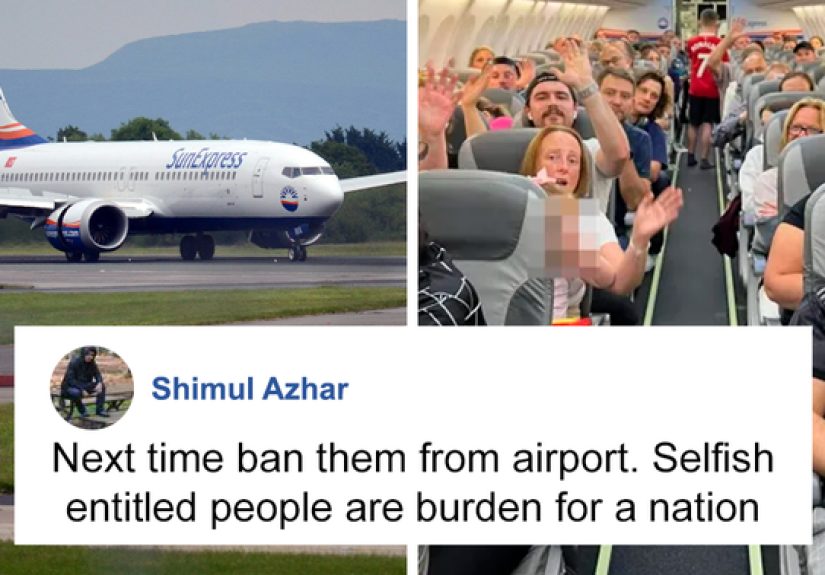
That is exactly why the uproar over British weather presenter Georgie Palmer and her family exploded far beyond one delayed holiday. Palmer said her family was removed from a SunExpress flight after she asked fellow passengers not to eat peanuts because of her daughter’s severe allergy. The airline defended its decision, saying it could not guarantee an allergen-free cabin and that the family’s handling of the situation crossed a line. Online, the story became a lightning rod. Some saw a mother trying to protect her child. Others saw a passenger making a request the airline was never obligated to honor. And somewhere between those two camps is the truth: flying with allergies is complicated, emotional, and wildly inconsistent from one airline to the next.
What Actually Happened on the Flight
According to widely reported accounts, Palmer, her husband, and their two daughters were traveling from London Gatwick to Dalaman, Turkey, when the conflict began. Palmer’s daughter has a severe peanut allergy, and the family wanted the crew to make an announcement asking passengers not to eat peanuts during the flight.
When that request was declined, Palmer said she spoke to nearby passengers directly. In her version of events, the response from other travelers was supportive and calm. She described the request passing politely through the cabin, row by row, with fellow passengers showing empathy rather than annoyance. Then came the hard turn. Palmer said the pilot reacted angrily and the family was ordered off the plane. The result was not just public embarrassment, but an expensive rebooking and an entirely avoidable holiday headache.
SunExpress, however, told a different story. The airline said it does not make these kinds of announcements because it cannot promise an allergen-free environment on board. It also said passengers with medical requirements are expected to notify the carrier in advance and claimed that proper notice had not been given. Reports also noted the airline alleged Palmer’s husband behaved aggressively and tried to approach the cockpit, which the family denied. In other words, this was never just about peanuts. It was about procedure, authority, communication, and whether the family’s effort to protect a child was reasonable advocacy or disruptive conduct.
Why the Word “Entitled” Took Off
Let’s be honest: the internet loves a one-word verdict. “Entitled” is neat, punchy, and perfect for a headline. It is also often lazy. In this case, that label did not settle the debate so much as expose it. To one side, asking an entire plane full of passengers to change their behavior for one family sounded excessive. To the other, refusing a simple announcement for a child with a potentially deadly allergy sounded cold and absurd.
The problem is that both instincts come from real anxieties. Travelers without allergies may hear a request like this and think, “Why is this my problem?” Families managing severe allergies hear the same situation and think, “Why does everyone act like survival is a personality flaw?” That tension is the story.
Calling the request “entitled” also misses a practical detail: passengers with serious allergies are often told to advocate for themselves because airline policies vary so much. One carrier may allow pre-boarding, make a cabin announcement, or create a buffer around the passenger. Another may say, in essence, “Good luck, and please enjoy this mystery snack at 35,000 feet.” When systems are inconsistent, self-advocacy fills the gap. Sometimes gracefully. Sometimes awkwardly. Often publicly.
The Airline’s Defense, in Plain English
From an airline’s perspective, the defense is straightforward. Carriers generally do not want to promise something they cannot fully control. They cannot police every snack another passenger brings aboard. They cannot guarantee a cabin has zero allergen residue from prior flights. They cannot ensure that a verbal announcement will eliminate risk. And they are understandably wary of creating a false sense of safety.
That logic is not unique to SunExpress. In the United States, major airlines openly say they cannot guarantee peanut-free or allergen-free flights. American Airlines states that it cannot provide nut-free zones or stop serving certain foods just because one traveler requests it. Delta says it will try to make reasonable accommodations but still cannot promise an allergen-free cabin. Southwest no longer serves peanuts, but it still warns that some snacks may contain tree nuts and that passengers may bring nut products on board. United takes a more flexible approach in some situations, noting that crew may ask nearby passengers not to eat certain foods if a severe allergy is reported.
So the airline’s broader point is not bizarre. It is actually pretty standard. The issue is that “we cannot guarantee an allergen-free environment” may be true, but it can also sound maddeningly insufficient to a parent who is not asking for perfection, only cooperation.
Why the Family and Advocates Pushed Back
The family’s frustration also makes sense. Severe food allergies are not mere preferences, and they are certainly not lifestyle branding. For people at risk of anaphylaxis, travel involves layers of planning most passengers never think about. You do not just show up with a carry-on and a neck pillow. You bring medication, backup medication, wipes, safe food, emergency instructions, and a small mountain of anxiety.
Advocates argue that when airlines refuse even modest accommodations, they effectively shift the burden entirely onto the allergic passenger. That burden is not small. It means the family must monitor food around them, clean surfaces, assess crew cooperation, watch seatmates, and hope no one opens the wrong snack at the wrong moment. To them, an announcement is not a dramatic demand. It is a low-cost preventive measure and a signal that the airline takes the risk seriously.
Critics of the SunExpress response also say the optics were terrible. Removing a family with children over an allergy-related dispute can make an airline look less like a safety-conscious operator and more like a customer-service cautionary tale in wings. Even if the airline believed protocol was not followed, the public often judges outcomes emotionally before it judges policy language. And in this case, the image of a mother and kids being deplaned over peanuts was always going to land badly.
What Science Says About Peanut Risk on Planes
This is where the discussion gets more nuanced than social media usually allows. Allergy specialists and public health guidance generally suggest that accidental ingestion and contaminated surfaces are bigger concerns than peanut vapors drifting through the cabin like tiny villains in coach. In simple terms, the biggest risk is usually what gets touched or eaten, not a rogue molecule floating through row 18.
That matters because it changes what actually helps. Pre-boarding to wipe tray tables, armrests, belts, and screens can be more useful than assuming a single announcement will create a safe bubble. Bringing your own food is safer than trusting airline meals. Carrying epinephrine in your carry-on is essential. Informing the airline early improves the odds of useful accommodations. Public health and allergy organizations consistently recommend those steps because they are practical, repeatable, and less dependent on the mood of the cabin crew that day.
Still, science does not erase lived reality. A family dealing with a severe allergy is not irrational for wanting the people nearby to avoid the trigger altogether. Even if the main threat is residue rather than airborne spread, fewer peanuts in the immediate environment is hardly a silly idea. The real problem is that the most scientifically grounded solution and the most emotionally reassuring solution are not always the same thing.
Why Airline Allergy Policies Feel So Inconsistent
If you are confused by airline allergy rules, congratulations, you are paying attention. There is no universal standard that makes every airline respond the same way. Policies differ across carriers, routes, crews, and countries. Some airlines invite passengers to flag allergies in advance. Some focus on pre-boarding and seat cleaning. Some will make announcements. Some will not. Some will avoid serving peanuts, while others simply point out that fellow passengers are free to bring whatever snacks they like.
That inconsistency is one reason these disputes keep happening. A family may have a smooth experience on one airline and assume the next carrier will handle things similarly. Then they discover the allergy equivalent of a software update nobody asked for: different rules, different tone, different level of help.
In the U.S., the Air Carrier Access Act can protect passengers with disabilities, and food allergies may qualify in some situations. But protection under the law does not magically create a uniform peanut policy across the industry. It mostly means airlines cannot simply dismiss the passenger’s needs out of hand. The details still matter. Notice requirements matter. Crew discretion matters. The wording of the airline’s own policy matters. And as Palmer’s story shows, the moment those details collide in real time at the gate or on the plane, policy language can suddenly feel very personal.
The Bigger Lesson: Safety and Empathy Should Not Be Fighting
The most frustrating part of stories like this is that they get framed as a choice between common sense and compassion, when good travel policy should include both. Airlines are right not to guarantee something they cannot fully control. Families are right to want a child’s medical risk taken seriously. Neither side should have to behave like the other is speaking an alien language.
A better system would make expectations clear before boarding ever begins. Travelers should know exactly what accommodations are possible, how far in advance to request them, what the airline will and will not announce, whether pre-boarding is available, and what emergency support exists onboard. That kind of transparency would prevent a lot of last-minute conflict and spare everyone from turning a medical issue into a cabin showdown.
Because once you are already seated, bags stowed, seat belt fastened, and snack politics underway, the odds of a graceful solution drop fast. Airplanes are not known for their spaciousness, patience, or subtlety. They are basically aluminum tubes where stress travels faster than the beverage cart.
Related Experiences That Show Why This Topic Keeps Exploding Online
One reason Palmer’s story struck such a nerve is that it feels familiar to a lot of travelers with allergies. In the past two years, several high-profile reports have shown the same pattern repeating itself: a passenger asks for help, the request becomes public, and the internet responds like it has been personally attacked by an EpiPen.
Some travelers have gone viral simply for asking a flight attendant to make a nut-allergy announcement. Instead of universal understanding, they received a flood of comments accusing them of overreacting, being dramatic, or expecting the whole world to revolve around them. That reaction says a lot about how food allergies are still misunderstood. People tend to support medical accommodations in theory, right up until the moment the accommodation mildly inconveniences their snack schedule.
Other accounts have been even more serious. Families have described being denied what they believed were reasonable requests, from pre-boarding and cleaning extra carefully to asking nearby passengers not to eat certain foods. Some travelers reported changing flights after feeling unsupported. Others described in-flight reactions that turned an ordinary trip into a medical emergency. The common thread is not simply that allergies are dangerous. It is that the emotional labor of managing them in public falls heavily on the person already at risk.
There is also the quieter experience that never becomes a headline. It is the parent scanning labels under bad airport lighting. It is the passenger wiping down a tray table like they are prepping for surgery with a travel-size packet of disinfectant. It is the awkward conversation with a stranger in the next seat that begins with, “I’m so sorry to ask, but…” It is the mental math of where the medication is, how long until landing, whether the crew understands, and whether speaking up will make things safer or just make things tense.
And yet many fellow passengers are kinder than the comment section would have you believe. When people understand that a request is tied to a real risk, not a preference, they often cooperate. They put away the peanut bar, swap snacks with their kids, or simply say, “No problem.” Those moments rarely trend, but they matter. They show that most travelers are not cruel; they are just uninformed until the issue is placed right in front of them.
That is why this debate refuses to disappear. It sits at the intersection of medicine, manners, consumer rights, and public patience. It raises uncomfortable questions: How much should a group adapt for one person’s health? How much responsibility belongs to the airline? How much should allergic travelers be expected to plan around a system that remains inconsistent? There are no perfect answers, but there is one obvious takeaway. Mocking people for trying to avoid anaphylaxis is not a serious policy position. It is just cruelty wearing the cheap sunglasses of common sense.
Palmer’s case became famous because she is recognizable. But the underlying experience is ordinary for many families. That is the real reason the story traveled so far. Beneath the celebrity angle was a situation thousands of travelers could imagine all too clearly: trying to keep a child safe in a crowded cabin while hoping compassion shows up before turbulence does.
Final Thoughts
The SunExpress dispute was not just a messy travel story with a famous face attached. It was a snapshot of a bigger problem in modern air travel. Airlines want flexibility and legal caution. Families with allergies want predictability and safety. Passengers want the flight to leave on time and preferably without becoming part of a moral referendum on peanuts.
In that sense, nobody really wins when situations like this escalate. The airline takes a reputational hit. The family endures stress, cost, and embarrassment. The internet picks a villain. And the larger issue of how to build smarter, more humane allergy policies remains unresolved.
The simplest lesson may also be the best one: severe allergies deserve respect, and clear airline policies deserve urgency. When those two things line up, flights get a lot safer and a lot less theatrical. Until then, expect more stories like this one to keep taking off.