Table of Contents >> Show >> Hide
- The Artist Behind the Mashups
- Why These Disney-Celebrity Edits Work So Well
- The Specific Images That Sell the Illusion
- Disney and Celebrities Have Been Mingling for Years
- Why the Internet Loves Fantasy That Pretends to Be Real
- Where the Joke Becomes Art
- Extended Experience: What It Feels Like to See, Share, and Live With These Mashups
- Conclusion
Some internet posts are mildly amusing. Some are cute for twelve seconds and then disappear into the scrolling void forever. And then there are the rare gems that make you stop, squint, laugh, and think, “Wait… why does this actually make perfect sense?” That is exactly the effect of the wildly entertaining Disney-celebrity mashups created by artist Andhika Muksin, whose edits place beloved animated characters into glamorous celebrity photos with such strange confidence that your brain just goes along with it.
One second you are looking at a familiar celebrity shot. The next, a Disney princess has slipped into the frame like she booked the event herself, arrived early, and already knows where the photographers are standing. It sounds ridiculous on paper. In execution, it looks weirdly natural. That is the secret sauce. These edits are funny, but they are also smart. They work because they tap into nostalgia, fashion, celebrity culture, visual storytelling, and the very old human habit of turning famous people into fairy tale figures.
The result is more than a viral joke. It is a surprisingly sharp piece of pop-culture art. Muksin’s images do not just insert Disney characters into famous photos for a cheap laugh. They reveal how close modern celebrity culture already is to fantasy storytelling. The gowns are bigger, the entrances are grander, the villains are better dressed, and everyone seems one dramatic breeze away from a musical number. Put differently: Disney characters fit into celebrity photos so well because celebrity photos were halfway to Disney already.
The Artist Behind the Mashups
Andhika Muksin became widely known online for digitally inserting Disney characters into celebrity shots, paparazzi scenes, and film stills. His work has been described as playful, trippy, and oddly convincing, and that last word matters most. Plenty of people can make a mashup. Far fewer can make one that lands with the confidence of an inside joke everyone somehow understands at once.
Muksin’s appeal comes from the fact that he is not treating Disney characters like museum pieces. He is not placing them on a velvet pedestal and asking us to admire them from a respectful distance. He is letting them be messy, stylish, overexposed, dramatic, and hilariously modern. In his hands, princesses go to music festivals, villains seem ready for front-row fashion week, and cartoon royalty behaves like tabloid royalty. That shift is what gives the work its spark.
There is also something personal in the concept. Muksin has described his collages as a way of keeping the characters he loved as a child alive in a more grown-up visual world. That idea explains why the images do not feel cold or merely technical. They feel affectionate. Even when they are absurd, they are made with the kind of pop-culture memory that only comes from someone who genuinely understands the source material.
Why These Disney-Celebrity Edits Work So Well
Disney characters are already built like icons
Disney characters are not random drawings. They are highly refined visual symbols. Ariel is instantly recognizable by silhouette alone. Belle carries a specific elegance. Aurora radiates composed glamour. Maleficent could walk into any room and somehow make the lighting more dramatic. These characters were designed to be legible in an instant, which makes them perfect for visual remixing.
That kind of iconic design behaves almost like fashion branding. You do not need a paragraph of explanation when you see Cinderella. You get the story immediately. Celebrity photography works the same way. A red carpet image, paparazzi shot, or editorial portrait often tells a whole mini-narrative in one frame: power, romance, scandal, reinvention, triumph, mystery. Disney characters already come with that same narrative weight, so when they enter a celebrity image, they do not feel like strangers. They feel like they have been recast.
Celebrity culture is basically a modern fairy tale factory
This is the part nobody likes to say out loud, so let’s say it with love: celebrity culture is a fairy tale machine wearing expensive sunglasses. We follow stars through romances, public feuds, glow-ups, comebacks, betrayals, transformations, and highly photogenic suffering. The archetypes are all there. There are heroes, ingénues, comic side characters, stylish witches, charming rogues, fallen kings, and unexpected princesses who suddenly own the whole room.
That is why Muksin’s edits click so quickly. He is not forcing Disney into a totally alien setting. He is sliding Disney into a visual environment that already runs on fantasy logic. The celebrity world loves spectacle, and so does Disney. The celebrity world loves visual shorthand, and so does Disney. The celebrity world is obsessed with image, costume, and roleplay, and Disney practically invented the modern version of all three. Put them together and the fit is less shocking than inevitable.
Good compositing tricks the eye before the brain catches up
There is also the technical side. Adobe’s guidance on photo manipulation and composite photography emphasizes that believable edits depend on matching perspective, lighting, color, and shadows. In other words, the joke has to obey the laws of photography before it can break the laws of reality. If the light is wrong, the illusion dies. If the angle is off, the magic collapses like a dollar-store tiara.
Muksin’s strongest edits succeed because they respect those fundamentals. The characters are not just slapped onto a background like a sticker on a laptop. They are integrated into the image’s visual grammar. Once the eye accepts the light source and spatial relationships, the brain becomes oddly generous. Suddenly Belle really does look like she belongs at the Met Gala. Suddenly Ariel in a celebrity cuddle photo feels less like nonsense and more like a paparazzi leak from an alternate universe.
The Specific Images That Sell the Illusion
Some of Muksin’s best-known mashups are memorable because they understand both the Disney character and the celebrity-photo scenario. That is what lifts them above a gimmick.
Ariel hugging Kit Harington is funny on its face, but it also works because both figures carry intense romantic-drama energy. It is moody, attractive, and just theatrical enough to feel weirdly right. Belle appearing in a look modeled after Rihanna’s famous Met Gala gown feels similarly perfect because Belle has always had a fashion-world kind of elegance. She is bookish, yes, but she is also one gold gown away from dominating a couture staircase.
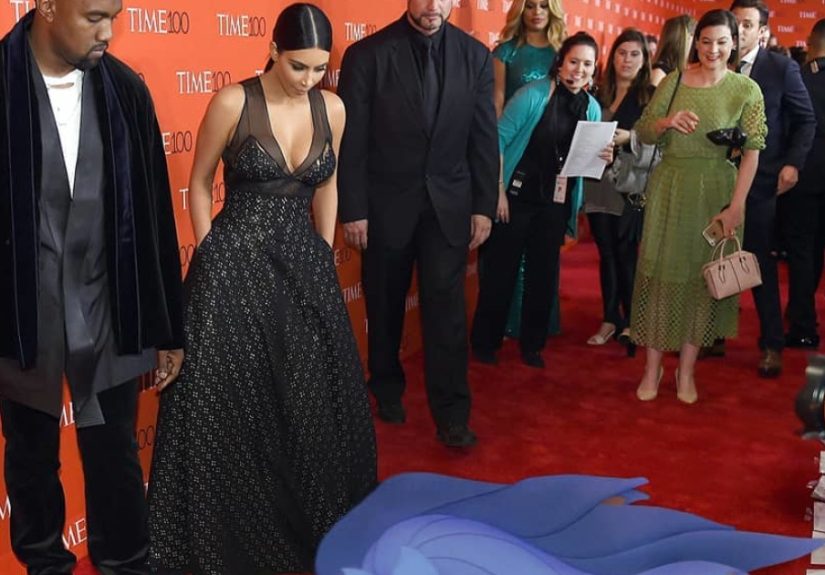
Pocahontas and Snow White at Coachella? Ridiculous. Also, absolutely believable in the language of festival photos, where everyone is styled like they wandered out of a costume department with better skin care. Cinderella ducking paparazzi feels right because the character already belongs to a story built around a public appearance, a disappearing act, and one very memorable fashion moment. Villains at fashion week make sense because, frankly, some Disney villains have always dressed like editors who could destroy your confidence with one raised eyebrow.
That is the genius. These edits are not random pairings. They are casting choices. Each image asks: if this Disney character were real, where would they naturally show up in modern image culture? Then it answers with far more accuracy than anyone expects.
Disney and Celebrities Have Been Mingling for Years
Part of why viewers instantly accept these mashups is that pop culture has been training us for this crossover for a long time. Disney has repeatedly put celebrities into fairy tale roles in official campaigns, especially through Annie Leibovitz’s famous Disney portrait series. Those images featured stars like Taylor Swift as Rapunzel, Jessica Biel as Pocahontas, Jennifer Lopez and Marc Anthony as Jasmine and Aladdin, Tina Fey as Tinker Bell, and more. Long before fan edits flooded social media, audiences were already being invited to see celebrities as fairy tale figures.
That history matters. Muksin’s work feels fresh, but it also taps into an existing visual tradition. Disney knows celebrities can carry fantasy narratives. Magazines know celebrity portraits benefit from a little mythmaking. Audiences know exactly how to decode the image. So when a fan artist pushes the concept one step further and places animated characters into celebrity photos, we are already prepared to believe it. The runway had been built years ago. He simply took off from it.
In that sense, these images feel unofficial but not unfamiliar. They are fan-made, yes, but they speak the same visual language as ad campaigns, editorial spreads, and entertainment photography. That familiarity is part of the joke, and part of the craft.
Why the Internet Loves Fantasy That Pretends to Be Real
There is a broader internet reason this kind of work takes off. Digitally manipulated images perform well online because they offer a double reward. First, they are instantly eye-catching. Second, they invite participation. The viewer does not just look; the viewer compares, recognizes, remembers, and mentally completes the gag. PetaPixel has noted how social media can reward more heavily manipulated, attention-grabbing imagery. That does not mean the work is fake in a cheap sense. It means it is optimized for a very real audience behavior: the love of the visual double take.
Muksin’s work thrives in that environment because it combines polish with play. It is not trying to pass as documentary truth, but it still borrows the visual authority of real photography. That tension is delicious. We know the image is fabricated, but the photograph’s natural credibility still does some psychological heavy lifting. For a split second, our eyes believe what our logic has not yet rejected. That tiny delay is where humor lives.
There is also nostalgia at work. Disney characters carry emotional memory. Celebrity photos carry cultural familiarity. Put those together and you get something like shared shorthand for an internet generation raised on both cartoons and red-carpet coverage. The mashups feel personal and public at the same time. They belong to everyone who grew up with Disney and later learned to decode the language of celebrity images.
Where the Joke Becomes Art
The easiest mistake is to dismiss these images as just internet fluff. They are fun, yes, but fun is not the opposite of art. In fact, some of the best contemporary digital work uses humor to talk about memory, image-making, and cultural desire. Photo composites can revise reality, rewrite context, and make viewers question why one version of a moment feels more emotionally “true” than another.
That is part of what gives Muksin’s Disney edits staying power. They are not simply asking, “Wouldn’t this be silly?” They are quietly asking, “Why are these worlds so compatible in the first place?” Once that question sinks in, the images become more interesting. They reveal that celebrity culture borrows heavily from fantasy, that childhood icons can be repackaged for adult visual culture, and that a good Photoshop composite can expose hidden similarities between totally different image systems.
In plain English: the joke is on us a little bit. These characters fit because our culture already treats glamour, fame, romance, and scandal like cartoon-ready material. The crown was always there. Somebody just swapped heads.
Extended Experience: What It Feels Like to See, Share, and Live With These Mashups
There is a specific emotional experience that comes with looking at Disney characters inside celebrity photos, and it is much richer than a quick laugh. First comes recognition. You know the celebrity pose, the paparazzi setting, the red carpet mood, or the famous fashion reference. Then comes the second hit: the Disney character. Your brain suddenly grabs two separate filing cabinets at once, and for a second they slide together so smoothly that it feels less like a collision and more like a reunion.
That experience is oddly satisfying because it makes childhood and adulthood sit at the same table. A lot of people grew up with Disney stories, then grew into a media culture full of celebrity images, fashion events, entertainment gossip, and internet humor. Muksin’s work compresses those life stages into one frame. It says, in effect, your childhood characters did not disappear; they just found better stylists and started attending public events. That is funny, but it is also comforting.
There is also the experience of the double take, which is half the fun. A good mashup does not announce itself too loudly. It lets your eye wander into the scene naturally. You notice the pose first, then the dress, then the expression, and only after that does the absurdity bloom. That delayed realization creates a tiny burst of delight. It is the same pleasure people get from a great visual punchline or a perfectly timed meme. You are not only looking at the image. You are discovering it in layers.
Sharing the images adds another layer of experience. These are the kinds of pictures people send to friends with messages like, “Why does this make so much sense?” or “Tell me this is not exactly her vibe.” The conversation is part of the artwork. One person sees fashion comedy. Another sees nostalgia. Another starts fantasy-casting live-action remakes in the group chat like it is now a civic duty. The image becomes social currency because it rewards recognition and opinion at the same time.
For Disney fans, the experience can be even more specific. Seeing a familiar character outside the original story creates a little thrill of freedom. Ariel is no longer limited to the ocean. Belle is not trapped in one ballroom. Aurora can leave the castle and behave badly at a music festival if she wants. These edits let the characters escape their official plots and enter a looser, funnier, more contemporary visual world. That can make them feel newly alive.
For people who love fashion, celebrity photography, or internet culture, the joy is slightly different. The mashups expose how theatrical celebrity imagery already is. Red carpets, candid shots, and editorial portraits are never just records of a moment; they are performances. Once a Disney character slips into that performance, the whole system becomes easier to read. You realize how close a paparazzi chase is to a Cinderella beat, how close a couture staircase is to a princess entrance, and how often villains have been running the style conversation all along.
There is even a small creative experience for the viewer. Good mashups invite imaginative continuation. After seeing one image, you start inventing others in your head. Which princess belongs at which awards show? Which villain would dominate Paris Fashion Week? Which prince would absolutely become tabloid bait by dating the wrong pop star? The artwork does not end at the frame. It triggers more frames in the audience’s imagination.
And then there is the deeper feeling underneath all of it: permission. Permission to mix high and low culture, childhood and adulthood, elegance and silliness, memory and media. These images remind people that delight can be intelligent, and that pop art does not need to be solemn to be sharp. Sometimes the best cultural commentary arrives wearing a ball gown, holding a phone, and pretending it has always belonged in the shot.
Conclusion
“Artist Photoshops Disney Characters Into Celebrity Photos, Probably Doesn’t Expect That They’d Fit So Well” is a title that sounds like a throwaway internet joke. But the staying power of the work comes from how much truth is packed inside the gag. These images fit because Disney characters are already icons, celebrity photography is already fantasy, and skilled compositing makes the impossible look casually inevitable.
Andhika Muksin’s mashups are playful, but they are not random. They reveal a pop-culture overlap that has been hiding in plain sight for years. Disney has long borrowed from glamour. Celebrity culture has long borrowed from myth. Social media loves images that blur reality and performance. Put all of that together and, suddenly, a princess in a paparazzi shot does not feel out of place at all. It feels overdue.
That is why these edits linger. They are funny enough to share, polished enough to admire, and smart enough to say something real about the images we already consume every day. In a world where fame is theatrical and nostalgia never really clocks out, Disney characters in celebrity photos do not just fit well. They fit suspiciously well.