Table of Contents >> Show >> Hide
- Why Finding Friends on Twitter Still Matters
- The Fastest Ways to Search for Friends on Twitter
- How to Upload Contacts on Twitter
- What to Know Before You Sync Your Address Book
- Search by Name, Handle, and Profile Clues
- Can You Search for Friends by Email or Phone Number?
- Use “Who to Follow” Suggestions Smarter
- Find Friends Through Mutual Followers
- How to Protect Your Privacy While Looking for Friends
- Why You Still Cannot Find Certain People
- Common Mistakes to Avoid
- Best Strategy for Finding Friends on Twitter
- Conclusion
- Experiences Related to Searching for Friends on Twitter
- SEO Tags
Finding friends on Twitter sounds like it should be easy. Type a name, hit search, high-five the internet, done. In real life, it can feel more like digital hide-and-seek. Some people use their real names, some use brand-new handles, and some appear to have named themselves after a cat, a moon phase, and a keyboard smash. The good news is that there are still several smart ways to find people on Twitter, now officially called X, whether you want to reconnect with real-life friends, locate coworkers, or build a more useful feed.
This guide breaks down the best ways to search for friends on Twitter, including how to upload contacts, use search the right way, check discoverability settings, and protect your privacy while doing it. If your goal is to turn your empty timeline into a place where familiar faces actually exist, you are in the right corner of the internet.
Why Finding Friends on Twitter Still Matters
Twitter works better when your feed includes people you actually care about. That might be friends from school, coworkers from your old job, relatives who post sports takes like they are being paid by the hot take, or creators whose posts you genuinely want to read. When you follow familiar accounts, the platform becomes less random and more relevant.
That is also why Twitter offers more than one path to friend discovery. You can search by name or username, sync your address book, browse suggestions, look through mutual followers, and use email or phone-based discoverability where available. No single method is perfect, but together they are surprisingly effective.
The Fastest Ways to Search for Friends on Twitter
If you want the quick version, here are the most effective methods:
- Upload your phone contacts through the mobile app.
- Search by real name, display name, or @username.
- Use email address or phone number discoverability when the other person allows it.
- Check mutual followers and who your friends already follow.
- Use profile keywords, location terms, or workplace clues in search.
- Review Twitter’s suggestions after syncing contacts.
Now let’s go through each method without the usual vague “just search for them” advice that helps exactly nobody.
How to Upload Contacts on Twitter
Uploading contacts is usually the most efficient way to find people you already know. On the Twitter mobile app, you can allow the platform to sync your address book so it can match your contacts with existing accounts. If those people have accounts connected to the same email addresses or phone numbers, they may appear as accounts for you to follow.
Steps to Upload Contacts
- Open the Twitter app on your phone.
- Tap your profile icon or navigation menu.
- Go to Settings and privacy.
- Tap Privacy and safety.
- Open Discoverability and contacts.
- Turn on Sync address book contacts.
Once enabled, Twitter can show accounts connected to people in your contact list. This feature is especially helpful when you do not know someone’s handle but do have their phone number or email saved.
There is one important catch: uploading contacts is not magic. It only works well when the person has used matching contact information on Twitter and has not locked down discoverability. So if your buddy signed up with an old email from 2014 and a phone number from three apartments ago, the app may shrug politely and offer you three comedians and a cryptocurrency account instead.
When Uploading Contacts Works Best
Contact syncing is most useful when you are trying to find:
- Friends and family already saved in your phone
- Coworkers whose emails or phone numbers you know
- People with common names but known contact details
- New accounts created by people you already know offline
What to Know Before You Sync Your Address Book
This is where the grown-up part of the conversation arrives. Uploading contacts can be convenient, but it also means sharing part of your address book with the platform. If privacy matters to you, and it should, pause for a moment before flipping every switch like you are launching a rocket.
First, review your device permissions. On iPhone and Android, you can control whether Twitter has access to your contacts. If you no longer want the app to use them, you can turn that permission off in your phone settings. You can also disable ongoing syncing inside Twitter’s settings.
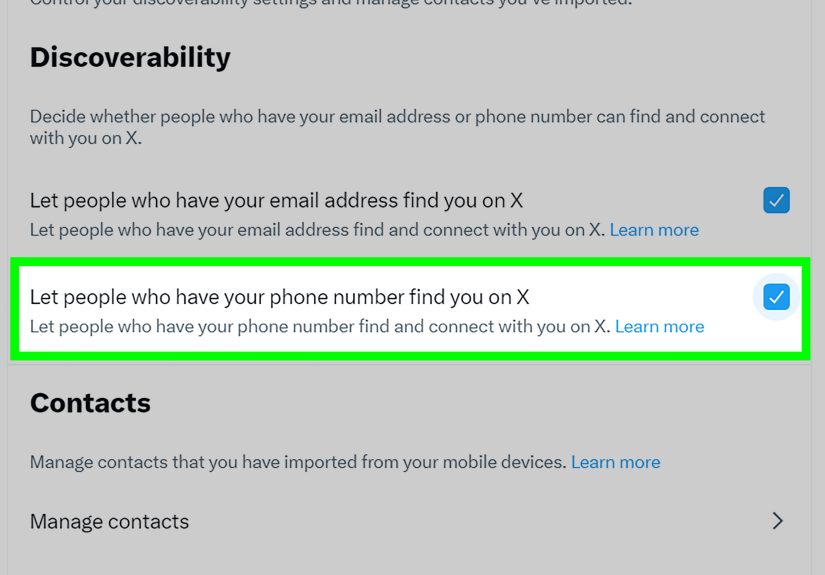
Second, remember that discoverability works both ways. If you allow people to find you by your email address or phone number, your account may be easier for your contacts to discover. For many users, that is helpful. For others, it is a hard no. If you want to be found by friends but not by every person who ever saved your number after a group project in 2021, review those settings carefully.
Search by Name, Handle, and Profile Clues
If contact syncing does not find the person you want, the next move is classic search. The search bar on Twitter can help you locate accounts by display name, username, keywords, or even topics associated with that person.
Best Practices for Searching by Name
Start with the obvious version of the person’s name, then try variations:
- Full name
- Nickname plus last name
- Maiden name or former last name
- Professional name or creator name
- Known username from another platform
For example, if you are trying to find Michael Thompson, search:
- Michael Thompson
- Mike Thompson
- @mikethompson
- Mike Thompson Chicago
- Mike Thompson design
This works because many Twitter accounts include location, job title, school, or hobby references in the profile. The person might not use their exact real name in the handle, but their bio may still betray them in the friendliest way possible.
Use Profile Keywords Like a Detective, Not a Drama Character
Search terms such as employer, city, college, sports team, or niche obsession can help narrow things down. If your friend loves cycling and lives in Austin, a search for their name plus “Austin” or “cycling” may surface the right profile faster than a plain-name search.
Also check profile photos, bios, follower overlap, and recent posts. A lot of people are easier to identify by context than by handle alone.
Can You Search for Friends by Email or Phone Number?
Sometimes, yes. Reliably, not always.
Twitter’s friend discovery system can use email addresses and phone numbers, but this depends on the other person’s privacy settings. If they allow others to find them by email or phone, and you have that information in your contacts, they may show up when your address book is synced. If they turned those settings off, they may remain gloriously invisible.
This is why direct email or phone-based searching feels inconsistent. The feature is real, but it depends on discoverability permissions, matching data, and whether the person used that information for their account in the first place.
In plain English: yes, your contact list can help, but no, it is not a guaranteed people-finding laser beam.
Use “Who to Follow” Suggestions Smarter
Twitter’s suggestions are not random. They are often influenced by your synced contacts, existing follows, network overlap, and engagement patterns. That means the suggestion area can quietly become one of the best ways to find people you know.
How to Improve Suggestions
- Sync your contacts first.
- Follow a few people you know well.
- Engage with accounts in your real interests.
- Check suggested accounts after adding contacts.
- Look for mutual followers as confirmation.
If you follow a few classmates, coworkers, or family members, Twitter often starts connecting the dots. Suddenly it is serving up people from your actual life instead of twelve verified accounts posting about macroeconomics and one guy whose entire personality is brisket.
Find Friends Through Mutual Followers
One underrated method is to look at who your friends already follow. If you find one person from your old circle, that account can become your map.
How to Use Mutuals
- Open the profile of someone you already know.
- Check their Following and Followers.
- Look for familiar names, faces, bios, or locations.
- Open likely matches and verify through profile details.
This method works especially well for school groups, work teams, hobby communities, and local friend circles. Real people tend to exist in clusters online just like they do offline.
How to Protect Your Privacy While Looking for Friends
Friend discovery is useful, but it should never come at the expense of common sense. Before or after syncing your contacts, review these privacy basics:
- Check whether Twitter can access your contacts on your phone.
- Turn off contact sync if you only needed it temporarily.
- Review whether people can find you by your email address.
- Review whether people can find you by your phone number.
- Avoid sharing more account information than necessary.
- Use block and mute tools to clean up unwanted connections.
If you are privacy-conscious, one smart move is to sync contacts briefly, review suggestions, follow who you want, and then turn syncing off again. That gives you the benefit without leaving every door wide open indefinitely.
Why You Still Cannot Find Certain People
If someone refuses to appear no matter what you try, there is usually a simple reason:
- They use a different email or phone number on Twitter
- They disabled discoverability settings
- Their display name is very different from their real name
- Their account is new, inactive, or hard to identify
- You do not have the right contact information saved
In other words, the problem is not always your search skills. Sometimes the person has built a wonderfully confusing account identity that would challenge even a professional investigator with three cups of coffee.
Common Mistakes to Avoid
1. Expecting Contact Upload to Find Everyone
It helps, but it will not surface every friend automatically.
2. Searching Only One Name Variation
Try nicknames, usernames, city names, schools, and workplaces.
3. Ignoring Mutuals
Mutual followers often solve the mystery faster than the main search bar.
4. Forgetting Privacy Settings
Before syncing contacts, decide how discoverable you want your own account to be.
5. Trusting the First Similar Profile
Double-check the bio, photo, and follower network before following the wrong “Chris Johnson” and accidentally joining a very passionate fishing discourse community.
Best Strategy for Finding Friends on Twitter
If you want the most practical approach, use this order:
- Sync your contacts on the mobile app.
- Review suggested accounts.
- Search by real name and username variations.
- Use city, school, job, or hobby keywords.
- Check mutual followers from accounts you already know.
- Adjust privacy settings afterward if needed.
That combination gives you the best chance of finding real people without wandering through the platform like a confused digital tourist.
Conclusion
Learning how to search for friends on Twitter is less about one secret trick and more about using the platform’s tools in the right order. Uploading contacts is often the fastest route, especially when you do not know someone’s handle. Standard search is still useful for names, bios, and profile clues. Mutual followers help fill in the gaps, and privacy settings determine how visible everyone really is.
The smartest approach is simple: use contact sync when it makes sense, search strategically when it does not, and always keep one eye on your privacy settings. That way, you can build a feed full of real connections instead of random noise. And honestly, that is a much better use of your time than spending 40 minutes trying to figure out whether @SunsetWizard1997 is your former roommate or just an unusually confident stranger.
Experiences Related to Searching for Friends on Twitter
One of the most common experiences people have when searching for friends on Twitter is assuming it will work exactly like a messaging app. It usually does not. On messaging platforms, you upload contacts and suddenly half your phone book appears. On Twitter, the results can feel more selective. Some people pop up instantly, while others remain missing even though you know they have an account. That inconsistency can be frustrating at first, but it also teaches an important lesson: Twitter is a social discovery platform, not a perfect directory.
A lot of users also discover that names are not nearly as helpful as context. You search for an old friend and get hundreds of results. Then you add the city where they live, the college they attended, or the company they work for, and suddenly the right profile appears like a contestant entering the stage in dramatic lighting. In practice, profile clues often matter more than exact spelling.
Another familiar experience is realizing just how many people use wildly different identities online. Your quiet coworker from accounting might be easy to find on LinkedIn, but on Twitter they are somehow @NachoMeteor with a bio about wrestling, horror movies, and espresso. That does not make them impossible to find, but it does mean you have to rely on profile photos, mutual followers, and recent posts instead of expecting a clean match from the start.
Many users also say that the best results come in waves. First, they find one person they know. Then they open that profile’s following list and suddenly several more familiar names appear. It becomes less like searching a database and more like rebuilding a social map piece by piece. In that sense, Twitter often rewards patience more than speed.
There is also the privacy side of the experience. Some people feel comfortable syncing contacts, while others hesitate the moment an app asks to see their address book. That hesitation is reasonable. A smart compromise many users adopt is to allow contact access briefly, review suggestions, follow the right people, and then turn syncing off. It feels more controlled, and for privacy-conscious users, that matters a lot.
Finally, there is the emotional part no settings page ever mentions. Finding friends on Twitter can make the platform feel dramatically more human. Instead of shouting into the void, you begin seeing familiar voices, inside jokes, shared interests, and posts that actually mean something to you. The feed gets better. The recommendations get smarter. And the whole experience starts feeling less like a crowded internet hallway and more like a room where you know who is talking. That is usually the moment people realize they were never really looking for “accounts.” They were looking for connection.