Table of Contents >> Show >> Hide
- What You’ll Find in This Guide
- Quick Picks: Best Dishwasher Detergents in 2025
- How to Choose the Right Detergent (Without Overthinking It)
- Pods vs Powder vs Gel: What Actually Matters
- Top Detergent Picks by Category
- 1) Best Overall: Cascade Platinum Plus ActionPacs
- 2) Best Value: Finish Ultimate (Pods/Tablets)
- 3) Best Fragrance-Free / Sensitive Home Pick: Seventh Generation Free & Clear Packs
- 4) Best Plastic-Free Tablet: Blueland Dishwasher Tablets
- 5) Best Powder Strategy: A Good Dishwasher Powder (for control + cost)
- 6) Worth Considering: Method Packs (If you care about scent + decent cleaning)
- 7) Eco “Wildcard” Pick: Nellie’s Dish Cubed
- Hard Water, Spots, Film: Fixes That Work
- Eco & Plastic-Free Options (And the PVA Debate)
- Pro Tips to Get Better Results With Any Detergent
- Bottom Line: The “Best” Detergent is the One That Fits Your Water + Your Loads
- Real-World Experiences (Extra): What “Best Dishwasher Detergent” Looks Like in Actual Kitchens
- SEO Tags (JSON)
Your dishwasher is not a magical raccoon. It can’t scrub, it can’t improvise, and it definitely can’t “figure it out” when you load a baked-on lasagna pan
like you’re playing Tetris in a moving car. What it can dosurprisingly wellis deliver spotless dishes… if you feed it the right detergent.
This 2025 guide pulls together what major U.S. consumer-testing outlets, cleaning labs, and product experts keep finding: single-dose pods/tablets usually win
on pure cleaning power, powders can be the secret weapon for control (and budget), and gels are the “nice try” of the dishwasher world. Let’s break it down
in plain Englishplus a little sarcasm, as a treat.
Quick Picks: Best Dishwasher Detergents in 2025
If you just want the “tell me what to buy” version, here are the standouts that keep showing up in U.S. lab tests and expert roundups.
(If your dishwasher is currently full and judging you: I get it.)
- Best overall cleaning power: Cascade Platinum Plus ActionPacs (pods)
- Best value that still performs: Finish Ultimate (pods/tablets)
- Best for fragrance-sensitive homes: Seventh Generation Free & Clear packs (pods)
- Best plastic-free format: Blueland Dishwasher Tablets (no dissolvable film)
- Best “control the dose” option: A quality dishwasher powder (great for light loads, prewash, and saving money)
Now let’s do the part where we match the detergent to your situationbecause the “best” detergent for a household with hard water and daily greasy
cookware is not the same as the “best” detergent for one person who owns four plates and a dream.
How to Choose the Right Detergent (Without Overthinking It)
Start with your biggest pain point
- Grease + baked-on food: Go with a premium pod/tablet (multi-enzyme + degreasing formula).
- Cloudy glassware / white film: Prioritize hard-water fighting + use rinse aid.
- Etching worries (frosty-looking glass): Avoid overdosing, skip aggressive cycles for delicate glass, and consider a gentler formula.
- Budget + flexibility: Powder gives you control (and often the lowest cost per load).
- Eco priorities: Look for plastic-free tablets and/or EPA Safer Choice–listed options.
Then check your dishwasher habits (yes, they matter)
Detergent is huge, but results are a three-legged stool: detergent + water + mechanics. If your filter is clogged, your spray arms are
blocked, and you’re running “Quick Wash” on dried oatmeal, even the best pod will struggle. (That’s not a detergent problem. That’s a lifestyle.)
Pods vs Powder vs Gel: What Actually Matters
| Type | Why People Like It | Where It Struggles | Best For |
|---|---|---|---|
| Pods / tablets | Convenient, pre-measured, often packed with enzymes + degreasers + drying aids | Can under-dissolve in short/cool cycles; less dosing control; often pricier | Tough messes, everyday loads, busy homes |
| Powder | Cheaper per load, adjustable dosing, great for prewash + main wash strategy | Messier; easy to over/under-dose if you eyeball it | Hard-water troubleshooting, budget shoppers, “I like control” people |
| Gel / liquid | Dissolves easily; gentle feel; widely available | Often weaker on baked-on food; easier to overpour; may leave residue | Very light soil loads or when nothing else is available |
The big 2025 takeaway from multiple testing labs: pods/tablets tend to outperform gels and many powders on overall cleaning, largely because
brands keep putting their newest “science-y” ingredients into the premium single-dose formats. Powders remain the smartest option when you want to fine-tune
dosing (especially with hard water) or lower cost per load.
Top Detergent Picks by Category
Below are the options that show up again and again in U.S. lab testing, expert reviews, and editorial “best of” listsplus the practical situations where
each one shines.
1) Best Overall: Cascade Platinum Plus ActionPacs
If you want the closest thing to “press start and forget your regrets,” this is it. Premium Cascade pods consistently rate at or near the top in cleaning
tests because they’re built for modern dish problems: greasy residue, dried-on starches, and protein gunk (hello, egg yolk) that laughs at weak detergent.
Who it’s for: Families, daily cooking, mixed loads, and anyone who regularly discovers a “surprise pan” in the back of the sink.
Pro move: If the scent is too strong for your household, switch to a fragrance-free pod rather than downgrading to a gel.
2) Best Value: Finish Ultimate (Pods/Tablets)
Finish’s premium lines often test well and are frequently positioned as a “great performance without the top-tier price sting.” If you’re upgrading from
store-brand gel and hoping your glasses stop looking like they were washed in a chalk factory, this is a strong step up.
Who it’s for: Most households that want reliable results and fewer rewashes.
Heads-up: If you have very hard water, you may still want a separate rinse aid to boost drying and reduce spots.
3) Best Fragrance-Free / Sensitive Home Pick: Seventh Generation Free & Clear Packs
Plenty of people love podsuntil the fragrance hits like a scented candle aisle in a wind tunnel. A strong fragrance-free pod is a practical compromise:
good cleaning, less sensory drama.
Who it’s for: Fragrance-sensitive homes, open-concept kitchens, baby bottles, and anyone who prefers “clean” to smell like… nothing.
4) Best Plastic-Free Tablet: Blueland Dishwasher Tablets
Blueland’s big selling point is simple: no dissolvable film. If you’re trying to reduce plastic use in your home (or you just hate handling sticky pods),
plastic-free tablets are the cleanest conceptually: tablet in, door closed, done.
Who it’s for: Eco-minded households, people who want simpler packaging, and anyone side-eyeing dissolvable films.
Reality check: Plastic-free doesn’t automatically mean “strongest degreaser on earth,” so pair it with good dishwasher maintenance and rinse aid if needed.
5) Best Powder Strategy: A Good Dishwasher Powder (for control + cost)
Powder isn’t flashy, but it’s the “manual transmission” of dishwashing: more control, better efficiency when you know what you’re doing, and
occasionally you’ll feel morally superior about it. The secret advantage is dosing: light load? Use less. Hard water? Use a bit more. Want a prewash dose?
Powder makes that easy.
Who it’s for: Budget-focused homes, hard-water troubleshooting, and anyone who runs smaller loads and hates wasting detergent.
How to win with powder: Measure. Don’t free-pour like you’re seasoning a steak.
6) Worth Considering: Method Packs (If you care about scent + decent cleaning)
Method’s packs frequently show up as a “best scent” option in testing lists, and they can clean impressively well for everyday loads. If you want your
dishwasher to smell like a spa instead of a hot swamp, this can be a pleasant upgrade.
7) Eco “Wildcard” Pick: Nellie’s Dish Cubed
If you want an eco-leaning option that still aims for performance, Nellie’s cubes get attention for being compact and low-waste. They’re often mentioned
alongside other “greener” picks as a practical middle path: less packaging fuss, respectable cleaning.
Hard Water, Spots, Film: Fixes That Work
Hard water is the villain that doesn’t kick down your doorit just quietly ruins your glassware and makes you question your life choices. If you see white
spots, cloudy film, or gritty residue, try this sequence:
Step 1: Add rinse aid (seriously)
Rinse aid helps water sheet off your dishes instead of clinging and drying into spots. Even if your pod claims “with rinse aid,” many experts still
recommend a separate rinse aid in very hard water or when drying performance is poor.
Step 2: Stop overdosing detergent
More detergent doesn’t mean “more clean.” It often means residue. If you use pods and still see film, try a different pod or switch to powder for a week
so you can reduce the dose.
Step 3: Clean the filter and spray arms
Detergent can’t “power through” if water isn’t moving properly. A dirty filter recirculates gunk. Blocked spray arms turn your dishwasher into a
lukewarm mist machine. Both are easy fixesannoying, but easy.
Step 4: Consider a dishwasher cleaner monthly
If your dishwasher smells funky or looks grimy inside, periodic dishwasher cleaning products can help remove grease and mineral buildup. Think of it as a
face mask… for your appliance. (Yes, that sentence made me uncomfortable too.)
Eco & Plastic-Free Options (And the PVA Debate)
In 2025, “eco-friendly” isn’t one laneit’s a whole highway interchange:
- Ingredient safety: Look for products listed under programs like EPA Safer Choice.
- Packaging reduction: Cardboard boxes, refill systems, and concentrated formulas reduce shipping weight and waste.
- Film-free formats: Plastic-free tablets skip dissolvable films entirely.
So what’s the deal with dissolvable pod film?
Many pods use a water-soluble film made from polyvinyl alcohol (PVA/PVOH). Here’s the honest, non-hot-take version: the film dissolves in your machine,
then heads into wastewater systems. Some experts and industry sources argue detergent-grade PVA biodegrades effectively under wastewater treatment
conditions; some researchers and journalists point out that breakdown can vary by facility conditions and that the long-term environmental story is still
being studied. If that uncertainty bugs you, plastic-free tablets (or powder in cardboard) are the simplest workaround.
How to shop greener without getting played by marketing
- Check for credible certification listings (like EPA Safer Choice) instead of vague “natural-ish” buzzwords.
- Prefer concentrated formats to reduce shipping emissions and packaging volume.
- Be wary of “miracle sheet” claims unless they’re backed by reliable testing for automatic dishwashers.
Pro Tips to Get Better Results With Any Detergent
Use the right cycle for the mess
Quick cycles are great for lightly soiled dishes and fresh loads. For dried-on food or greasy cookware, use Normal/Heavy and let the machine do its job.
Some experts note that pods can underperform in very short or cool cycles if they don’t fully dissolveso if you live on “Quick Wash,” powder or a
fast-dissolving tablet may be a better match.
Don’t use regular dish soap (unless you enjoy mopping)
Regular hand-washing dish soap creates suds. Dishwashers do not want suds. The result can be a bubbly foam apocalypse that ends with you on your hands and
knees questioning how this became your evening.
Load like you want water to hit everything
Water can’t clean what it can’t reach. Don’t nest bowls like they’re hibernating. Don’t block the detergent dispenser door. And please don’t put a cutting
board in a way that shields half the rack. Your dishwasher is powerful, but it’s not telepathic.
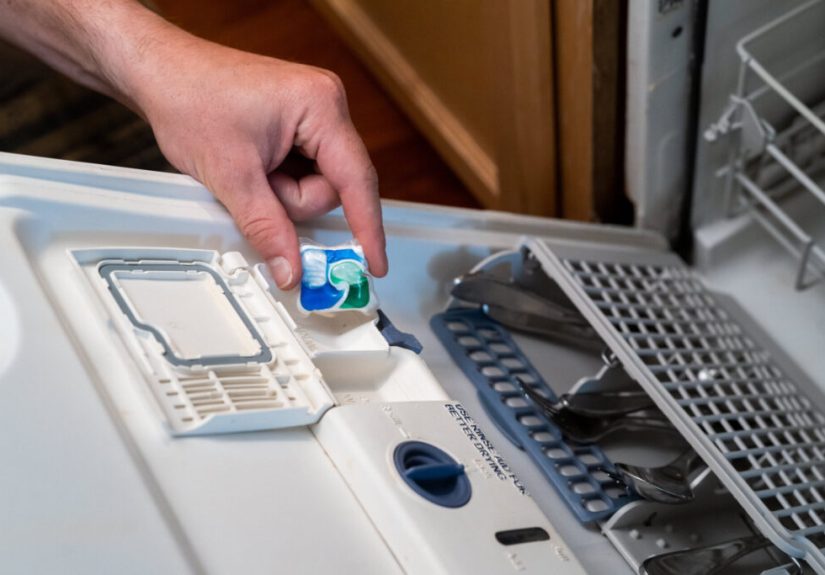
Store pods correctly
Pods can clump or stick together in heat and humidity. Keep them sealed, cool, and dry. If you’ve ever grabbed two pods fused into one mega-pod… you
already know why.
Bottom Line: The “Best” Detergent is the One That Fits Your Water + Your Loads
If you want the safest bet for top-tier results, pick a premium pod like Cascade Platinum Plus. If you want a strong performer at a
friendlier price, Finish Ultimate is a frequent winner. If you’re sensitive to fragrance, go fragrance-free without
downgrading to a weak gel. If you care deeply about packaging and film concerns, plastic-free tablets (like Blueland) keep things simple.
And if you want maximum control and savings, powder is still a smart, underrated choice.
The best part? Once you get detergent + rinse aid + basic maintenance dialed in, your dishwasher starts acting like the hero it was built to bequietly
solving problems while you do literally anything else.
Real-World Experiences (Extra): What “Best Dishwasher Detergent” Looks Like in Actual Kitchens
Reviews are great, but real life has plot twists. Below are common dishwasher-detergent “scenes” that play out in homes every dayplus what usually fixes
them. Consider this the extended cut: 500-ish words of practical, lived-in reality (without pretending I personally haunted your kitchen at 9 p.m.).
Scene 1: The Lasagna Pan of Doom
You baked lasagna. It was glorious. Then you left the pan “to soak” (a lie) and it dried into a cement sculpture. This is where premium pods shine:
multi-enzyme formulas and strong degreasers are designed for dried-on starches and baked cheese. The trick is pairing the right detergent with the right
cycleuse Heavy (or at least Normal) and don’t choose Quick Wash like it’s a personality trait. If you still see burnt edges, it’s not always the detergent:
make sure the spray arm isn’t blocked by a plate standing upright like it’s trying to escape.
Scene 2: The Cloudy Glass Conspiracy
Your glasses look foggy, and suddenly you’re Googling “Is my water haunted?” Two common culprits: hard-water mineral deposits (usually removable) and
etching (permanent). Start with rinse aid and a slightly lower detergent dose; overdosing can leave residue that looks like film. If the haze doesn’t wipe
off with vinegar or a glass-safe cleaner, it may be etching from high heat + harsh chemistry + soft water. In that case, switch to a gentler detergent,
avoid extreme cycles, and don’t pre-rinse so aggressively that your detergent has nothing to “work on” (enzymes need soil).
Scene 3: The “Why Are My Plates Still Greasy?” Mystery
Grease issues are often a combo problem: the wrong detergent type and poor water action. Pods/tablets tend to outperform gels here, but also check
your filter. A clogged filter recirculates greasy water like a tiny, unfortunate fountain. If you cook a lot, cleaning the filter becomes a boring superpower.
A monthly dishwasher cleaner can help if your tub has buildup, but it won’t replace filter cleaning. (Sadly, nothing replaces filter cleaning. Not even vibes.)
Scene 4: The “Eco Switch” That Backfires (At First)
You swap to an eco-friendly detergent and suddenly your dishes are… fine-ish. Some loads sparkle; others look like they lost a fight with oatmeal. Before you
blame the brand, tighten the basics: use rinse aid, run a warmer cycle for heavy soil, and don’t overload. Eco formulas can perform really well, but they’re
less forgiving when water temperature is low or the machine is grimy. If you’re worried about dissolvable films, plastic-free tablets are the cleanest concept,
but you may need to be more consistent about maintenance and cycle choice. The payoff is worth it when you get the routine locked in.
Scene 5: The Teen Loads the Dishwasher (And the Dishwasher Weeps)
Someone loads bowls stacked inside bowls, spoons cuddling, and one plate blocking the detergent door like a bouncer. No detergent can fix “water can’t reach
the mess.” If your household has multiple loaders, a simple rule helps: leave “spray paths” open. Make sure the detergent dispenser can open, avoid nesting,
and point dirty surfaces toward the center spray. Thenonly thendebate pods vs powder like it’s a sport. Once loading improves, you’ll notice even mid-tier
detergents perform better, and premium pods start looking borderline magical.

![18 Best Types of Charts and Graphs for Data Visualization [+ How to Choose]](https://corkopencoffee.org/wp-content/uploads/2026/05/18-best-types-of-charts-and-graphs-for-data-visualization-how-to-choose-qKM1PBYG-thumb.jpg)