Table of Contents >> Show >> Hide
- Quick Take (For the Busy, The Curious, and The Chronically Moisture-Deprived)
- What Is Biossance, Exactly?
- The Hero Ingredient: Squalane (Not to Be Confused With Squalene)
- Is Biossance “Clean” in a Meaningful Way?
- Sustainability: Where Biossance Shines (and Where You Should Still Read Closely)
- Top Biossance Products People Actually Talk About
- How Biossance Performs: Texture, Results, and “Do I Actually Like Using This?”
- Who Biossance Is Best For (and Who Might Want to Sample First)
- How to Build a Biossance Routine (Simple, Realistic, and Not 14 Steps)
- Price and Value: Is Biossance Worth It?
- Pros and Cons
- FAQs
- Real-World Experience Roundup (Extended Notes ~)
- Conclusion: The Bottom Line
If you’ve ever stood in the skincare aisle squinting at ingredient lists like you’re decoding an ancient scroll,
you’ve probably seen the word squalane pop up. Biossance is basically the brand that looked at squalane
and said, “Yes. More of that. And let’s make it ethical.” The result is a modern “clean beauty” line that leans
heavily on biotechnology, feels grown-up without being intimidating, andwhen it hitscan make your routine feel
like it got a promotion.
This review breaks down what Biossance is, what it does well, where it can disappoint, and how to decide if it’s
worth the spot (and the budget) on your bathroom shelf.
Quick Take (For the Busy, The Curious, and The Chronically Moisture-Deprived)
- Best known for: sugarcane-derived squalane and barrier-friendly hydration.
- Overall vibe: clean-leaning, science-backed, minimalist formulas with a “soft luxury” feel.
- Strengths: moisturizing without the grease (most of the time), good for sensitive-leaning routines, strong hero products.
- Watch-outs: price, occasional texture preferences (some products feel rich), and “clean” can mean different things to different people.
What Is Biossance, Exactly?
Biossance is a skincare brand built around one star ingredient: squalanea stable, skin-friendly
emollient that helps reduce moisture loss and supports a smoother-feeling barrier. What helped Biossance stand out
early on wasn’t just squalane itself (other brands use it too), but the brand’s claim to fame: producing squalane
from renewable sugarcane rather than sourcing related compounds from animals.
The brand’s identity is tightly tied to biotech: instead of relying on scarce or controversial sources, it uses
fermentation and refining to create consistent, skin-compatible ingredients. Translation: Biossance sells the idea
that you can have performance and values without living on a diet of wishful thinking and cute packaging.
The Hero Ingredient: Squalane (Not to Be Confused With Squalene)
Let’s clear up the name confusion, because skincare loves a spelling bee. Squalene is a lipid your
skin naturally produces. It’s part of what keeps skin flexible and comfortable. The problem? Squalene is
unstable and oxidizes easily.
Squalane is the more stable, hydrogenated version. It’s lighter than many oils, tends to play well
with other ingredients, and often feels “silky” rather than heavy. Biossance leans into this by putting squalane
into nearly everything: oils, moisturizers, serums, eye creams, body careyou name it.
Why people like squalane in the real world
- It’s barrier-friendly: Helps reduce transepidermal water loss (aka “why does my face feel dry again 20 minutes later?”).
- It layers well: Often sits comfortably under sunscreen and makeup when used in the right amount.
- It’s flexible: Many skin types tolerate it, including those who find heavier oils overwhelming.
Biossance also promotes its sugarcane-derived squalane as traceable and consistentmeaning fewer batch-to-batch
surprises. In skincare terms, that’s like ordering your favorite latte and actually getting the same latte every time.
Is Biossance “Clean” in a Meaningful Way?
“Clean beauty” is famously slippery. There’s no single universal legal definition, and brands use it differently.
Biossance tends to position itself as clean, vegan, and cruelty-free, and you’ll often see it sold through
retailers that have their own “clean” standards.
Key claims you’ll commonly see associated with Biossance
- Vegan and cruelty-free: The brand markets its full line as vegan and cruelty-free.
- Retailer “clean” programs: Certain products are highlighted through major retailer clean categories.
- EWG-related positioning: Some products are promoted as meeting EWG-related standards and appear in EWG’s Skin Deep database.
My practical take: if you like your skincare to avoid certain ingredients by preference (for example, you prefer
fragrance-free or you’re picky about specific preservatives), Biossance is often a comfortable brand to browse.
But if you want “clean” to mean “guaranteed irritation-proof,” no brand can honestly promise thatskin is personal,
and even gentle formulas can annoy the wrong person on the wrong day.
Sustainability: Where Biossance Shines (and Where You Should Still Read Closely)
Biossance built a big part of its reputation on sustainabilityespecially around squalane sourcing. Historically,
squalene was associated with shark-liver sourcing in some supply chains (which is exactly as bad as it sounds).
Biossance has been widely covered as part of the shift toward plant-derived, renewable alternatives.
The brand also talks about how its sugarcane supply is managed and how production is designed to minimize impacts
like deforestation. That said, “sustainable” is a spectrum, not a trophy. A responsible shopper can appreciate the
shift away from problematic sourcing while still caring about packaging waste, shipping emissions, and how
marketing claims are verified.
What’s fair to like here
- Renewable hero ingredient: A consistent message around sugarcane-derived squalane and traceability.
- Mission-forward branding: Sustainability is not an afterthought; it’s central to the brand story.
- Industry influence: Biossance helped popularize the idea that high-performance skincare can be made without relying on controversial sources.
What to stay curious (and a little skeptical) about
- Packaging complexity: Even “better” packaging can still be mixed-material and harder to recycle in practice.
- Buzzword drift: Sustainability claims vary in detail depending on the product and the marketing page you land on.
Top Biossance Products People Actually Talk About
Biossance has a broad lineup, but a handful of products show up again and again in editorial roundups and customer carts.
Here are the headliners, plus what they’re trying to do.
1) 100% Squalane Oil
The simplest representation of the brand’s philosophy: one primary ingredient, multi-use, and designed to be easy.
People use it on face, dry patches, cuticles, and even hair ends. If you’re trying Biossance for the first time,
this is the product that best explains the brand in one step.
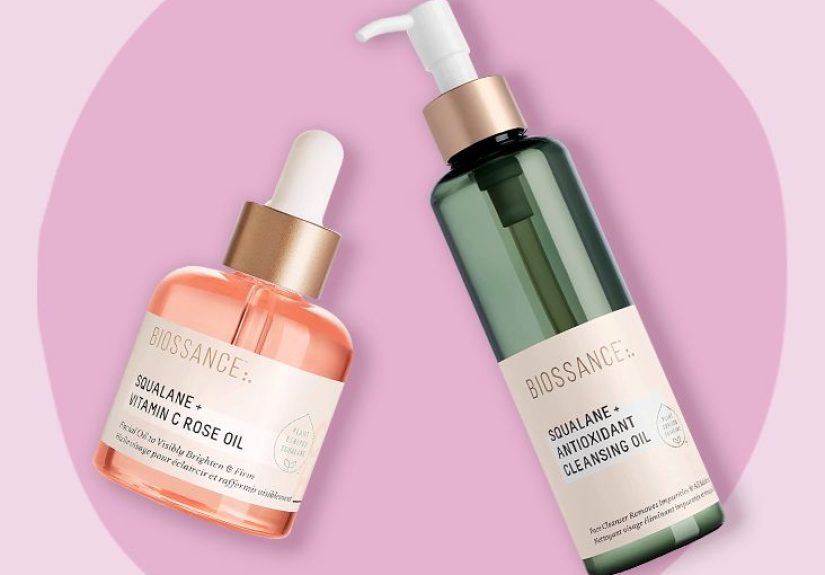
2) Squalane + Vitamin C Rose Oil
This is Biossance’s “fancy but not scary” face oil. It combines squalane with a stable vitamin C derivative and a
rosy sensorial experience. Many reviews describe it as lightweight and glowy when used as a last step to seal in moisture.
If you’re oil-averse, this is the one that often convinces skepticsthough some people still find oils feel like
“a polite film” on the skin.
3) Squalane + Omega Repair Cream
Rich, cushiony, and built for barrier support. This is the moisturizer people reach for when skin feels dry,
stressed, or over-exfoliated. It tends to be a favorite for normal-to-dry skin and colder months. If you’re oily or
humidity-prone, you may prefer something lighter (or use a smaller amount).
4) Squalane + Probiotic Gel Moisturizer
A lighter, gel-leaning option aimed at people who want hydration without feeling “coated.” It’s often mentioned as
a good pick for combination or acne-prone skin because the texture is less occlusive than richer creams.
5) Eye Care Favorites
Biossance has multiple eye products that get attentionespecially formulas positioned as hydrating, smoothing, and
makeup-friendly. Eye products are notoriously subjective, but the brand’s eye offerings are frequently cited in
editor reviews and award lists.
How Biossance Performs: Texture, Results, and “Do I Actually Like Using This?”
A brand can have perfect values and still fail the daily vibe test. Biossance generally performs well on the
basics: formulas feel elegant, layering is usually smooth, and the brand focuses heavily on hydration and barrier comfort.
What tends to go right
- Comfort factor: Many products feel soothing and non-stripping, especially compared to harsher, “squeaky clean” formulas.
- Glow without glitter: The finish is typically dewy, not sparklythink “well-rested,” not “disco ball.”
- Good under makeup (when used correctly): Lightweight layers and small amounts generally cooperate with foundation and sunscreen.
What can go wrong
- Too rich for some routines: Omega Repair Cream and face oils can feel heavy on very oily skin or in hot/humid weather.
- Expectation inflation: If you expect instant transformation, you’ll be disappointed. Biossance is often more “steady improvement” than “overnight miracle.”
- Price sensitivity: When a moisturizer costs as much as a nice dinner, you’re allowed to have opinions.
Who Biossance Is Best For (and Who Might Want to Sample First)
Great match if you:
- Want barrier-supporting hydration and a gentle-leaning routine.
- Prefer vegan and cruelty-free positioning in your skincare shopping.
- Like the feel of “soft luxury” textures without intense fragrance.
- Do well with squalane (or want to try it in a consistent, brand-forward way).
Consider sampling first if you:
- Get shiny fast and dislike richer textures.
- Are on a strict budget (Biossance can be pricey for a full routine).
- Prefer stronger actives (high-strength retinoids, exfoliating acids, or prescription-level approaches).
How to Build a Biossance Routine (Simple, Realistic, and Not 14 Steps)
Biossance products play nicely in a mix-and-match routine. You don’t have to go “all Biossance, all the time.”
Here are a few practical setups.
Routine A: Dry or stressed skin (barrier-first)
- Gentle cleanser
- Hydrating serum (or skip if you keep it minimal)
- Omega Repair Cream (thin layer)
- Optional: a few drops of squalane oil to seal dry patches
- Morning: finish with sunscreen (always)
Routine B: Combination skin (balanced hydration)
- Cleanser
- Targeted serum (for tone/texture)
- Probiotic Gel Moisturizer
- Optional: Rose Oil only on drier areas (cheeks) rather than the whole face
- Morning: sunscreen
Routine C: “I’m oily but dehydrated” (yes, that’s a thing)
- Gentle cleanser (avoid over-stripping)
- Light hydration layer
- Gel moisturizer
- Optional: 1–2 drops of squalane, pressed in lightly (more is not more)
- Morning: sunscreen
Tip: if you’re trying Biossance for the first time, patch test and introduce one product at a time. It’s not the
most exciting advice, but neither is spending premium money to learn your face hates one ingredient.
Price and Value: Is Biossance Worth It?
Biossance sits in the mid-to-premium category. The value depends on what you care about:
texture elegance, ingredient sourcing, vegan/cruelty-free positioning, and whether squalane-based hydration works
well for your skin.
If your skin thrives on barrier support and you love products that feel comfortable and cosmetically elegant,
Biossance can feel worth itespecially if you focus on one “hero” product rather than buying the whole lineup at once.
If you’re primarily chasing actives (like strong retinoids or exfoliating acids), you might use Biossance as your
“supporting cast” brand: cleanse + moisturize + seal, while your actives come from elsewhere.
Pros and Cons
Pros
- Strong focus on barrier-friendly hydration and comfortable textures.
- Sugarcane-derived squalane is a clear, consistent brand strength.
- Widely available through major beauty retailers and common in editorial roundups.
- Vegan and cruelty-free positioning appeals to values-driven shoppers.
Cons
- Price can be a hurdle for a full routine.
- Some products may feel too rich depending on climate and skin type.
- “Clean beauty” messaging can be vague across the industrystill worth reading ingredient lists if you have sensitivities.
FAQs
Is Biossance good for sensitive skin?
Many people with sensitive-leaning routines like Biossance because the line is heavily focused on comfort and hydration.
But “sensitive” isn’t one-size-fits-allpatch test if you’re reactive.
Will squalane clog pores?
Squalane is often considered lightweight and generally well tolerated, but any emollient can feel too heavy for some
skin types if over-applied. Start with a small amount and adjust.
Do I need multiple Biossance products to see results?
Not necessarily. Many routines work best when you choose one role for the brand (like a moisturizer or oil) and let
other products do other jobs.
Real-World Experience Roundup (Extended Notes ~)
Since I can’t wear moisturizer (tragically, I am a browser tab with opinions), the most honest way to talk about
“experience” is to summarize recurring themes from editor testing, retailer reviews, and common user feedback.
When you zoom out across lots of opinions, Biossance tends to produce a very specific kind of skincare experience:
comfort-forward, glow-friendly, and texture-driven.
The first thing people mention is usually how the products feel. Biossance formulas are often described
as silky, cushiony, and “expensive” in textureeven by people who complain about the price. The Omega Repair Cream
in particular gets called rich and comforting, the kind of moisturizer you want when your skin feels like it’s been
through something (weather, over-exfoliation, stress, or an unfortunate fling with a drying cleanser).
Users who love it often say it makes skin feel softer by morning and helps calm that tight, papery sensation.
Users who don’t love it tend to say the same thing in a different tone: it can feel too rich, especially on
oilier areas or in humid climates.
With the Squalane + Vitamin C Rose Oil, the experience is frequently described as “glowy but not greasy”
but with an important asterisk: amount matters. A few drops pressed into skin after moisturizer is where
many people find the sweet spot. When people complain, it’s often because they used too much (easy to do with a dropper),
applied it under products that already have a dewy finish, or expected an oil to absorb like a gel. Some users describe a
subtle scent and a luxurious feel, while others prefer fragrance-free everything and stay neutral on the sensorial side.
The 100% Squalane Oil tends to get “multi-tasker” praise: dry patches, post-shower body softness, cuticles,
and hair ends. The most consistent positive comments are about it being lightweight and easy to spread. The most consistent
negative comments are less about irritation and more about preferencesome people simply don’t like the feel of oils,
no matter how elegant the formula is.
For combination and acne-prone shoppers, the experience splits into two camps. One group loves that Biossance
can deliver hydration without harshness and appreciates the lighter gel textures when available. Another group prefers to
use Biossance selectivelychoosing one hydrating product while keeping the rest of the routine oil-free or active-focused.
A common “best of both worlds” approach is: gel moisturizer during the day, richer cream at night on drier zones only.
Overall, the most consistent real-world “result” people describe is improved comfort and a healthier-looking glow
rather than dramatic overnight change. Biossance is often a brand people keep around because it makes skin feel goodsteady,
supportive, and reliablelike the friend who always brings snacks and never tells you to “just drink water” as their entire personality.
Conclusion: The Bottom Line
Biossance is at its best when you treat it as a barrier and hydration specialist. The brand’s sugarcane-derived
squalane focus is genuinely useful, and its hero products have earned attention because they deliver a comfortable, elegant experience.
If you want skincare that feels nice, supports hydration, and aligns with vegan/cruelty-free positioning, Biossance is a strong contender.
The smartest way to buy is to start with one product that fits your needsoften the 100% Squalane Oil, the Vitamin C Rose Oil,
or a moisturizer that matches your skin typethen expand only if your skin actually asks for more. Your face does not need a
12-step routine. It needs consistency, patience, and sunscreen. (Yes, I said it. Someone had to.)