Table of Contents >> Show >> Hide
- What Is Cherry Clafoutis, Exactly?
- Why You’ll Love This Cherry Clafoutis Recipe
- Ingredients
- Equipment
- Step-by-Step: How to Make Cherry Clafoutis
- Clafoutis Tips That Make a Big Difference
- Variations (Because Cherries Deserve Options)
- Serving Ideas
- Make-Ahead, Storage, and Reheating
- Troubleshooting (A.K.A. “Why Did Mine Do That?”)
- Cherry Clafoutis Recipe Card
- Experiences: What Making Cherry Clafoutis Is Like (The Real-Life Version)
- Conclusion
Cherry clafoutis sounds like something you’d order while wearing sunglasses indoors and pretending you know what “notes of stone fruit” means.
In reality, it’s the low-effort, high-impress French dessert you can pull off in a regular kitchen with regular ingredients
no pastry degree required, no tiny chef hat needed (but it wouldn’t hurt).
Think of clafoutis as the love child of a custard, a pancake, and a very confident bowl of cherries. It bakes into a tender, lightly sweet,
flan-meets-Dutch-baby situation that looks fancy, tastes cozy, and forgives minor human mistakes (like “measuring” with vibes).
What Is Cherry Clafoutis, Exactly?
A traditional clafoutis is fruit (classically cherries) baked in a thin batter made from eggs, milk (sometimes cream), sugar, flour, and vanilla.
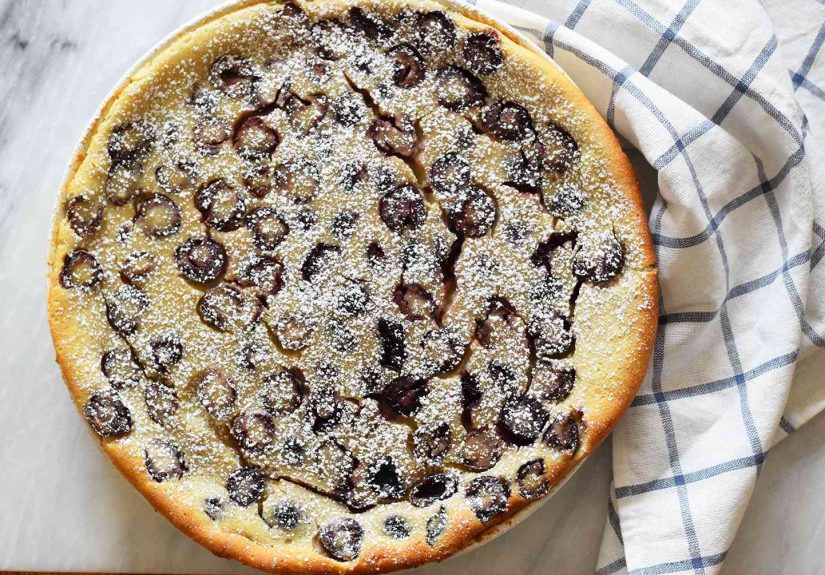
The batter puffs in the oven, turns golden at the edges, and sets into a custardy center that slices like a soft piebut eats like a warm hug.
Purists will tell you clafoutis is only “clafoutis” when it’s made with cherries; otherwise it’s a flaugnarde. Most of us will tell you:
it’s delicious either way, and nobody at your table is going to demand your dessert’s passport.
Why You’ll Love This Cherry Clafoutis Recipe
- Fast: Mix, pour, bake. No crust drama.
- Flexible: Fresh or frozen cherries work. Creamy or lighter versions both shine.
- Fancy-looking: Powdered sugar = instant “I have my life together” energy.
- Great warm or room temp: Dessert now, brunch later. That’s range.
Ingredients
This version aims for a classic, balanced clafoutis: custardy but sliceable, cherry-forward, gently sweet, and fragrant with vanilla
(plus optional almond vibes).
The Fruit
- Cherries: 2 to 2 1/2 cups sweet cherries (about 12–16 oz), stemmed and pitted
Fresh cherries are ideal when in season, but frozen cherries are absolutely welcomejust thaw, drain well, and pat dry
so your clafoutis doesn’t turn into a cherry jacuzzi.
The Batter
- Butter: 2 tablespoons, plus more for greasing the dish
- Sugar: 1/2 cup, plus 1–2 teaspoons for the baking dish (optional but lovely)
- Eggs: 3 large
- Milk: 1 cup (whole milk is classic, 2% works)
- Cream: 1/4 cup heavy cream (optional, but adds silkiness)
- Flour: 1/2 cup all-purpose
- Salt: 1/4 teaspoon
- Vanilla: 1 teaspoon extract (or seeds from 1/2 vanilla bean if you’re feeling romantic)
- Almond extract: 1/8 teaspoon (optional; a little goes a long way)
- Kirsch / brandy: 1 tablespoon (optional; very French, very fun)
- Lemon zest: 1 teaspoon (optional; brightens the cherries)
- Powdered sugar: for finishing
Equipment
- 9- to 10-inch baking dish, pie plate, or oven-safe skillet
- Blender (optional) or whisk + bowl
- Cherry pitter (optional) or a small knife + patience
A blender makes the batter extra smooth with almost zero effortthis is one of those rare moments where laziness is rewarded with elegance.
Step-by-Step: How to Make Cherry Clafoutis
1) Preheat and Prep the Dish
Preheat your oven to 375°F. Grease a 9- to 10-inch baking dish generously with butter. For extra texture and a subtle caramelized edge,
sprinkle 1–2 teaspoons of sugar in the dish and shake it around so it lightly coats the bottom and sides.
2) Prep the Cherries
Spread the pitted cherries in an even layer in the prepared dish. If you’re using frozen cherries, thaw them first, drain thoroughly,
then pat dry with paper towels to reduce excess moisture.
Traditional clafoutis is sometimes baked with unpitted cherries (the pits can lend a faint almond-like aroma), but pitting is friendlier for guests
and teethespecially if you’re feeding kids, coworkers, or anyone who values their molars.
3) Make the Batter
In a blender (or bowl), combine eggs, milk, cream (if using), sugar, vanilla, salt, and optional lemon zest and kirsch.
Blend or whisk until smooth. Add the flour and blend/whisk again until you have a thin, lump-free batter.
Optional pro move: let the batter rest 10–20 minutes while the oven finishes heating. This gives the flour a chance to hydrate,
leading to a smoother texture.
4) Pour and Bake
Pour the batter over the cherries. Bake for 35–45 minutes, until puffed, lightly golden, and the center is set but still gently jiggly
(like a custard, not like a trampoline).
5) Cool Slightly, Dust, Serve
Let the clafoutis cool for 10–15 minutes. It will deflate a bittotally normal. Dust with powdered sugar and serve warm or at room temp.
Clafoutis Tips That Make a Big Difference
Keep It Custardy, Not Rubbery
The #1 clafoutis mistake is overbaking. If you bake until it’s completely firm, it can go from “silky custard” to “omelet’s distant cousin.”
Pull it when the edges are set and the center still has a soft wobble.
Dry Your Cherries (Especially Frozen)
Excess moisture can water down the custard and cause a gummy texture. Thaw, drain, and pat dry frozen fruit.
If your fresh cherries are extremely juicy, a quick blot helps too.
Choose Your Sweetness Level
Sweet cherries (like Bing) typically need less sugar than tart cherries. If using tart cherries, bump sugar by 2–4 tablespoons,
or serve with a sweet topping like whipped cream or vanilla ice cream.
Don’t Fear the Sink
Clafoutis puffs up in the oven and relaxes as it cools. That’s not failureit’s physics. (Also: delicious physics.)
Variations (Because Cherries Deserve Options)
Cherry-Almond Clafoutis
Add 1/8 teaspoon almond extract and sprinkle 2–3 tablespoons sliced almonds on top before baking.
This leans into that classic cherry-almond pairing without turning your dessert into a perfume counter.
Chocolate Cherry
Scatter 1/3 cup chopped dark chocolate over the cherries before pouring the batter. The result is quietly dramatic.
Gluten-Free
Substitute a 1:1 gluten-free flour blend. You can also replace a portion of flour with almond flour for a slightly richer custard.
Dairy-Free
Use an unsweetened plant milk (like oat or almond) and swap butter for a neutral oil or dairy-free butter.
The texture shifts slightly, but it still scratches the clafoutis itch.
Other Fruits
Try plums, peaches, apricots, pears, or berries (firm berries work best). If the fruit is very watery,
reduce moisture by patting dry or briefly roasting/sautéing first.
Serving Ideas
- Classic: warm clafoutis + powdered sugar
- Brunchy: clafoutis + Greek yogurt + honey
- Dessert mode: clafoutis + vanilla ice cream or lightly sweetened whipped cream
- Extra: a drizzle of cherry syrup, or a splash of kirsch for grown-up plates
Clafoutis is best the day it’s made, but leftovers are still excellentcold from the fridge counts as “chef’s snack.”
Make-Ahead, Storage, and Reheating
- Make-ahead: You can pit cherries and mix dry ingredients earlier. Batter is best blended shortly before baking.
- Store: Cover and refrigerate for up to 3 days.
- Reheat: Warm slices in a 300°F oven for 8–12 minutes, or microwave briefly (texture will be softer).
Troubleshooting (A.K.A. “Why Did Mine Do That?”)
It’s watery on the bottom
Usually fruit moisture. Dry frozen cherries well. Consider sprinkling 1 teaspoon flour or cornstarch over the cherries before pouring batter.
It puffed a lot, then collapsed
Normal behavior. Clafoutis is dramatic in the oven and chill outside itlike a cat who only sprints at 2 a.m.
It tastes eggy
Slightly underbaked or not enough flavoring. Add vanilla, a touch of zest, or a teaspoon of kirsch next time,
and bake until the custard is set with a gentle wobble.
It’s tough
Overbaked or over-floured. Measure flour carefully (spoon and level), and pull it earlier next time.
Cherry Clafoutis Recipe Card
Ingredients
- 2 to 2 1/2 cups sweet cherries (12–16 oz), stemmed and pitted
- 2 tablespoons unsalted butter, plus more for greasing dish
- 1/2 cup granulated sugar (plus 1–2 teaspoons for dish, optional)
- 3 large eggs
- 1 cup whole milk (or 2%)
- 1/4 cup heavy cream (optional)
- 1/2 cup all-purpose flour
- 1/4 teaspoon salt
- 1 teaspoon vanilla extract
- 1/8 teaspoon almond extract (optional)
- 1 tablespoon kirsch/brandy (optional)
- 1 teaspoon lemon zest (optional)
- Powdered sugar, for serving
Instructions
- Preheat oven to 375°F. Butter a 9–10 inch baking dish. Optional: add 1–2 teaspoons sugar and swirl to coat lightly.
- Spread cherries evenly in the dish. If using frozen cherries, thaw, drain, and pat dry first.
- In a blender or bowl, mix eggs, milk, cream (if using), sugar, vanilla, salt, and optional zest/kirsch. Add flour and blend/whisk until smooth.
- Let batter rest 10–20 minutes (optional). Pour over cherries.
- Bake 35–45 minutes until puffed and golden at edges, with a gently set, slightly wobbly center.
- Cool 10–15 minutes, dust with powdered sugar, and serve warm or at room temperature.
Experiences: What Making Cherry Clafoutis Is Like (The Real-Life Version)
The first “experience” most people have with cherry clafoutis is the name itself: you say it out loud once, confidently, and immediately wonder if
you’ve accidentally ordered something at a hair salon. Then you discover the best partclafoutis is wildly approachable. It’s one of those desserts
that feels like you’re cheating because it looks so elegant, yet the process is basically: “blend stuff, pour stuff, bake stuff.”
If you’re using fresh cherries, the most memorable moment is usually the pitting. It starts out romantic: a bowl of glossy cherries, summertime vibes,
maybe a little music. Ten minutes later, your cutting board looks like a crime scene and your fingers are stained a cheerful shade of “I definitely
did something.” A cherry pitter turns it into a satisfying assembly line. Without one, you’ll still get thereit just becomes a patience exercise
with snacks built in, because somehow half the cherries “need testing.”
Once the cherries are in the dish, clafoutis becomes the calm part of your day. The batter is thin and smooth, and if you use a blender, it’s almost
comically easylike the dessert is trying to befriend you. Pouring the batter over the fruit is oddly satisfying: the cherries bob a little, the dish
suddenly looks “chef-y,” and you get that small burst of pride usually reserved for successfully folding fitted sheets (rare, mythical).
The oven stage is where clafoutis gets dramatic. You’ll check it and see it puffing like it has important opinions. The edges turn golden, the center
rises, and the whole thing looks like a pastry shop displayexcept it’s in your kitchen, and you’re standing there holding a potholder like a trophy.
Then you pull it out, set it down, and watch it deflate. This is the part that surprises first-timers, but it’s also part of the charm: clafoutis
doesn’t pretend to be a perfectly sculpted cake. It’s rustic, honest, and still gorgeous.
Serving clafoutis is its own little experience. Dusting with powdered sugar feels like a magic trick: suddenly it’s “company-worthy.”
If you serve it warm, the custard is soft and spoonable at the center; at room temperature, it slices more neatly; cold, it becomes a sneaky
breakfast treat. People tend to go quiet after the first bitethe good kind of quietbecause the texture is unexpected: lighter than flan,
richer than a pancake, and packed with cherries that taste like they got promoted.
Over time, most home bakers develop their own signature twist. Some lean into almond and add toasted sliced almonds on top. Others add a splash of
kirsch or brandy and call it “for complexity” (translation: delicious). Many people discover clafoutis is the perfect dessert for using fruit that’s
just a day away from losing its sparklebecause baking cherries in custard is basically giving them a glow-up.
The best part of the clafoutis experience is how it changes your dessert confidence. After you make it once, you realize you can create something
that looks and tastes special without signing a contract with a rolling pin. It becomes the dessert you make when you want to impress without stress,
when you want something cozy but not boring, and when you want your kitchen to smell like vanilla, butter, and “yes, I absolutely meant to do that.”
Conclusion
A great cherry clafoutis recipe is all about simple ingredients treated kindly: ripe cherries, a smooth batter, gentle baking,
and a powdered sugar finale. It’s an easy French dessert that delivers bakery-level vibes with weeknight-level effort. Bake it once, and you’ll have
a new go-to for cherry season, last-minute guests, and any day that needs a little sweet, custardy reassurance.