Table of Contents >> Show >> Hide
- What Is Ham Loaf, Exactly?
- Why This Recipe Works
- Simple Glazed Ham Loaf With Mustard (Full Recipe)
- Flavor Notes and Easy Tweaks
- Serving Ideas: What Goes With Glazed Ham Loaf?
- Make-Ahead, Storage, and Leftovers
- Troubleshooting: Fixes for Common Ham Loaf Problems
- FAQ
- Kitchen Notes: Real-Life Ham Loaf Moments (Plus of Practical “Experience”)
- Conclusion
Ham loaf is what happens when a classic meatloaf and a holiday ham fall in love, move to the Midwest,
and decide everything should be served with a sweet-tangy glaze. It’s hearty, nostalgic, surprisingly
easy, andbonusyour kitchen will smell like you’re hosting a “fancy family dinner” even if you’re
wearing sweatpants that have seen things.
This recipe keeps it simple: a tender ham-and-pork loaf, lightly seasoned (because ham is already doing
the most), then finished with a glossy mustard glaze that’s equal parts sweet, sharp, and sticky in the
best possible way. If you’ve never made ham loaf before, you’re about to wonder why it isn’t as common
as banana bread on the internet.
What Is Ham Loaf, Exactly?
Ham loaf is a baked mixture of ground ham and another ground meatusually porkheld together with a binder
(like oats or breadcrumbs), eggs, and a splash of milk. Think of it as a “sliceable sandwich hero” with
dinner-party manners. It’s especially popular in Pennsylvania Dutch and Midwestern home cooking, where
it often shows up for holidays, Sunday suppers, and potlucks where the goal is “comforting and gone by
the time you get a plate.”
The signature move is the glaze: typically brown sugar plus vinegar and mustard (sometimes dry mustard,
sometimes prepared mustard, sometimes both). The sugar caramelizes, the vinegar brightens, and the mustard
keeps everything from tipping into candy territory. The result is a savory-sweet loaf that tastes like
it took all daywhile you quietly know it didn’t.
Why This Recipe Works
1) The meat blend keeps it tender
Ground ham brings big flavor and salt, but it can bake up firm if it’s the only meat in the mix. Pairing it
with ground pork adds fat and moisture, giving you slices that stay juicy instead of “polite but dry.”
2) Oats (or breadcrumbs) hold moisture
A binder isn’t just structural supportit’s a hydration strategy. Oats or breadcrumbs soak up milk and juices,
preventing the loaf from shrinking into a salty brick. (Ham is delicious, but it needs boundaries.)
3) Mustard glaze balances sweetness
Brown sugar makes that shiny lacquer; mustard adds bite; vinegar keeps the glaze from tasting flat. It’s the
same reason a good barbecue sauce tastes like a party instead of a sugar rush.
Simple Glazed Ham Loaf With Mustard (Full Recipe)
Yield: 6–8 servings
Time: 15 minutes prep, 60–75 minutes bake
Ingredients (Ham Loaf)
- 1 lb ground ham (or very finely ground/processed ham)
- 1 lb ground pork
- 1 small onion, finely minced (or grated for “no onion chunks” households)
- 2 large eggs
- 1/2 cup milk
- 3/4 cup quick oats or plain breadcrumbs
- 2 tbsp prepared yellow mustard (or Dijon for a sharper bite)
- 1 tbsp chopped fresh parsley (optional, but it makes you look like you have a plan)
- 1/2 tsp black pepper
- Optional: 1–2 tbsp ketchup (for a slightly sweeter, classic “meatloaf vibe”)
Ingredients (Mustard Glaze)
- 1/2 cup packed brown sugar
- 3 tbsp apple cider vinegar (or white vinegar in a pinch)
- 2 tbsp prepared mustard (yellow, Dijon, or a mix)
- 2 tbsp water (helps it brush easily and melt smoothly)
- Optional: 1/2 tsp dry mustard (for extra “mustard confidence”)
- Optional: pinch of cayenne (if you like a little wink of heat)
Equipment
- 9×5-inch loaf pan or a small baking dish
- Mixing bowl
- Small saucepan (or microwave-safe bowl) for the glaze
- Instant-read thermometer (highly recommended)
Step-by-Step Instructions
-
Preheat and prep.
Preheat your oven to 350°F. Lightly grease a loaf pan, or line it with parchment (a sling makes lifting
out easier). If you use a baking dish, lightly grease it too. -
Mix the loaf.
In a large bowl, combine ground ham, ground pork, onion, eggs, milk, oats (or breadcrumbs), mustard,
parsley (if using), and black pepper. Mix just until everything is evenly combined.
Tip: Overmixing makes loaves dense. You want “cohesive,” not “worked like bread dough.” -
Shape.
Press the mixture into your loaf pan, smoothing the top. If using a baking dish, form a free-standing loaf.
(Free-standing loaves get more glaze surface area. This is a pro-glaze lifestyle choice.) -
Start baking.
Bake for 45 minutes. -
Make the glaze.
While the loaf bakes, combine brown sugar, vinegar, mustard, and water in a small saucepan over medium heat.
Stir until the sugar dissolves and the glaze looks glossy, 2–4 minutes. (Or microwave in 20-second bursts,
stirring each time, until smooth.) -
Glaze and finish.
After 45 minutes, brush or spoon about half the glaze over the loaf. Bake 10 minutes, then glaze again with
the remaining sauce. Bake another 10–20 minutes, until the loaf reaches 160°F in the center. -
Rest, then slice.
Let the ham loaf rest 10 minutes before slicing. This keeps the juices where they belong: in your dinner,
not all over your cutting board.
What You’re Looking For (Doneness and Texture)
- Internal temperature: 160°F in the thickest part.
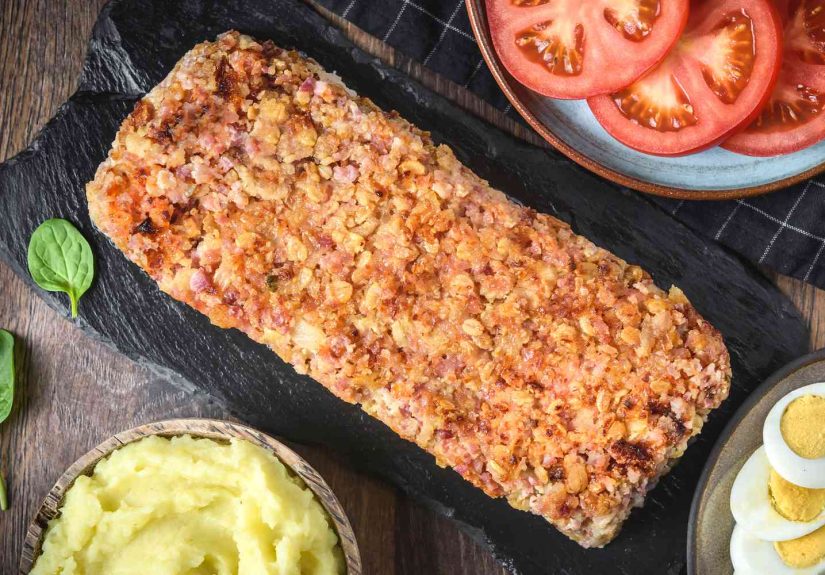
- Top: glossy glaze, lightly caramelized edges.
- Slices: firm enough to hold together, tender enough to cut with a fork.
Flavor Notes and Easy Tweaks
Choose your mustard personality
- Yellow mustard: classic, nostalgic, bright tang.
- Dijon: sharper, more grown-up, great with cider vinegar.
- Whole-grain: adds texture and little mustard “fireworks.”
Binder options
- Quick oats: tender, slightly heartier bite, great moisture retention.
- Breadcrumbs: classic meatloaf texture, very sliceable.
- Crushed crackers: old-school comfort; use what you’ve got.
Prevent the “too salty” surprise
Ham is already seasoned and cured, so avoid adding salt until you’ve tasted your specific ham (and even then,
proceed like you’re defusing a tiny sodium bomb). Pepper, onion, parsley, and mustard give you flavor without
pushing it into “I need water and a nap” territory.
Want more caramelization?
For a darker glaze, brush the final coat on in the last 8–10 minutes and bake uncovered. If you want extra shine,
you can broil for 1–2 minutes at the very endjust watch it like a hawk with a coffee addiction because sugar
goes from “caramelized” to “campfire” fast.
Serving Ideas: What Goes With Glazed Ham Loaf?
Ham loaf plays well with classic comfort sides and anything that loves a sweet-tangy glaze. A few easy pairings:
- Potatoes: mashed, scalloped, roasted, or cheesyham loaf is not picky.
- Green vegetables: green beans, Brussels sprouts, sautéed kale, or a simple salad to cut richness.
- Mac and cheese: for maximum “crowd-pleaser” energy.
- Dinner rolls: because glaze deserves something to mop it up.
- Applesauce or roasted apples: a sweet, classic pairing with porky dinners.
Sandwich mode (highly encouraged)
The next day, warm a slice, tuck it into a soft roll, add a swipe of mustard, maybe a pickle, and suddenly you’re
holding the kind of lunch that makes coworkers stare respectfully.
Make-Ahead, Storage, and Leftovers
Make-ahead options
- Mix ahead: Combine the loaf mixture up to 24 hours in advance; cover and refrigerate.
- Glaze ahead: Make the glaze 2–3 days ahead and refrigerate. Warm slightly to loosen before brushing.
Storing leftovers
- Refrigerator: Store slices in an airtight container for 3–4 days.
- Freezer: Wrap tightly and freeze up to 2–3 months. Thaw overnight in the fridge for best texture.
Reheating
Reheat slices gently (microwave in short bursts, or in a covered skillet with a splash of water). If reheating a larger
portion, cover with foil and warm at 325°F until hot throughout. Add a tiny extra brush of glaze if you want it to look
freshly baked.
Troubleshooting: Fixes for Common Ham Loaf Problems
“My ham loaf is dry.”
- Use a ham+pork blend (pork adds moisture).
- Don’t overbakecheck temperature early and pull at 160°F.
- Use oats or breadcrumbs measured correctly; too much binder can dry it out.
- Let it rest before slicing so juices redistribute.
“It fell apart when I sliced it.”
- Make sure you used enough binder and eggs.
- Chill leftovers before slicing for ultra-clean sandwich slices.
- Let it rest 10 minutes after bakinghot loaves are fragile divas.
“The glaze tastes too sharp.”
- Swap to apple cider vinegar (mellower than white vinegar).
- Add 1–2 tablespoons of water or a teaspoon of honey to soften the edge.
FAQ
Can I make this with leftover ham instead of ground ham?
Yespulse leftover ham in a food processor until very finely chopped (almost ground). You want small, even pieces
so the loaf holds together. If the ham is very lean, pairing it with ground pork becomes even more important.
Do I need to add salt?
Usually not. Between cured ham and the glaze, you’re covered. If you must, taste-test a tiny cooked bit of the mix
in a skillet before adding any salt.
Can I bake it as mini loaves?
Absolutely. Mini loaves cook faster (often 35–50 minutes depending on size) and give you more glazed edges, which
is basically the culinary version of “more frosting on the cupcake.”
What if I don’t like mustard?
First, I respect your honesty. Second, you can use a milder mustard (yellow) or reduce the mustard in the glaze and
increase brown sugar slightly. You can also try a honey glaze with a tiny touch of mustard just for balance.
Kitchen Notes: Real-Life Ham Loaf Moments (Plus of Practical “Experience”)
Ham loaf has a funny way of becoming “the thing you didn’t know your family needed.” It’s not flashy like a spiral ham
with pineapple rings, and it doesn’t have the celebrity status of brisket. But once you set a glazed ham loaf on the table,
people start hovering to “just cut a small slice” the way they hover around a dessert tray. That’s the glaze talking.
In a lot of home kitchens, the first ham loaf attempt starts with a very reasonable plan: “This will be a simple dinner.”
Then the glaze begins to bubble, the kitchen smells sweet and tangy, and suddenly it feels like you should be lighting candles
and pretending you own matching plates. The best part is how low-stress it is. You mix, you shape, you bake, you brush. No
flipping, no pan-frying in batches, no complicated timing. The oven does the heavy lifting while you do important things like
deciding which side dish deserves the most butter.
One of the most common “aha” moments is realizing ham loaf behaves differently than beef meatloaf. Ham is already cured and
seasoned, so the whole flavor strategy changes: instead of building from a blank canvas, you’re editing something that’s already
bold. That’s why onion, pepper, and mustard work so wellthey add aroma and bite without fighting the ham. It’s also why the
glaze is more than decoration. Without it, ham loaf can taste a little one-note (savory-salty). With it, each bite has contrast:
salty meat, sweet caramelized top, and a mustardy tang that keeps you reaching for another slice.
Another real-world lesson: shape matters. A free-standing loaf in a baking dish gives you maximum glazed surface area, which is
great if your household believes “crusty edges are a food group.” A loaf pan gives you taller slices that stack beautifully in a
sandwich. If you’re cooking for a crowd, mini loaves are the secret weaponmore glaze per person, faster bake time, and everyone
gets those shiny corners. (Mini loaves also look like you tried harder than you did. We love efficient fame.)
Then there’s the slicing situation. Fresh out of the oven, ham loaf smells like victory, and people want in immediately. But if you
slice too soon, you’ll see juices running out and the texture will be softer. Resting is not optional; it’s the difference between
neat slices and a “delicious pile.” If you’re aiming for cold-cut-style sandwich slices, refrigerate leftovers overnight. The next
day, the loaf firms up and you can cut thin, tidy slices that make you feel like you own a deli slicereven if you absolutely do not.
And finally: leftovers. This is where ham loaf quietly becomes a weekly-meal MVP. A warm slice with mashed potatoes is comfort food.
A cold slice in a sandwich is lunch that feels like it came from a nicer universe. Dice it and toss it into a breakfast scramble, stir
it into mac and cheese, or fold it into a simple potato hash. The glazeespecially if you save a spoonfulcan act like a built-in sauce.
It’s the kind of “planned leftovers” situation that makes you look like a meal-prep genius, even if your actual plan was “make enough
because it’s good.”
Conclusion
Simple glazed ham loaf is comfort food with a glossy, mustardy crown. It’s easy enough for a weeknight, special enough for a holiday,
and flexible enough to fit whatever’s in your pantry. Bake it to temperature, brush on that sweet-tangy glaze, rest it like you mean it,
and enjoy the kind of dinner that makes people ask, “Wait… why don’t we make this more often?”