Table of Contents >> Show >> Hide
- Why “Sit Still” Is a Terrible Deal for a Student Brain
- What Are Under-Desk Cycling Machines, Exactly?
- The Big Question: Does Pedaling Actually Help Students Focus?
- How One Clever Classroom Idea Went Viral
- Implementation: How to Add Desk Cycles Without Creating Desk Chaos
- Who Benefits Most From Under-Desk Pedaling?
- Common Concerns (And How Teachers Solve Them)
- Alternatives That Work on the Same Principle
- How to Talk About Desk Cycles With Parents and Administrators
- Conclusion: The Brain Learns Better When the Body Isn’t in a Straightjacket
- Experiences From Classrooms: What It Looks Like When Pedals Meet Real Life
If you’ve ever told a room full of kids, “Just sit still,” you’ve probably watched their bodies respond with the
urgent energy of popcorn in a microwave. Feet bounce. Knees jiggle. Pencils tap. Someone discovers a brand-new
hobby: spinning in their chair like an astronaut training for lift-off.
So when a clever teacher decided to put quiet, under-desk cycling machines beneath her students’ desks, it sounded
a little wild… until it sounded like something that should’ve been normal all along. The idea is simple: instead
of fighting movement, give it a lane. Let legs do the wiggling so brains can do the thinking.
This “pedal-and-pay-attention” approach sits at the intersection of classroom management, brain science, and that
deeply practical teacher skill known as: “I’ve tried everything else, and I’m not losing to a wobbly knee today.”
Let’s break down why under-desk pedaling can help students focus, how it works in real classrooms, what research
suggests, and how teachers can try it without turning math period into the Tour de Desks.
Why “Sit Still” Is a Terrible Deal for a Student Brain
Many students aren’t unfocused because they’re unmotivated. They’re unfocused because their bodies are
under-occupied. For lots of kidsespecially those who are naturally high-energystillness can feel like trying to
hold a sneeze during a silent test. The energy doesn’t disappear; it just leaks out through fidgeting, blurting,
chair-rocking, and wandering eyes.
The fidget paradox
Fidgeting looks like distraction, but it can be a self-regulation strategy. Some students move to stay awake,
manage stress, or maintain alertness. When movement is “forbidden,” it doesn’t stop; it just becomes disruptive.
Under-desk cycling machines offer a way to convert chaotic movement into predictable, quiet motion.
Movement and the attention thermostat
Think of attention like a thermostat. Too low: students feel sluggish and drift. Too high: students feel restless
and impulsive. Light, steady movement can help some learners land in the “just right” zonealert but not
overwhelmed. The goal isn’t cardio. It’s regulation.
What Are Under-Desk Cycling Machines, Exactly?
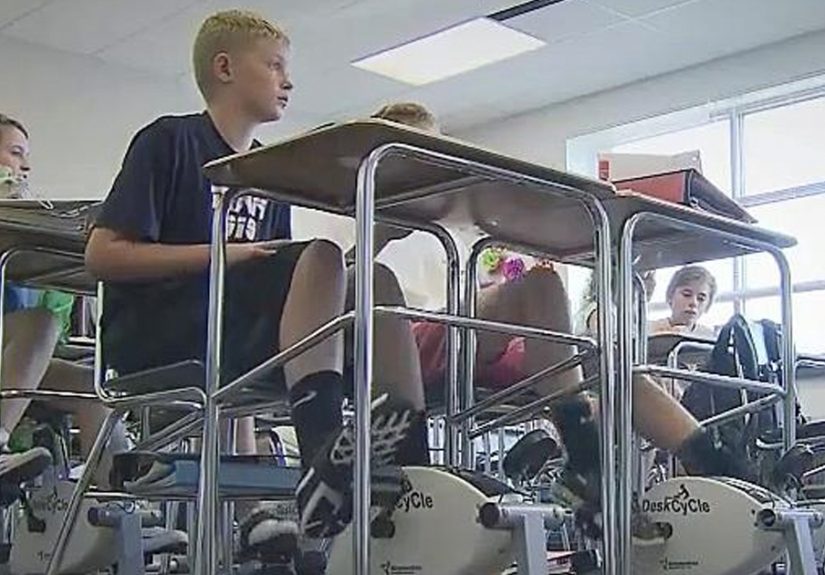
Under-desk cycling machines (often called under-desk pedal exercisers or desk cycles) are compact pedal units
that sit on the floor. Students keep their regular chairs and desks; the pedal unit simply gives their feet
something to do that isn’t “kick the backpack” or “invent percussion on the desk frame.”
How they fit into a classroom
- Quiet pedaling: Many units use smooth resistance systems designed to minimize noise.
- Low-intensity movement: Students can pedal slowly while reading, writing, or listening.
- Minimal footprint: The unit stays under the desk, so it doesn’t turn the room into an obstacle course.
- Student choice: Some teachers assign pedals to specific students; others rotate or offer them as an option.
The most effective classroom setups treat pedaling as background activitylike breathing, but with slightly more
ankle involvement.
The Big Question: Does Pedaling Actually Help Students Focus?
The short version: for many students, purposeful movement during learning can improve on-task behavior and reduce
off-task fidgetingespecially when the movement is low-distraction and well-structured. The longer version is more
honest: it depends on the student, the classroom routines, and how the equipment is introduced.
What research and school practice tend to agree on
Across classroom physical activity approachesmovement breaks, active seating, standing options, and active
desksthere’s a recurring theme: movement can support attention and classroom behavior when it’s integrated
intentionally. Students often demonstrate improved time-on-task and fewer disruptive behaviors after physical
activity opportunities, particularly when teachers keep the activities predictable and tied to classroom norms.
Why pedaling can be a “quiet win” compared to other movement
- It’s contained. The movement doesn’t require students to leave their seats.
- It’s consistent. The rhythm can become calming rather than exciting.
- It’s socially neutral. For many kids, pedaling feels less “spotlight-y” than getting up to move.
- It can reduce sensory-seeking behaviors. The legs get the motion input the brain is craving.
But it’s not magic (and it shouldn’t be sold as magic)
A pedal unit won’t replace quality instruction, relationship-building, or thoughtful supports for students with
learning differences. Also, a small subset of students may find pedaling distracting, may pedal too intensely, or
may turn it into a competition (because kids can compete about literally anything, including blinking).
The sweet spot is when pedaling becomes “barely noticeable movement” that helps the student sustain attention
not a new activity that steals attention.
How One Clever Classroom Idea Went Viral
The story that brought this concept into the spotlight usually goes something like this: a teacher notices that
students who struggle to focus often have excess physical energy. Instead of constant correction“stop tapping,”
“stop rocking,” “stop poking your neighbor’s pencil case like it owes you money”she tries a different approach.
Under-desk cycling machines show up. Students pedal quietly while working. The teacher reports fewer behavior
issues and better concentration. Students who used to “leak energy” through distractions now have a safe, steady
release valve under their desks.
Whether the classroom is middle school math or another subject entirely, the core lesson is the same: learning
doesn’t have to be physically static to be mentally focused.
Implementation: How to Add Desk Cycles Without Creating Desk Chaos
The difference between “innovative active classroom” and “tiny desk gym apocalypse” is routine. Here’s what
successful implementations tend to have in common.
1) Start with a clear purpose (and say it out loud)
Students should understand that pedaling is a focus tool, not a toy. Teachers often frame it like this:
“This is something your body can do so your brain can work.”
2) Set non-negotiable norms
- Pedal silently. If it squeaks, report itdon’t narrate it.
- No speed trials. This is class, not qualifying laps.
- Feet stay on the pedals. Not on the frame, not on the neighbor’s chair, not on the laws of physics.
- Stop on signal. Teach a quick “freeze” cue for transitions.
3) Introduce the equipment like you introduce lab materials
Demonstrate how to adjust resistance (if applicable), how to position the unit, and what “appropriate pedaling”
looks like. If you wouldn’t hand out beakers without modeling, don’t hand out mini bicycles without modeling.
4) Decide on a model: assigned, rotating, or optional
- Assigned: Specific students use the pedals daily based on need and observed benefit.
- Rotating: Students rotate weekly or by class period, reducing equity concerns.
- Optional station: A limited number of pedal units function like flexible seatingstudents sign up.
Many teachers start small (2–6 units) and scale only after classroom routines prove solid.
5) Track simple outcomes
You don’t need a research grant. Teachers often track:
- Missing work (before vs. after)
- Time-on-task observations (quick tally marks)
- Student self-ratings (“Did pedaling help you focus today?”)
- Behavior referrals or redirections per period
The goal is to see whether pedaling is helping this group of students in this roomnot to prove a universal law of
education.
Who Benefits Most From Under-Desk Pedaling?
While every classroom is different, under-desk cycling machines are often most helpful for students who:
- have high physical restlessness or frequent fidgeting
- struggle with sustained attention during independent work
- benefit from sensory input to self-regulate
- need a “movement outlet” that doesn’t interrupt instruction
What about students with ADHD?
Many educators report that movement supports can be particularly helpful for students with attention differences,
including ADHDespecially when movement is predictable and not socially disruptive. That said, supports should be
individualized. A pedal unit can be a great tool in a broader plan, but it’s not a substitute for accommodations,
skill-building, and collaboration with support teams.
What about students who get distracted?
A small number of students may find pedaling too engaging or may hyperfocus on the mechanics. Those students might
do better with alternatives like resistance bands, wobble cushions, or scheduled movement breaks.
Common Concerns (And How Teachers Solve Them)
“Won’t it be noisy?”
It can beif equipment is low-quality or not maintained. Teachers who succeed usually pick units designed for
quiet use, add simple floor grips to prevent shifting, and set “noise expectations” from day one.
“What about cost?”
Outfitting a full classroom can be expensive. Many teachers start with a small set funded through donations,
grants, PTA support, or classroom wish lists. A few units can still make a noticeable difference if used
strategically.
“Is it fair if only some kids get pedals?”
Fair isn’t always equal; fair is meeting needs. Still, teachers often reduce perceived unfairness by creating a
rotation system, positioning pedals as a learning tool, or offering multiple movement supports so students have
options (not a single “cool toy” that everyone wants).
“Safety and accessibility?”
Any movement equipment should be checked for stability, appropriate fit, and safe placement. Students with
mobility needs should have equal access to supports that work for themwhether that’s a pedal unit, alternate
seating, or different accommodations. The best approach is flexible: the tool should adapt to students, not the
other way around.
Alternatives That Work on the Same Principle
Under-desk cycling machines aren’t the only way to help students focus through movement. The bigger concept is
“active learning environments”classrooms that allow controlled motion.
Other movement-friendly focus tools
- Classroom movement breaks: Short, structured bursts between lessons.
- Resistance bands on chair legs: Quiet foot pushing without new equipment under the desk.
- Wobble stools or balance cushions: Gentle core engagement for students who need movement.
- Standing options: A few stand-capable workspaces for students who focus better upright.
- “Choice seating” with norms: A menu of options paired with clear expectations.
The common thread: movement isn’t a reward; it’s part of the learning infrastructure.
How to Talk About Desk Cycles With Parents and Administrators
Under-desk pedaling can look unusual to someone walking past the door with a clipboard. The key is communicating
the “why” clearly and professionally.
What to emphasize
- Academic intent: The primary goal is improved focus and on-task behavior.
- Classroom management: Pedals reduce disruptive fidgeting by channeling movement.
- Health benefits are a bonus: Light movement is supportive, but the classroom isn’t a gym.
- Data and reflection: You’re monitoring outcomes and adjusting based on student needs.
When framed as a structured learning supportnot a gimmickthis approach tends to land much better.
Conclusion: The Brain Learns Better When the Body Isn’t in a Straightjacket
A teacher putting cycling machines under students’ desks isn’t trying to reinvent education. She’s doing something
more realistic: noticing what students need, then designing the environment to support it.
For many kids, movement is not the enemy of focusit’s the doorway to it. Under-desk cycling machines can reduce
fidgeting, increase time-on-task, and help students feel more comfortable during learning. When implemented with
clear norms, thoughtful rollout, and attention to individual needs, pedaling becomes a quiet partner to learning:
legs move, pencils stay busy, and the classroom feels calmer.
And if nothing else, it’s refreshing to see a classroom strategy that doesn’t require students to pretend they’re
statues. Because learning is hard enough without also auditioning for “Most Motionless Human.”
500-word experiences section
Experiences From Classrooms: What It Looks Like When Pedals Meet Real Life
Teachers who experiment with under-desk pedaling often describe a similar “first week storyline.” Day one feels
like introducing a class pet: everyone is intensely interested, slightly too loud, and emotionally committed to
touching it. Day two is smoother. By day five, most students treat pedaling as normallike having a notebook or a
water bottlewhile the teacher quietly celebrates the fact that nobody has asked, “Can I sharpen my pencil?”
twelve times in ten minutes.
Experience #1: The “quiet outlet” for chronic fidgeters
In one common scenario, a teacher identifies a handful of students who struggle most with seated work. These are
not “bad kids.” They’re kids whose bodies show their thinking. When pedaling is introduced, the teacher notices a
shift: fewer chair scrapes, fewer hands wandering into neighbors’ supply zones, and fewer “accidental” desk taps
that somehow always happen during reading.
The teacher’s biggest surprise isn’t that students moveit’s that they move less in disruptive ways.
With a steady outlet under the desk, students stop searching for movement elsewhere. The room sounds calmer.
Transitions feel less like herding caffeinated squirrels. Students report that pedaling helps them “get the energy
out,” which is kid-speak for “my brain can finally pay attention without my legs staging a rebellion.”
Experience #2: The “choice tool” that protects dignity
Another pattern: teachers avoid labeling pedals as “for the kids who can’t behave.” Instead, pedals become a
choice. Students can request them during independent work, rotate in, or use them as a station. That structure
protects student dignity and reduces stigma. It also helps with equity: the classroom isn’t divided into “pedalers”
and “non-pedalers” as a permanent social category.
Teachers who use this model often pair it with brief reflection: “Did pedaling help you focus today?” Students
learn to self-assess. Some discover that pedaling supports them during reading but not during tests. Others find
the opposite. Over time, the tool becomes less about novelty and more about self-managementan executive function
skill disguised as a tiny bicycle.
Experience #3: The “lesson learned” about intensity
Not every experience is instantly perfect. Many teachers discover quickly that intensity matters. If students
pedal like they’re being chased by a math worksheet with legs, it becomes distracting. The fix is usually simple:
define a “focus pace” (slow, steady) and model it. Some teachers use a playful rule: “If I can hear it, it’s too
fast.” Others pair pedaling with quiet work only, not whole-class discussion, to keep cognitive load manageable.
Experience #4: The maintenance reality (a.k.a. Nothing is truly ‘set it and forget it’)
The most realistic teacher takeaway is that classroom tools need upkeep. Pedal units may slide on certain floors,
loosen over time, or need quick checks. Teachers who succeed build micro-routines: students help align units at
the start of class, “equipment monitors” report issues, and the teacher has a backup plan (like resistance bands)
for days when a pedal needs repair. The overall tone stays practical: this is a learning tool, and learning tools
sometimes need tighteningliterally.
Across these experiences, one theme stands out: pedaling works best when it’s treated as part of classroom
systems, not as a miracle object. The smartest implementations aren’t flashy. They’re steady, structured, and
student-centeredexactly what you’d expect from a teacher who’s tired of fighting the laws of childhood energy and
decided to redirect them instead.