Table of Contents >> Show >> Hide
- Why Copper Pots Look So Good in a Kitchen
- Kitchen Styles That Love Copper
- The Best Ways to Display Copper Pots
- How to Keep Copper Decor From Looking Cluttered
- Decorative Copper Can Still Be Practical
- Patina, Polish, and the Great Copper Identity Crisis
- Buying Copper for Decor: What to Look For
- Experiences With Copper Pots as Kitchen Decor
- Final Thoughts
If kitchens had a jewelry box, copper pots would be the pieces wrapped in velvet and shown off to company. They gleam. They glow. They make even a modest kitchen feel like it suddenly knows how to pronounce “coq au vin” correctly. More importantly, copper pots do something rare in home design: they bridge function and beauty without trying too hard. They are cookware, yes, but they are also color, texture, history, and mood.
That is why copper pots keep showing up in dream kitchens, farmhouse kitchens, French-inspired kitchens, modern rustic kitchens, and even small apartments where every square inch has to earn its rent. A row of copper pots can warm up white cabinets, soften industrial finishes, and add richness to kitchens that otherwise feel a little too neat, a little too cold, or a little too “I bought everything in one Saturday trip.” Copper brings soul. It says this room is used, loved, and maybe just a tiny bit dramaticin the best possible way.
Still, decorating with copper pots is not as simple as tossing a saucepan on the counter and calling it a vibe. To make copper cookware feel elevated rather than messy, you need placement, balance, and a little restraint. The goal is curated charm, not kitchen-yard-sale energy. Here is how to make copper pots work as decor in a way that feels stylish, practical, and thoroughly worth admiring.
Why Copper Pots Look So Good in a Kitchen
Copper has a visual magic trick built in: it reflects light while also feeling warm. Stainless steel can look sleek, but it can also feel clinical. Black cookware looks bold, but it sometimes disappears into the room. Copper, by contrast, catches daylight, glows under pendant lighting, and adds a reddish-gold tone that instantly makes a kitchen feel more inviting. It behaves like a neutral, but a glamorous neutralthe kind that shows up overdressed and somehow gets away with it.
That warmth is especially useful in kitchens filled with hard-working materials like stone, tile, glass, and painted cabinets. Copper keeps those surfaces from feeling flat. Against white cabinets, it creates contrast. Against dark green, navy, charcoal, or black, it feels rich and moody. Against natural wood, it looks timeless. That flexibility is a big reason copper pots remain a favorite decorative element across so many kitchen styles.
There is also the matter of shape. Pots, pans, saucepans, kettles, and mixing bowls have curves, handles, rivets, and rounded silhouettes that break up all the straight lines found in most kitchens. Cabinets are boxes. Shelves are rectangles. Tiles are grids. Copper pots arrive like the fun relatives who refuse to sit in stiff dining chairs and instead tell stories in the kitchen. They make the room feel more lived-in.
Kitchen Styles That Love Copper
French Country and European-Inspired Kitchens
This is the obvious one, and for good reason. Copper pots practically flirt with French country style. Pair them with open shelving, creamy cabinets, aged brass, a farmhouse sink, or rustic wood, and the room suddenly feels like it belongs in a countryside home where someone is always baking something buttery.
Farmhouse Kitchens
Farmhouse kitchens thrive on materials that look authentic. Copper works beautifully here because it brings old-world character without needing a full renovation. A single hanging rack of copper pans can make a modern kitchen feel more rooted and personal.
Modern Kitchens
Yes, even modern spaces can handle copper. In a streamlined kitchen, copper acts like a statement accessory. A few polished pieces on a rail or shelf can prevent minimalist design from tipping into sterile territory. Think of copper here as the lipstick of the room: not required, but wow, does it help.
Eclectic and Vintage Kitchens
If your kitchen already mixes old and new, copper pots fit right in. Vintage copper, especially with patina, adds depth and personality. It tells a story even when nobody asks for one. That makes it ideal for eclectic homes, collected interiors, and kitchens that prefer charm over perfection.
The Best Ways to Display Copper Pots
Hang Them Over an Island
A ceiling-mounted pot rack is the classic move because it works. It turns cookware into a focal point, keeps pieces within reach, and frees up cabinet space at the same time. Over an island, copper pots become sculptural. They fill vertical space without crowding the countertops, and they help anchor the center of the room.
The trick is editing. Do not hang every pot you own like you are opening a cookware museum. Choose the prettiest and most useful pieces, vary the shapes, and leave some breathing room between them. If each item can be seen clearly, the display feels intentional. If everything clanks together like an impatient wind chime, it does not.
Use a Wall Rail or Pot Hooks
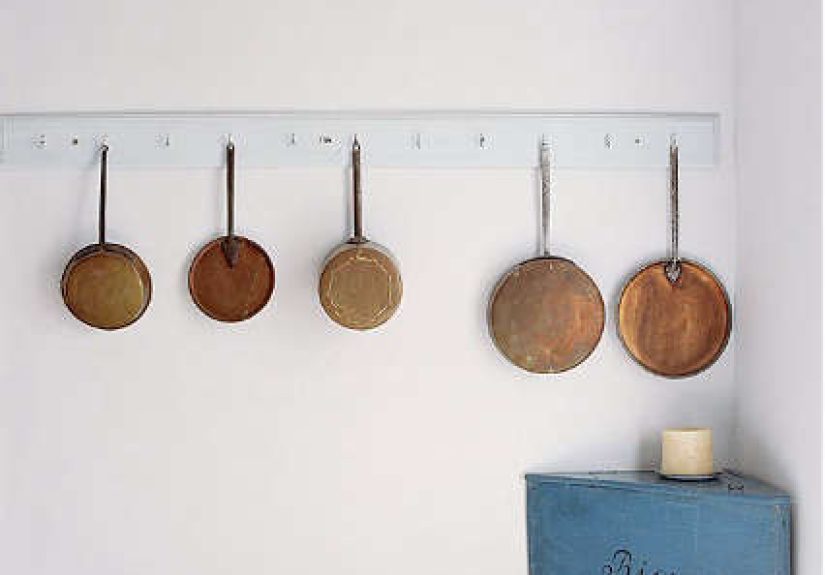
If a ceiling rack is too big or too permanent, a wall-mounted rail is a smart alternative. This works especially well behind a stove, along a backsplash wall, or in a small kitchen where upper cabinets feel heavy. A rail lined with copper pots looks tailored and practicallike the kitchen knows exactly what it is doing.
Wall hooks also create a more casual, collected look. They are ideal for smaller pots, lids, or decorative copper pieces that are beautiful but not used every day. Bonus: they make awkward wall space suddenly useful.
Style Open Shelves With Copper Accents
Open shelving can go wrong fast. One moment it is “airy and charming,” and the next it is “why are there seventeen mugs and a jar of mystery beans?” Copper helps because it adds shine and structure. A stockpot, saucepan, or copper bowl can break up stacks of plates and neutral ceramics, creating contrast without clutter.
Try grouping copper with wood cutting boards, white dishes, cookbooks, or glass jars. The mix keeps the display from becoming too metallic or too theme-y. A little copper goes a long way.
Let One Hero Piece Own the Counter
Not every kitchen needs a full copper collection. Sometimes one gorgeous piece is enough. A polished copper kettle, a large jam pot, or a hammered bowl can become the star of the countertop. This works especially well in kitchens where minimalism matters. One statement piece feels sophisticated. Seven random ones feel like you lost a bet at an antique mall.
Use Under-Island or Lower-Shelf Storage as Decor
Open lower shelves, baker’s racks, and freestanding kitchen tables offer another excellent home for copper pots. Larger pieces stored below a work surface can look orderly and luxurious, especially when grouped by size or finish. This placement feels grounded and useful, which is exactly what good kitchen decor should feel like.
How to Keep Copper Decor From Looking Cluttered
The biggest mistake people make with decorative cookware is forgetting that visibility is not the same thing as beauty. Just because you can see everything does not mean the room looks better. Copper works best when the display is curated.
Start by choosing a lane. Maybe your kitchen uses polished copper with crisp white cabinets. Maybe it prefers aged copper with rustic wood and stone. Maybe you are mixing copper with brass and black accents. Any of those can work, but they should feel deliberate. Random finishes competing for attention make the room feel busy.
Next, repeat the tone elsewhere in the room. A copper pot rack, a small pendant detail, cabinet hardware, or a warm-toned faucet can help the cookware feel connected to the larger design. You do not need a full copper takeover. This is decor, not a penny-based economy. Just enough repetition makes the look feel cohesive.
Also pay attention to scale. Big kitchens can handle a generous hanging display. Small kitchens often look better with a tight edit: one rail, one shelf, or a few standout pieces. Copper already has a strong personality. It does not need a megaphone.
Decorative Copper Can Still Be Practical
One reason copper pots work so well as decor is that they do not have to be purely decorative. In many kitchens, the best-looking items are the ones people actually use. A saucepan hanging by the stove has purpose. A stockpot on a shelf can come down for pasta night. A copper mixing bowl can hold fruit one day and cake batter the next.
This kind of dual-purpose styling makes a kitchen feel more authentic. It says the room is designed for real life, not just photos. And honestly, real life has better snacks.
If you do cook with copper, be mindful of condition and construction. Many modern copper pots are lined, often with stainless steel or tin, which makes them suitable for cooking while preserving that classic copper look. Vintage pieces can be wonderful, but they may need inspection, relining, or gentle use depending on their age and wear. If a piece is too delicate for daily cooking, it can still shine as display decor.
Patina, Polish, and the Great Copper Identity Crisis
One of the most interesting things about copper decor is that there is no single correct finish. Some people love bright, mirror-like polish that sparkles under kitchen lights. Others adore the darker, softened patina that comes with age. Both are beautiful. They just tell different stories.
Polished copper feels crisp, formal, and glamorous. It suits elegant kitchens, tailored spaces, and rooms where you want a little shine. Patinated copper feels storied, relaxed, and collected over time. It suits rustic, vintage, and character-filled kitchens. In other words, polished copper says, “I alphabetize my pantry.” Patinated copper says, “I make soup from instinct.”
If your copper is mainly decorative, you do not need to clean it obsessively. In fact, a little age often makes it better. The point is not to make every piece look brand-new. The point is to let the finish support the style of your kitchen.
Buying Copper for Decor: What to Look For
You do not need a chef’s budget to decorate with copper. Flea markets, estate sales, vintage shops, resale apps, and even modern decor collections can offer beautiful options. Look for interesting silhouettes, sturdy handles, and pieces with enough visual presence to hold their own on display.
Hammered finishes add texture. Lids add shape. Long handles add drama. Rounded stockpots and shallow sauté pans give variety when displayed together. If you are mixing old and new pieces, aim for harmony rather than perfect matching. A little variation often looks more natural.
And yes, even faux-copper or copper-finished pieces can work if the goal is decorative warmth rather than culinary prestige. Nobody is checking your pans for pedigree while complimenting your backsplash.
Experiences With Copper Pots as Kitchen Decor
One of the most charming things about decorating with copper pots is how personal the experience becomes. People rarely talk about copper in a purely technical way. They talk about how it makes them feel. A kitchen that once seemed too cold starts to feel warmer. A blank wall suddenly looks finished. An inherited pot from a grandmother becomes more than cookware; it becomes memory on display.
Many homeowners discover copper almost by accident. They buy one pot because it looks beautiful, then realize that it changes the whole room. What used to be a perfectly nice kitchen becomes a kitchen with character. The light hits the copper in the morning, the metal glows in the evening, and the room feels more alive throughout the day. It is a subtle shift, but it is real. Good decor often works like that. It does not shout. It quietly improves the atmosphere until you cannot imagine the room without it.
There is also a practical satisfaction in seeing something useful become beautiful. People often describe a sense of relief when they stop hiding cookware in crowded cabinets and start displaying the best pieces instead. Suddenly, storage becomes styling. A wall rail solves a space problem. A pot rack clears out a cabinet. A shelf display brings order to items that once felt bulky. The kitchen looks better because it functions better, and that is always a winning combination.
For people who love vintage decor, copper often becomes the gateway to a more collected home. One antique saucepan can lead to a small set. A flea-market kettle can inspire open shelves, linen towels, or a wood-toned cutting board display. Copper has a way of nudging the kitchen toward warmth and story. It encourages rooms to feel layered rather than staged.
Even renters often find that a few copper pieces can personalize a kitchen without major renovation. If you cannot replace cabinets or counters, adding warm metal accents is a clever workaround. A copper bowl with fruit, a small pot on a hook, or a polished kettle near the stove can soften standard-issue finishes and make the room feel more like home. That is the power of detail. Sometimes the kitchen does not need a full makeover. Sometimes it just needs better accessories and less visual boredom.
Another common experience is the evolution of taste. At first, some people want every piece polished to perfection. Later, they begin to appreciate a little tarnish, a little darkening, a little evidence of time. Copper teaches patience in that way. It changes. It mellows. It becomes less showroom and more storybook. And that shift can be oddly comforting in a world that often expects everything to stay shiny forever.
Perhaps the best experience of all is that copper makes the kitchen feel inhabited even when nothing is cooking. Empty kitchens can feel flat. Kitchens with copper feel ready. Ready for dinner, ready for conversation, ready for someone to walk in and say, “Okay, wow, this is gorgeous.” And that may be the strongest argument for copper pots as decor: they make the kitchen look like the heart of the home, even before the oven is on.
Final Thoughts
Copper pots as kitchen decor are not a trend that survives on novelty alone. They last because they solve several design problems at once. They add warmth, create texture, fill vertical space, support storage, and bring a sense of tradition to a room that works hard every day. They can look elegant, rustic, vintage, modern, or casually collected depending on how you style them.
The secret is intention. Choose pieces you genuinely love. Display them where they make visual and practical sense. Let them support your kitchen rather than overwhelm it. Whether you hang a full set above an island or simply give one glorious copper pot a place of honor on the counter, the effect is the same: your kitchen feels richer, warmer, and far more interesting.
Which is not bad for a bunch of pots.