Table of Contents >> Show >> Hide
- What CPAP Treats (and Why Sleep Apnea Is a Bigger Deal Than Snoring)
- How a CPAP Machine Works (No, It Doesn’t “Breathe for You”)
- CPAP vs APAP vs BiPAP: Same Family, Different Personalities
- How You Actually Get a CPAP (Step-by-Step, Without the Mystery)
- Choosing a Mask: The Make-or-Break Decision
- Common CPAP Side Effects (and How to Fix Them Without Losing Your Mind)
- Cleaning and Maintenance: Keep It Safe, Not Fancy
- CPAP Compliance and Insurance: The “4-Hour Rule” Explained
- What Benefits Can CPAP Provide?
- When CPAP Isn’t Enough (or Isn’t Tolerable): Other Options to Know About
- Frequently Asked Questions About CPAP Machines
- Real Experiences With CPAP Therapy (What People Actually Say After the First Few Weeks)
- Experience #1: “I didn’t realize how tired I was until I wasn’t.”
- Experience #2: The mask trial-and-error phase (aka “The Great Seal Negotiation”)
- Experience #3: Humidification is the unsung hero
- Experience #4: The “data nerd” advantage
- Experience #5: Partners notice before you do
- Experience #6: The turning point is usually “support,” not “willpower”
- Conclusion
If obstructive sleep apnea (OSA) is your airway playing “Red Light, Green Light” all night, a CPAP machine is the calm referee that blows the whistle and keeps the game moving.
CPAP stands for Continuous Positive Airway Pressure, and it does exactly what it says: it delivers a steady stream of pressurized air through a mask to help keep your airway open while you sleep.
No drama. No wrestling match with your own throat. Just… breathing.
CPAP therapy has a reputation: highly effective, slightly weird at first, and capable of turning a foggy, exhausted morning person into a functioning human again.
In this guide, we’ll break down how CPAP works, who it helps, what to expect, and how to make it actually tolerable (yes, even if you’re a side-sleeper, a mouth-breather, or someone who thinks “mask” belongs in a superhero movie).
What CPAP Treats (and Why Sleep Apnea Is a Bigger Deal Than Snoring)
CPAP is most commonly prescribed for obstructive sleep apnea, a condition where the upper airway narrows or collapses during sleep.
Your breathing partially reduces (hypopnea) or briefly stops (apnea), over and over. Your brain notices. Your body panics a little. You micro-wake to reopen the airway.
Rinse and repeatdozens or even hundreds of times a night.
Common signs you might hear about (or hear complaints about)
- Loud snoring (often reported by a partner, roommate, or innocent bystander)
- Gasping or choking during sleep
- Excessive daytime sleepiness, brain fog, irritability, or trouble concentrating
- Morning headaches or dry mouth
- High blood pressure or heart-related concerns showing up in the background
OSA isn’t just “snoring with confidence.” It’s linked with higher rates of cardiovascular problems and high blood pressure, and it can worsen daytime sleepinessone reason untreated OSA raises concerns about drowsy driving and work performance.
Treating sleep apnea is about more than quieting the bedroom; it’s about protecting long-term health and quality of life.
How severity is measured: AHI in plain English
Sleep specialists often describe OSA using the apnea-hypopnea index (AHI), which measures the average number of breathing events per hour of sleep.
In adults, a common framework is:
- Mild OSA: 5 to fewer than 15 events/hour
- Moderate OSA: 15 to fewer than 30 events/hour
- Severe OSA: 30 or more events/hour
Numbers matter, but symptoms matter too. Someone with “mild” AHI can still feel awful, and someone with a higher AHI might under-report sleepiness because they’ve normalized exhaustion.
That’s why a good evaluation blends test results with your real-life experience.
How a CPAP Machine Works (No, It Doesn’t “Breathe for You”)
A CPAP machine doesn’t replace your breathing. It supports your airway.
Think of your upper airway like a soft straw: when the walls collapse, airflow stops. CPAP gently pressurizes the air so the straw stays open.
Your lungs still do the work; the machine just prevents the “pinch point” from closing.
The basic parts of a CPAP setup
- Motor/blower unit: draws in room air, filters it, and pressurizes it
- Filter(s): help trap dust and particles before air reaches you
- Tubing (hose): moves the air from machine to mask
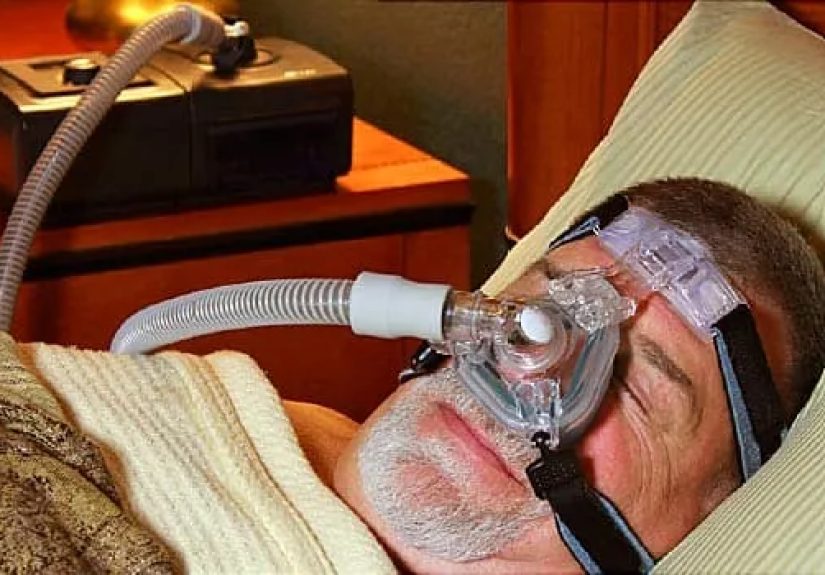
- Mask interface: nasal pillows, nasal mask, or full-face mask
- Humidifier (optional but beloved): adds moisture to reduce dryness and congestion
Most people notice results in two ways: snoring drops fast, and mornings feel less like dragging a piano up a staircase.
Some benefits show up quickly; others (like blood pressure improvement in some people) may take longer and depend on consistent use.
CPAP vs APAP vs BiPAP: Same Family, Different Personalities
“CPAP” is often used as a catch-all term, but there are multiple forms of positive airway pressure (PAP) therapy.
Here’s the simple breakdown:
CPAP (Continuous PAP)
Delivers a fixed, steady pressure all night. It’s the classic option and still the most recognized.
Fixed pressure can be great when your needs are consistent and your settings are well dialed-in.
APAP (Auto-adjusting PAP)
Adjusts pressure within a prescribed range based on detected airway resistance, flow limitation, snoring, or events.
APAP can be useful if your pressure needs vary with sleep position, nasal congestion, or different sleep stages.
BiPAP/BPAP (Bilevel PAP)
Provides two pressures: a higher one when you inhale and a lower one when you exhale.
It’s often considered when higher pressures are needed, exhaling feels difficult on CPAP, or specific breathing patterns require bilevel support.
The “best” option depends on your diagnosis, comfort, and response to therapyso it’s worth working with a sleep specialist rather than letting the internet pick your air pressure like it’s a Spotify playlist.
How You Actually Get a CPAP (Step-by-Step, Without the Mystery)
1) Diagnosis: sleep study, home test, or lab test
A clinician may recommend a sleep evaluation if symptoms and risk factors point toward OSA.
Testing can be done through an in-lab overnight study (polysomnography) or, for some people, a home sleep apnea test.
Your results help determine whether OSA is present, how severe it is, and what treatment is appropriate.
2) Prescription and setup
CPAP is a prescription therapy. The prescription typically includes machine type (CPAP/APAP/BPAP), pressure settings or range, and mask/interface recommendations.
Many modern machines record usage data, leak rates, and event indices to help your clinician fine-tune therapy.
3) Pressure “titration” and follow-up
Settings might be established during a titration study in a sleep lab or adjusted over time using APAP data.
Follow-up matters, especially in the first month, because small tweaksmask fit, humidity, ramp timingcan be the difference between “life-changing” and “I put it in the closet.”
Choosing a Mask: The Make-or-Break Decision
If CPAP therapy has a secret villain, it’s not the air pressure. It’s a mask that doesn’t fit your face.
Comfort, seal, and your breathing style (nose vs mouth) all matter.
Common mask types
- Nasal pillows: minimal, lightweight inserts that seal at the nostrils
- Nasal mask: covers the nose; a common balance of stability and comfort
- Full-face mask: covers nose and mouth; often helpful for mouth-breathing or chronic nasal blockage
Real-world example: picking a mask based on your sleep style
Imagine Taylor, a side-sleeper with seasonal allergies. Nasal pillows might work greatuntil pollen season turns their nose into a traffic jam.
A nasal mask plus heated humidification might keep things comfortable, but if Taylor’s mouth falls open at night, leaks happen and dryness follows.
In that case, a chin strap or a full-face mask might be the better “sleep like a normal person” move.
The point: the right setup is personal, and it’s normal to try more than one mask to get it right.
Common CPAP Side Effects (and How to Fix Them Without Losing Your Mind)
Many CPAP issues are not “you failing CPAP.” They’re just solvable friction.
Here are the usual suspects and the fixes that sleep clinics suggest most often.
Dry mouth or dry nose
- Try: heated humidifier, heated tubing, chin strap (if mouth leak), mask refit
- Why it works: moisture reduces irritation; less leaking keeps air where it belongs
Stuffy nose or congestion
- Try: humidification, saline rinse (if appropriate), addressing allergies with your clinician’s advice
- Also check: filter cleanliness and bedroom air quality
Mask leaks and “air in my eyes”
- Try: different cushion size, adjusting straps (not over-tightening), mask liners
- Tip: a leak is often a fit issue, not a “tighten until you become a waffle” issue
Skin irritation or pressure marks
- Try: mask liners, alternating mask styles, gentle cleaning of face and mask cushion, correct sizing
- Ask about: different cushion materials if irritation persists
Aerophagia (swallowing air, bloating)
- Try: pressure adjustments (clinician-guided), ramp features, different PAP mode if needed
- Don’t DIY pressure changes unless your clinician has specifically instructed you to do so
Claustrophobia or anxiety
- Try: desensitization practice (wear mask awake while reading or watching TV), starting with a minimal mask
- Use: ramp feature so pressure increases gradually
If you remember one thing: discomfort is common early on, but it’s often fixable.
The goal is not to “tough it out.” The goal is to build a setup you’ll actually use.
Cleaning and Maintenance: Keep It Safe, Not Fancy
CPAP maintenance doesn’t need to look like a science fair project.
In general, most manufacturers recommend routine cleaning with mild soap and water for mask parts and regular replacement of filters and supplies on a schedule.
The boring approach is often the best approach.
Important safety note about ozone/UV CPAP cleaners
Devices that claim to clean CPAP equipment using ozone gas or ultraviolet (UV) light have raised safety concerns.
The FDA has warned that it has not authorized such devices for CPAP cleaning and has noted concerns about whether they effectively clean internal surfaces and whether they could damage equipment or expose users to irritants.
If you’re unsure, follow your CPAP manufacturer’s instructions and ask your clinician or durable medical equipment provider.
Simple habits that prevent “gross CPAP”
- Keep the mask cushion clean so it seals well
- Replace filters as recommended so airflow stays clean
- Use distilled water if your clinician or manufacturer suggests it (especially to reduce mineral buildup)
- Let components fully air-dry after cleaning
CPAP Compliance and Insurance: The “4-Hour Rule” Explained
Many insurers (including Medicare) may require proof that you’re using CPAP regularlyespecially during the early trial period.
A common benchmark is using the machine at least 4 hours per night on 70% of nights within a consecutive 30-day window during the first 90 days.
Machines can track usage automatically, and your provider can help submit documentation.
How to hit compliance without turning bedtime into homework
- Start with naps: short sessions help you adapt faster
- Fix leaks early: leaks trigger wake-ups and mask rage
- Use humidification: dryness is a top reason people quit
- Ask for help fast: the first two weeks are the easiest time to improve comfort
Compliance rules can feel annoying, but they’re also a reminder: CPAP only works when it’s on your face.
Not next to your bed. Not in a drawer. Not “emotionally supporting” you from a shelf.
What Benefits Can CPAP Provide?
The most immediate benefit many people notice is less daytime sleepiness.
When breathing events are reduced, sleep becomes more continuous and restorative.
Partners often celebrate the reduction in snoring, toosometimes with the enthusiasm of someone who just got their life back.
Potential benefits people commonly report
- Better morning energy and mental clarity
- Fewer nighttime bathroom trips (for some people)
- Improved mood and less irritability
- Better blood pressure control in some individuals, especially with consistent use
- Improved quality of life for the person using CPAP and the person sleeping nearby
CPAP isn’t a magic wand, and results vary. But when it’s properly fitted and consistently used, it’s one of the most effective treatments for moderate-to-severe OSA.
When CPAP Isn’t Enough (or Isn’t Tolerable): Other Options to Know About
Some people can’t tolerate CPAP even after troubleshootingor they have mild OSA and prefer different approaches.
Depending on your situation, a clinician might discuss:
- Oral appliances (custom devices that reposition the jaw/tongue)
- Positional therapy (training yourself off back-sleeping if that worsens events)
- Weight management and lifestyle changes (often supportive, sometimes transformative)
- Upper airway surgery for carefully selected cases
- Hypoglossal nerve stimulation (an implanted therapy for certain candidates)
The right plan is individualized. If CPAP isn’t working for you, that’s not “game over”it’s “time for a smarter strategy.”
Frequently Asked Questions About CPAP Machines
Do I have to use CPAP forever?
Some people use CPAP long-term because it consistently manages their OSA.
Others may reduce severity with weight changes, surgery, or alternative treatments.
The safe answer is: treat CPAP as your current best therapy, and reassess with your clinician if your health status changes.
Can I travel with a CPAP machine?
Yes. Many people travel with standard or travel CPAP devices. Keep it in a protective bag, plan for power needs, and bring extra supplies.
If you use a humidifier, you may choose to skip it for short trips (if comfortable) or use it as usual.
What if I’m sick or congested?
Some people find CPAP harder during colds; others find it helps because it supports airflow.
Humidification, mask adjustments, and clinician-guided symptom management can help you stay consistent.
Real Experiences With CPAP Therapy (What People Actually Say After the First Few Weeks)
The clinical side of CPAP is important, but the lived experience is where most people get stuckor succeed.
Below are real-world patterns people commonly report when starting CPAP therapy. (These are composite experiences, not medical advice, and your results can vary.)
Experience #1: “I didn’t realize how tired I was until I wasn’t.”
A lot of CPAP users describe a strange moment around week two or three: they wake up and notice the absence of exhaustion.
Not a fireworks displaymore like someone turned off a loud, annoying fan in the background of their life.
They stop needing three snoozes. Their afternoon slump becomes less dramatic.
They still have normal human days, but the baseline improves.
Experience #2: The mask trial-and-error phase (aka “The Great Seal Negotiation”)
Many first-time users assume one mask should work for everyone.
Then they discover faces are… different. Who knew?
One person does great with nasal pillows; another feels like their nostrils are filing a complaint.
Some people love full-face masks because mouth breathing is real; others feel more “masked” than “rested.”
The most common success story isn’t “I loved it on night one.”
It’s: “I adjusted the fit, tried a different cushion size, added humidification, and suddenly it clicked.”
Experience #3: Humidification is the unsung hero
Dry mouth, dry nose, and congestion are frequent early problemsespecially in winter, in dry climates, or with allergies.
People often report that adding (or properly setting) a heated humidifier changes everything.
It can reduce irritation, make airflow feel gentler, and cut down on that “I woke up chewing cotton” sensation.
If CPAP feels harsh, humidity and mask fit are two of the first levers many clinics pull.
Experience #4: The “data nerd” advantage
Modern CPAP machines often display usage hours, mask seal info, and sometimes a simplified event index.
Some users find this motivatinglike closing rings on a fitness tracker, except the goal is “breathe normally while unconscious.”
These users tend to spot patterns: leaks happen when they sleep on their back, or congestion nights spike events, or a certain pillow position breaks the seal.
With clinician guidance, the data can help fine-tune comfort and effectiveness.
Experience #5: Partners notice before you do
Partners often report a dramatic drop in snoring and nighttime gasping.
Sometimes the person using CPAP feels “about the same” at first, but their partner is ready to throw a parade because the bedroom got quiet.
Over time, as consistent use adds up, the CPAP user may notice better mood and energywhile the partner enjoys the secondary benefit of sleeping like a person who isn’t on overnight emergency alert.
Experience #6: The turning point is usually “support,” not “willpower”
People who succeed with CPAP often describe getting help early:
they call the equipment provider, ask for a refit, request a different mask style, or talk to their clinician about dryness or bloating.
People who struggle often try to power through discomfort alone until they associate CPAP with frustration.
The irony: many problems have straightforward fixes once a professional sees the setup.
If you’re new to CPAP, it can help to set expectations: the first nights may feel awkward, but comfort and routine usually improve.
CPAP is a skilllike learning to sleep with a new pillow, except the pillow has tubing and your future self may thank you loudly.
Conclusion
A CPAP sleep apnea machine is one of the most effective treatments for obstructive sleep apnea because it tackles the core problem: airway collapse during sleep.
The keys to success are the right diagnosis, the right mask fit, and early troubleshooting.
Add humidification if dryness shows up, keep cleaning simple and safe, and work with your sleep team if something feels off.
With consistent use, many people sleep better, feel better, and stop treating mornings like an extreme sport.