Table of Contents >> Show >> Hide
- What Is Dirty Bulking?
- Does Dirty Bulking Work for Building Muscle?
- The Big Downsides of Dirty Bulking
- So… Who (If Anyone) Might Consider Dirty Bulking?
- How to Bulk Smarter (Without Turning Every Meal Into a Cheat Meal)
- A Simple Example: Clean-ish Bulk Day With a Little “Dirty”
- Signs Your Dirty Bulk Is Turning Into “Just Getting Fluffier”
- How to Pivot If You’ve Already Been Dirty Bulking
- Bottom Line: Is Dirty Bulking Worth It?
- Experiences From the “Dirty Bulk” Trenches (About )
Dirty bulking is the nutritional equivalent of yelling, “Witness me!” while hurling a cart full of burgers, donuts, and family-size cereal boxes into your kitchen.
It’s a real approach some lifters use to gain weight fastoften with the hope that more calories will translate into more muscle.
And yes, a calorie surplus can support muscle growth. But “can” is doing a lot of heavy lifting in that sentence.
If you’ve ever wondered whether dirty bulking is a genius shortcut or just a fast track to “I can’t see my abs and my stomach is mad at me,” you’re in the right place.
We’ll break down what dirty bulking is, whether it actually works, what it can do to your health and performance, and how to bulk smarter without living on drive-thru receipts.
What Is Dirty Bulking?
“Bulking” simply means eating in a calorie surplusconsuming more energy than you burnso your body has extra fuel to build muscle alongside progressive resistance training.
“Dirty bulking” takes that surplus and turns the dial to maximum, prioritizing calories above food quality.
The idea is straightforward: if you struggle to gain weight, ultra-calorie-dense foods make it easier to hit big numbers.
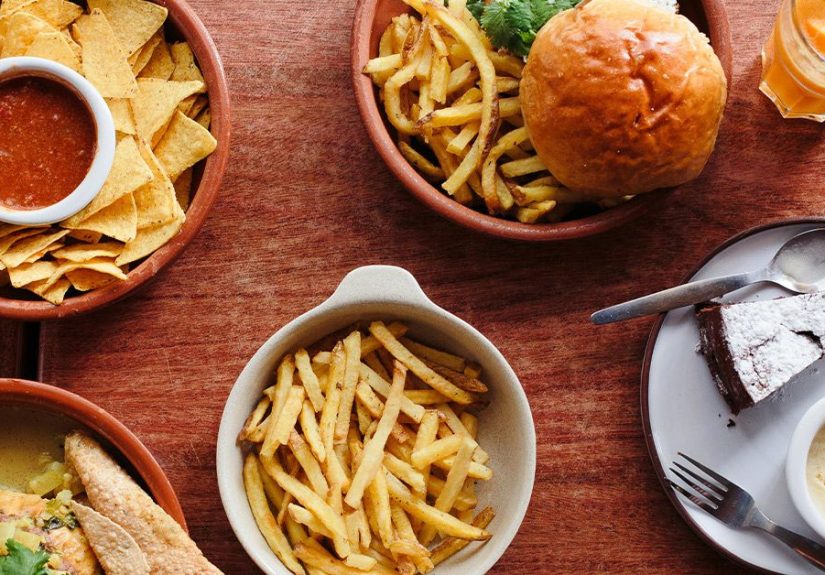
In practice, dirty bulking often looks like frequent fast food, sugary drinks, processed snacks, and oversized portionsbecause it’s easy, cheap, and (let’s be honest) delicious.
But it’s also a method that can bring a lot of “bonus prizes” you didn’t order: rapid fat gain, digestive issues, sluggish workouts, and less-than-stellar bloodwork.
Dirty Bulk vs. Clean (Lean) Bulk
A clean (or lean) bulk aims for a smaller, more controlled surplus with mostly nutrient-dense foodsthink lean proteins, whole grains, fruits, vegetables, beans, dairy, and healthy fats.
The goal is slower weight gain with a higher percentage of that gain coming from lean mass.
Dirty bulking is the opposite strategy: “If it has calories, it counts.” It can be effective for adding body weight quickly, but it often increases fat mass more than people expect.
For many lifters, the question becomes: “Is the speed worth the trade-offs?”
Does Dirty Bulking Work for Building Muscle?
Here’s the nuance: a calorie surplus can help support muscle growth, but a huge surplus doesn’t automatically mean more muscle.
Your rate of muscle gain is limited by training stimulus, recovery, genetics, sleep, total protein intake, and how long you’ve been lifting.
Once those factors hit their natural speed limit, extra calories don’t magically convert into extra bicepsthey’re more likely to convert into extra body fat.
What the evidence suggests
Sports nutrition research and clinical guidance consistently support the basics: resistance training plus adequate energy and protein supports hypertrophy.
But when the surplus gets large, the “partitioning” of weight gain (muscle vs. fat) can skew toward fat.
In fact, research in resistance-trained participants suggests larger surpluses can produce similar strength and muscle-size outcomes compared with smaller surpluseswhile increasing skinfold thickness (a proxy for body fat) more clearly.
Translation: you might bench more either way, but with a very aggressive surplus, your belt might also start negotiating its exit strategy.
Why people think it works (and sometimes it does)
- It’s easier to eat enough. If you’re a “hard gainer,” a big surplus can be the first time the scale actually moves.
- Training feels fueled. More carbs and total calories can boost gym performance and recoveryespecially if you were previously under-eating.
- Convenience wins. When calories are the only goal, meal planning becomes “open mouth, insert food.”
But the key point is that these benefits don’t require a junk-heavy approach. You can get adequate calories with better food quality and fewer downsides.
The Big Downsides of Dirty Bulking
1) You gain fat faster than you think
The main risk of dirty bulking is simple math: if you eat far above what your body can use for muscle building and training, the rest is storedmostly as fat.
That fat gain can be substantial, and it may not improve performance.
Some athlete data reviewed in clinical sports medicine commentary has found no meaningful difference in muscle gains between overeating groups and maintenance groups, while fat mass increased significantly more in the overeating groups.
And here’s the part nobody puts on the motivational montage: the more fat you gain, the longer (and more miserable) your cutting phase often becomes.
2) Processed-food-heavy bulks can wreck your “feel good” meter
A dirty bulk often leans on ultra-processed foods that are high in added sugars, saturated fat, and sodium.
Public health research links overconsumption of processed foods with poor diet quality and higher risk factors tied to obesity, type 2 diabetes, and hypertension.
Even if you’re young and active, repeatedly smashing ultra-processed, low-fiber meals can lead to energy crashes, poor digestion, and workouts that feel like you’re lifting in a fog.
3) Cardiometabolic markers can drift the wrong direction
When your bulk is built on high saturated fat and frequent refined carbs, you’re more likely to see undesirable changes in cholesterol, triglycerides, and blood pressureespecially if body fat climbs.
The American Heart Association emphasizes limiting saturated fat (often recommending less than 6% of calories), largely because saturated fat raises LDL (“bad”) cholesterol and increases cardiovascular risk.
No, one burger won’t summon a cardiologist like Beetlejuice. But weeks and months of “anything goes” can add upparticularly if your waistline is growing quickly.
4) Micronutrients and fiber get pushed out
Dirty bulking tends to crowd out nutrient-dense foods.
It’s hard to hit meaningful fiber, potassium, magnesium, and a broad range of vitamins when most of your calories come from pizza, soda, and snack cakes.
Over time, that can show up as constipation, bloating, worse training recovery, low energy, and a general sense that your body is filing formal complaints.
5) The cut afterward can be harder (and sometimes harsher)
Bulking and cutting are often treated like two separate lives: “Bulk Me” and “Cut Me.”
But if Bulk Me gains too much fat, Cut Me needs a longer calorie deficit, more diet discipline, and more time living in “I would fight a bear for a rice cake” mode.
Many people find that the psychological and physical stress of an extended cut outweighs the convenience of a dirty bulk.
So… Who (If Anyone) Might Consider Dirty Bulking?
For most recreational lifters, dirty bulking is not the best first choice.
That said, some situations can make an aggressive bulk tempting:
- Very underweight individuals who struggle to eat enough, under clinician guidance.
- Certain strength or collision sport athletes whose performance benefits from higher body mass (even if some gain is fat).
- Short-term “bridge” phases where someone uses a few calorie-dense convenience foods while transitioning toward a higher-quality bulk.
Even in those cases, the smarter play is usually “calorie dense, not nutrient empty.”
In other words: more trail mix and olive oil, fewer soda refills and deep-fried mystery baskets.
How to Bulk Smarter (Without Turning Every Meal Into a Cheat Meal)
Aim for a conservative surplus first
A common evidence-informed approach is a modest calorie surplusoften around 5–20% above maintenance, scaled to training experience and rate of gain.
Newer lifters can often gain muscle faster and may tolerate a slightly larger surplus, while advanced lifters typically benefit from slower gain.
If your weight is jumping quickly week to week, odds are high that a meaningful chunk is fat.
Protein: set it, then forget the drama
Muscle gain is much easier when protein is adequate and spread across the day.
Many sports nutrition position statements place active individuals in a range around 1.4–2.0 g/kg/day depending on training type and goals, with resistance training often toward the higher end.
If you prefer pounds: that’s roughly 0.6–0.9 g per pound for many lifters.
Practical move: build each meal around a protein anchor (chicken, fish, eggs, Greek yogurt, tofu, beans, lean beef, whey, etc.), then add carbs and fats to hit your calorie target.
Carbs and fats: pick quality most of the time
Carbs support training intensity and glycogen replenishment. Choose mostly complex options: oats, rice, potatoes, whole grains, fruit, beans, and vegetables.
For fats, emphasize unsaturated sources: olive oil, avocado, nuts, seeds, and fatty fish.
Keep an eye on saturated fat; the heart-health consensus generally recommends limiting it, especially if your diet is already heavy in red meat, full-fat dairy, and processed foods.
Use “calorie-dense, nutrient-dense” boosters
If you’re struggling to eat enough, you don’t need junkyou need density:
- Add olive oil to rice, pasta, and veggies
- Use nut butter in oatmeal or smoothies
- Snack on trail mix, nuts, cheese, or hummus
- Choose whole milk or higher-protein yogurt if it fits your goals
- Drink some calories (smoothies) instead of forcing huge plates
Try the 80/20 rule instead of “anything goes”
If you love the idea of dirty bulking because it feels mentally freeing, keep the freedombut set boundaries.
An “80/20 bulk” is simple: about 80% of your calories come from nutrient-dense foods, and about 20% can be fun foods.
That’s enough to make the diet enjoyable and easier to sustain without letting every day become a crunchy, greasy science experiment.
A Simple Example: Clean-ish Bulk Day With a Little “Dirty”
Here’s what a moderate surplus day might look like for a lifter who needs extra calories but wants to limit collateral damage:
Breakfast
- Oatmeal with whole milk, banana, peanut butter
- 2–3 eggs (or egg whites plus whole eggs)
Lunch
- Rice bowl: chicken or tofu, rice, beans, salsa, avocado, veggies
- Optional “fun add”: chips and guac (portion-controlled)
Pre-workout snack
- Greek yogurt with honey and berries, or a smoothie with whey + fruit
Dinner
- Salmon or lean beef, potatoes, big salad with olive-oil dressing
Dessert / flexible calories
- Ice cream or cookiesenjoyed on purpose, not “oops I blacked out in the pantry”
Notice what’s missing: the need to eat like a raccoon in a gas station.
You still get surplus calories, training fuel, and enjoymentwithout relying on junk as the foundation.
Signs Your Dirty Bulk Is Turning Into “Just Getting Fluffier”
- Your body weight is rising fast (week after week) and your waist measurement is climbing quickly
- You feel sluggish during workouts, not energized
- Digestion is consistently rough (heartburn, bloating, constipation)
- Sleep quality drops (late-night heavy meals and sugar can do that)
- You’re getting more calories but not adding reps, load, or training volume over time
A bulk is supposed to support better training. If your training is worse, the bulk isn’t “hardcore”it’s just unhelpful.
How to Pivot If You’ve Already Been Dirty Bulking
If you’ve been going full send and you’re not thrilled with the results, you don’t need a dramatic nutrition exorcism.
Try this:
- Step 1: Bring calories closer to maintenance for 2–4 weeks (a “reset” phase).
- Step 2: Keep protein high and tighten food quality (more whole foods, fewer liquid sugars).
- Step 3: Reintroduce a smaller surplus and track rate of gain (scale + waist + gym performance).
- Step 4: If body fat is high, consider a short “mini-cut” before bulking again.
The goal isn’t punishment. The goal is to get back to a surplus that helps you train hard, recover well, and look/feel better over time.
Bottom Line: Is Dirty Bulking Worth It?
Dirty bulking can add weight quickly, but it’s not a proven shortcut to more muscleand it often comes with predictable downsides:
faster fat gain, poorer food quality, and potentially worse cardiometabolic markers if the pattern continues long enough.
For most lifters, a controlled surplus with high protein and mostly nutrient-dense foods is more effective, easier to maintain, and far kinder to your future cutting phase.
If you still want some flexibility, go for a “mostly clean, occasionally fun” approach.
You can build muscle without turning every meal into a competitive eating audition.
Experiences From the “Dirty Bulk” Trenches (About )
Ask ten lifters about dirty bulking experiences and you’ll often hear the same story arcjust with different fast-food brands.
The beginning is usually pure excitement: the scale is finally moving, meals feel indulgent, and there’s a weird joy in ordering “the combo” without doing mental math.
Some people describe their early dirty-bulk weeks as the first time they’ve ever felt consistently “full” and fueled.
Workouts can feel strong at first, especially if they were under-eating beforehand; more carbs and total calories can translate into better pumps, better recovery, and that swagger that comes from adding weight to the bar.
Then comes the middle chapter: “Why do I feel like a stuffed suitcase?”
Many lifters report that once the novelty wears off, the food volume (and the type of food) starts pushing back.
Digestive complaints are common: bloating, heartburn, unpredictable bathroom schedules, and a general sensation that your stomach is writing a resignation letter.
Sleep can take a hit tooespecially when late-night heavy meals become routine.
People often say they wake up feeling puffy and thirsty, which isn’t shocking if sodium and added sugars are doing most of the heavy lifting.
The mirror chapter is where the emotional plot twist happens.
Early on, clothes fitting tighter can feel like progressuntil it’s not your shoulders stretching your shirts, it’s your midsection stretching everything.
A frequent dirty-bulk surprise is realizing how quickly fat gain can outpace muscle gain.
Lifters describe feeling “bigger,” but not necessarily looking more athletic.
Some say their arms and legs look a little fuller, but their waist changes faster, which can be frustrating if the original goal was a leaner, more muscular look.
Another common experience is the “performance paradox.”
Even with more calories, workouts don’t always keep improving.
Some lifters feel sluggish, especially on high-fat, low-fiber days where energy is high but digestion is slow.
They’ll describe sessions where they’re technically stronger, yet they feel flat, tired, or mentally foggylike the body has plenty of fuel, but it’s not premium fuel.
That’s often the moment people start experimenting with a cleaner bulk: swapping soda for smoothies, adding fruits and vegetables, choosing more consistent protein, and using calorie-dense whole foods (nuts, oils, dairy, rice) instead of relying on constant “treat” foods.
Finally, there’s the “cut tax.”
Many people say the hardest part of dirty bulking isn’t the bulkit’s the long, grinding cut afterward.
When the surplus is aggressive, the diet correction often needs to be longer, which can feel like paying interest on every impulsive drive-thru run.
The most satisfied lifters tend to land on a middle ground: an intentional surplus, protein as a non-negotiable, mostly high-quality meals, and a planned slice of fun so the diet doesn’t feel like a punishment.
In other words: bulk like an adult, snack like a human, and save the chaos for your PR attemptsnot your grocery list.