Table of Contents >> Show >> Hide
- What makes a “waterless diorama snow globe” different?
- Materials and tools
- How to build a waterless diorama-style snow globe (step-by-step)
- Step 1: Pick a theme before you pick a jar
- Step 2: Test-fit everything (seriously, do it)
- Step 3: Build a “stage” for better visibility
- Step 4: Prep surfaces for a stronger bond
- Step 5: Glue the main focal point first
- Step 6: Add supporting details and foreground texture
- Step 7: Optional diorama upgradeadd a backdrop
- Step 8: Let everything dry completely
- Step 9: Add the “snow”
- Step 10: Seal and assemble
- Diorama design tips that make your globe look “expensive”
- Holiday theme ideas (with specific, buildable examples)
- Kid-friendly and pet-aware crafting
- Troubleshooting: common problems (and fixes)
- Display and gifting ideas
- Sustainability bonus: upcycle like a holiday hero
- Conclusion
- Extra: “Been-there” experiences and lessons (about )
If you love the idea of a snow globe but not the part where you accidentally create a tiny indoor flood (or the part where glitter shows up in your laundry until 2039), you’re going to adore DIY holiday waterless diorama-style snow globes. They’re the mess-free, shakeable, shelf-stable cousins of traditional liquid globesbuilt like miniature stage sets inside jars, cloches, or ornaments.
This guide walks you through how to design, build, and troubleshoot a dry (waterless) snow globe diorama that looks store-bought, feels personal, and holds up through holiday chaos (including curious kids, nosy cats, and that one relative who insists on “just one more shake”).
What makes a “waterless diorama snow globe” different?
A classic snow globe suspends “snow” in liquid, usually with thickening agents so the flakes fall slowly. A waterless snow globe skips the liquid entirely. Instead, you build a dioramaa miniature scene with depththen add loose faux snow or glitter that swirls when shaken.
Why you might prefer the waterless version
- No leaks. Which is great, because your holiday spirit should be overflowingyour mantel should not.
- Easier gifting. Waterless globes ship better and don’t freeze in transit.
- More “diorama” freedom. Paper backdrops, layered scenes, and delicate elements won’t get waterlogged.
- Low-maintenance display. No cloudy water, no algae nightmares, no “why is it yellow now?” mystery.
Materials and tools
You can make this as budget-friendly or boutique as you want. The magic is in the scene design, not the price tag.
Containers (pick your vibe)
- Wide-mouth Mason jar (classic, easiest to build inside)
- Apothecary jar (more elegant, more “fancy cabin in the woods” energy)
- Plastic jar (kid-friendly and drop-resistant)
- Fillable clear ornament (mini “snow globe ornament” for trees)
- Cloche or glass dome (a snow globe look without the shakemore “museum display,” less “toddler maraca”)
Miniatures and scene pieces
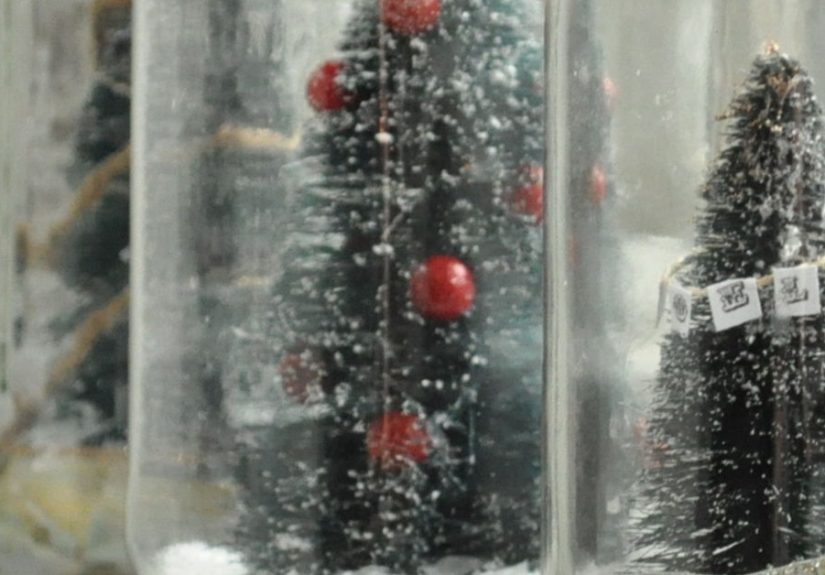
- Bottle brush trees (the unofficial mascot of holiday crafts)
- Mini figurines (reindeer, snowmen, tiny houses, train village pieces)
- Small natural elements (mini pinecones, dried moss, twigs)
- DIY options: polymer clay items, tiny paper signs, printed mini photos
“Snow” and sparkle options (dry-friendly)
- Artificial snow flakes (plastic or paper-based craft snow)
- White glitter (fine or chunky; mix sizes for realism)
- Microbeads (tiny “snow pellets,” great swirl, high escape riskseal well)
- Poly-fill or cotton (for snowdrifts, not for swirl)
Tip: “Instant snow” powders are fun in sensory play, but they’re moisture-hungry. In a sealed jar, humidity can turn them into a weird snow smoothie. If you want long-term display, stick to dry faux snow or glitter.
Adhesives (choose based on who’s crafting)
- Hot glue: fast and easy, but can soften if stored in heat
- Clear-drying epoxy: strongest, most durable (best for heirloom-quality pieces)
- Waterproof craft glue / silicone glue: good middle ground for stability
- Double-sided tape: great for paper backdrops and lightweight props
Tools and extras
- Scissors, tweezers, craft knife
- Sandpaper (for prepping slick lids or plastic bases)
- Spray paint (optional: glam up lids and bases)
- Foam, cork, or a wood slice (for a raised “stage”)
- Mini LED fairy lights (optional: tiny drama lighting)
How to build a waterless diorama-style snow globe (step-by-step)
Step 1: Pick a theme before you pick a jar
This is the part everyone skips and then wonders why their globe looks like a thrift store brawl happened in miniature. Decide your scene in one sentence: “A cozy cabin with a reindeer visitor,” or “Santa’s tiny post office,” or “A snowman starting a band.” When every object supports that sentence, the diorama feels intentional.
Step 2: Test-fit everything (seriously, do it)
Place your miniatures on the lid (or base platform) and hover the jar over them. If anything touches the glass, it will look crampedand it may pop off when you shake. Dioramas need breathing room.
Step 3: Build a “stage” for better visibility
Wide-mouth jars help, but even then, the jar rim can hide your cutest details. Add a riser: a trimmed foam half-ball, cork, or a small platform glued to the lid. This lifts your scene into the viewing area and adds depth.
Step 4: Prep surfaces for a stronger bond
Smooth metal lids and glossy plastic are not naturally “glue-friendly.” Lightly sand the area where you’ll attach the platform or figurines, then wipe away dust. Your future self will thank you when nothing rattles loose.
Step 5: Glue the main focal point first
Start with the “star” of your scene: the house, tree, snowman, or tiny dramatic moose. Use a slower-setting glue if you want time to nudge alignment. Hot glue is fastgreat for confident crafters, less great for indecisive artists (hi).
Step 6: Add supporting details and foreground texture
Smaller items go next: mini gifts, a bench, lanterns, tiny signposts (“Hot Cocoa ➜”), pebbles, or moss. Think like a movie set: background, middle ground, foreground.
Step 7: Optional diorama upgradeadd a backdrop
Want instant “wow”? Print a small winter sky, a forest silhouette, or a cozy wallpaper pattern. Trim it into a rectangle, gently curve it, and tape it inside the jar so it hugs the glass. You just created stage scenery.
Step 8: Let everything dry completely
This is not the fun step, but it prevents trapped moisture and shifting pieces. Give your adhesive the full cure time recommended on the labelespecially if you used epoxy or silicone-based glues.
Step 9: Add the “snow”
For a classic swirl, use a blend of faux snow flakes and glitter. Start with a small amounttoo much snow makes your globe look like a blizzard warning. You can always add more; removing it is like trying to un-sparkle a craft project. (You can’t. The sparkle owns you now.)
Step 10: Seal and assemble
If you want the globe to stay closed (recommended if kids will handle it), run a thin bead of glue around the lid threads and tighten. For display-only globes, you can skip sealing so you can refresh the “snow” later.
Diorama design tips that make your globe look “expensive”
Use the “triangle” composition trick
Place your tallest element slightly off-center, then balance it with two smaller elements to form a triangle shape. It’s a simple composition trick that makes scenes feel arranged instead of accidental.
Scale matters (tiny world logic)
A 1-inch reindeer next to a 3-inch door creates “reindeer is actually a horse” confusion. Try to keep scene pieces in the same scale family (dollhouse miniatures, train village parts, or consistent ornament sizes).
Texture beats quantity
One well-placed “snowdrift” (poly-fill or cotton) + a dusting of glitter looks more realistic than stuffing in ten random objects. Leave negative space so your snow can swirl and your eye can rest.
Light it like a tiny theater
A short strand of mini LED fairy lights tucked behind a tree or along the base can turn a cute globe into a centerpiece. Keep batteries accessible if you plan to use it season after season.
Holiday theme ideas (with specific, buildable examples)
1) Classic winter village
Mini house + bottle brush trees + tiny fence + glitter “ice path.” Add a printed twilight sky backdrop for instant Hallmark vibes.
2) North Pole Post Office
Use a tiny mailbox, a mini sign (“Letters to Santa”), and a miniature sack of “mail” made from a rolled scrap of paper tied with thread. Bonus points for a micro candy cane as a prop.
3) Gingerbread wonderland (no crumbs, still adorable)
Use polymer clay “cookies” and “gumdrops,” or tiny faux sweets from craft kits. Build a miniature gingerbread stand and sprinkle “sugar snow” glitter.
4) Modern minimalist
One white tree. One tiny deer. A clean base. Matte lid. This is the snow globe for people who say, “I don’t decorate much,” while owning exactly 47 candles.
5) Photo memory globe
Print a small photo (pets, family, a winter trip), mount it on cardstock, and place it as the backdrop. Keep the front simplejust a tree and a little snowso the photo stays the star.
Kid-friendly and pet-aware crafting
- Choose plastic containers for younger kids and classrooms.
- Avoid microbeads if there’s any chance the jar will openthose things travel.
- Use larger faux snow and skip ultra-fine glitter for easier cleanup.
- Supervise hot glue and consider tacky glue for little hands (with longer dry time).
- Seal it if pets will “help.” Cats in particular believe snow globes are a personal challenge.
Troubleshooting: common problems (and fixes)
“My snow sticks to the glass.”
Static cling is the usual culpritespecially in dry winter air. Try these:
- Lightly wipe the inside of the jar with a dryer sheet, then buff with a dry cloth.
- Use slightly larger flakes (fine glitter clings more).
- Mix textures: a little chunky glitter + faux snow flakes often behaves better than one ultra-fine material.
“It looks cloudy inside.”
In waterless globes, “cloudy” usually means trapped glue fumes or moisture. Let glued pieces cure fully before sealing, and avoid sealing immediately after spray painting.
“My figurine popped off when I shook it.”
Upgrade the adhesive (epoxy is the heavyweight champ), sand slick surfaces, and keep heavy items low. If you’re building a gift that will be shaken by enthusiastic humans, build it like it’s going on a road trip.
“Too much snownow I can’t see the scene.”
Pour some out and remix with larger flakes. The goal is a swirl, not a whiteout. A little snow goes a long waylike perfume, or opinions at a family gathering.
Display and gifting ideas
Turn it into a centerpiece
Group three globes of different heights on a tray with pine sprigs and battery candles. The variation reads “designer,” not “I panicked at the craft store.”
Make it a “gift in a jar”
Create a mini waterless globe on the lid, then fill the jar with something giftable: wrapped candies, hot cocoa packets, or handwritten notes. It becomes decor and a giftlike a holiday multitasker with excellent boundaries.
Add a personalized base
Paint the lid, wrap it in ribbon, add a name tag, or glue on a small wood slice as a “stand.” Small finishing touches are what turn “cute craft” into “keepsake.”
Sustainability bonus: upcycle like a holiday hero
Waterless snow globes are perfect for reused jam jars, salsa jars, and those mystery containers from the back of the pantry. Clean thoroughly, remove labels, and you’ve got a craft foundation with a near-zero guilt footprint.
Conclusion
A DIY holiday waterless diorama-style snow globe is basically a tiny winter story you can hold in your hands. It’s creative without being complicated, customizable without being chaotic, and festive without risking your furniture. Start simple, design with intention, and remember: you can always add more snow, but you cannot un-glitter your life.
Extra: “Been-there” experiences and lessons (about )
Let’s talk about the part no tutorial admits: your first waterless diorama snow globe will teach you things. Not in a gentle, inspirational waymore like a tiny, glittery life coach that shouts, “MEASURE TWICE, GLUE ONCE.”
The most common “experience” people have is discovering that scale is a sneaky villain. That miniature tree you bought online? It looked petite in the photo. In your jar, it’s suddenly a redwood. The fix is a quick test-fit habit: arrange everything on the lid, then lower the jar over it like you’re closing a spaceship hatch. If it scrapes, it’s too tall. If it looks crowded, it’s too much. If it feels balanced, you’re winning.
Another classic moment: the Great Snow Overload. People want drama, so they dump in faux snow like they’re trying to recreate a historic blizzard. Then they flip the jar andsurpriseyour beautiful scene disappears behind a white wall. The best approach is to start with a teaspoon or two, shake-test, then add gradually. A mix of sizes (some flakes, some glitter) almost always looks better than one uniform “powder.”
Then there’s the adhesive learning curve. Hot glue is fast and satisfying… until you realize it can loosen in heat or pop off smooth metal. Many crafters eventually “graduate” to stronger options for globes that will be handled a lot. The real lesson: prep matters. A quick sanding of the lid’s surface can turn a questionable bond into a reliable one. Also, patience is not optionalif you seal the jar before everything cures, the inside can look hazy or smell faintly like “fresh craft.” Let it dry fully, even if that means walking away and pretending you’re totally fine.
A surprisingly relatable experience is dealing with static cling. In winter, faux snow can stick to the sides like it’s paying rent. People often try to “shake harder,” which only makes the snow more determined. A gentle wipe of the inside with an anti-static solution (or a dryer sheet buff) can dramatically improve the swirl. Switching to slightly larger flakes helps toofine glitter is gorgeous, but it’s also the clingiest guest at the party.
Finally, the best experience-related tip is about storytelling. The globes that get the most compliments usually have a clear theme: a tiny cabin scene, a holiday market stall, a minimalist forest, a pet memory. When you choose one “main character” and build around it, the diorama looks intentionaleven if you made it while wearing sweatpants and listening to holiday playlists on repeat. And that’s the whole charm: you’re creating a tiny world that feels warm, personal, and wonderfully yours.