Table of Contents >> Show >> Hide
- What’s Really Happening in This Office Drama
- Infertility at Work: Common, Costly, and Usually Invisible
- Why Mother’s Day Can Hit Like a Surprise Punch
- Was the Employee’s Demand Reasonable?
- What the Manager Did Wrong (Even If They Meant Well)
- What Managers Should Do Instead (A Practical Playbook)
- The Legal and HR Landscape in the U.S. (General Info, Not Legal Advice)
- A Better Workplace Approach to Holidays (Without Cancelling Joy)
- What Coworkers Can Do (So It Doesn’t Get Weird)
- Scripts That Actually Work (Employee + Manager)
- So… Should the Coworker Put Away the Flowers?
- Conclusion: Compassion With Boundaries Is the Grown-Up Solution
- Experiences From the Real World: When Flowers, Baby Showers, and Calendar Reminders Collide
Office life has a funny way of turning tiny objects into giant symbols. A coffee mug becomes a political statement. A shared microwave becomes
international waters. And apparently, a bouquet of Mother’s Day flowers can become the spark that lights up a whole workplace debate about empathy,
boundaries, and what managers are supposed to do when feelings show up to work without an ID badge.
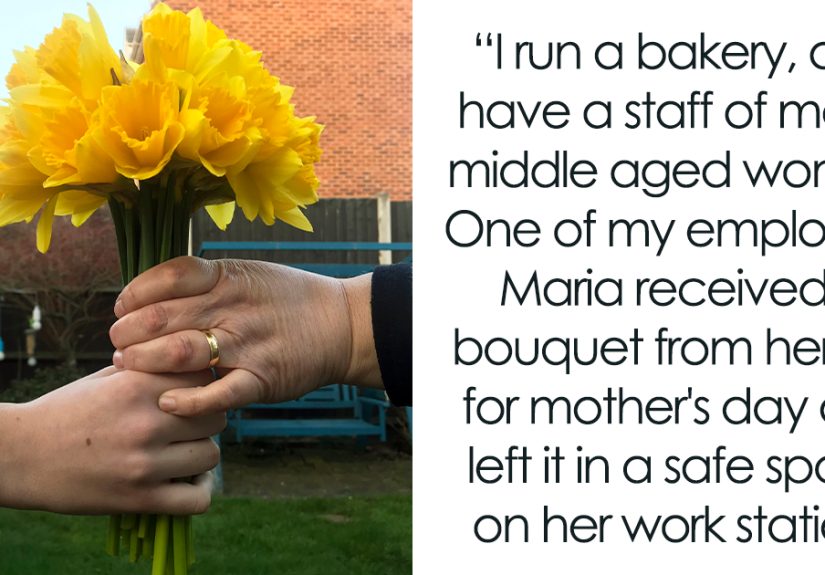
In this situation, an employee dealing with infertility feels blindsided by a coworker’s Mother’s Day flowers. She asks (or demands) that her manager
make the coworker put them away. The manager ignores the request. The employee is upset. Everyone else is confused. HR can be heard somewhere in the
distance whispering, “Please don’t make this a Slack thread.”
Let’s unpack what’s going on beneath the petalswithout turning the office into a flower-free dystopia or treating infertility like a “personal problem”
that should be stored neatly in a desk drawer next to the stapler.
What’s Really Happening in This Office Drama
On the surface, it’s a conflict about décor: flowers on display versus flowers out of sight. But the real issue is a collision between two truths:
- Truth #1: Infertility can be emotionally exhausting, unpredictable, and deeply painfulespecially around family-centered holidays.
- Truth #2: Coworkers are allowed to have lives, families, and celebrations, and they don’t automatically become villains for receiving a gift.
When these truths crash into each other at 9:17 a.m. on a Tuesday, the result can look like “She’s overreacting” or “They’re being insensitive.”
Usually, it’s neither. It’s an unmet need colliding with a workplace that doesn’t have a plan for emotional landmines that aren’t listed in the employee
handbook under “Other Duties as Assigned.”
Infertility at Work: Common, Costly, and Usually Invisible
Infertility isn’t rare, and it isn’t just a “women’s issue.” People of different ages, genders, orientations, and family structures can experience it.
The challenge is that infertility is often invisible at workunlike pregnancy, which becomes physically apparent and socially “shareable.”
Many employees keep infertility and treatment private because it’s personal, because it involves medical appointments, and because they worry (sometimes
correctly) that disclosure could affect how they’re perceived: less reliable, less focused, “too emotional,” or “not fully committed.”
Add in the practical realities: frequent appointments, unpredictable timelines, medication side effects, financial stress, and the emotional roller coaster
of hope and disappointment. Even if coworkers never hear a word about it, the employee is carrying it into every meeting, every deadline, every cheerful
“How was your weekend?” conversation.
Why Mother’s Day Can Hit Like a Surprise Punch
For someone navigating infertility, Mother’s Day can feel like a holiday designed by an algorithm that only knows one life path. It’s not just ads and
social media. It’s the office too: group cards, breakroom cupcakes, “mom life” jokes, andyesflowers on desks.
Here’s the tricky part: the coworker with flowers may not be doing anything “wrong.” They may not even be a parent; flowers can be given by partners,
children, friends, adult relatives, or anyone who wants to say, “Hey, you’re important.” But grief doesn’t always wait around for context.
Sometimes it shows up instantly, loudly, and uninvitedlike a calendar notification you can’t dismiss.
If the employee is in treatment, emotions may also be heightened by stress, sleep issues, and medication side effects. None of that excuses harmful
behaviorbut it does explain why a bouquet can feel less like a decoration and more like a flashing neon sign that says, “You’re stuck.”
Was the Employee’s Demand Reasonable?
A request for support? Reasonable. A demand that a manager police a coworker’s personal items? That’s where things get complicated.
In healthy workplaces, we try to meet needs without assigning blame where it doesn’t belong. The employee’s pain is real. But the coworker’s flowers are
not a targeted act. When someone says, “Make her put them away,” what they’re really asking for is controlbecause infertility often comes with a brutal
lack of control, and the brain tries to reclaim it wherever it can.
Managers should take the emotion seriously, but they also have to protect fairness and prevent a precedent where one person’s trigger becomes another
person’s gag order. The goal isn’t “Who wins the flower war?” The goal is: “How do we make work feel safe enough for everyone to do their jobs?”
A more workable framing
Instead of “make her put them away,” the employee is more likely to get traction with something like:
“I’m dealing with something difficult and Mother’s Day themes are hitting me hard. Is there a way we can keep holiday-related displays out of shared
spaces or give people options?”
That moves the conversation from controlling a coworker to improving the environment.
What the Manager Did Wrong (Even If They Meant Well)
Ignoring the employee is the managerial equivalent of putting a traffic cone on top of a pothole and calling it infrastructure.
Even if the manager thought the request was unreasonable, silence usually makes it worse. The employee doesn’t hear “no.” They hear “your pain doesn’t
matter,” which can escalate frustration, decrease trust, and increase the chance of an emotional blow-up laterpossibly during a meeting, possibly on a
day when the copier is already jammed and the universe is clearly testing everyone.
What Managers Should Do Instead (A Practical Playbook)
Step 1: Acknowledge the emotion without interrogating the details
A manager doesn’t need medical specifics to respond humanely. Try:
“I’m sorry you’re going through something painful. Thank you for telling me. Let’s talk about what support at work could look like.”
Step 2: Separate the need from the target
If the employee points to the coworker (“Make her…”), gently reframe:
“I hear that the flowers were upsetting. Let’s focus on what we can change about the workspace or routines so you can feel okay here.”
Step 3: Check whether this is a shared-space issue
Flowers on a personal desk are different from flowers in a common area. If the bouquet is in a shared space (reception, breakroom, communal table),
a manager can reasonably say: “Let’s keep personal celebration items at individual workstations.”
If it’s at a coworker’s desk, the manager should be cautious about forcing removal. Instead, offer alternatives to the distressed employee:
a seat change, a different path through the office, flexible breaks, remote work days, or the option to step away during triggering moments.
Step 4: Offer privacy-respecting flexibility
Many employees going through fertility treatment need flexibilityappointments can be early, frequent, and not always predictable.
A manager can support without asking for details:
“If you need schedule flexibility for medical appointments, we can talk about options. You don’t need to share specifics.”
Step 5: Loop in HR (not as a threat, as support)
HR can help with accommodations, leave policies, manager coaching, and consistent standards across the team. The manager can say:
“I want to handle this the right way and make sure we’re consistent. I’m going to consult HR about what supports are available.”
The Legal and HR Landscape in the U.S. (General Info, Not Legal Advice)
This kind of situation sits at the intersection of emotion and employment law. Specific rights depend on facts, job role, employer size, and state laws,
but here are the big buckets managers and employees should understand:
Title VII and the Pregnancy Discrimination Act: discrimination risks
Federal guidance has recognized that discrimination connected to pregnancy-related conditions and reproductive decisions can raise sex discrimination
issues. While a manager doesn’t need to become an amateur lawyer overnight, they should recognize a simple truth: punishing someone for medical needs
connected to fertility treatment or reproductive health can create serious risk for the employer.
The ADA: when infertility or related conditions may qualify
The Americans with Disabilities Act can apply when an employee has an impairment that substantially limits major life activities. In some circumstances,
infertility connected to a medical impairment may qualify, and accommodations might involve modified schedules or leave for treatment and stress reduction.
The key word is interactive: it’s a conversation about what helps the employee perform the job, not a debate about whether the employee is “allowed”
to have feelings.
FMLA: job-protected leave (when eligibility and medical criteria fit)
The Family and Medical Leave Act provides job-protected leave for eligible employees at covered employers for qualifying medical reasons. Whether fertility
treatment is covered can depend on whether the situation meets the definition of a serious health condition and the documentation standards.
Practically, many workplaces treat it similarly to other ongoing medical care when the criteria are met.
PWFA: pregnancy accommodations (related, but not the same topic)
The Pregnant Workers Fairness Act requires reasonable accommodations for known limitations related to pregnancy, childbirth, or related medical conditions
for covered employers. While the law focuses on pregnancy-related limitations, it has pushed many employers to improve their accommodation processes overall
(which is helpful, because “ignoring the problem” is not a recognized accommodation method).
Bottom line: Even when the exact legal category is complex, the management strategy is straightforwardrespond promptly, document appropriately,
involve HR, and focus on reasonable, privacy-respecting solutions.
A Better Workplace Approach to Holidays (Without Cancelling Joy)
Workplaces don’t need to ban holidays to be inclusive. They need to stop assuming everyone experiences family-themed celebrations the same way.
Here are policies that reduce conflict without turning the office into an emotional dead zone:
- Keep celebrations opt-in: Avoid mandatory group events, forced gifting, or public shout-outs that put people on the spot.
- Use inclusive language: “Caregivers,” “parents,” “mentors,” and “people we appreciate” can widen the tent.
- Limit shared-space displays: Encourage personal items to stay at personal workstations rather than communal areas.
- Offer flexibility around sensitive dates: Normalize taking a break, working remotely, or shifting tasks when needed.
- Train managers: Not to become therapists, but to avoid common misstepslike giving fertility advice or asking invasive questions.
What Coworkers Can Do (So It Doesn’t Get Weird)
Coworkers don’t have to walk on eggshells, but they should avoid turning someone else’s pain into a group project. If you learn a colleague is struggling:
- Lead with consent: “Do you want to talk about it, or would you rather I just be here?”
- Skip the fixer energy: Avoid advice like “Just relax” or “Have you tried…” unless they specifically ask.
- Respect privacy: Don’t share their situation, even as “concern.”
- Be normal: Kindness is great. Pity is exhausting.
Scripts That Actually Work (Employee + Manager)
If you’re the employee who’s struggling
“I’m dealing with a difficult medical/family situation. Certain holiday themes are affecting me more than usual. I’m not asking anyone to stop
celebrating, but I’d like to discuss reasonable ways to reduce exposure in shared spaces and explore flexibility options.”
If you’re the manager
“Thank you for telling me. I’m sorry you’re going through this. Let’s talk about what you need to feel supported here. I can’t control personal items
at someone’s desk in the way you requested, but I can work with you and HR on practical optionslike workspace adjustments, flexible scheduling, and how we
handle displays in shared areas.”
So… Should the Coworker Put Away the Flowers?
If the flowers are in a shared space, it’s reasonable for management to set a general rule: shared spaces stay neutral. If the flowers are on a personal
desk, forcing removal is usually the wrong movebecause it treats the coworker as the problem instead of addressing the environment and the distressed
employee’s needs.
The best resolution is rarely “flowers disappear.” It’s “the workplace learns how to support pain without policing everyone else’s happiness.”
Conclusion: Compassion With Boundaries Is the Grown-Up Solution
Infertility can make ordinary moments feel unbearable, and workplaces often don’t know what to do with that kind of invisible grief. But “ignore it”
isn’t a strategyit’s a delay button that usually makes the eventual conflict louder.
A better path looks like this: acknowledge the employee, avoid targeting the coworker, set fair shared-space norms, offer flexible supports, and involve HR
to keep the process consistent and private. That’s how you build a culture that can hold both joy and hurtsometimes on the same day, sometimes at desks
ten feet apart, sometimes with a bouquet sitting quietly in between.
Experiences From the Real World: When Flowers, Baby Showers, and Calendar Reminders Collide
If you’ve ever worked in an office, you already know the secret: the workplace is not just a place where tasks happen. It’s a place where humans happen.
That becomes painfully obvious when a team hits a life milestonenew babies, engagements, anniversariesand someone else is privately grieving or struggling.
One common pattern: an employee going through fertility treatment tries to “act normal” until a family-centered event pops up. It could be a baby shower
sign-up sheet taped to the breakroom fridge, a group chat exploding with ultrasound photos, or a manager enthusiastically announcing a “Mother’s Day
appreciation moment” during the Monday meeting. None of these are malicious. But the employee’s body doesn’t care about intent. Their brain hears:
“Everyone else is moving forward. You’re not.”
In offices with no guardrails, the struggling employee often becomes the accidental villain. They snap. They avoid the breakroom. They call in sick on the
day the baby shower happens. Or they make a request that comes out sidewayslike demanding that someone hide their flowersbecause they don’t know how to
translate pain into a workplace-appropriate ask. Meanwhile, the manager freezes because they’re terrified of saying the wrong thing, so they say nothing.
The silence lands like rejection.
In offices that handle this well, the difference isn’t that nobody celebrates. The difference is that celebration isn’t compulsory and the environment
isn’t weaponized by accident. Teams keep shared spaces neutral by defaultmeaning you can absolutely have personal items at your desk, but the reception
area doesn’t become a rotating shrine to everyone’s life events. Managers learn to offer flexibility without fishing for details: “Take the appointment.
Put it on the calendar as medical. You don’t owe me a biography.”
Employees also learn “quiet kindness.” A coworker might say, “Hey, if you ever want me to run interference when the team gets overexcited about baby
stuff, I can.” That’s support without spotlight. Or they might simply stop making casual assumptionslike asking, “When are you having kids?” as if it’s
small talk on the same level as “Seen any good shows lately?”
The most effective stories usually end with a small, boring solutionbecause boring is good at work. A seating change. A temporary remote schedule.
A manager who sets a simple guideline: “Personal celebrations stay at personal workspaces; shared spaces stay neutral.” A team that uses inclusive language
and makes celebrations opt-in. Nobody “wins.” Nobody is publicly shamed. And the employee going through infertility gets something priceless:
a workplace that doesn’t make a hard season harder.
If you’re living this, here’s the honest encouragement: you deserve support that doesn’t require you to explode first. And if you’re managing someone who
is living this, here’s the equally honest reminder: you don’t have to fix infertility. You just have to stop ignoring the person.