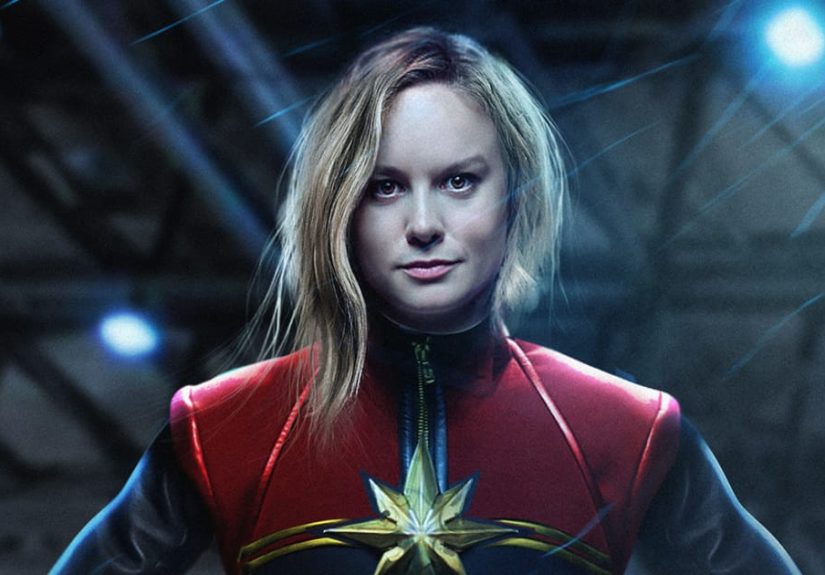
Table of Contents >> Show >> Hide
- Captain Marvel at a Glance
- Plot Basics: From Vers to Carol Danvers
- Main Characters and Cast
- Captain Marvel’s Powers and Origin in the MCU
- Where Captain Marvel Fits in the MCU Timeline
- Box Office, Reviews, and Cultural Impact
- Themes: Identity, Gaslighting, and Owning Your Power
- ’90s Nostalgia and MCU Easter Eggs
- How The Marvels Builds on Captain Marvel
- Should You Watch (or Rewatch) Captain Marvel Now?
- Real-World Experiences and How Fans Connect with Captain Marvel
- Conclusion
Before she was blasting through spaceships and head-butting villains in the
upper atmosphere, Captain Marvel was a big question mark in the Marvel
Cinematic Universe. When the movie hit theaters in March 2019, it didn’t
just introduce Carol Danvers – it plugged one of the biggest gaps in the MCU
timeline, rewrote Nick Fury’s backstory, and casually dropped a cat that’s
actually a tentacled space monster. Not bad for a “’90s throwback” origin
story.
If you’re catching up on the MCU, rewatching before a marathon, or just
wondering why everyone keeps talking about a glowing blue cube and a Flerken
named Goose, this guide breaks down everything we know about the
Captain Marvel movie. We’ll cover the plot, cast, MCU
timeline, box office performance, themes, and how it connects to
The Marvels – plus some real-world viewing experiences to help you
decide how (and when) to hit play.
Captain Marvel at a Glance
Captain Marvel is a 2019 Marvel Studios film set in the
Marvel Cinematic Universe (MCU). It was directed by Anna Boden and Ryan
Fleck and stars Brie Larson as Carol Danvers, a former U.S. Air Force pilot
turned cosmic powerhouse. The movie runs about 2 hours (roughly 124
minutes) and is set primarily in 1995, making it one of the earliest stories
in the MCU’s internal timeline even though it released late in Phase 3.
Financially, the film was a monster. It crossed the
$1 billion mark at the global box office and became the
first female-led superhero film to do so. It also arrived strategically
between Avengers: Infinity War and Avengers: Endgame,
positioning Captain Marvel as a crucial player in the fight against Thanos
and ensuring that audiences absolutely, positively had to meet Carol Danvers
before the Endgame showdown.
Plot Basics: From Vers to Carol Danvers
The Captain Marvel movie plot is built around identity and
memory. When we first meet our hero, she isn’t “Carol Danvers” at all – she
goes by the name Vers and serves as a member of the Kree
Starforce, an elite military unit led by Yon-Rogg (Jude Law). She has
powerful energy-based abilities, but her past is a blur. The Supreme
Intelligence, the Kree’s AI ruler, keeps telling her to control her
emotions. (Which, as every superhero origin story knows, means her emotions
are about to save the day.)
During a mission against the shapeshifting Skrulls, Vers is
captured and her memories are probed by their leader, Talos (Ben
Mendelsohn). Instead of revealing some sinister Kree secrets, her scrambled
memories hint at a life on Earth: flying jets, a best friend named
Maria Rambeau, a mysterious scientist (Dr. Wendy Lawson),
and a test gone very wrong. Vers escapes, crash-lands through the roof of a
Blockbuster Video on Earth, and runs into a younger
Nick Fury (Samuel L. Jackson), who still has two working
eyes and no idea that aliens are a thing.
As she retraces her past, Vers learns that she was once Carol Danvers, a
test pilot working with Lawson on a light-speed engine powered by the
Tesseract. The lab explosion that apparently killed Lawson
and nearly killed Carol instead flooded her with cosmic energy, giving her
incredible powers. The Kree then scooped her up, wiped her memories, and
turned her into their weapon.
In classic MCU fashion, the sides aren’t what they seem. The Skrulls aren’t
just villains; many of them are refugees hiding from the Kree. Once Carol
uncovers the truth, she switches sides, embraces her full powers (including
flight, energy blasts, and a glowing “binary” form), and helps the Skrulls
escape. Along the way, Nick Fury loses his eye – thanks not to a brutal
battle, but to a scratch from Goose, the seemingly normal cat who is
actually a Flerken with pocket-dimension tentacles. The movie ends with
Carol heading off into space to help the Skrulls find a home and giving Fury
a specially modified pager for emergencies only. (Guess what he uses in the
Infinity War post-credits scene?)
Main Characters and Cast
Carol Danvers / Captain Marvel (Brie Larson)
Brie Larson’s Carol Danvers is a blend of fighter-pilot
confidence, stubborn determination, and cosmic firepower. In the MCU, Carol
is a human–Kree hybrid who channels vast amounts of energy, making her one
of the most powerful heroes on the roster. Larson plays her as someone who’s
learning to trust her instincts again after years of being gaslit by an
alien empire. It’s less “perfect space goddess” and more “sarcastic ace
pilot who can punch through a starship.”
Nick Fury (Samuel L. Jackson)
Long before he was the one-eyed super-spy assembling the Avengers, Nick Fury
was a mid-level S.H.I.E.L.D. agent just trying to figure out why there’s a
woman in a leather suit yelling about space wars in a Blockbuster. The film
uses digital de-aging technology to show a 1990s Fury, complete with hair,
two eyes, and a much more relaxed vibe. Watching his partnership with Carol
develop adds a buddy-cop flavor to the movie and explains why he later bets
the entire planet’s survival on a single page to her.
Talos (Ben Mendelsohn)
Ben Mendelsohn’s Talos might be one of the MCU’s best
bait-and-switch characters. Initially framed as the ruthless Skrull
antagonist, he’s eventually revealed as a desperate leader trying to protect
his family and people from Kree persecution. Once the twist lands, Talos
shifts from menacing to dryly hilarious, creating some of the film’s best
comedic beats.
Maria Rambeau and Monica
Lashana Lynch plays Maria Rambeau, Carol’s fellow pilot and
closest friend. Their relationship grounds the movie emotionally: Maria is
the living proof of the life Carol lost, and her home becomes the heart of
the film’s second half. Maria’s daughter, Monica Rambeau,
later grows up to be a superhero herself and a key character in
WandaVision and The Marvels, making this movie an
important starting point for her story as well.
Yon-Rogg, the Supreme Intelligence, and Goose
Jude Law’s Yon-Rogg is Carol’s Kree mentor, drill sergeant,
and manipulator. He represents a classic “I held you back because I feared
you” dynamic. The Supreme Intelligence appears differently
to everyone; to Carol, it takes the form of Wendy Lawson (Annette Bening),
a subtle reminder of the mentor she admired. And then there’s
Goose, the Flerken who swallows the Tesseract and half the
audience’s heart. Goose is also indirectly responsible for Fury’s famous eye
patch, proving that in this universe, you should never turn your back on
a cat.
Captain Marvel’s Powers and Origin in the MCU
In the MCU, Carol Danvers’ origin is slightly different from the comics but
still rooted in experimental technology and alien intervention. The
light-speed engine she was testing was powered by the
Tesseract, which contains the Space Stone. When the engine
explodes, Carol absorbs its energy instead of dying. The Kree then infuse
her with Kree blood, making her a human–Kree hybrid and giving her enhanced
strength, durability, flight, and the ability to project and absorb energy.
Early in the film, a Kree implant limits her power and keeps her under their
control. Once she literally rips that limiter out, she upgrades into full
“binary mode”: glowing eyes, fiery hair, and the ability to fly through
space without a ship and casually destroy missiles mid-flight. In MCU power
rankings, Captain Marvel sits firmly in the “could probably
solo most threats” tier, which is exactly why she spends a lot of time
handling problems off-world while the Earthbound heroes deal with their own
chaos.
Where Captain Marvel Fits in the MCU Timeline
While Captain Marvel was released in 2019, its story takes
place in 1995. That places it chronologically before most of the MCU films,
including the first Iron Man. It effectively becomes a prequel to
S.H.I.E.L.D.’s modern activities and explains why Fury is so prepared to
believe in superheroes and aliens later on.
The movie also sets up several events and relationships that pay off in
later projects:
-
Fury’s idea for the Avengers Initiative is inspired by
Carol’s Air Force call sign, “Avenger”. -
The Tesseract ends up in S.H.I.E.L.D.’s custody again
after Goose coughs it up, connecting to its later appearances in
Thor, The Avengers, and beyond. -
Carol’s bond with the Skrulls foreshadows future storylines about their
survival and integration, including plot points hinted at in
Secret Invasion. -
The mid-credits scene jumps forward to post-Infinity War, where
Carol responds to Fury’s pager and meets the surviving Avengers, leading
into her role in Avengers: Endgame.
Later appearances in Endgame, Shang-Chi and the Legend of the
Ten Rings, the Disney+ series Ms. Marvel, and
The Marvels turn this movie into the foundation for a whole
“cosmic” branch of the MCU.
Box Office, Reviews, and Cultural Impact
From a business perspective, Captain Marvel was a major
win. It earned over $1.12 billion worldwide, with strong
returns both domestically and internationally. That put it among the top
films of 2019 and firmly in the upper tier of MCU box office performers.
Critically, the film received generally positive reviews. Many praised Brie
Larson’s performance, the ’90s tone, and the buddy-cop chemistry between
Carol and Fury. Some critics and fans felt the movie stuck a little too
closely to the established MCU origin formula or wanted deeper character
exploration, but most agreed it delivered a fun mix of action, humor, and
emotional beats. Audience scores reflect that split: plenty of people love
it, some think it’s “solid but not top-tier Marvel,” and a few clearly woke
up on the wrong side of the Quantum Realm.
Beyond numbers, the film’s biggest impact was cultural. As the first
female-led MCU movie to headline and clear $1 billion, it became a milestone
for representation. Girls dressing up as Captain Marvel, adults wearing
“Higher, Further, Faster” shirts, and a wave of new Carol Danvers fans all
followed. Whether or not you rank it as your favorite MCU film, it helped
normalize the idea that a woman can anchor a massive superhero franchise.
Themes: Identity, Gaslighting, and Owning Your Power
Under the quips and photon blasts, Captain Marvel is a
story about reclaiming identity. Carol spends most of the movie being told
to “control her emotions” and trust the Kree’s version of events. They
literally rewrote her life to weaponize her. Once she pieces together her
memories, the emotional core of the film isn’t just “I’m powerful” – it’s
“You don’t get to define me.”
The movie also leans into the experience of being underestimated. Carol is
mocked by men in her flashbacks, dismissed by Kree leadership, and framed as
“too emotional” to be trusted. Instead of denying those traits, she folds
them into her strength. The “I have nothing to prove to you” moment near the
end, where she refuses Yon-Rogg’s macho one-on-one challenge and just blasts
him into a canyon, is the thesis statement in one perfectly timed photon
punch.
’90s Nostalgia and MCU Easter Eggs
Part of the fun of the Captain Marvel movie is its very
specific 1995 vibe. Carol crash-lands into a Blockbuster Video, chases
Skrulls through a mall full of pay phones and RadioShack signs, and tries to
navigate the glacial speeds of dial-up internet. The soundtrack leans into
the era with songs from bands like No Doubt and Nirvana, giving big “this
would be on your taped-off-the-radio mixtape” energy.
For long-time MCU fans, the Easter eggs are everywhere:
-
A young Phil Coulson appears as a rookie S.H.I.E.L.D.
agent, still learning the ropes. -
The pager that Fury gives Carol is the same one he uses
to call her in the Infinity War post-credits scene. -
The Tesseract’s presence quietly ties the film back to earlier stories
involving S.H.I.E.L.D. and later to the larger Infinity Saga. -
The “Project P.E.G.A.S.U.S.” facility links to references in
The Avengers.
It’s the kind of movie that rewards both casual viewers (who just want cool
fights and a fun hero) and hardcore timeline nerds (who want to know exactly
where Fury was on any given Tuesday in 1995).
How The Marvels Builds on Captain Marvel
The Marvels (2023) is the direct sequel to
Captain Marvel and brings together three heroes:
Carol Danvers, Monica Rambeau, and
Kamala Khan (Ms. Marvel). While the sequel focuses more on
cosmic chaos in the present day, its emotional backbone relies heavily on
relationships introduced or teased in the first film:
-
Monica’s childhood memories of “Aunt Carol” and the pain of Carol’s long
absence after the events of 1995. -
The ongoing fallout from Kree–Skrull conflicts that started in
Captain Marvel. -
Carol’s guilt, responsibilities, and reputation across the galaxy as
someone who can topple empires.
In other words, watching Captain Marvel first isn’t just a
nice bonus – it’s practically required homework if you want the full impact
of The Marvels, Ms. Marvel, and Monica’s arc from
WandaVision.
Should You Watch (or Rewatch) Captain Marvel Now?
If you’re doing a full MCU marathon, Captain Marvel fits
best either:
-
In release order, between Avengers: Infinity War
and Avengers: Endgame, or -
In timeline order, after Captain America: The First
Avenger but before most modern-day films.
It’s especially worth revisiting if you’re interested in:
- Nick Fury’s backstory and why he trusts aliens and superheroes.
- How the Tesseract keeps popping up like the world’s most chaotic paperweight.
- Cosmic-scale power levels and heroes who operate off-world most of the time.
-
A Marvel origin story that feels a bit different thanks to memory loss,
unreliable narrators, and a very opinionated cat.
The tone is classic MCU: plenty of humor, colorful action, and emotional
beats that land hardest when Carol remembers who she was before the Kree
tried to write over her life. If you enjoy stories about characters reclaiming
themselves and then absolutely obliterating anyone who tried to hold them
back, this one belongs on your watchlist.
Real-World Experiences and How Fans Connect with Captain Marvel
Beyond the official plot and MCU timeline, a big part of what we “know” about
the Captain Marvel movie comes from how fans experience it.
For many people, seeing Carol Danvers on the big screen was the first time
they watched a woman take the lead in a massive shared Marvel storyline.
Parents brought their kids in flight-suit costumes. Entire friend groups
coordinated ’90s-themed outfits and argued in the lobby afterward about
whether Goose or Baby Groot is the superior cute side character.
Watching it today, especially at home, feels different than that original
pre-Endgame hype window. Now you can put the film in context: you
know where Carol shows up later, how Monica and Kamala evolve, and how
sprawling the MCU has become. That actually makes rewatches more fun. On a
second or third viewing, you catch small details – the way Fury studies
Carol’s powers with equal parts fear and fascination, or the quiet sadness
in Maria’s voice when she realizes her best friend has been missing for six
years and didn’t even know it.
Fans also connect with Captain Marvel through cosplay and
conventions. Carol’s suit – especially the red-blue-gold version Monica
helps her design – has become a staple at comic-cons. You’ll see kids and
adults alike in star-emblem jackets, mohawks, and even Goose carriers.
Cosplayers often mention that they’re drawn to Carol because she’s not
perfect: she’s stubborn, gets angry, makes mistakes, and still chooses to
do the right thing once she knows the truth.
From a viewing-experience perspective, the movie works incredibly well as a
“comfort rewatch.” The structure is familiar enough that you don’t have to
overthink it: mystery in the first act, twist in the second, full-power
payoff in the third. The humor is light but consistent, the stakes are high
without being apocalyptic, and the color palette is bright and saturated
instead of grim. It’s the kind of film you can keep on while doing other
things and still look up at the best parts: the train fight, the bar flashbacks,
the moment Carol stands up again and again across her life, the binary-mode
ship takedown.
If you want the most fun out of it, line up a themed movie night. Start with
Captain America: The First Avenger for another period-piece origin,
jump to Captain Marvel for the ’90s energy, then roll into
Avengers: Infinity War and Endgame to see how her arrival
changes the battlefield. Add some ’90s snacks, a playlist full of alt-rock,
and let everyone argue over who they’d call first with Fury’s emergency
pager.
That’s really the heart of everything we know about the
Captain Marvel movie: it’s not just a data point in the MCU
spreadsheet. It’s a film that people remember for the way it made them feel
– empowered, nostalgic, amused, and maybe a little tempted to adopt another
cat (but definitely not let it near their eyes).
Conclusion
Captain Marvel fills in a key chapter of the Marvel
Cinematic Universe: it explains how Nick Fury became the guy who calls gods
and geniuses on speed dial, shows how the Tesseract shaped Earth’s early
contact with cosmic powers, and introduces a hero whose power level redefines
what’s possible in this world. Whether you’re here for the ’90s nostalgia,
the cosmic punch-ups, the character study of Carol Danvers, or just Goose,
the not-actually-a-house-cat, the film offers plenty to unpack – and even
more to revisit as the MCU continues to expand.
SEO Summary
meta_title: Captain Marvel Movie: Cast, Plot & MCU Role
meta_description: Discover the Captain Marvel movie’s
story, cast, powers, box office, and MCU timeline connections in this
in-depth guide.
sapo:
The Captain Marvel movie doesn’t just introduce Carol Danvers – it rewires
the MCU timeline, explains Nick Fury’s past, and launches a cosmic-powered
hero who can go higher, further, faster than almost anyone else. This
in-depth guide breaks down the plot, characters, powers, box-office success,
and connections to The Marvels, plus real-world viewing experiences and
tips. Whether you’re watching for the first time or planning a full MCU
rewatch, here’s everything you need to know about Captain Marvel and why her
movie still matters.
keywords:
Captain Marvel movie, Carol Danvers, Brie Larson Captain Marvel,
Marvel Cinematic Universe, MCU Phase 3, The Marvels sequel, Nick Fury origin

![18 Best Types of Charts and Graphs for Data Visualization [+ How to Choose]](https://corkopencoffee.org/wp-content/uploads/2026/05/18-best-types-of-charts-and-graphs-for-data-visualization-how-to-choose-qKM1PBYG-thumb.jpg)