Table of Contents >> Show >> Hide
- What Is the Madeline Weinrib Blue and White Buche Flatweave Carpet?
- Why This Rug Works So Well in Modern Homes
- How to Choose the Right Size for the Buche Flatweave
- How to Style the Madeline Weinrib Buche Rug Like a Pro
- Care Guide: Keep It Beautiful Without Babysitting It
- Pros and Trade-Offs Before You Buy
- 500-Word Experience Section: Living With the Madeline Weinrib Blue and White Buche Flatweave Carpet
- Final Takeaway
Some rugs whisper. This one walks into the room, sets down an espresso, and says, “Let’s make this place look expensive but still feel lived in.”
The Madeline Weinrib Blue and White Buche Flatweave Carpet has that rare design superpower: it can read coastal, modern, classic, or collecteddepending on what furniture you pair with itwithout losing its own personality.
If you’re searching for a rug that feels artistic but practical, bold but not loud, and refined without becoming “museum, do not touch,” you’re in exactly the right place.
In this in-depth guide, we’ll break down what makes the Buche flatweave special, where it works best, how to size and style it correctly, and how to keep it looking sharp even in a real home with crumbs, shoes, pets, kids, and the occasional “I totally meant to spill that coffee” moment.
You’ll also get a long-form experience section at the end that explores what daily life with this type of rug actually feels likenot just how it looks in a perfectly staged photo.
What Is the Madeline Weinrib Blue and White Buche Flatweave Carpet?
A designer rug with strong textile heritage
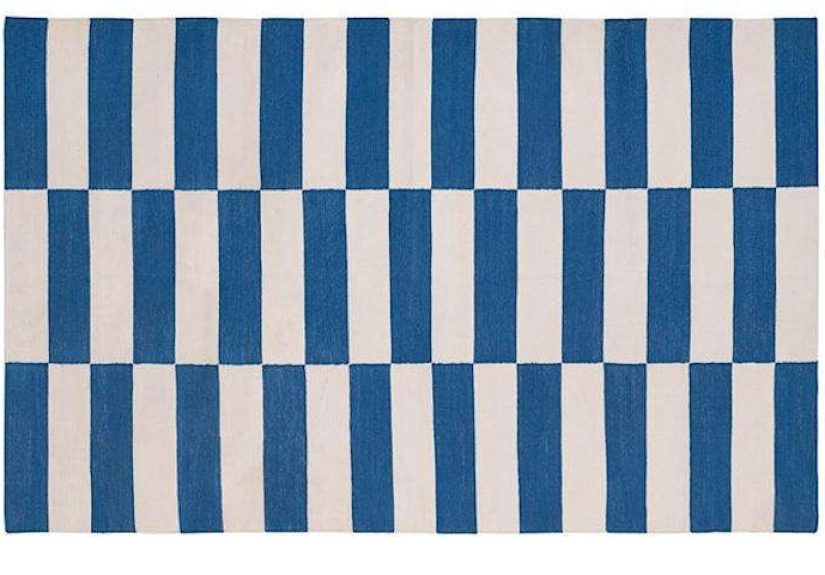
Madeline Weinrib is known for merging art-minded pattern work with traditional craftsmanship. The Buche style sits squarely in that lane: graphic, high-contrast, and woven with a handmade sensibility that avoids a mass-produced vibe.
In many references, this family of rugs appears as blue-and-white striped or geometric flatweave pieces associated with her atelier and select design retailers.
Flatweave construction in plain English
“Flatweave” means there’s no thick pile standing up from the base. Instead, fibers are woven into a low-profile surface. Translation: cleaner lines, easier movement for chairs, and less fluff drama than high-pile rugs.
This is one reason flatweaves are frequently chosen for high-traffic zones like living rooms, dining spaces, hallways, and multipurpose rooms where beautiful things are expected to survive actual life.
Blue and white: the forever color combo
Blue-and-white rugs have unusual flexibility. They add contrast to neutral rooms, cool down warm woods, and create visual structure in open layouts.
The Buche look leans into that versatility: it can anchor a room with a crisp graphic foundation while still playing nicely with linen, leather, brass, black accents, or natural oak.
Why This Rug Works So Well in Modern Homes
1) It gives you pattern without visual chaos
Some patterned rugs are so loud they overpower every chair, lamp, and throw pillow in sight. The Buche aesthetic usually avoids that trap.
Its repeating motifs and balanced palette give you energy and movement, but the blue-and-white format keeps the room legible. Think “interesting” instead of “what is happening?”
2) The low profile is practical
Flatweaves are ideal in rooms where furniture moves. Dining chairs glide more easily, doors clear better, and robot vacuums are less likely to stage a dramatic protest.
If your home has constant foot traffic, this style offers a clean, tailored look without the bulky feel of plush pile rugs.
3) It layers beautifully
Want a designer move that looks intentional? Layer this style over a larger natural-fiber base rug in oversized rooms.
The flat structure makes layering easier because it won’t create a big height cliff at the edges. It adds dimension without turning the floor into an obstacle course.
4) It bridges multiple design styles
- Coastal: blue-and-white echoes sea-and-sky palettes without cliché beach signs.
- Modern organic: works with wood, stone, and textured neutrals.
- Traditional: adds order and rhythm under classic silhouettes.
- Eclectic: balances vintage pieces by providing a disciplined visual base.
How to Choose the Right Size for the Buche Flatweave
Even a stunning rug looks wrong when it’s undersized. If you remember one thing: go bigger than your first instinct.
A too-small rug can make a room feel accidental; a properly sized rug makes it feel designed.
Living room sizing rules
- At minimum, place the front legs of your main seating on the rug.
- If possible, fit all major furniture legs on the rug for a more luxurious, cohesive look.
- Common winners in many homes: 8′ x 10′ and 9′ x 12′.
- Avoid tiny “postage stamp” rugs floating in the center of a large seating area.
Dining room sizing rules
- Extend the rug far enough that chairs remain on it when pulled out.
- Flatweave is especially helpful here because low profile = easier chair movement.
- Center table and rug carefully to maintain symmetry.
Bedroom sizing rules
- For larger beds, leave visible rug on both sides so feet land on softness, not cold floor.
- Runner options work if full-room rugs are not practical.
- Aim for balance: the rug should feel like it belongs to the bed zone, not just peeking out.
Hallway and runner use
Blue-and-white flatweave runners can make long corridors look intentional instead of forgotten.
Keep margins consistent on both sides for a clean visual rhythm, and use a quality pad to reduce shifting.
How to Style the Madeline Weinrib Buche Rug Like a Pro
Palette formula A: Calm and coastal
Pair the rug with off-white walls, washed oak, linen upholstery, and matte black accents.
Add one warm notelike caramel leather or brassto keep the room from feeling too cool.
Palette formula B: Modern contrast
Use charcoal, bone, and deep indigo around the rug for a sharper editorial look.
Keep art minimal and sculptural. Let the rug carry most of the pattern work.
Palette formula C: Classic collected
Mix the Buche rug with antique wood, tailored upholstery, and textured solids (bouclé, velvet, nubby linen).
It creates an “old-meets-new” atmosphere that feels layered rather than themed.
Texture stacking that works
- Smooth coffee table + nubby sofa + flatweave rug = balanced contrast.
- Add natural materials (ceramic, cane, wood) to keep the room from feeling too polished.
- Use pillows and throws for soft variation instead of adding another busy pattern on the floor.
Care Guide: Keep It Beautiful Without Babysitting It
Weekly maintenance
- Vacuum regularly (and gently), especially in high-traffic lanes.
- For reversible flatweaves, rotate and clean both sides periodically.
- Address spills quickly by blottingdon’t scrub aggressively.
Monthly routine
- Inspect edges and corners for curling or uneven wear.
- Check if the rug pad has shifted.
- Do targeted spot cleaning with mild, fiber-safe solutions after testing an inconspicuous area.
Seasonal and annual refresh
- Rotate the rug every few months to balance wear from sunlight and traffic patterns.
- Use low-moisture methods for deeper refreshes, especially if wool is involved.
- Consider professional cleaning for stubborn stains or whole-rug revitalization.
What not to do
- Don’t saturate the rug with water.
- Don’t use harsh carpet chemicals not intended for the fiber type.
- Don’t skip the rug padsafety and longevity both take a hit.
- Don’t ignore manufacturer care instructions for your specific piece.
Pros and Trade-Offs Before You Buy
Major advantages
- High design impact: graphic pattern with timeless color pairing.
- Practical profile: slim construction suits active rooms.
- Versatility: supports many interior styles.
- Layer-friendly: easy to combine with other floor textiles.
Possible limitations
- Less plush feel: flatweaves aren’t cloud-soft underfoot like high pile.
- Can shift without pad: especially on smooth floors.
- Pattern visibility: crumbs/pet hair may stand out depending on contrast and lighting.
Best-fit buyer profile
You’ll likely love this rug if you want a design-forward floor piece that can survive real foot traffic, you prefer clean lines over fluffy textures, and you like interiors with visual structure.
If your top priority is ultra-cushy softness for lounging directly on the floor, a deeper pile might be better.
But if you want elegance with backbone, the Buche flatweave checks a lot of boxes.
500-Word Experience Section: Living With the Madeline Weinrib Blue and White Buche Flatweave Carpet
The most useful question isn’t “Does it photograph well?” It’s “Does it still look good on a random Tuesday when life is messy?” Based on common homeowner and designer-use patterns, this is what living with a blue-and-white Buche-style flatweave usually feels like.
Week 1: The room suddenly has a point of view
The first thing people notice is proportion. Once the rug is in place, furniture stops floating and starts belonging. Sofa, chairs, and coffee table finally feel like they were introduced properly instead of meeting awkwardly at a bus stop. The blue-and-white pattern gives the room backbone without demanding a full makeover. Existing neutral pieces usually look more intentional immediately. It’s one of those upgrades where guests say, “Did you redo everything?” and you grin because you absolutely did not.
Month 1: Daily traffic test
Shoes in, shoes out. Dog zoomies at 7:12 a.m. A backpack dropped with Olympic force. This is where flatweave earns respect. Because the surface is low profile, it doesn’t mat the way deeper pile can in busy paths. Vacuuming tends to be straightforward, and chairs or ottomans move without snagging. The rug pad matters a lot here: with a good one, the rug feels planted and safe; without one, it may shift just enough to annoy everyone in the house, including the person who said, “We don’t need a pad.”
Month 2: Styling confidence goes up
The blue-and-white base becomes a cheat code for decorating. Brass lamp? Works. Walnut side table? Works. Black metal floor lamp? Also works. Even if you rotate pillows seasonally, the rug keeps the room coherent. In spring, it feels crisp with pale linens. In fall, it handles deeper colors like rust or olive without conflict. That flexibility is a hidden value: you can refresh the room’s mood with small accessories rather than buying major furniture every time your taste evolves.
Month 3: Real-life spills and recovery
Someone eventually spills something. Coffee, juice, mystery saucechoose your adventure. Quick blotting and gentle spot-cleaning usually prevent panic. Because the pattern has movement, minor marks can be less obvious than on solid, pale rugs, though contrast areas still require attention. The practical lesson homeowners learn fast: keep a simple cleaning kit nearby and act quickly. Most rug regret stories start with “I’ll clean it later.” Later is where stains rent apartments and refuse to leave.
Month 4 and beyond: The long-game experience
After the novelty phase, the rug still earns its place. It’s not a trend piece that expires after one season. Instead, it behaves like a reliable design anchor that can move from one apartment, house, or room concept to the next. People who value longevity tend to appreciate this most. The rug doesn’t beg for attention every day; it just keeps making the room look finished. And in the grand tradition of good interior decisions, it quietly does its job so well that you forget to think about ituntil someone visits, points at the floor, and asks, “Okay, where did you find that?”
Final Takeaway
The Madeline Weinrib Blue and White Buche Flatweave Carpet is the kind of piece that blends artistry and utilitya stylish foundation that can handle real life while keeping your space elevated.
If you size it correctly, pair it with a proper rug pad, and follow a simple care routine, it can deliver years of strong visual impact with surprisingly low daily drama.
In design terms: high reward, manageable maintenance, and very little fluffliterally and figuratively.