Table of Contents >> Show >> Hide
- Why the “Unburnable Book” Landed So Hard
- The Handmaid’s Tale Keeps Getting Challenged for a Reason
- The Real Symbolic Issue Is Bigger Than Fire
- Why This Novel Escaped the Shelf and Entered Public Life
- What the Unburnable Edition Says About Modern Censorship
- Experience on the Ground: What This Fight Feels Like in Real Life
- Conclusion
There are few better ways to prove a book still has a pulse than to watch people repeatedly try to smother it. That is part of what makes Margaret Atwood’s The Handmaid’s Tale such a stubborn cultural force. It keeps getting challenged, removed, denounced, reconsidered, and treated like a literary biohazard, yet it somehow remains standing in classrooms, libraries, protests, book clubs, and group chats where somebody inevitably says, “Well, that got dark fast.”
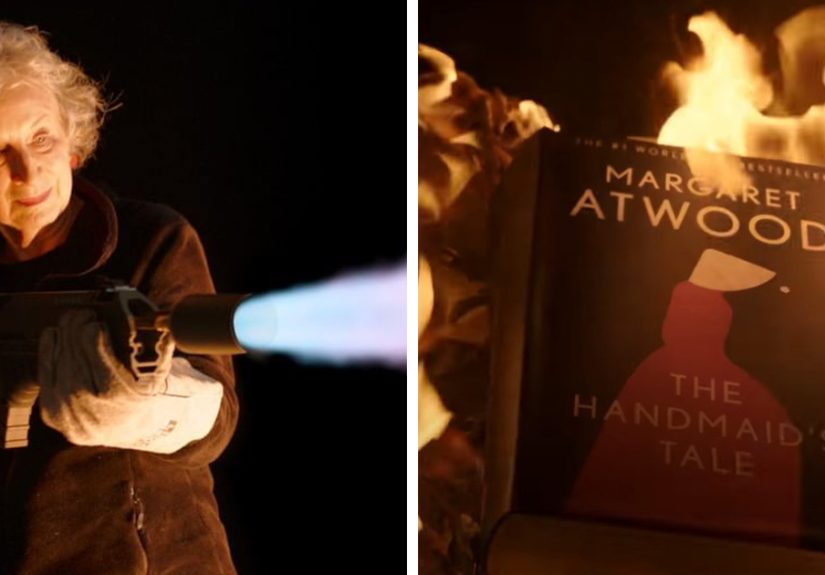
Then Atwood did something gloriously on-brand: instead of writing a polite little note about censorship and calling it a day, she helped introduce a one-of-a-kind fireproof edition of The Handmaid’s Tale. The result was part art object, part publishing prank, part political statement. And more importantly, it clarified the symbolic issue at the center of the novel. The truly unburnable thing is not the paper. It is the warning.
That is why this story matters. The “unburnable” edition was not just a clever anti-censorship stunt with a flamethrower and excellent timing. It was a very public reminder that some books survive precisely because the fears inside them remain alive. In the case of The Handmaid’s Tale, those fears include authoritarian control, reproductive coercion, religious extremism used as political cover, and the oldest power trick in the book: control the story, and you control the people.
Why the “Unburnable Book” Landed So Hard
When Atwood and Penguin Random House unveiled the fireproof edition, the symbolism was almost hilariously direct. Here was a novel that has spent decades being challenged for sexual content, profanity, and supposed moral offense, now returning to the public as an object designed to resist literal flames. It was subtle in the way a marching band inside your living room is subtle, which is exactly why it worked.
The point was not that modern censorship usually looks like old-fashioned bonfires. In America today, censorship is more likely to arrive wearing khakis, carrying procedure, and citing “community concerns.” Books are reviewed, relocated, restricted, flagged, temporarily removed, quietly disappeared, or buried in appeals processes so long that they might as well have been vaporized. No smoke, no ash, just absence. That is cleaner optics, but it is still suppression.
By making The Handmaid’s Tale physically unburnable, Atwood pushed back against that sanitized version of censorship. She turned removal into spectacle and forced viewers to look at what book banning has always been about: fear of ideas. Not fear of paper cuts. Not fear of binding glue. Fear of what happens when readers encounter a story that gives them language for power, hypocrisy, cruelty, and resistance.
And yes, there was something deliciously mischievous about the whole thing. Atwood, a writer famous for precision, irony, and a dry wit sharp enough to slice sheet metal, effectively said: if you insist on performing censorship theater, I can do theater too. Only mine has better props.
The Handmaid’s Tale Keeps Getting Challenged for a Reason
The Handmaid’s Tale is not controversial because it is vague. It is controversial because it is legible. The novel’s world of Gilead is a patriarchy so organized it has filing systems for oppression. Women are stripped of legal identity, literacy is tightly controlled, fertility is politicized, and language itself becomes a mechanism of surveillance. Nobody reading it seriously mistakes it for cozy fiction.
That clarity is exactly what keeps the book in the censorship crosshairs. For years, challenges to Atwood’s novel have leaned on familiar complaints: sexual material, vulgarity, anti-religious implications, or subject matter deemed inappropriate for students. Those objections may sound specific, but they often function as a broader discomfort with what the novel actually does. It refuses to flatter systems of authority. It exposes how quickly a society can dress domination in moral language and call it order.
The book has appeared on major challenged-book lists, and its reputation as a frequent target is not new. That matters because it shows the pattern is not one weird district, one panicked parent, or one temporary controversy. It is part of a longer American habit of treating difficult literature as if discomfort were a design flaw instead of the point.
Recent local disputes make that pattern feel even more immediate. In some districts, copies of The Handmaid’s Tale have been removed from school libraries or reading lists while officials sort through claims that the novel is too explicit or harmful for students. In Texas and Idaho, fights over school shelves have shown how quickly celebrated literature can be reframed as suspect material once a district starts governing by fear. One minute a novel is assigned to sharpen critical thinking; the next minute it is spoken about like it snuck into the building wearing a fake mustache.
The Real Symbolic Issue Is Bigger Than Fire
It is about who gets to control meaning
Books do not threaten authoritarian thinking because they are made of paper. They threaten it because they let readers compare the official story with lived reality. The Handmaid’s Tale is especially dangerous to censors because it trains readers to notice how power hides behind piety, slogans, bureaucracy, and “for your own good” reasoning. Once you start seeing that pattern, it becomes difficult to unsee it.
That is why the unburnable edition matters symbolically. The physical book becomes a stand-in for something less easy to confiscate: interpretation. You can challenge a title, but you cannot as easily challenge the mental habit of recognizing authoritarian logic once a novel has taught you how it works.
It is about memory
Atwood has long explained that she did not build Gilead from fantasy fluff and spooky vibes alone. She rooted the novel in historical precedent. That is one reason the book continues to sting. Readers understand that its horrors were not invented from nowhere; they were assembled from things human beings have already done to one another. Once a book carries that historical memory, attempts to suppress it become even more revealing. The censor is not just objecting to fiction. The censor is objecting to recognition.
That is the deeper irony: banning a book like The Handmaid’s Tale can end up proving its thesis. The novel warns that when societies become anxious, they often restrict speech, narrow women’s autonomy, moralize public life, and call repression virtue. Then the book is challenged on moral grounds by institutions anxious about what students might think if they read it. Gilead would absolutely admire that efficiency.
It is about the freedom to read as a democratic habit
The freedom to read is sometimes treated as a nice, abstract principle, like putting up a poster that says “ideas matter” and then forgetting about it while the copier jams. But it is much more concrete than that. A student denied access to a book is being denied a framework, a comparison point, a challenge, a provocation, or a warning. A community that normalizes removal teaches people to approach literature not with curiosity but with suspicion. That is bad for education, bad for democracy, and frankly terrible for anyone who claims to love critical thinking.
Why This Novel Escaped the Shelf and Entered Public Life
One reason The Handmaid’s Tale is so hard to silence is that it no longer lives only as a novel. Its imagery has migrated into public protest. The red robes and white bonnets associated with handmaids became recognizable symbols at demonstrations over reproductive rights and gendered power. Once that happened, the book stopped being just a text and became a visual shorthand for a fear many people already carried: that rights can erode while institutions insist everything is perfectly normal.
That shift matters because protest culture gave the novel a second life. Readers did not merely consume Atwood’s warning; they wore it in public. The costume said, without needing a speech, that bodily autonomy and state control were not abstract issues. The image traveled because it was instantly legible. You did not need a PhD in literary theory to understand the point. A red robe in front of a statehouse does the talking.
And once a book becomes public symbolism, it becomes harder to suppress by ordinary administrative means. Remove it from one school shelf, and it appears in a newspaper photo, a protest sign, a television adaptation, an online debate, a college syllabus, a used bookstore display, and a conversation between two teenagers who now want to read the thing precisely because somebody tried to bury it. Censors have accidentally become some of literature’s most overqualified marketers.
What the Unburnable Edition Says About Modern Censorship
The unburnable edition of The Handmaid’s Tale worked because it translated an old problem into a modern image. It told the truth without pretending that censorship always arrives in the same costume. Today’s version may involve policies, committee language, “temporary review,” legal ambiguity, or vague appeals to protecting children. But the underlying desire is familiar: limit access, control interpretation, reduce friction, shrink the public imagination.
Atwood’s answer was not to insist that books are fragile treasures floating above politics. It was almost the opposite. She treated the book as an active participant in political life. The object itself became argument. The cover, the materials, the performance, the flames that failed to do their job: all of it said that literature can answer suppression not only with dignity, but with nerve.
There is also a useful lesson here for publishers, teachers, and readers. Defending a book does not always mean whispering reverently about literary merit until everyone falls asleep. Sometimes defense should be vivid. Sometimes it should be funny. Sometimes it should be impossible to ignore. The unburnable edition succeeded because it made censorship look what it often is: panicked, theatrical, and a little ridiculous.
Experience on the Ground: What This Fight Feels Like in Real Life
If you want to understand why this topic keeps resonating, it helps to move away from headlines and into ordinary experience. Imagine a high school English teacher who has taught The Handmaid’s Tale for years. She knows exactly when students laugh nervously, exactly when the room goes quiet, and exactly when somebody finally says, “Wait, this part isn’t fiction-fiction, is it?” That moment is the entire value of the book. It is not there to hand students a political script. It is there to make them recognize patterns, ask harder questions, and notice how language can be weaponized.
Now imagine that same teacher being told the novel is under review. Suddenly the discussion is no longer about analysis, irony, gender, power, or historical precedent. It becomes paperwork, complaints, email chains, district policy, and the stale vocabulary of panic. A living classroom text turns into evidence in a case nobody asked to try. The teacher is expected to defend literature as though she were smuggling contraband instead of assigning a landmark novel.
Then there is the school librarian, who often gets handed the emotional debris of these fights. Students ask where a book went. Parents ask why it was there in the first place. Administrators ask for patience. Advocacy groups ask for documentation. The librarian becomes part records manager, part public servant, part accidental shield wall. In that environment, a book ban is never just about one title. It changes the climate of the room. It teaches caution. It encourages self-censorship. It makes people think twice before recommending the book that might bring trouble to the desk.
Readers feel it too. Plenty of adults first come to The Handmaid’s Tale not through a syllabus but through rumor: the banned book list, the protest image, the clip of Atwood with a flamethrower, the friend who says, “You really should read this now.” That journey matters. A challenged book arrives with a strange aura. It feels charged before page one. Sometimes that makes readers defensive. More often, it makes them attentive. They read asking the question censors never want asked: what, exactly, is so threatening here?
And the answer usually is not what the complaint form suggests. It is not just profanity. It is not just sexual content. It is not just mature themes. The threat is recognition. The threat is that a reader will connect control of reading with control of bodies, or connect moral panic with political power, or connect a fictional regime with real habits of silencing. Once those connections click, the book has already done its work.
That is why the “unburnable” image resonates so strongly with teachers, librarians, students, and ordinary readers. It mirrors their experience. The object in Atwood’s hand may be fireproof, but the deeper endurance belongs to the conversation the book keeps starting. You can remove copies, challenge curricula, or slap warning labels on shelves. But if a novel has already taught people how censorship behaves, it keeps circulating in memory long after the committee meeting ends. And that, more than any special paper stock, is what makes a book hard to destroy.
Conclusion
Margaret Atwood’s unburnable edition of The Handmaid’s Tale was memorable because it took a familiar slogan, “books can’t be silenced,” and gave it a body. But the most powerful part of the gesture was not the engineering. It was the insight. The book’s real durability lies in the warning it carries: authoritarian systems fear readers who can identify the machinery of control.
That is why this symbolic issue remains unburnable. The Handmaid’s Tale survives because it names what censorship tries to hide. It shows how power colonizes language, how moral panic can become policy, and how quickly a society can confuse obedience with virtue. Every new challenge to the novel ends up underscoring the same lesson. When people try this hard to contain a story, they are usually admitting the story still knows something dangerous.