Table of Contents >> Show >> Hide
- The Big Origin Story: Chaos, the Conjunction, and a World That Got “New Neighbors”
- Rule #1: Magic Isn’t “Free” (Even When It Looks Like It)
- Where Does Power Come From? Elements, Hotspots, and “Places of Power”
- Who Can Use Magic? Not Just “Wizards,” and Definitely Not Just Humans
- How Spellcasting “Works” in Practice: Focus, Formulas, and Fancy Hand Motions
- The Cost of Magic: Exhaustion, Sacrifice, and the Problem With “Hungry” Power
- Anti-Magic: Dimeritium, Shackles, and “No, You May Not Teleport Today”
- Witcher Signs: Small Spells, Big Tactical Value
- Special Cases: Djinn, Elder Blood, and Reality-Bending Exceptions
- Why Magic Feels So “Witcher”: It’s Science, Myth, and Politics in a Knife Fight
- Conclusion: The Witcher’s Magic Is Power Under Pressure
- Experiences With Witcher Magic: What It Feels Like Across Books, Games, and the Show (Extra )
Magic in The Witcher isn’t a polite little sparkler you wave at parties. It’s more like borrowing a forklift from the universe:
powerful, loud, and absolutely capable of ruining your day if you don’t read the manual (and nobody reads the manual).
Whether you know the Continent through Andrzej Sapkowski’s books, CD Projekt Red’s games, or Netflix’s adaptation, one theme stays consistent:
magic is real, it’s dangerous, and it comes with rulessome written down, some learned the hard way.
This guide breaks down how magic actually works in the Witcher world: where it comes from, who can use it, how spells are “built,” why certain
kinds of power are taboo, and what makes Witchers’ Signs different from a sorceress casually rearranging reality like it’s a living-room makeover.
Along the way, we’ll use concrete examples (portals, illusions, Signs, anti-magic metals, and that whole “fire is hungry” thing) without turning
this into a textbook you pretend to read while scrolling.
The Big Origin Story: Chaos, the Conjunction, and a World That Got “New Neighbors”
In Witcher lore, magic is often described as Chaosa raw, volatile energy that can be shaped into spells. It’s not merely “talent”
or “faith”; it’s closer to a fundamental force that exists in the environment, tied to the natural world and, crucially, to the history of how the
world became a crossroads for strange creatures and stranger physics.
A key event is the Conjunction of the Spheres, a cataclysmic collision of realities that brought monsters, new races, and new
magical conditions into the same plane of existence. After the Conjunction, Chaos became something that could be accessed, studied, and weaponized.
Think of it as the moment the universe’s firewall failedand now everybody’s running questionable downloads.
Rule #1: Magic Isn’t “Free” (Even When It Looks Like It)
The Witcher setting loves a practical truth: you don’t get something from nothing. Magic is typically portrayed as the act of
drawing power from somewhere (the world, elements, places saturated with energy) and shaping it through knowledge,
discipline, and will. The result can look effortlessuntil you notice the exhaustion, the risks, and the occasional “oops, my eyebrows are now a memory.”
Drawing vs. Shaping: Two Jobs, One Nervous System
Most spellcasting in The Witcher can be understood as a two-step process:
- Draw raw energy (Chaos) from a source.
- Shape it into a specific effect (a shield, a portal, a blast, an illusion).
“Shaping” is where trained mages separate themselves from amateurs. Plenty of people might sense power; far fewer can turn it into a clean portal
instead of a tragic interpretive dance with gravity.
Where Does Power Come From? Elements, Hotspots, and “Places of Power”
Across versions of the story, magic is strongly associated with the natural worldespecially classical elements and locations where
energy pools. In the games, you literally find Places of Power that boost Signs and hint at how geography can “hold” magic like a battery.
Elemental Sources (and Why Fire Has a Reputation)
The Witcher universe often treats elemental energy as a source for spellwork: water, earth, air, and fire. Not all sources are equally safe.
Fire is frequently framed as uniquely dangerousnot because “fire spells are banned,” but because drawing from fire as your fuel
is volatile and consuming. Creating flame as an effect is one thing; feeding your spell with fire’s raw power is another.
Hotspots: When the World Is Basically a Charging Station
Some places are more saturated with magical energyancient ruins, monolith-linked sites in the show, or natural intersections of power. These locations
make spellcasting easier, stronger, or less draining, which explains why mages love ancient towers and why Witchers keep stumbling into “perfectly normal”
caves that are never, ever perfectly normal.
Who Can Use Magic? Not Just “Wizards,” and Definitely Not Just Humans
Magic in The Witcher isn’t a single club with a velvet rope. It’s more like several overlapping professions, faith traditions, and
extremely questionable hobbies.
1) Trained Mages (Sorcerers and Sorceresses)
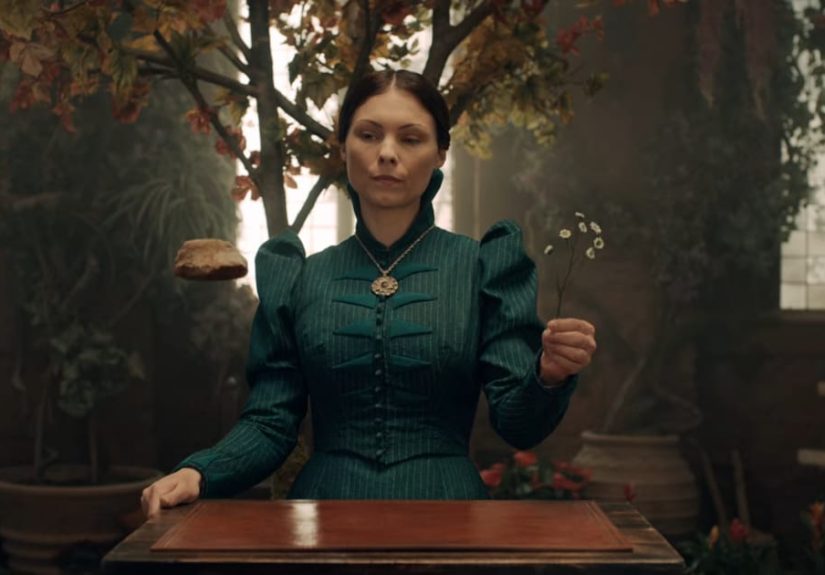
Mages are the “engineers” of Chaos: educated, trained, and usually capable of complex spellwork (portals, illusions, transformations, battlefield
magic, divination). They don’t just have powerthey have technique. Training matters because raw Chaos without control is dangerous,
and because the world’s political class tends to react poorly to “unlicensed reality editing.”
2) Druids, Priests, and Other Traditions
The setting includes other magical paths: druids tied to nature and ritual, and religious figures whose “miracles” may overlap with magic, whether
they admit it or not. Not everyone calls it Chaos, but the results can rhyme: healing, wards, curses, visions. On the Continent, labels are often
political as much as spiritual.
3) Monsters and Entities (Because Reality Wasn’t Complicated Enough)
Certain creatures are inherently magicaldjinn, higher vampires, cursed beings, and other entities whose biology is basically “magic, but with teeth.”
In those cases, magic isn’t a skill; it’s an operating system.
4) Witchers: Combat Magic With Training Wheels (On Purpose)
Witchers aren’t “full mages.” They use Signssimple, fast, battle-ready magical techniques designed to complement swordplay.
Signs are limited compared to sorcerous spells, but they’re efficient: minimal gestures, quick casting, tactical effects. Witcher magic is
the fantasy equivalent of a multitool: not as flashy as a full workshop, but incredibly useful when something is trying to eat you.
5) Sources and Bloodlines (AKA: Power You Didn’t Ask For)
Some people are born with unusual magical potentialoften called Sources. Then there’s Elder Blood, a lineage tied
to exceptional, reality-bending abilities (and a mountain of prophecy). In these cases, power can manifest unpredictably: uncontrolled outbursts,
involuntary portals, and “I sneezed and history changed” energy.
How Spellcasting “Works” in Practice: Focus, Formulas, and Fancy Hand Motions
Witcher magic often feels grounded because it behaves like a craft. Yes, it’s mysticalbut it’s also technical. Casting typically involves:
concentration, gestures, spoken components, and sometimes physical tools (medallions, amulets, staffs, or prepared materials).
Portals: The Practical Flex of a Skilled Mage
Portals are a great example of structured magic: opening a stable passage between locations requires precision. A poorly made portal can be
disastrousbest case, you arrive nauseous; worst case, you arrive as “concept art.” That’s why portal magic is often treated as a hallmark of trained
sorcerers and sorceresses: it’s complex, it’s dangerous, and it’s strategically priceless.
Illusions and Glamours: The Continent’s Favorite Lie
Illusions range from small deceptions (disguises, misdirection) to elaborate constructs that fool senses and minds. Witcher stories use illusions
constantly because they fit the world’s tone: politics, manipulation, and monsters that win by confusion as much as claws. Illusions also highlight
a key principle: magic isn’t only about raw force. It’s about controland controlling perception can be more powerful than controlling fire.
Healing and Transformation: High Stakes, High Skill
Healing spells and body-altering magic often feel more “costly” because they fight biology and entropy. The more complex the change (repairing deep wounds,
altering appearance, reshaping tissue), the more knowledge and power are implied. In some portrayals, healing can look easy; in others, it’s draining,
risky, or dependent on ingredients and preparation.
The Cost of Magic: Exhaustion, Sacrifice, and the Problem With “Hungry” Power
One reason Witcher magic stays interesting is that it doesn’t let casters become untouchable gods. Spells can drain stamina, require careful sourcing,
or exact a priceespecially when characters push beyond safe limits.
Fatigue and Overreach
Even without mystical “payment,” spellcasting can be physically punishing. Drawing power, maintaining concentration, and shaping complex effects is
exhausting. The world treats magic like lifting heavy weight: form matters, and you can absolutely injure yourself trying to ego-lift a thunderstorm.
Sacrifice (Especially in the Netflix Interpretation)
In the Netflix adaptation’s framing, magic frequently involves a concept of sacrifice commensurate with the effect. Sometimes that’s
symbolic; sometimes it’s literal. That emphasis reinforces the setting’s core tone: power has consequences, and shortcuts are just consequences with
better marketing.
Why Fire Magic Is “Forbidden” (Even When People Still Do It)
Fire is treated as dangerous because using it as a source of Chaos is corrupting and consuming. In practical terms, fire magic can invite
emotional volatilityrage, obsession, desperationbecause fire “takes” as much as it gives. It’s the kind of power that works great right up until
it works on you.
Anti-Magic: Dimeritium, Shackles, and “No, You May Not Teleport Today”
A world with magic needs counters, and The Witcher delivers. The standout is dimeritium, a rare substance associated with
suppressing or disrupting magical energy. In stories and adaptations, dimeritium shows up as shackles, cages, weapons, or environmental obstacles
basically the setting’s way of saying, “Congrats on your spellcasting degree. Now sit down.”
Anti-magic tools serve two big narrative purposes:
- Balance: mages can’t solve every plot problem by teleporting to a safe house and ordering victory.
- Politics: rulers and institutions fear magic, so they build systems to control itoften brutally.
Witcher Signs: Small Spells, Big Tactical Value
If sorcerers are software developers writing custom programs, Witchers are using five pre-installed apps mid-fight while sprinting downhill.
Signs are intentionally simple: quick gestures, limited scope, reliable battlefield utility.
The Five Core Signs (And What They’re For)
- Aard: telekinetic forceknockback, stagger, disruption. Great for creating space or interrupting attacks.
- Igni: firedamage, panic, control. Useful against enemies that fear flame (and enemies who enjoy being on fire less than you do).
- Quen: protective shielddefense and survivability. The “please don’t kill me” button with excellent uptime.
- Yrden: magical trapslows, anchors, or reveals certain spectral foes. Especially important when the enemy is technically “not here.”
- Axii: mental influencestun, calm, persuade, or briefly control. Also the closest Geralt gets to customer service.
Why Witchers Don’t Cast “Big” Spells
Witchers are built for a different job. Their mutations, potions, and training focus on surviving monsters, reading weaknesses, and fighting efficiently.
Signs support that: they’re fast, consistent, and don’t require the same deep spellcraft a mage uses. A Witcher doesn’t need a cathedral-sized ritual
to kill a drowners’ nesthe needs one hand free, a Sign, and a strong desire to go home.
Special Cases: Djinn, Elder Blood, and Reality-Bending Exceptions
The Witcher world is disciplineduntil it isn’t. Certain forces break the “normal” rules or operate on a different tier.
Djinn and Elementals: Power With a Personality
Djinn are tied to elemental forces and can unleash massive effects, often with unintended consequences. They’re not just batteries; they’re entities
with will and volatility. That’s why “controlling” one is riskybecause what you’ve actually done is enter a negotiation with a hurricane that’s
feeling petty.
Elder Blood and Ciri: When the Spell Is the Person
Elder Blood abilities are often framed as rare, world-shaping powerespecially around space, time, and portals. This isn’t standard spellcraft; it’s
closer to a unique connection to the fabric of reality. In narrative terms, it’s why everyone wants Ciri: kingdoms, mages, hunters, and monsters all
understand that a person who can tear open paths between worlds changes the board permanently.
Why Magic Feels So “Witcher”: It’s Science, Myth, and Politics in a Knife Fight
The Witcher setting doesn’t treat magic as a separate “wizard world.” It’s integrated into society the same way wealth, propaganda, and fear are integrated:
unevenly, often cruelly, and always with consequences. Mages shape wars. Kings try to leash them. People fear what they don’t understand. Witchers get blamed
because they’re nearby and have weird eyes. Monsters exploit magical fallout. And somewhere in the middle, a bard is turning it all into a catchy chorus.
Ultimately, magic in The Witcher works because it has structure (sources, training, tools, counters) and mess
(risk, emotion, politics, unintended consequences). It’s powerful enough to matter, limited enough to stay tense, and complicated enough to feel like a real
part of the world rather than a cheat code.
Conclusion: The Witcher’s Magic Is Power Under Pressure
If you want the cleanest summary, it’s this: Witcher magic is the art of drawing Chaos from the world and shaping it with disciplinewhile accepting that
every shortcut has a price. Sorcerers and sorceresses can do the big, beautiful, terrifying stuff because they train for it. Witchers use Signs because they
need speed, reliability, and one hand on the sword. Fire is feared because it’s consuming when used as a source. Anti-magic exists because everyone else
noticed how inconvenient mages are during political disagreements. And rare bloodlines can bend rules because fantasy loves an exception almost as much as it
loves a prophecy.
In other words: on the Continent, magic isn’t a gift. It’s a responsibility with teethand it occasionally bites the person holding it.
Experiences With Witcher Magic: What It Feels Like Across Books, Games, and the Show (Extra )
One of the coolest “meta” experiences of Witcher magic is how differently it lands depending on how you encounter the story. As a reader, you tend to feel
the mystique first: magic appears at key moments, often through character perspective, and it carries weight because it’s tied to danger, secrets,
and power dynamics. You don’t always get a step-by-step breakdown of how a spell is assembled, but you do get the emotional truth: drawing power is
risky, control is everything, and even brilliant mages can make catastrophically human choices.
In the games, the experience shifts toward tactics. Witcher Signs become a language you learn through repetition: Quen before a tough monster,
Yrden when something spectral won’t stay put, Axii when you need a breath of control, Igni for pressure and panic, Aard for spacing and interrupts.
What’s fascinating is how “small” magic becomes addictive in play. You’re not throwing meteor swarms; you’re nudging the fight in your favor with quick,
reliable tools. That’s a different kind of fantasy satisfactionless “I am a god,” more “I am prepared.” And preparation is basically the Witcher vibe
distilled into one word.
The show leans hard into consequence, especially with the idea that magic has a visible cost. That framing creates a distinct viewing experience:
spellcasting becomes dramatic not just because of the visual spectacle, but because you’re trained to look for what it’s taking out of the caster. When
characters reach for fire or overextend, you’re not only thinking “wow,” you’re thinking “uh-oh.” It’s a storytelling trick that keeps magic from becoming
background noise. Even when a spell looks effortless, the context makes it feel expensive.
Another experience fans often share is the “second-watch/second-play” realization that magic is everywhere in the world-building. The Continent’s politics
revolve around it. Racism and persecution echo through it. Monsters exist because reality got stitched together wrong. Even mundane choiceswhere people build,
what ruins they fear, what metals they hoardhave magical logic underneath. Once you start noticing that, Witcher magic stops being a set of cool powers and
becomes infrastructure: the invisible system that shapes what’s possible and what’s terrifying.
Finally, there’s the personal-fan experience of using Witcher magic as a creative template. It’s a great system to borrow for tabletop campaigns or original
stories because it’s flexible: you can emphasize the “science” side (sources, technique, anti-magic), the “myth” side (prophecy, bloodlines, curses), or the
“politics” side (control, propaganda, fear). The best part is that it naturally encourages meaningful limitations. When magic has a costfatigue, risk, scarcity,
moral compromisecharacters become more interesting. They have to choose. And in the Witcher universe, choices are rarely clean… which is exactly why the magic
sticks with people long after the fireballs fade.