Table of Contents >> Show >> Hide
- Meet the Ranch: Remote Land, Loud Legends
- The 1990s: When “Just a Ranch” Turned Into “The UFO Ranch”
- Enter the Billionaire and the Lab Coats: The Bigelow Years
- When Washington Noticed: How a Ranch Ended Up in UFO Politics
- The Modern Era: New Owner, New Spotlight
- So…Is It Really Paranormal? A Calm (and Slightly Snarky) Reality Check
- What the Ranch Teaches Us (Even If You Don’t Believe in Anything Spooky)
- Experiences: What People Say It Feels Like Around Utah’s Most Famous “UFO Ranch” (Extra )
- Conclusion
Out in northeastern Utah’s Uintah Basin, there’s a working ranch that somehow became a magnet for UFO stories, “unexplained” livestock injuries, weird lights in the sky, government rumors, and a TV crew with more batteries than a big-box electronics aisle. People call it Skinwalker Ranch (also known historically as Sherman Ranch), and love it or roll your eyes at it, the place has earned a rare modern title: a paranormal hotspot with a paper trail.
This isn’t a tale about a haunted Victorian mansion with tasteful wallpaper and a ghost that politely knocks once. This is wide-open countrybig sky, rough weather, sparse neighbors, and the kind of night darkness that makes you realize your phone flashlight is basically a toy. So how did a remote Utah ranch go from “just land” to “America’s strangest watercooler story”? A mix of geography, folklore, local lore, media amplification, deep-pocketed patrons, and a stubborn lack of definitive answers.
Meet the Ranch: Remote Land, Loud Legends
Where it sits (and why “remote” matters)
Skinwalker Ranch is in northeastern Utah’s Uintah Basin, in an area that feels intentionally designed to make humans question their place in the universe. It’s rural, it’s windy, and the horizon goes on long enough to make your thoughts echo. That isolation matters: fewer streetlights, fewer distractions, and (importantly) fewer casual witnesses who can easily corroborate events in real time.
The Uintah Basin effect: big sky, big stories
The Basin has a long-running reputation for odd aerial sightingslong before modern “UAP” became a mainstream acronym. When a region already has a culture of telling and retelling strange encounters, any new weirdness doesn’t land in a vacuum. It lands on kindling.
The name “Skinwalker” and why it’s complicated
Even the ranch’s nickname carries cultural weight. “Skinwalker” comes from Navajo tradition, but the ranch is not located within the Navajo Nation; it’s near Ute lands. Over the years, the term has become a pop-culture label slapped onto the area’s strangenesssometimes carelessly. It’s worth keeping the difference clear: folklore isn’t a prop, and Indigenous stories deserve respect, not souvenir-shop treatment.
The 1990s: When “Just a Ranch” Turned Into “The UFO Ranch”
A family moves inand says the weirdness moves in too
In the mid-1990s, a family purchased the property expecting ranch life: chores, livestock, and the occasional “why is that coyote judging me?” stare. What they later described was far stranger: odd lights, unusual marks, and repeated cattle incidents that they believed were not typical predator behavior. The stories included moments that read like a screenplaylarge animals that didn’t behave like normal wildlife, and aerial objects that didn’t fit the usual “weather balloon” explanation.
Cattle mutilations: a grim hook that won’t let go
Nothing pulls a mystery into public attention like a disturbing detail you can’t easily laugh off. Reports of “cattle mutilations” in the broader American West go back decades, and the Uintah Basin had already been linked with those claims. When the ranch stories added repeated incidentsoften described as oddly “clean” or “surgical”the narrative hardened into something that felt more “case file” than campfire tale.
Local rumor becomes regional story, then national curiosity
Once a story hits print, it gains a second life. People repeat it, elaborate it, debate it, and argue about whether it’s proof of something extraordinary or proof that humans are storytelling mammals with excellent imaginations. Either way, attention compounds. And in the ranch’s case, attention didn’t just bring curiosityit brought funding.
Enter the Billionaire and the Lab Coats: The Bigelow Years
When belief meets money (and money buys cameras)
In the late 1990s, the ranch drew the interest of billionaire Robert Bigelow, who had a long-standing fascination with UFO claims and paranormal reports. The purchase mattered because it changed the ranch from “private weirdness” into “organized investigation.” Bigelow’s team pursued monitoring, documentation, and surveillanceturning the ranch into something closer to a controlled observation site than a typical piece of rural property.
That’s a big pivot in the story: once you install cameras, sensors, and security, you’re not just collecting datayou’re also shaping the myth. The ranch becomes less like a place people live and more like a stage where something might happen.
The evidence problem: lots of claims, little consensus
Here’s the frustrating part for true believers and hard skeptics alike: despite years of attention and investigation, there’s no single publicly available “smoking gun” artifactno universally accepted footage, no independently verified biological sample, no measurement that forces the scientific community to rewrite physics on the spot.
Instead, the ranch’s reputation grew on a pattern: repeated claims, occasional strange readings, and a steady sense that the most dramatic events always arrive right when the cameras are blocked, the batteries die, or the angle is wrong. That doesn’t automatically mean fraud. It does mean the story is built more on accumulation of accounts than on a clean, repeatable demonstration.
When Washington Noticed: How a Ranch Ended Up in UFO Politics
From ranch lore to government-adjacent intrigue
One reason Skinwalker Ranch refuses to fade is that it’s tangledat least indirectlyin the modern history of U.S. government curiosity about aerial anomalies. Over time, reporting and commentary connected Bigelow’s interests, defense-related research contracting, and the broader “what are those things in the sky?” conversation.
To be clear: government attention in this space does not equal confirmation of aliens, portals, or anything else with a merchandising pipeline. Governments study lots of thingssometimes to assess threats, sometimes to evaluate technology, sometimes because a well-connected person pushes the topic into the room. Still, the association alone gave the ranch a powerful upgrade: it wasn’t just a local legend anymore. It became a symbol in the larger UAP era.
Why that mattered to the public
In the internet age, “the government looked into it” is gasoline. It turns a strange local story into a national argument, instantly splitting the audience into camps:
- Believers who see investigation as validation.
- Skeptics who see it as wasted time or clever marketing.
- The perpetually curious who just want someoneanyoneto show their work.
The Modern Era: New Owner, New Spotlight
Brandon Fugal and a shift from secrecy to controlled publicity
In 2016, the ranch changed hands again, later revealed to be owned by Utah real estate developer Brandon Fugal through an LLC. For a while, ownership was deliberately quietfueling more speculation than a campfire in a windstorm. Eventually, the owner’s identity became public, and with it came a new era: not only investigation, but also documentation for an audience.
The History Channel effect: when a mystery gets a season finale
In 2020, “The Secret of Skinwalker Ranch” premiered, following an investigative team running experiments and monitoring unusual events. Whatever you think of reality television, it excels at one thing: taking a niche fascination and turning it into a weekly ritual. Suddenly, “remote Utah ranch” wasn’t just a phrase for hardcore UFO forumsit was a show people watched while folding laundry.
The show also shaped the narrative structure: experiments, results, cliffhangers. That format is entertainment-first, but it can still capture genuine momentsespecially when the team’s best “evidence” is often confusion, not certainty. And confusion, frankly, is the ranch’s most consistent export.
So…Is It Really Paranormal? A Calm (and Slightly Snarky) Reality Check
What we can say without setting our credibility on fire
We can say this much with confidence:
- The ranch is a real place in Utah’s Uintah Basin, with a long-running public reputation for unusual reports.
- Multiple owners and investigators have claimed unusual events over decades.
- The ranch has been the subject of books, journalism, and a major TV seriesmeaning the story is now culturally bigger than the property itself.
- There is no single piece of publicly available evidence that has ended the debate in a way that satisfies mainstream scientific standards.
Why hotspots form even when proof stays slippery
Hotspots don’t need definitive proof to thrive. They need a feedback loop. Skinwalker Ranch has one of the strongest loops around:
- Isolation + darkness makes ordinary things (satellites, aircraft, meteor activity, atmospheric effects) look extraordinary.
- Expectation changes perception. If you arrive waiting for a “sign,” your brain becomes a pattern-finding machine with no off switch.
- Ambiguity is sticky. Clear answers end stories; unclear answers extend them.
- Media attention attracts investigators, which attracts more stories, which attracts more attention.
- Money (from wealthy enthusiasts or entertainment) funds more surveillance and more narrative momentum.
In other words: the ranch became a hotspot the way certain restaurants become “the place to be.” Not because everyone can prove it’s objectively the best, but because enough people believe something interesting might happen thereand keep showing up (physically, financially, or through a TV screen) to sustain the legend.
What the Ranch Teaches Us (Even If You Don’t Believe in Anything Spooky)
Even if you assume every eerie tale has a mundane explanation, the ranch is still useful as a case study in modern myth-making:
- Story moves faster than verification. Once a claim spreads, debunking rarely catches up.
- “We’re investigating” can be more powerful than “We found it.” Mystery sells; closure doesn’t.
- Culture shapes interpretation. Folklore, religion, and regional history color what people think they’re seeing.
- Uncertainty is uncomfortable. Humans prefer almost any explanation over “we don’t know.”
Skinwalker Ranch sits at the intersection of wonder and skepticismwhere people argue about evidence, meaning, and who gets to define “real.” That argument is the true engine of its longevity.
Experiences: What People Say It Feels Like Around Utah’s Most Famous “UFO Ranch” (Extra )
If you’ve only encountered Skinwalker Ranch through dramatic music and night-vision shots, it’s easy to forget the most unnerving part of the whole setup: in daylight, it’s just…land. Quiet pasture, scrub, distant ridgelines, and a sky so big it feels like it’s leaning down to eavesdrop. That contrastordinary scenery paired with extraordinary reputationis a major reason the ranch gets under people’s skin. You expect the atmosphere to announce itself with spooky fog and a helpful raven. Instead, it offers silence and makes you supply the suspense yourself.
People who’ve traveled through the Uintah Basin often describe a specific kind of “edge-of-the-map” feeling. It’s not that the area is impossible to reach; it’s that once you’re there, the distances between places are large enough to make time feel different. At night, the darkness can be intenseless “romantic stargazing” and more “did my car just become the only visible object on Earth?” In that setting, a bright point moving across the sky can spark a whole internal debate: satellite, aircraft, meteor, or something else? The sky becomes a live-action inkblot test.
There’s also the social experiencethe way a famous mystery changes local conversations. Some people in the region are tired of the attention and treat the ranch like an annoying celebrity neighbor. Others enjoy the lore the way people enjoy a classic campfire story: not necessarily because they can prove it, but because it’s entertaining, regionally specific, and passed along with personal flourishes (“My cousin’s friend’s uncle saw…”). Visitors, meanwhile, tend to arrive with one of two moods: determined skepticism or hopeful anticipation. Either way, they’re primed. And when you’re primed, even normal thingscoyotes yipping, wind slapping a fence line, a sudden temperature dropfeel like they’re auditioning for a paranormal documentary.
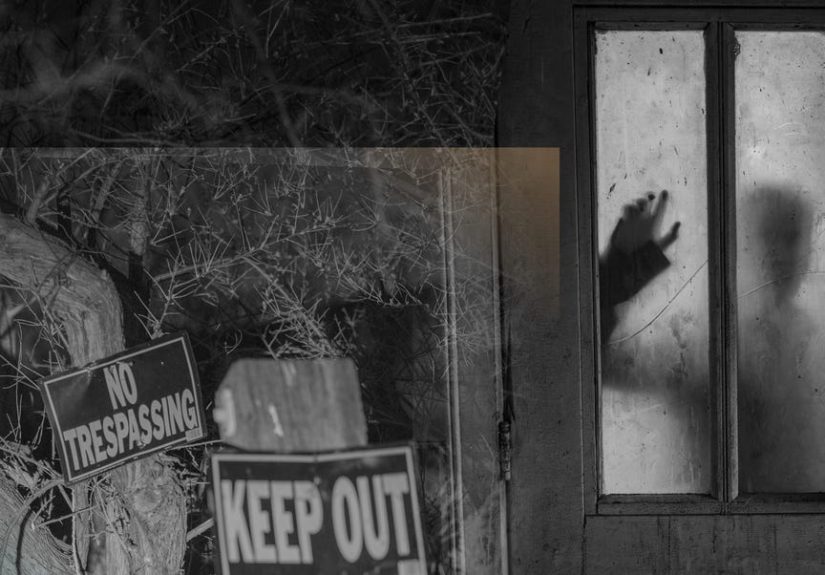
Then there’s the “gate experience,” which is its own modern ritual. The ranch is private property, not a theme park, and it’s not something you can casually wander into (nor should you try). But that boundary itself becomes part of the mystique: the locked access, the warnings, the sense that something is being protected. To a believer, the security looks like confirmation. To a skeptic, it looks like smart liability management. To everyone else, it’s simply intriguingbecause forbidden places trigger curiosity the way a “DO NOT PUSH” button triggers chaos.
What many fans report, more than any single sighting, is a layered feeling: fascination mixed with frustration. They want a clear momentone undeniable event that settles the argumentand instead they get a vibe, a story, a strange light, a glitchy reading, or a weird coincidence. Some describe leaving the area feeling silly for being spooked, and then feeling spooked again later when the memory replays at 2:00 a.m. in a quiet bedroom. The ranch’s “experience,” for most people, isn’t a monster in the field. It’s the lingering question: What if something really is going on out thereand it just refuses to perform on command?
Conclusion
Skinwalker Ranch became a paranormal hotspot the old-fashioned way: by stacking stories, attracting attention, and surviving every attempt at neat closure. A family’s frightening claims in the 1990s drew wealthy interest. Wealth funded surveillance. Surveillance fueled books and media. Media invited more curiosityand eventually a reality series that turned a remote property into a weekly national conversation.
Whether you see the ranch as a genuine mystery, a modern myth, or a cultural Rorschach test, its rise follows a recognizable pattern: isolated place + unsettling claims + organized investigation + public fascination = a legend that keeps evolving. And in the Uintah Basin, under that enormous sky, the legend doesn’t need to prove itself every night. It only needs to stay interesting.