Table of Contents >> Show >> Hide
- What Underwater Welders Actually Do
- Step-by-Step: How to Become an Underwater Welder
- How Much Do Underwater Welders Make?
- How Dangerous Is Underwater Welding? (Death Rate Explained)
- Pros and Cons of an Underwater Welding Career
- Is Underwater Welding Right for You?
- Real-World Experiences from the Underwater Welding World
- Conclusion
Picture this: you’re hanging on the side of an oil rig, 80 feet below the surface, welding steel while fish cruise past like they’re on their morning commute.
If that sounds more exciting than another day in a fluorescent-lit office, underwater welding might be on your radar.
But before you quit your day job, let’s talk honestly about what it takes to become an underwater welder – the salary, the schooling, and yes, the very real death rate.
Underwater welding is a niche career that mixes commercial diving with highly skilled welding.
It can pay very well, but it’s also one of the most dangerous jobs in the industrial world.
In this guide, we’ll walk through how to become an underwater welder, how much money you can realistically make, what schools and certifications you’ll need, and what those scary statistics about fatalities actually mean.
What Underwater Welders Actually Do
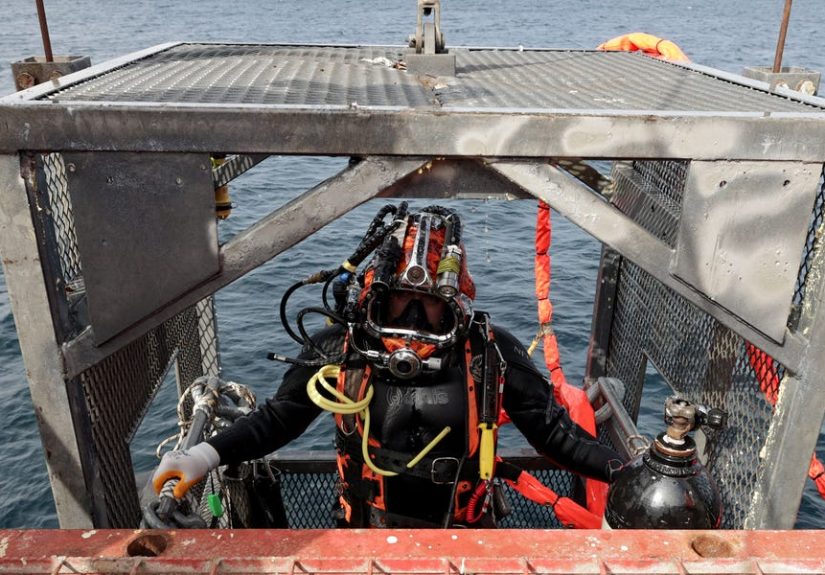
“Underwater welder” is a bit of a catchy nickname. Most people in this field are technically
commercial divers who perform welding, cutting, and repair work underwater.
Their work supports industries like offshore oil and gas, ship repair, bridges, dams, and underwater pipelines.
On a typical job, an underwater welder might:
- Inspect and repair ship hulls, piers, and offshore platforms
- Cut away damaged steel using underwater burning (oxy-arc cutting)
- Install or repair subsea pipelines and risers
- Work inside pressurized habitats for “dry” hyperbaric welding
- Document inspections with photos, video, and written reports
Some jobs involve wet welding (directly in the water) while others use dry hyperbaric welding
inside a sealed chamber. Dry welding is usually higher paying and higher skill, but all types require
strong technical training and nerves of steel.
Step-by-Step: How to Become an Underwater Welder
There’s no “Underwater Welding 101” class at your local high school. Instead, you build this career in stages:
1. Finish High School (or Get a GED)
Most welding and diving programs require at least a high school diploma or GED.
Classes in math, physics, and shop will actually help you later with dive physics, pressure calculations, and welding basics.
2. Learn to Weld on Land First
Before anyone hands you a welding stinger underwater, you need to prove you can weld topside.
Many underwater welders start with:
- Completion of a welding program at a trade school or community college
- Certification through the American Welding Society (AWS) in structural or pipe welding
- One or more years of experience in structural steel, shipyards, or industrial welding
You don’t have to be the best welder in America, but you do need clean, consistent welds and comfort with different processes
like SMAW (stick), FCAW, and sometimes MIG or TIG depending on the program.
3. Enroll in a Commercial Diving School
The next step is commercial diver training. These specialized schools teach you:
- Dive physics and decompression theory
- Diver communication and emergency procedures
- Use of surface-supplied air systems and helmets
- Underwater tools, rigging, and basic construction
- Hyperbaric chamber operations and safety
In the United States, commercial diving programs typically last several months, often in the
16-week to 7-month range, depending on the school and whether you add specialty certifications.
Programs must meet standards set by industry organizations and may include hundreds of hours of in-water training.
4. Pass Medical and Fitness Requirements
Commercial diving isn’t for anyone with a casual relationship to cardio.
You’ll need to pass a thorough commercial diver medical exam that checks:
- Cardiovascular health and blood pressure
- Lung function
- Ear, nose, and sinus health (equalizing pressure is crucial)
- Neurological and mental health status
You’ll also need strong swimming skills, comfort in the water, and the ability to work in cold, dark, and claustrophobic spaces.
If you panic in deep water or hate confined spaces, this is not your dream job – and that’s okay.
5. Specialize in Underwater Welding
Once you’re a certified commercial diver, you can pursue underwater welding training.
Some schools offer combined welding + commercial diving + underwater welding programs,
while others offer underwater welding as an add-on module.
You’ll learn:
- Wet welding techniques and electrode handling under water
- Joint preparation and fit-up in low visibility
- How to control arc stability and bead quality underwater
- How to adapt welding procedures to different depths and conditions
Employers often look for divers who are versatile – people who can weld, cut, rig, inspect, and problem-solve,
not just “run beads” and go home.
6. Build Experience in the Field
Your first job probably won’t be deep-habitat hyperbaric welding at a six-figure salary.
Many new graduates start as tenders, supporting more experienced divers by:
- Managing dive umbilicals and communication
- Setting up tools and equipment
- Helping with surface tasks and inspections
Over time, you’ll log more dives, take on more responsibility, and earn opportunities to handle
more technical welding and cutting tasks.
How Much Do Underwater Welders Make?
Here’s what most reputable sources agree on: underwater welders generally earn significantly more than
regular welders, but the range is huge. Your pay depends on experience, dive depth, location, union status,
and whether you work offshore.
Typical Salary Ranges
Across U.S. data and industry surveys, you’ll commonly see estimates like:
- Overall average: roughly $50,000 to $100,000 per year for many underwater welders
- Entry-level: often around $40,000 to $60,000 per year
- Mid-career: can move into the $60,000 to $90,000 range
- Highly experienced / specialty work: $80,000 to $120,000 or more annually
- Saturation divers (elite, deep work): can earn $100,000 to well over $200,000+ in busy years
Some articles love to highlight rare cases of divers making several hundred thousand dollars a year.
That can happen on long, complex offshore projects with saturation diving and lots of overtime,
but it’s not the baseline you should plan your life around.
Pay Compared to Regular Welders
For context, many land-based welders in the U.S. earn around the low-$50,000s per year.
Underwater welders often earn more because they take on extra risk, specialized training, travel,
and physically demanding work in harsh environments.
Think of underwater welding less like a golden ticket and more like a high-skill, high-risk niche
where your earning potential grows with experience, reliability, and willingness to work in tough conditions.
Training Costs You Should Expect
This career path isn’t cheap. Expect:
- Welding school: Often several thousand dollars for a trade program (varies widely)
- Commercial diving school: Frequently in the $15,000–$30,000 range for a full program,
plus room, board, and gear - Equipment and fees: Personal gear, certifications, medical exams, and travel can add a few thousand more
That means you may invest tens of thousands of dollars and months of intense training before your first underwater paycheck.
How Dangerous Is Underwater Welding? (Death Rate Explained)
Let’s talk about the stat everyone clicks on: the underwater welder death rate.
There is no official, up-to-date government statistic that cleanly tracks “underwater welder” deaths as a separate category.
However, industry analyses, law firms, and safety experts often quote estimates suggesting:
- Lifetime fatality risks possibly around 15% for underwater welders in some sectors
- Fatality rates dozens of times higher than average U.S. workers
- Risk that is significantly higher than many other “dangerous” jobs like logging or commercial fishing
These numbers vary between sources and methods, but they all paint the same picture: this is genuinely
one of the most dangerous industrial jobs you can do.
Why the Job Is So Risky
Underwater welders face a long list of hazards, including:
- Drowning: Loss of air supply, entanglement, or equipment failure can become fatal quickly.
- Electrocution: Welding in water requires careful control of power, insulation, and procedures.
- Explosions: Pockets of gas in and around structures can ignite when exposed to sparks.
- Decompression sickness: Ascending too quickly or staying at depth too long can cause “the bends.”
- Hypothermia and cold stress: Even in warm climates, water steals body heat fast.
- Physical trauma: Crushing injuries from shifting structures, heavy tools, or ships.
Serious safety-focused employers invest heavily in procedures, supervision, and equipment to bring these risks down.
But the baseline hazard is still much higher than most other careers.
Can Safety Training Reduce the Risk?
Yes – to a point. Choosing reputable commercial diving schools, working for established contractors
with strong safety records, and following procedures to the letter can reduce your risk significantly.
However, even with best practices, this is not a “safe” job in the traditional sense.
If you’re considering underwater welding, you should be genuinely comfortable with risk,
disciplined about safety, and unwilling to cut corners – even when everyone’s tired and the schedule is tight.
Pros and Cons of an Underwater Welding Career
Big Advantages
- High earning potential: Strong salaries, especially for experienced divers and saturation work.
- Adventure and variety: Travel, offshore work, and projects that don’t all look the same.
- Specialized niche: Skills that are rare and in demand in certain sectors.
- Short bursts of intense work: Some divers work seasonally and take long breaks between projects.
Major Downsides
- High risk of injury or death: The numbers are no joke.
- Demanding lifestyle: Long stretches away from home, offshore rotations, rough weather.
- Physically punishing: Heavy gear, cold water, awkward positions, long days.
- Short career lifespan: Many divers transition into supervision, inspection, or topside roles as they age.
Is Underwater Welding Right for You?
Underwater welding is a great fit if you:
- Love the water and feel calm in deep, dark, and enclosed spaces
- Enjoy hands-on, technical work more than desk jobs
- Can handle risk logically, not recklessly
- Are willing to invest time and money into serious training
- Are okay with travel, irregular schedules, and physically demanding conditions
It’s probably not your dream path if you:
- Hate being away from family or home for weeks at a time
- Have ear, sinus, or heart issues that don’t mix well with diving
- Want a predictable 9-to-5 with low risk
- Get anxious in tight spaces or low visibility
If you’re serious about this career, a smart next step is to talk to working commercial divers and underwater welders,
not just recruiters or advertisements. They’ll give you the unfiltered version: the good money, the boredom between jobs,
the camaraderie, and the moments that are genuinely terrifying.
Real-World Experiences from the Underwater Welding World
Reading statistics is one thing. Hearing how the work actually feels is another.
While every diver’s story is different, many of their experiences share the same themes: long days, tight deadlines,
intense focus, and a weird mix of beauty and danger.
Life on an Offshore Platform
Imagine waking up in a bunk on an offshore rig, eating breakfast while the sun comes up over open water,
and then gearing up for a dive meeting. The dive supervisor goes over the job: repairing a corroded brace 60 feet down,
limited visibility, minor current. On paper, it’s a routine job.
You suit up, check your helmet, and step to the dive station.
As you climb down the ladder and drop into the water, the world shrinks down to your breathing, your comms line,
and the sound of your own heartbeat. Once you reach the structure, your task is simple:
clean the metal, fit the plate, run your welds, and report back.
The funny part? A lot of the time, it’s not glamorous. You might spend half your dive cleaning marine growth,
fighting with a stubborn grinder, and trying to get your body into a position that lets you actually see the joint.
It’s hard, awkward, and not particularly Instagrammable – but when you surface and hear “Nice work” from the supervisor,
it feels pretty good.
Dealing with the Mental Side of Risk
Most underwater welders don’t obsess about the death rate every day – if they did, they probably wouldn’t last long.
Instead, they focus on what they can control: pre-dive checks, following procedures, speaking up if something feels off,
and trusting the team.
Experienced divers will tell you that complacency is the real enemy.
The jobs that feel “easy” can be the ones where someone skips a step or ignores a weird noise.
The people who stay safer longer tend to be the ones who treat every dive like it can go sideways if they don’t respect it.
How Careers Evolve Over Time
Many underwater welders don’t stay in the water forever. After a decade or so, some move into roles like:
- Dive supervisor or superintendent
- Inspection diver or NDT (nondestructive testing) specialist
- Project manager or client representative
- Instructor at commercial diving schools
These jobs may pay less than peak offshore saturation work, but they usually come with lower physical strain,
more predictable schedules, and a better chance of making it to retirement in one piece.
Balancing the Dream with Reality
For some people, underwater welding is the perfect storm of everything they want from life: adventure, good pay,
challenging work, and stories that make everyone else at the barbecue go quiet when they talk.
For others, the reality of risk, time away from home, and physical wear and tear hits hard after a few seasons.
The best way to decide? Learn everything you can, talk to people actually doing the job,
and be brutally honest with yourself about your health, your goals, and your risk tolerance.
If you decide to dive in, do it the right way: with solid training, reputable schools, and a serious respect for safety.
Conclusion
Becoming an underwater welder is not a casual career switch; it’s a major life decision.
You’ll invest time, money, and energy into welding school, commercial diving training, and specialized underwater welding practice.
If you stick with it, the payoff can be strong salaries and a career very few people on earth will ever experience.
But the same things that make this job exciting also make it dangerous. The underwater welder death rate is significantly higher
than most occupations, and you can’t wish that risk away. The responsible approach is to look the numbers in the eye,
understand the hazards, and decide whether the payoff matches your personal appetite for risk.
If the idea of welding in the deep still excites you after all of that, your next steps are clear:
get solid welding skills, choose a reputable commercial diving school, and start building your path one certification at a time.
Just remember – in this line of work, confidence is good, but respect for the water is non-negotiable.