Table of Contents >> Show >> Hide
- What Kilowatts and Kilowatt-Hours Mean
- How to Calculate Kilowatts Used by Light Bulbs: 7 Steps
- Step 1: Find the wattage of the light bulb
- Step 2: Convert watts to kilowatts
- Step 3: Estimate how many hours the bulb is used
- Step 4: Multiply kilowatts by hours to get daily kWh
- Step 5: Calculate monthly and yearly energy use
- Step 6: Multiply by your electricity rate
- Step 7: Add all bulbs and compare better options
- Simple Light Bulb Energy Use Examples
- Why LEDs Change the Math
- Factors That Affect Light Bulb Electricity Use
- Common Mistakes When Calculating Light Bulb Kilowatts
- Quick Reference Formula
- Real-World Experience: What Happens When You Actually Track Your Lights
- Conclusion
Light bulbs are tiny, polite little energy eaters. They do not roar like an air conditioner, shake the room like a washing machine, or demand attention like a refrigerator with mystery leftovers. They simply glow. And because they glow quietly, many homeowners underestimate how much electricity lighting can use over days, months, and years.
The good news? Calculating the kilowatts used by light bulbs is not advanced physics. You do not need a lab coat, a spreadsheet tattoo, or a calculator that looks like it could launch a satellite. You only need three things: the bulb’s wattage, the number of hours it runs, and your electricity rate. From there, you can estimate daily use, monthly cost, yearly cost, and the savings from switching to LEDs.
This guide explains how to calculate kilowatts used by light bulbs in 7 simple steps, with clear formulas, practical examples, and real-life experience from homes where lights mysteriously stay on even after everyone swears they turned them off.
What Kilowatts and Kilowatt-Hours Mean
Before we start calculating, let’s clean up one common mix-up: kilowatts and kilowatt-hours are not the same thing.
Kilowatts measure power
A watt is a unit of power. It tells you how fast a device uses electricity at a specific moment. A 60-watt light bulb uses electricity faster than a 9-watt LED bulb. A kilowatt is simply 1,000 watts.
Formula: watts ÷ 1,000 = kilowatts
So, a 60-watt bulb equals 0.06 kilowatts. A 10-watt LED equals 0.01 kilowatts. Already, the LED is looking like the responsible roommate who actually labels food in the fridge.
Kilowatt-hours measure energy use
A kilowatt-hour, often written as kWh, measures energy used over time. This is the number your electric company cares about when it prepares your bill. If a 1-kilowatt device runs for one hour, it uses 1 kWh. If a 0.06-kilowatt bulb runs for 10 hours, it uses 0.6 kWh.
Formula: kilowatts × hours used = kilowatt-hours
Once you know kWh, you can estimate cost by multiplying it by your electricity rate.
Cost formula: kWh × electricity rate = estimated cost
How to Calculate Kilowatts Used by Light Bulbs: 7 Steps
Step 1: Find the wattage of the light bulb
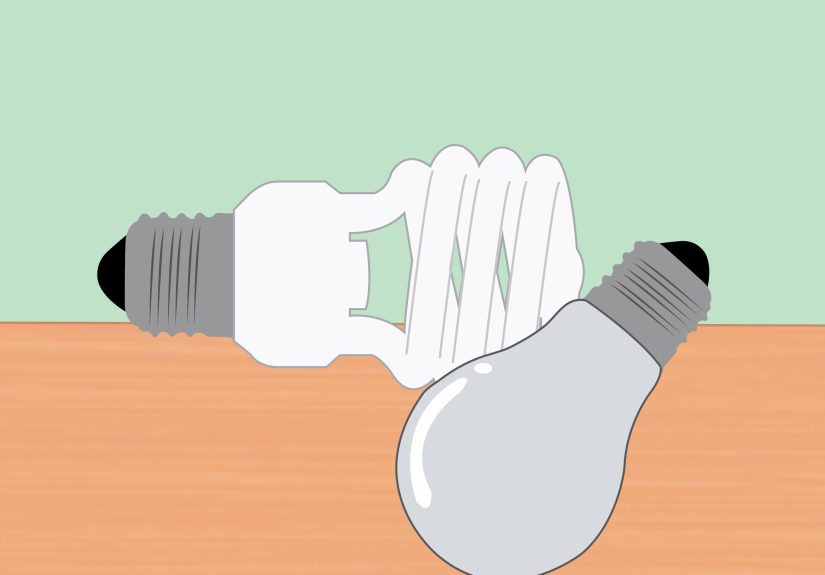
Start by checking the bulb itself, the packaging, the fixture label, or the Lighting Facts label. The wattage tells you how much power the bulb uses. Traditional incandescent bulbs often use 40, 60, 75, or 100 watts. LED bulbs that produce similar brightness usually use far fewer watts, often around 6 to 15 watts for common household bulbs.
Do not confuse “60-watt equivalent” with actual wattage. A package might say a bulb is a “60W replacement,” but the actual LED power may be only 8 or 9 watts. That means it gives brightness similar to an old 60-watt incandescent bulb while using much less electricity. The actual wattage is the number you need for your calculation.
Example: If your LED bulb says “9W,” use 9 watts. If your incandescent bulb says “60W,” use 60 watts.
Step 2: Convert watts to kilowatts
Electric bills usually measure energy in kilowatt-hours, so the next step is converting watts to kilowatts. This is easy: divide the wattage by 1,000.
Example 1: 60 watts ÷ 1,000 = 0.06 kilowatts
Example 2: 9 watts ÷ 1,000 = 0.009 kilowatts
This step may feel tiny, but it is the key that unlocks the whole calculation. It turns the number on the bulb into the same language your utility bill uses.
Step 3: Estimate how many hours the bulb is used
Now estimate how long the bulb runs each day. Be honest. The porch light that is “only on for a little while” may actually be working the night shift from 6 p.m. to sunrise. The kitchen light might be on during cooking, snacking, homework, late-night cereal investigations, and conversations nobody planned.
For a simple estimate, write down the average daily use:
- Bedroom lamp: 2 hours per day
- Kitchen ceiling light: 5 hours per day
- Porch light: 10 hours per day
- Bathroom vanity light: 1.5 hours per day
If you want a more accurate number, track usage for a week and average it. For smart bulbs or smart plugs, check the app if it reports energy data. For plug-in lamps, a basic electricity usage monitor can measure actual consumption.
Step 4: Multiply kilowatts by hours to get daily kWh
Once you know kilowatts and hours, multiply them. This gives you the bulb’s daily energy use in kilowatt-hours.
Formula: kilowatts × hours per day = daily kWh
Let’s calculate a 60-watt incandescent bulb used 5 hours per day:
60 watts ÷ 1,000 = 0.06 kW
0.06 kW × 5 hours = 0.30 kWh per day
Now compare that with a 9-watt LED used for the same 5 hours:
9 watts ÷ 1,000 = 0.009 kW
0.009 kW × 5 hours = 0.045 kWh per day
The incandescent bulb uses 0.30 kWh per day. The LED uses 0.045 kWh per day. Same general job, very different appetite.
Step 5: Calculate monthly and yearly energy use
Daily numbers are useful, but electric bills usually arrive monthly, and savings become more exciting when you look at a full year. To estimate monthly use, multiply daily kWh by 30. To estimate yearly use, multiply daily kWh by 365.
Monthly formula: daily kWh × 30 = monthly kWh
Yearly formula: daily kWh × 365 = yearly kWh
For the 60-watt incandescent bulb used 5 hours per day:
0.30 kWh per day × 30 = 9 kWh per month
0.30 kWh per day × 365 = 109.5 kWh per year
For the 9-watt LED used 5 hours per day:
0.045 kWh per day × 30 = 1.35 kWh per month
0.045 kWh per day × 365 = 16.425 kWh per year
That single bulb swap saves about 93 kWh per year. Multiply that across several rooms, and your lighting budget starts shrinking like a sweater in a hot dryer.
Step 6: Multiply by your electricity rate
To estimate cost, find your electricity rate on your utility bill. It may appear as cents per kWh. Rates vary by location, provider, season, and plan, so use your real bill when possible. If your rate is 17 cents per kWh, write it as $0.17.
Cost formula: kWh × rate = cost
Using the monthly examples above:
Incandescent bulb: 9 kWh × $0.17 = $1.53 per month
LED bulb: 1.35 kWh × $0.17 = $0.23 per month
That is about $1.30 saved per month from one bulb used 5 hours daily. One bulb will not buy you a yacht. Ten bulbs, twenty bulbs, outdoor lighting, holiday lights, garage lights, and forgotten basement lights? Now the math starts wearing a cape.
Step 7: Add all bulbs and compare better options
Most homes do not have one lonely bulb. They have clusters: ceiling fixtures, recessed cans, lamps, vanity lights, porch lights, closet lights, garage lights, and that one mysterious bulb above the stairs that requires the courage of a circus acrobat to replace.
To calculate total lighting use, repeat the formula for each group of bulbs:
Total kWh: number of bulbs × wattage ÷ 1,000 × hours used
Example: A kitchen has six recessed bulbs, each 65 watts, used 4 hours per day.
6 bulbs × 65 watts = 390 watts
390 watts ÷ 1,000 = 0.39 kW
0.39 kW × 4 hours = 1.56 kWh per day
1.56 kWh × 30 = 46.8 kWh per month
At $0.17 per kWh, that kitchen lighting costs about $7.96 per month.
Now replace those six 65-watt bulbs with six 9-watt LEDs:
6 bulbs × 9 watts = 54 watts
54 watts ÷ 1,000 = 0.054 kW
0.054 kW × 4 hours = 0.216 kWh per day
0.216 kWh × 30 = 6.48 kWh per month
At $0.17 per kWh, the LED setup costs about $1.10 per month. That is a monthly savings of about $6.86 in just one room.
Simple Light Bulb Energy Use Examples
Example A: A 100-watt bulb used 3 hours a day
100 watts ÷ 1,000 = 0.1 kW
0.1 kW × 3 hours = 0.3 kWh per day
0.3 kWh × 30 = 9 kWh per month
9 kWh × $0.17 = $1.53 per month
Example B: A 10-watt LED used 3 hours a day
10 watts ÷ 1,000 = 0.01 kW
0.01 kW × 3 hours = 0.03 kWh per day
0.03 kWh × 30 = 0.9 kWh per month
0.9 kWh × $0.17 = $0.15 per month
Example C: Outdoor porch light left on all night
Assume a 60-watt bulb runs 10 hours per night.
60 watts ÷ 1,000 = 0.06 kW
0.06 kW × 10 hours = 0.6 kWh per night
0.6 kWh × 30 = 18 kWh per month
18 kWh × $0.17 = $3.06 per month
Replace it with a 9-watt LED:
9 watts ÷ 1,000 = 0.009 kW
0.009 kW × 10 hours = 0.09 kWh per night
0.09 kWh × 30 = 2.7 kWh per month
2.7 kWh × $0.17 = $0.46 per month
That is a savings of about $2.60 per month for one outdoor bulb. Not dramatic enough for a movie trailer, but very real.
Why LEDs Change the Math
LED bulbs are popular because they produce useful light with much lower wattage than older incandescent bulbs. When shopping, focus on lumens for brightness and watts for energy use. Lumens tell you how bright the bulb is. Watts tell you how much electricity it consumes.
For example, a traditional 60-watt incandescent bulb and a modern LED may both produce roughly similar everyday brightness, but the LED might use around 8 to 10 watts. That lower wattage directly reduces kilowatt-hours when the bulb runs for the same amount of time.
This is why “watts” are no longer the best way to shop for brightness. In the old days, people said, “I need a 60-watt bulb,” when they really meant, “I need about that much brightness.” Today, a smarter sentence is: “I need the right lumens, a comfortable color temperature, and low actual wattage.” It is less catchy, but your electric bill appreciates the sophistication.
Factors That Affect Light Bulb Electricity Use
1. Wattage
The higher the wattage, the more power the bulb uses. A 100-watt bulb uses more than a 60-watt bulb. A 9-watt LED uses much less than both.
2. Hours of operation
A low-watt bulb can still use noticeable energy if it runs constantly. A 10-watt LED left on 24 hours per day uses 0.24 kWh daily, or about 7.2 kWh monthly. That is still modest, but not zero.
3. Number of bulbs
One bulb may be cheap to run. Ten bulbs in a kitchen, basement, or garage can add up quickly. Always count the whole fixture, not just one bulb.
4. Electricity rate
Your cost depends on your local rate per kWh. A bulb uses the same energy regardless of location, but the price of that energy changes from one utility plan to another.
5. Lighting controls
Dimmers, timers, occupancy sensors, motion sensors, and smart switches can reduce usage by cutting unnecessary run time. The cheapest kilowatt-hour is the one your forgotten hallway light never uses.
Common Mistakes When Calculating Light Bulb Kilowatts
Mistake 1: Using replacement wattage instead of actual wattage
If an LED package says “60W equivalent,” do not use 60 watts in your calculation. Look for the actual wattage, such as 8.8W or 9W.
Mistake 2: Forgetting to convert watts to kilowatts
Electricity cost calculations usually require kilowatts, not watts. Always divide watts by 1,000 before multiplying by hours.
Mistake 3: Ignoring multiple bulbs in one fixture
A chandelier with eight bulbs is not one bulb. It is eight little employees on the lighting payroll.
Mistake 4: Guessing usage too low
Many people underestimate how long lights stay on. Track a normal day, especially for kitchens, bathrooms, porches, and living rooms.
Mistake 5: Forgetting seasonal changes
Outdoor lights may run longer in winter because nights are longer. Holiday lights, garage projects, and early sunsets can all change lighting use.
Quick Reference Formula
Use this simple formula whenever you want to calculate light bulb electricity use:
Bulb wattage ÷ 1,000 × hours used = kWh
To estimate cost:
kWh × electricity rate = cost
For multiple bulbs:
Number of bulbs × watts per bulb ÷ 1,000 × hours used × electricity rate = cost
Real-World Experience: What Happens When You Actually Track Your Lights
Here is the funny thing about calculating light bulb kilowatts: the math is easy, but the behavior audit can be humbling. Many people start with one innocent question, such as “How much does this lamp cost to run?” Then they walk around the house and discover a lighting ecosystem with the discipline of a raccoon in a snack aisle.
In a typical home, the biggest lighting surprises are not always the brightest fixtures. They are the lights that stay on the longest. A porch light, garage light, hallway light, or basement bulb may use more energy over a month than a brighter lamp that runs only occasionally. Time is the sneaky ingredient. A small wattage multiplied by many hours can become noticeable, especially when several bulbs are involved.
One practical experience is to start with a “lighting walk-through.” Choose an ordinary evening and write down every light that is on at 7 p.m., 9 p.m., and before bed. Do not change habits yet. Just observe. You may find that the kitchen lights stay on long after dinner, the bathroom vanity lights remain on while nobody is in the room, or the porch light starts early and ends late. This is not a moral failure. It is just electricity doing what electricity does when nobody gives it a bedtime.
Next, group bulbs by use. High-use lights are the best candidates for LED upgrades because savings depend on both wattage and time. Replacing a rarely used closet bulb is fine, but replacing kitchen, living room, porch, and bathroom bulbs usually produces more meaningful savings. If a fixture has multiple bulbs, prioritize it. A five-bulb fixture can turn one small decision into five small savings that work together.
Another useful habit is comparing “before and after” costs. Suppose a bathroom has four 40-watt incandescent bulbs used 2 hours per day. That is 160 watts total, or 0.16 kW. Used for 2 hours, it consumes 0.32 kWh per day. Over 30 days, that is 9.6 kWh. At $0.17 per kWh, it costs about $1.63 per month. Replace those with four 6-watt LEDs, and the fixture uses only 24 watts, or 0.024 kW. At the same 2 hours per day, monthly use drops to 1.44 kWh, costing about $0.24. The monthly savings is small enough to ignore once, but large enough to matter across the whole house and over several years.
Smart controls can also help, but they should match the problem. A motion sensor is excellent for a garage, pantry, laundry room, or hallway where people forget switches. A timer is useful for outdoor lights. A dimmer can improve comfort and reduce use when full brightness is unnecessary. Smart bulbs are convenient, but remember that some connected devices use a tiny amount of standby power. For most homes, the larger savings still come from lower wattage and fewer hours.
The best experience-based advice is simple: do not chase perfection. You do not need to calculate every bulb down to the last decimal forever. Calculate the major lights, replace inefficient high-use bulbs, use controls where lights are often forgotten, and check your bill over time. The goal is not to become the household electricity detective with a badge and dramatic theme music. The goal is to make better choices with numbers that are easy to understand.
Conclusion
Learning how to calculate kilowatts used by light bulbs gives you a practical way to understand your electricity bill and make smarter lighting choices. The basic process is simple: find the wattage, divide by 1,000, multiply by hours used, and then multiply by your electricity rate. That small formula can reveal which bulbs cost pennies, which fixtures deserve attention, and how much you may save by switching to LEDs or using timers, dimmers, and sensors.
Light bulbs may be small, but they are everywhere. When you understand their kilowatt-hour use, you stop guessing and start managing your home energy like a pro. No cape required. Although if you want to wear one while replacing bulbs, that is between you and the ladder.

![18 Best Types of Charts and Graphs for Data Visualization [+ How to Choose]](https://corkopencoffee.org/wp-content/uploads/2026/05/18-best-types-of-charts-and-graphs-for-data-visualization-how-to-choose-qKM1PBYG-thumb.jpg)