Table of Contents >> Show >> Hide
- The Moment That Turned A Final Exam Into A Life Story
- Who Is Briana Williams?
- Why This Harvard Graduation Story Went Viral
- What An Epidural Actually Does During Labor
- The Real Challenge: Finishing Law School With A Newborn
- Harvard Law, Support Systems, And The Importance Of Asking For Help
- Why Student Parents Need More Than Inspirational Applause
- What Readers Can Learn From Briana Williams’ Story
- The Symbolism Of Evelyn At Graduation
- A Balanced View: Admire The Grit, But Respect The Reality
- Experiences Related To This Topic: What Student Parents Often Live Through
- Conclusion: A Harvard Story About More Than Harvard
Some people ask for extra pencils during a final exam. Briana Williams needed something a bit more dramatic: an epidural.
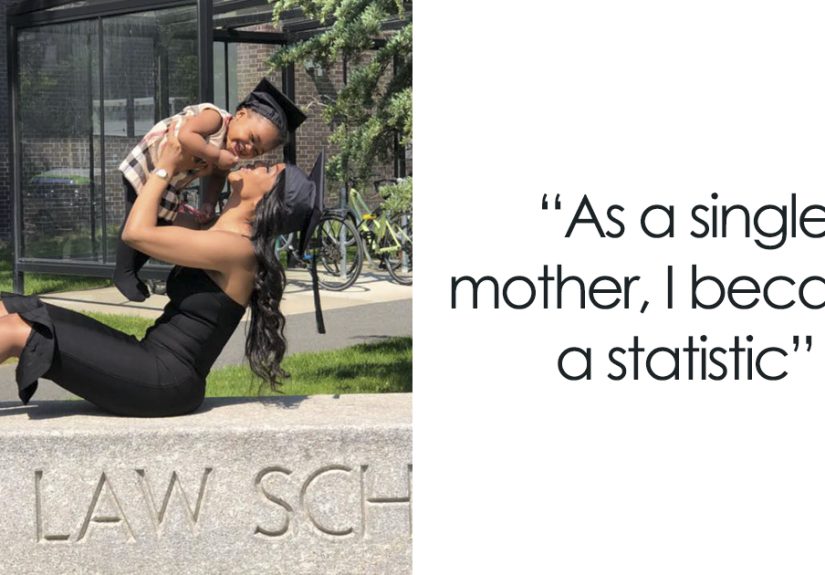
Her story sounds like the kind of internet headline that makes you blink twice, refill your coffee, and whisper, “Wait, she did what?” But the heart of it is very real. Williams, a young single mother and Harvard Law School student, went into labor during her Family Law final exam, got medical care, finished the test, gave birth to her daughter Evelyn, and later walked across the graduation stage with her baby in her arms.
It is the kind of story that travels fast because it contains all the ingredients of a modern inspiration tale: pressure, ambition, motherhood, academic grit, and a baby who clearly had no respect for exam schedules. But beyond the viral sparkle, Briana Williams’ Harvard Law journey raises deeper questions about student parents, resilience, higher education, childcare, and the invisible work behind big achievements.
This is not a story about pretending pain does not exist. It is not advice to take an exam during a medical emergency. It is a story about how one woman navigated a nearly impossible moment with determination, support, and a very clear goal: she was going to finish what she started.
The Moment That Turned A Final Exam Into A Life Story
In April 2017, while taking her Family Law final exam, Briana Williams unexpectedly went into labor. The subject alone makes the story feel almost too perfectly written. Family Law, meet actual family life. Somewhere, irony put on a cap and gown.
According to Williams’ own public account and later media reports, she requested an epidural so her contractions would not derail her exam performance. After receiving medical care, she completed the exam. Hours later, she welcomed her daughter, Evelyn.
Most students leave finals week with a crumpled snack wrapper and a suspicious dependence on iced coffee. Williams left with a newborn.
Her story gained national attention after she shared her experience on Instagram. People were moved not just by the image of a student finishing a final while in labor, but by what came after: she completed her final year at Harvard Law School while caring for a baby as a single mother.
Who Is Briana Williams?
Briana Williams was 24 when her story captured public attention. Originally from Los Angeles, she was a Harvard Law student pursuing one of the most demanding degrees in the country. Law school is already famous for turning calendars into crime scenes. Add pregnancy, childbirth, newborn care, and single parenthood, and the difficulty level goes from “hard” to “somebody please invent a medal shaped like a baby bottle and a casebook.”
Williams has described moments of exhaustion, fear, uncertainty, and pressure. She also shared that reliable childcare was sometimes difficult to find. Her daughter Evelyn sometimes accompanied her to class, and Williams leaned on support when she needed it. The reality behind the polished graduation photo was not smooth or effortless. It was messy, tiring, emotional, and deeply human.
That honesty is part of why the story still resonates. Williams did not present her achievement as a magical montage. She made it clear that the journey hurt. It tested her. Some days felt nearly impossible. But she kept going.
Why This Harvard Graduation Story Went Viral
The internet loves a good “against all odds” story, but Briana Williams’ graduation stood out because it challenged several assumptions at once.
1. Motherhood Did Not End Her Ambition
Too often, young mothers are framed as people whose dreams must shrink. Williams’ story flipped that script. Her daughter was not the reason she stopped. Her daughter became one of the reasons she continued.
That does not mean motherhood made everything easier. It clearly did not. But it gave her a powerful sense of purpose. For many student parents, a child is not a distraction from the future. A child is the future.
2. Academic Success Is Not Always Quiet And Polished
Graduation photos can make success look neat. The gown is pressed. The smile is bright. The baby is adorable. Everyone claps. Cue inspirational music.
But behind that moment were late nights, childcare challenges, emotional fatigue, studying, parenting, and the relentless pace of law school. Williams’ achievement reminds readers that success often looks chaotic before it looks beautiful.
3. Student Parents Are Often Overlooked
Williams’ story is extraordinary, but the broader challenge is not rare. Across the United States, millions of college students are parents. Many are balancing classes with childcare, jobs, transportation, housing costs, and family responsibilities.
Student parents are not side characters in higher education. They are part of the campus community, even when policies, schedules, and assumptions do not always make room for them.
What An Epidural Actually Does During Labor
Because the headline includes the word “epidural,” it is worth pausing for a simple explanation. An epidural is a common form of pain relief used during labor. It is administered by medical professionals and is designed to reduce pain in the lower body while allowing the mother to remain awake and alert.
In Williams’ case, the epidural became part of a remarkable academic moment. But medically, it is not a superhero serum. It does not turn labor into a spa day with better lighting. It is a pain management option that can help many patients cope with contractions and remain more comfortable during labor.
The important takeaway is this: Williams’ decision happened in a medical setting with professional care. Her story should be admired for her perseverance, not copied as a “productivity hack.” Nobody should look at a due date and say, “Great, I’ll schedule my torts outline around that.”
The Real Challenge: Finishing Law School With A Newborn
Giving birth during finals was dramatic, but the harder chapter came afterward. Newborns are adorable, but they are also tiny managers with very loud leadership styles. They do not care about case briefs, deadlines, cold calls, or the fact that you were finally about to sleep.
Williams had to complete her final year while caring for Evelyn. That meant studying while exhausted, attending class with a baby in tow when necessary, and navigating a campus environment built mostly around traditional students, not necessarily parents with strollers and feeding schedules.
Her experience points to a truth many student parents know well: the hardest part is not always motivation. Sometimes it is logistics. Who watches the baby during class? What happens when childcare falls through? How do you study after a night of interrupted sleep? How do you keep showing up when your body and mind are both asking for a timeout?
For Williams, the answer was not one big heroic gesture. It was a series of daily decisions: keep studying, ask for help, bring the baby if needed, rest when possible, and continue moving toward the degree.
Harvard Law, Support Systems, And The Importance Of Asking For Help
One of the most useful lessons from this story is that resilience does not mean doing everything alone. Williams was a single mother, but her journey still involved support from faculty, staff, family, and campus resources.
Harvard Law School has resources for student support, including help for students navigating personal circumstances, exam-period challenges, pregnancy, and parenthood. These kinds of resources matter because determination alone cannot babysit a child, extend a deadline, or create an emergency plan.
There is a common myth that asking for help makes an achievement less impressive. In reality, asking for help is often what makes achievement possible. Success is rarely a solo performance. Even the most disciplined person needs a network, a backup plan, and sometimes someone to hold the baby while class is in session.
Why Student Parents Need More Than Inspirational Applause
Stories like Williams’ are inspiring, but inspiration should not be the final stop. If we only clap and move on, we miss the bigger issue: student parents need practical support.
That support can include affordable childcare, flexible scheduling, lactation spaces, emergency care options, housing assistance, financial aid policies that recognize dependents, and faculty who understand that a student may be brilliant and still need to leave class because daycare called.
Research on student parents shows a major gap between ability and completion. Many parenting students perform well academically, yet they often face lower graduation rates because the barriers around them are heavy. The problem is not a lack of talent. The problem is that talent still needs time, money, childcare, transportation, and institutional understanding.
Federal programs such as Child Care Access Means Parents in School, often called CCAMPIS, exist to help low-income student parents access campus-based childcare. Programs like this matter because childcare is not a “nice extra.” For student parents, it can be the bridge between stopping out and graduating.
What Readers Can Learn From Briana Williams’ Story
Briana Williams’ story is powerful because it is not only about Harvard. Harvard gives the headline sparkle, of course. It is a famous name, and people react to it. But the deeper message applies far beyond Ivy League gates.
Lesson One: The Perfect Time May Never Arrive
Williams did not complete her law degree under perfect conditions. She completed it under deeply challenging ones. That does not mean people should ignore health, rest, or safety. It means that waiting for life to become perfectly convenient can become its own trap.
Sometimes the path forward is not clean. Sometimes the plan changes. Sometimes the baby arrives during finals because apparently the universe enjoys dramatic timing. The goal is not to control every detail. The goal is to adapt without abandoning yourself.
Lesson Two: Motivation Can Come From Responsibility
People often talk about responsibility like it is only a burden. But for Williams, motherhood became a source of strength. Her daughter gave her another reason to finish. That kind of motivation is not fluffy. It is practical, emotional, and fierce.
Many parents pursuing education feel the same way. They are not just earning degrees for personal pride. They are building stability, opportunity, and a new model of possibility for their children.
Lesson Three: Visibility Matters
When Williams walked across the stage with Evelyn, she gave other student parents something important: proof of presence. She showed that parents belong in lecture halls, libraries, professional schools, and graduation ceremonies.
Visibility does not solve every structural barrier, but it can change imagination. A young parent who sees Williams’ story may think, “Maybe there is still a way forward for me too.” That is not a small thing.
The Symbolism Of Evelyn At Graduation
The image of Williams and Evelyn in matching graduation style became one of the most memorable parts of the story. It was sweet, yes, but it was also symbolic.
Evelyn was not hidden from the achievement. She was included in it. That matters. For many parents, children are part of the journey, not interruptions from it. The diploma belonged to Williams, but the story behind it included the baby who traveled through lectures, late nights, fatigue, and hope with her.
In that moment, Harvard Law graduation became more than a professional milestone. It became a family milestone. Williams was not just accepting a degree. She was showing her daughter, before Evelyn could even understand it, that persistence can reshape a life.
A Balanced View: Admire The Grit, But Respect The Reality
It is easy to turn stories like this into motivational posters. “No excuses!” “Push through anything!” “Sleep is for people without dreams!” Please, no. Sleep is wonderful. Sleep is the unpaid intern holding civilization together.
The better lesson is more balanced. Williams’ story deserves admiration, but it should not become pressure on every student parent to perform superhuman strength. Not everyone can or should finish an exam during labor. Not every person has the same medical situation, institutional support, family help, or emotional capacity.
True inspiration does not demand that everyone suffer more. It asks communities to support people better.
Williams did something remarkable. The rest of us should not respond by telling struggling parents to “try harder.” We should ask what systems can make success less punishing and more possible.
Experiences Related To This Topic: What Student Parents Often Live Through
To understand why Briana Williams’ story matters, imagine a student parent’s ordinary week. There is no dramatic headline. No viral photo. No national applause. Just Monday morning, a child with a runny nose, a reading assignment that somehow multiplied overnight, and a professor who expects everyone to be bright-eyed by 8:30 a.m.
For many student parents, the day begins before the academic day officially starts. They may pack lunches, prepare bottles, find missing shoes, confirm childcare, commute, and then switch into student mode before the first lecture. By the time classmates are opening laptops, the parent-student may already feel like they have completed a small military operation involving cereal, traffic, and one deeply suspicious sock.
Then comes the mental split. A student parent may be physically in class while part of their mind is tracking daycare pickup, pediatric appointments, grocery costs, or whether the baby slept enough. Concentration becomes a skill built under pressure. Reading assignments are squeezed into nap windows, lunch breaks, bus rides, and late nights after bedtime. The quiet study session that some students take for granted can feel like a luxury item, somewhere between a vacation home and a dishwasher that unloads itself.
There is also the emotional side. Student parents often carry guilt in both directions. When they study, they may feel guilty for missing time with their child. When they care for their child, they may feel anxious about falling behind in school. That push-pull can be exhausting. It requires not only discipline but self-forgiveness.
One experience many student parents describe is the art of becoming highly efficient. They cannot always wait for ideal conditions, so they learn to use small pockets of time. Twenty minutes becomes enough to review notes. A quiet hallway becomes a temporary office. A phone calendar becomes a survival tool. The parent-student develops a special ability to detect usable time the way a detective spots clues.
Support can change everything. A professor who offers flexibility, a campus office that knows how to help, a family member who covers childcare, or a friend who shares notes can make the difference between continuing and quitting. These supports do not erase the difficulty, but they make the road less lonely.
Briana Williams’ experience sits at the extreme end of this reality, but the emotional pattern is familiar to many parents in school. The lesson is not that every parent must become a legend under pressure. The lesson is that ambition and caregiving can coexist when people are given enough support, respect, and room to be fully human.
Conclusion: A Harvard Story About More Than Harvard
Briana Williams’ story continues to move people because it is dramatic, yes, but also because it is deeply relatable. Most people will never take a Harvard Law final while in labor. Thankfully. But many people know what it feels like to chase a goal while life refuses to behave.
Her journey is about motherhood, education, ambition, fear, exhaustion, and the stubborn belief that a difficult chapter does not have to be the final chapter. It reminds us that achievement is often built in the hidden hours, in the moments no one claps for, and in the choices people make when quitting would be understandable.
Briana Williams did not graduate because the path was easy. She graduated because she kept walking it, sometimes with casebooks, sometimes with a stroller, and eventually with her daughter in her arms. That is more than a viral headline. That is a legacy in motion.
![18 Best Types of Charts and Graphs for Data Visualization [+ How to Choose]](https://corkopencoffee.org/wp-content/uploads/2026/05/18-best-types-of-charts-and-graphs-for-data-visualization-how-to-choose-qKM1PBYG-thumb.jpg)