Table of Contents >> Show >> Hide
- Before You Start: Safety and “Don’t Turn This Into an Electric Water Park” Rules
- What You’ll Need (Spoiler: Mostly Stuff You Already Own)
- How Often Should You Clean a Waffle Maker?
- Quick Clean After Every Use (5–10 Minutes, No Drama)
- Cleaning Removable Plates (Easy Mode)
- Cleaning Fixed Plates (Still EasyJust Don’t Flood It)
- How to Remove Stuck-On Batter (Without Destroying the Nonstick)
- Deep Clean a Waffle Maker (Monthly or Before Storage)
- Don’t Forget the Outside, Hinge, and Drip Areas
- Common Mistakes That Make Cleaning Harder
- Special Case: How to Clean a Cast Iron Waffle Iron
- Troubleshooting: “Why Are My Waffles Sticking Now?”
- Conclusion: Clean Waffle Maker, Better Waffles, Happier You
- Experience-Based Lessons (Real-Life “I’ve Seen This Movie” Moments)
Your waffle maker has one job: turn batter into golden, crispy joy. But after a few weekends of “just one more batch,”
it starts smelling like yesterday’s brunch and looking like a modern art installation made of syrup and regret.
The good news: cleaning a waffle maker is fast, safe, and way easier than scraping burnt batter with a fork
(please don’t do thatyour nonstick coating will remember).
In this guide, you’ll learn how to clean a waffle maker the right waywhether it has removable plates,
fixed grids, or old-school cast iron. We’ll cover quick after-each-use cleanup, a deeper monthly refresh,
and real-life “help, the batter is welded on” solutionswithout turning your kitchen into a science fair.
Before You Start: Safety and “Don’t Turn This Into an Electric Water Park” Rules
1) Unplug it and let it cool completely
Waffle makers run hot on purpose. Cleaning while it’s still blazing can burn you, and adding water to a hot surface
can “cook” residue onto the plates. Let it cool until it’s safe to touch, then unplug before you do anything else.
2) Never submerge the appliance
Your waffle maker is an electric appliance, not a cast-iron skillet. Do not soak it in the sink. Ever.
If the base or cord goes swimming, you risk damaging the electrical components.
3) Avoid abrasive cleaners and metal tools
Nonstick coatings don’t like steel wool, scouring pads, or sharp utensils. Scratches make sticking worse over time
and can shorten the life of the plates.
4) Check the manual (especially for soap and dishwasher guidance)
Some waffle makers have removable plates that are dishwasher-safe; others prefer hand-washing.
A few models even specify whether soap should or should not be used on the grids. When in doubt, follow the manufacturer’s instructions.
What You’ll Need (Spoiler: Mostly Stuff You Already Own)
- Paper towels or a lint-free cloth
- Soft-bristled brush, soft toothbrush, or non-scratch sponge
- Mild dish soap
- Warm water
- Wooden chopstick or a plastic utensil (for crevicesno metal)
- Toothpicks or cotton swabs (for seams and edges)
- Baking soda (for stubborn buildup)
- Optional: a little cooking oil (for hardened batter on edges)
How Often Should You Clean a Waffle Maker?
The sweet spot is a quick clean after every use and a deeper clean about once a month (or before long-term storage).
Quick cleaning prevents oil from turning sticky and keeps old crumbs from burning the next time you heat it up.
Monthly deep cleaning helps remove the invisible film that makes waffles start sticking even when your batter is perfect.
Quick Clean After Every Use (5–10 Minutes, No Drama)
This routine works for most electric waffle makers and waffle irons with nonstick-coated grids.
It’s the “brush your teeth” of waffle care: small effort now, fewer problems later.
Step 1: Remove crumbs and loose bits
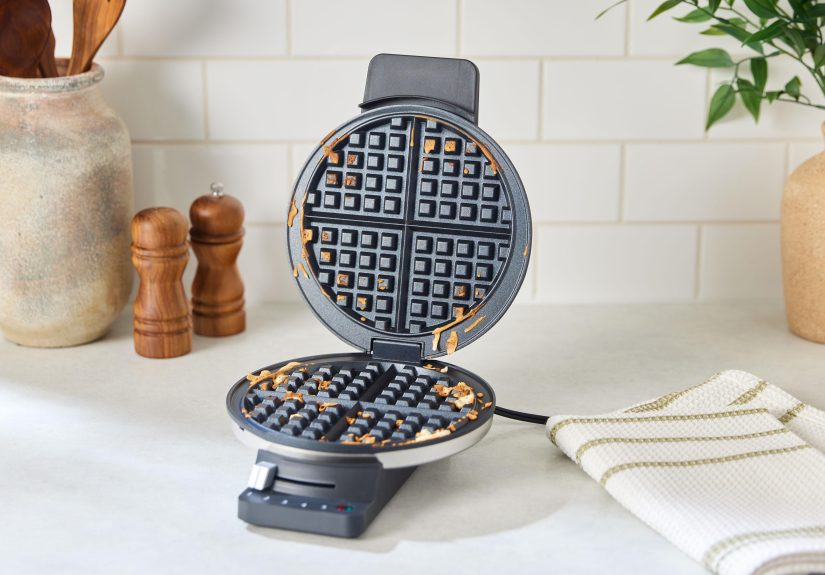
Once the unit is unplugged and cool, open it and use a dry paper towel or a soft brush to sweep away crumbs.
For deep square pockets (Belgian style), angle the brush so it reaches into corners instead of just petting the surface.
Step 2: Blot excess oil
If the plates look shiny, fold a paper towel into a small square and use the edges to wick oil out of grooves.
This matters because leftover oil can oxidize and get sticky, and it can make your next batch taste… a little “yesterday.”
Step 3: Wipe with a barely damp, soapy cloth
Mix warm water with a few drops of mild dish soap. Dip a cloth or non-scratch sponge in the solution, then wring it out well.
You want “damp,” not “dripping.” Gently wipe the grids and any drip areas.
Step 4: Rinse-wipe and dry thoroughly
Take a clean cloth dampened with plain water and wipe again to remove soap residue. Then dry the plates and exterior
with a dry lint-free cloth. If you can, leave the waffle maker open for 10–20 minutes so any hidden moisture evaporates.
Cleaning Removable Plates (Easy Mode)
If your waffle maker has removable plates, you’ve basically won the cleanup lottery. Remove plates only after they’re completely cool.
Then clean them based on the manual:
- Dishwasher-safe plates: Place them on the top rack if recommended, and avoid harsh cycles if the manual warns against it.
- Hand-wash plates: Use warm, soapy water and a soft sponge. Rinse and dry fully before reinstalling.
While the plates are out, wipe the interior housing (where batter splatters like to hide) with a damp cloth, then dry.
Reattach plates only when everything is completely dry.
Cleaning Fixed Plates (Still EasyJust Don’t Flood It)
Fixed grids can’t go in the sink, so your goal is controlled moisture. Use the quick-clean routine above,
then focus on the trouble spots:
Use a toothbrush for grooves
Dip an old toothbrush in your warm, soapy water, then shake off excess. Brush gently in grooves and along the hinge area.
Follow with a plain-water wipe and a full dry.
Chopstick + damp paper towel for tiny pockets
Wrap the tip of a wooden chopstick in a damp paper towel and “detail clean” the grid squares, especially on mini waffle makers
where grooves are narrower than your patience.
How to Remove Stuck-On Batter (Without Destroying the Nonstick)
If batter has dried into concrete, don’t go straight to scraping. Most stuck-on messes come off with softening first.
Here are safe approaches that actually work.
Method 1: Oil-soften for hardened edges
For baked-on batter around the outer rim, put a few drops of cooking oil on a paper towel and rub it onto the hardened spots.
Wait about 5 minutes, then wipe. Oil helps soften dried batter so it releases without aggressive scrubbing.
Method 2: Baking soda paste for stubborn residue
Mix baking soda with a small amount of water until it forms a paste (think “toothpaste,” not “soup”).
Apply a thin layer to stuck areas, let it sit 10–45 minutes, then wipe with a damp cloth. Baking soda is mildly abrasive,
so use a gentle touch and avoid grinding it into the coating.
Method 3: Deep-degrease paste for sticky, oily film
If the grids feel tacky even after regular cleaning, you’re dealing with built-up oil residue. A stronger paste can help:
spread it over sticky areas, let it sit (up to about an hour), then wipe away with a damp cloth. Use toothpicks for seams,
not blades. Dry fully before the next use.
Method 4: The “steam towel” loosening trick (carefully)
When residue is stubborn, a little warmth and moisture can soften it. The key is controlled steam:
use a lightly damp paper towel and never pour water directly into the appliance. Keep everything unplugged while wiping afterward,
and dry thoroughly.
Method 5: The “sacrificial waffle” cleanup hack
For stubborn crumbs you can’t reach, some cooks use a simple flour-and-water mixture cooked briefly in the waffle maker
to help grab leftover bits. It’s not a replacement for cleaning, but it can help lift tiny crumbs hiding deep in the grids.
(Think of it as a sticky-note that picks up lintonly breakfast-themed.)
Deep Clean a Waffle Maker (Monthly or Before Storage)
Deep cleaning is what you do when waffles start sticking even though you swear you didn’t change a thing. Usually,
it’s a thin film of old oil that has polymerized (fancy way of saying it turned into a stubborn, sticky coating).
Deep clean checklist
- Unplug and cool completely.
- Remove crumbs and blot oil with a dry paper towel.
- Apply a degreasing paste to sticky areas and let it sit long enough to absorb residue (often 30–60 minutes).
- Wipe away paste with a damp cloth, using toothpicks for seams and corners.
- Final wipe with plain water to remove residue, then dry completely.
Don’t Forget the Outside, Hinge, and Drip Areas
Batter loves to escape. The outside and hinge area often hold dried drips that smoke the next time you preheat.
Wipe the exterior with a soft, damp cloth, then dry. If your waffle maker has a drip tray or a “moat” for overflow,
clean it every timethose hidden channels can get gross fast.
Common Mistakes That Make Cleaning Harder
Using metal utensils to remove waffles
Metal tools can scratch nonstick coatings. Use silicone, plastic, or wooden utensils instead.
Overusing aerosol cooking spray
Many cleaning and appliance experts warn that cooking spray can build up and leave a sticky residue on waffle plates over time.
If you need oil, apply it with a pastry brush or oil mister for lighter, more controlled coverage.
Storing it while damp
Even a little trapped moisture can create smells (and sometimes spots) in storage. Dry it thoroughly and let it air out
before you close it and put it away.
Special Case: How to Clean a Cast Iron Waffle Iron
Stovetop cast iron waffle irons are a different animal. You treat them more like cast iron cookware:
remove crumbs, wipe clean, dry completely, and apply a thin layer of oil to protect the surface.
If you rinse, dry promptly and use gentle heat to evaporate moisture, then re-season lightly.
Troubleshooting: “Why Are My Waffles Sticking Now?”
If waffles suddenly stick
- There may be a film of old oildo a deep clean.
- Check the coating for scratches or peeling; damaged nonstick tends to grab batter.
- Make sure the plates are fully preheated before adding batter (undercooked batter sticks more).
If it smokes during preheat
- Likely dried oil or batter on edges/hingeclean the exterior rim and seams carefully.
- Reduce oil application next time; avoid overspray and drips.
Conclusion: Clean Waffle Maker, Better Waffles, Happier You
Cleaning a waffle maker doesn’t have to be a whole weekend project. A quick wipe and brush after each use prevents buildup,
keeps flavors fresh, and helps your waffle maker last longer. Then, once a month (or before you store it), a deeper clean
tackles the sticky oil film that causes sticking and smoke.
Follow the safety basicsunplug, cool, don’t submerge, and avoid abrasive toolsthen choose the right method for your model:
removable plates get the simplest treatment, fixed plates just require controlled moisture, and cast iron needs drying and seasoning.
Do that, and your waffle maker will stop acting like a crime scene and go back to making brunch magic.
Experience-Based Lessons (Real-Life “I’ve Seen This Movie” Moments)
Let’s talk about the stuff that happens in actual kitchensbecause most waffle maker messes aren’t “a light crumb situation.”
They’re “someone got excited and overfilled the batter” situations.
1) The Overfill Avalanche
One of the most common experiences is the batter overflow: you pour “just a little more,” close the lid, and suddenly batter
oozes out like a slow-motion lava flow. The mistake people make next is trying to wipe it immediately while the waffle maker is hot.
That usually smears batter onto the outside, and if a damp cloth touches a hot rim, it can bake residue on even harder.
The better play: let the unit finish cooking, unplug it, cool it down, then wipe the overflow. If the overflow hardened on the edges,
oil-softening with a few drops of cooking oil on a paper towel can save you from aggressive scrubbing.
2) The “Why Is It Sticky?” Mystery
Another classic experience: the waffle maker looks clean, but the plates feel tackyand waffles start sticking for no obvious reason.
This usually comes from thin layers of oil building up over time (often made worse by aerosol cooking spray).
People then try to “fix it” by adding even more oil, which can temporarily help release waffles but makes the buildup worse long-term.
The real fix is a deep clean to remove the sticky film, followed by lighter, more controlled oil application (a pastry brush or mister
works better than blasting the plates like you’re painting a fence).
3) The Sugar Problem (Cinnamon Roll Waffles, We’re Looking at You)
If you’ve ever made waffles with sugary add-insthink cinnamon sugar, chocolate chips, or sweet “dessert waffle” battersyou’ve probably
experienced the caramelization effect: sugar melts, runs, then hardens into a gluey crust in the grooves. The temptation is scraping.
The smarter approach is softening and lifting: a warm, damp wipe (not soaking wet), gentle brushing, and baking soda paste for stubborn spots.
And if little crumbs are trapped deep in the grid, a detail tool like a chopstick wrapped in a damp paper towel can reach places your sponge can’t.
4) The Storage Surprise
Plenty of people clean their waffle maker, close it, shove it in a cabinet, and later discover a weird smelllike “old fryer oil” with a hint of
“what happened in here?” That usually means the unit wasn’t fully dry, or it still had residual oil in grooves and seams.
An easy habit that helps: after wiping dry, leave it open for 10–20 minutes to air out before storing. This is especially important for flip-style
waffle makers with drip channels where moisture can hide.
5) The Cast Iron Learning Curve
People who switch from a modern nonstick waffle maker to a stovetop cast iron waffle iron often have a “wait, why is it rusting?” moment.
Cast iron doesn’t forgive lingering moisture. The experience-based rule is simple: dry immediately and thoroughly, then protect the surface
with a thin coat of oil. If you rinse cast iron, towel dry it and use low heat briefly to evaporate remaining moisture. When cared for properly,
cast iron can become more nonstick over timewhen cared for casually, it becomes a sticky, rusty drama generator.
The takeaway from all these real-world scenarios is the same: most waffle maker problems are solved by three habitsclean while it’s cool,
use gentle tools, and keep oil buildup from turning into a permanent sticky layer. Do that, and the only thing “stuck” at breakfast will be
your family’s obsession with waffles.