Table of Contents >> Show >> Hide
- What You’ll Learn
- The 60-Second Daily Routine
- Why Granite Needs Gentle Cleaning
- Granite-Safe Supplies (and What to Skip)
- Step-by-Step: Daily Cleaning (The Right Way)
- How to Disinfect Granite Safely (Without Wrecking the Shine)
- Weekly Deep Clean for Long-Lasting Shine
- Stain Removal Playbook (Because Life Happens)
- Common Mistakes to Avoid (Granite’s “Do Not Invite” List)
- Sealing & Long-Term Granite Countertop Maintenance
- FAQ
- Real-World Experience: What Actually Works (and What I Learned the Hard Way)
- Conclusion
Granite countertops are basically the “tough friend” of the kitchen: they look expensive, handle heat like a champ,
and rarely complain. But give them the wrong cleaner (looking at you, vinegar-and-lemon crowd) and granite will
quietly exact revenge by losing its shine, weakening its seal, and collecting stains like they’re trendy souvenirs.
The good news: cleaning granite is simple once you know the rules. The better news: it doesn’t require a chemistry
degree, a monastery vow of silence, or a special cloth blessed by countertop monks. You just need gentle habits,
the right basics, and a plan for messes before they turn into “kitchen folklore.”
What You’ll Learn
The 60-Second Daily Routine
If you do nothing else (and honestly, “nothing else” is a mood), do this. It’s the easiest way to keep granite
looking polished without accidentally sanding down your countertop’s will to live.
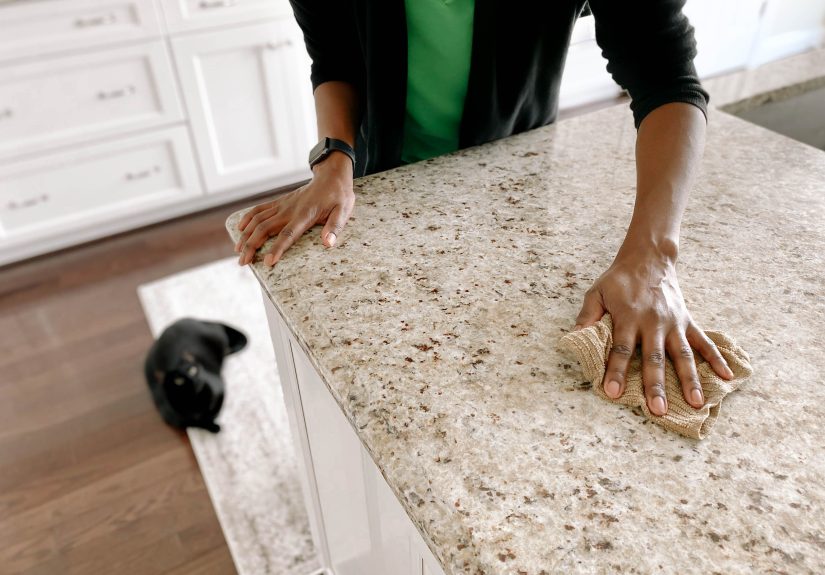
- Wipe crumbs and spills with a soft, damp microfiber cloth.
- Add a drop of mild dish soap to warm water if the surface feels greasy or sticky.
- Wipe again with clean water to remove any soap residue.
- Dry immediately with a dry microfiber towel to prevent water spots and streaks.
That’s it. No vinegar. No abrasive pads. No “all-purpose mystery spray” that smells like it could remove paint.
Granite likes gentle, boring consistencykind of like your most responsible friend.
Why Granite Needs Gentle Cleaning
Granite is a natural stone, and while it’s durable, it’s not invincible. Most granite countertops are sealed with
a protective sealer that helps resist stains and moisture. The key word is “helps.” Granite can still absorb oils
and liquidsespecially if the sealer is worn or if the stone is more porous.
Harsh or acidic cleaners don’t usually “destroy granite” overnight. Instead, they do something more annoying:
they slowly wear down the seal and dull the finish. Think of it like sun damage for countertopssubtle at first,
then suddenly you’re wondering why everything looks a little tired.
Why pH matters
Granite does best with pH-neutral or very mild cleaners. Acidic products (like vinegar or citrus-based solutions)
can etch or degrade the sealer over time. Strong chemicals can also weaken the seal and leave the surface more
vulnerable to staining.
Why drying matters (yes, really)
Water spots happen when minerals in water dry on the surface. Also, letting water sit can seep into tiny
imperfections in the seal. Wiping is good. Wiping and drying is better. Your granite prefers a tidy exit.
Granite-Safe Supplies (and What to Skip)
You don’t need a garage full of products. You need a small, reliable “countertop squad” that won’t cause drama.
What to use
- Microfiber cloths (at least two: one for cleaning, one for drying/buffing)
- Warm water (the underrated MVP)
- Mild dish soap (avoid anything heavily citrus-based if you can)
- pH-neutral stone cleaner (optional, but handy for convenience)
- Isopropyl alcohol (for safe disinfecting when diluted properly)
- Soft sponge (non-scratch)
What to avoid
- Vinegar, lemon juice, or acidic “natural” sprays (acid is not granite’s love language)
- Abrasive powders and gritty scrubs
- Scouring pads or anything labeled “extra tough”
- Bleach or ammonia-heavy cleaners (especially for routine use)
- Steam cleaners (heat + pressure can stress the seal and push moisture where it shouldn’t go)
A simple DIY everyday spray (safe, streak-minimizing)
For a quick spray you can use for light cleaning, combine:
- 1 1/2 cups warm water
- 1/2 cup isopropyl alcohol (around 70% is a common household type)
- 1/2 teaspoon mild dish soap
Put it in a spray bottle, shake gently, and spray lightly (don’t soak the stone). Wipe with microfiber, then dry.
This is great for fingerprints, light grease, and general “kitchen life” residue. If you want stronger disinfection,
see the disinfecting section for dwell time and safety notes.
Step-by-Step: Daily Cleaning (The Right Way)
Daily cleaning should remove food residue and light grease without leaving streaks, haze, or a soapy film. Here’s
the method that keeps granite happy and your kitchen looking like you might have your life together.
Step 1: Clear debris first
Crumbs are tiny sandpaper. Wipe them up before you start “scrubbing” so you don’t grind grit across the surface.
Step 2: Use a damp (not dripping) cloth
Wet a microfiber cloth or soft sponge, then wring it out well. Too much water can pool, and standing moisture is
a recurring villain in the granite story.
Step 3: Add mild soap only if needed
If the counter is visibly greasy (hello, bacon morning), add a small drop of mild dish soap to warm water. Wipe
in overlapping strokes. No need to press hardgranite isn’t a cast-iron pan.
Step 4: Rinse wipe
Soap residue can create a dull film over time. Do one quick wipe with clean water to remove leftover suds.
Step 5: Dry and buff
Dry with a clean microfiber cloth. If you want extra shine, buff in small circles. This is the countertop version
of “skincare,” and it pays off.
How to Disinfect Granite Safely (Without Wrecking the Shine)
Cleaning removes dirt and grease. Disinfecting targets germs. You don’t need to disinfect granite every time
someone looks at it funnybut after raw meat prep, sticky kid situations, or “mystery spill,” it’s reasonable.
Option A: Diluted isopropyl alcohol
A commonly recommended approach is a 50/50 mix of isopropyl alcohol and water (or a similar dilution), applied
lightly and wiped with microfiber. For disinfecting to actually disinfect, the surface generally needs a short
contact time (often a few minutes). Don’t flood the countertoplight, even coverage is the goal.
- Spray lightly across the area.
- Let it sit for about 3–5 minutes if possible (avoid letting it dry completely in thick puddles).
- Wipe clean and dry thoroughly.
If you’re using a store-bought disinfectant, make sure it’s safe for natural stone and follow the label
instructions exactly (especially contact time).
Option B: Stone-safe disinfecting products
Some commercial cleaners are formulated specifically for sealed stone and can clean and sanitize without harsh
ingredients. If your home is high-traffic, this can be a convenient “grab-and-go” choice.
One important note: “natural” doesn’t automatically mean “safe for granite.” Acidic DIY sprays can be natural and
still be a slow-motion disaster for your sealer.
Weekly Deep Clean for Long-Lasting Shine
A weekly deep clean is how you avoid that cloudy, streaky “Why does my counter look tired?” vibe. The culprit is
usually buildup: cooking oils, soap residue, and airborne kitchen grime.
Step 1: Use warm water + mild soap
Wipe the whole surface with a lightly soapy solution. Focus on high-touch zones like around the sink, stove edge,
and the “snack prep runway” near the fridge.
Step 2: Rinse wipe (non-negotiable)
Use a separate cloth dampened with clean water to remove soap. This is how you avoid haze buildup over time.
Step 3: Dry and buff
Dry immediately, then buff with a dry microfiber cloth. If you see streaks, you’re either leaving moisture behind
or using too much product. In granite care, less is usually more.
Stain Removal Playbook (Because Life Happens)
Granite is stain-resistant, not stain-proof. The faster you respond, the easier the cleanup. If you’re reading
this while staring at a suspicious dark spot: you’re not alone, and your countertop probably isn’t doomed.
First response: blot, don’t rub
If a spill is fresh, blot it up. Rubbing can spread pigments or oils into the stone. Then clean with warm water
and a tiny amount of mild dish soap, rinse, and dry.
Water spots and rings
Water spots are usually mineral deposits and leftover moisture. Start with a dry microfiber cloth and buff in
small circles. If that doesn’t work, use your mild soap solution, wipe, rinse, and dry thoroughly.
Oil-based stains (cooking oil, butter, greasy sauces)
Oils can darken granite because they soak in. A poultice (a paste that draws out stains) is often the go-to.
For an oil stain, a common approach is a baking soda paste (baking soda + water) or a stone-appropriate poultice
material designed to pull oils out.
- Mix baking soda with water to a thick paste (think peanut butter consistency).
- Spread it over the stain about 1/4 inch thick.
- Cover with plastic wrap and tape the edges down.
- Let sit 24–48 hours.
- Remove, rinse gently, and dry. Repeat if needed.
Stubborn oil stains may require a different solvent-based approach, and if you’re unsure, a stone professional is
the safest optionespecially on darker granite where “fixes” can show.
Organic stains (coffee, tea, wine, berries)
Organic stains often respond well to poultice methods. Some guidance suggests hydrogen peroxide for organic stains,
but it can lighten some stonesespecially darker graniteso spot-testing in an inconspicuous area is essential.
If you go this route, keep it targeted, not a daily cleaner.
Ink and dye (markers, some cosmetics)
Ink is tricky. A poultice may still work, but it can take multiple rounds. The important part is patience:
aggressive scrubbing usually makes things worse. If the stain is large or valuable (like a full bottle of
hair dye explodedrespectfully, how?), consider a pro.
Rust stains
Rust can come from metal cans, cast iron, or a leaky utensil holder. Rust removal often requires specialized
stone-safe products. Avoid random internet hacks hererust is one of those problems that likes to escalate when
you improvise.
Common Mistakes to Avoid (Granite’s “Do Not Invite” List)
Granite is forgiving, but it’s not into chaos. Avoid these and you’ll prevent most dullness, etching, and seal
damage over time.
1) Acidic cleaners
Vinegar and lemon-based sprays are popular because they feel “natural.” Granite disagrees. Acid slowly degrades
the protective sealer and can dull the finish.
2) Abrasives and scrub pads
Scratching granite is harder than scratching softer stone, but you can absolutely scratch the sealer and create
micro-damage that makes surfaces look cloudy. Use soft cloths and non-scratch sponges.
3) Harsh chemicals for routine cleaning
Bleach, ammonia-heavy cleaners, and strong degreasers can weaken sealers and cause discoloration over time.
For everyday cleaning, mild is best.
4) Letting spills sit
The fastest way to stain granite is to leave oil, wine, coffee, or juice sitting long enough to sink in.
Your countertop doesn’t need immediate panicjust timely attention.
5) Skipping the dry step
Drying prevents water spots and streaks and helps keep the seal from being stressed by standing moisture.
You’re not being “extra.” You’re being strategic.
Sealing & Long-Term Granite Countertop Maintenance
A good sealer is like a rain jacket for your granite: it doesn’t make you immortal, but it helps you survive
the weather. Sealers wear down over time depending on how much you use the kitchen and what you clean with.
The simple water-drop test
To check if your granite needs resealing:
- Place a few drops of water on the countertop.
- Wait about 10–15 minutes.
- If the water beads up, the seal is likely still doing its job.
- If the water darkens the stone or soaks in, it may be time to reseal.
How often should you reseal?
There isn’t a single perfect schedule because granite varies in porosity and kitchens vary in chaos level.
Many homeowners find resealing every 1–3 years works well, while some stone types and high-use counters may
need it more often. The water-drop test is the best reality check.
Polish: yes, but sparingly
Granite doesn’t need oily polishes every week. Over-polishing can leave buildup that attracts fingerprints and
makes the surface look smeary. If you want extra shine, buffing with microfiber after cleaning often gets you
80% of the “wow” with 0% of the residue.
When to call a pro
- Deep, stubborn stains that don’t improve after a couple poultice rounds
- Etching/dull areas that look like the shine is permanently altered
- Cracks, chips, or seams that are collecting grime
- Unsealed or unknown stone where DIY chemicals feel risky
FAQ
Can I use “glass cleaner” on granite?
Regular glass cleaners are often not granite-friendly long-term because they may contain ingredients that can
weaken sealers or leave residue. If you want a spray-and-wipe product, choose one labeled safe for natural stone.
Is dish soap always safe?
Mild dish soap is widely recommended, but use it lightly and rinse afterward. Too much soap can leave a film that
dulls shine over time. Also, avoid soaps packed with acidic citrus additives when possible.
Can I cut directly on granite?
Granite can handle it, but your knives can’t. Granite is hard enough to dull blades quickly. Use a cutting board
and let the countertop keep its job as “beautiful surface,” not “knife sharpener.”
Can I put hot pans on granite?
Granite is heat-resistant, but sudden temperature changes and heat near seams can stress surfaces and sealers.
A trivet is cheap insurance, and it makes you look like someone who has it together.
Real-World Experience: What Actually Works (and What I Learned the Hard Way)
Let’s talk about the part that cleaning guides don’t always say out loud: most granite “damage” isn’t one big
dramatic event. It’s slow, cumulative, and usually fueled by good intentions plus the wrong spray bottle.
In real kitchens, the problems show up as a subtle haze, a sticky feel that never fully goes away, or a couple
of dark spots that look like your countertop is developing a personality.
The first big lesson is that soap film is real. If you love dish soap (and who doesn’t, it’s the
Swiss Army knife of the sink), it’s easy to use a little too much. The counter looks clean, but after a week or
two, it starts reflecting light like it’s wearing a thin layer of “meh.” The fix is simple: use fewer suds than
you think you need and always do that quick rinse wipe. It’s the difference between “fresh and shiny” and “why
does this look cloudy at 2 p.m. sunlight?”
The second lesson is about drying. People skip it because it feels optional. Then they wonder why
they have rings near the sink, streaks around the coffee station, and a random dull patch where water likes to
hang out. Drying is the granite version of putting the cap back on the toothpastesmall effort, huge payoff.
Keep a dedicated microfiber towel in a drawer near the counter. If it’s right there, you’ll actually use it.
The third lesson is that disinfecting needs a plan. In the real world, you’ll prep raw chicken,
then immediately remember you don’t want “chicken memories” living on your countertop forever. A diluted alcohol
spray is convenient and tends not to leave a sticky residue like some wipes can. But here’s what people miss:
disinfecting products need contact time. A quick spray-and-immediate-wipe is mostly cleaning. If you truly need
disinfection, let it sit briefly, then wipe and dry. Think of it like letting shampoo sit for a minute instead of
rinsing it out the moment it touches your hair.
The fourth lesson: spills have categories. When someone says “stain,” it sounds like one problem,
but it’s really several. Oil stains darken and linger. Coffee and wine are pigment bullies. Berry juice is the
sweet little liar that looks harmless until it’s not. Once you recognize the type, your response gets smarter:
blot fast, clean gently, and if it’s already set, use a poultice method with patience. The “patience” part is the
hardest because you want results now, and granite is like: “Best I can do is tomorrow.”
Another real-life tip: your sink zone is a special ecosystem. That area gets splashes, soap,
toothpaste, hand sanitizer, and whatever dripped off the dish sponge you promised yourself you’d replace last
week. If your granite looks dull anywhere, it’s probably near the sink first. A weekly deep clean + thorough dry
in that area is the simplest way to keep the surface even and shiny.
Finally, the most practical experience-based advice I can give: make it easy to do the right thing.
Put a small spray bottle of your granite-safe solution where you’ll use it. Keep two microfiber cloths accessible:
one for wiping, one for drying. Store the “risky” cleaners (heavy degreasers, acidic stuff) somewhere else so you
don’t grab them on autopilot. Granite care isn’t hardit’s just vulnerable to convenience. Build convenience on
your side and your countertops will look “new kitchen energy” for years.