Table of Contents >> Show >> Hide
- First, Know What You’re Cleaning (So You Don’t Accidentally Ruin It)
- What You’ll Need (A Simple, Laminate-Safe Cleaning Kit)
- The Right Way to Clean Laminate Floors: Step-by-Step
- How to Clean Laminate Floors Without Streaks (The “Why Is It Cloudy?” Fix)
- Spot Cleaning: How to Remove Common Laminate Floor Stains
- Deep Cleaning Laminate Floors: When “Normal Cleaning” Isn’t Enough
- Can You Disinfect Laminate Floors?
- Preventive Maintenance: The Easiest Cleaning Is the Cleaning You Don’t Have to Do
- Common Mistakes That Ruin Laminate Floors (And How to Avoid Them)
- A Simple Cleaning Schedule That Actually Works
- FAQ: Quick Answers for Real-Life Laminate Floor Questions
- Conclusion: The “Right Way” Is Really Just the Gentle Way
- Real-World Experiences: What People Learn After Living With Laminate
Laminate floors are basically the “looks like hardwood, acts like a sensible adult” option. They’re durable, budget-friendly,
and they don’t demand a spa day every weekend. But they do have one big boundary: laminate hates excessive water the way
cats hate surprise baths. Clean it correctly and it stays crisp and photo-ready for years. Clean it wrong and you’ll be
starring in a home-renovation tragedy titled “Why Is My Floor Bubbling?”
In this guide, you’ll learn the smart, warranty-friendly way to clean laminate flooringdaily upkeep, deep cleaning, stain
removal, and the common mistakes that turn a quick mop into a regret. Expect practical steps, specific examples, and a few
reality checks for anyone who thinks “more water = more clean.” (No. Just… no.)
First, Know What You’re Cleaning (So You Don’t Accidentally Ruin It)
Laminate flooring isn’t solid wood. It’s a layered product with a tough wear layer on top and a core underneath (often a
fiberboard-like material). The surface is durable, but the seams and edges are vulnerable. When too much moisture gets into
those seams, the core can swell, edges can lift, and the floor can warp. That’s why the golden rule is:
use as little liquid as possible and dry fast.
What You’ll Need (A Simple, Laminate-Safe Cleaning Kit)
- Microfiber dust mop (dry) for everyday grit
- Vacuum with a hard-floor attachment (no beater brush)
- Microfiber flat mop for damp cleaning (not a string mop)
- Laminate floor cleaner (ideally manufacturer-approved or labeled safe for laminate)
- Spray bottle (optional, for controlled misting)
- Soft cloths for spot cleaning
- Felt pads for furniture + doormats to trap grit
- Plastic scraper or old credit card (for stuck-on gunk)
What to Avoid (A Short List of Things Laminate Despises)
- Steam mops (heat + moisture can damage seams and adhesives)
- Soaking wet mops or puddles that sit
- Wax, polish, “mop & shine,” or oil soaps (they leave residue and can dull the finish)
- Abrasives like steel wool or scouring pads
- Harsh chemicals (strong chlorine/bleach, heavy-duty ammoniated cleaners)
The Right Way to Clean Laminate Floors: Step-by-Step
Step 1: Remove Dirt First (Because Wet Grit = Sandpaper)
Most laminate “damage” starts as tiny scratches caused by gritty debris. If you mop before you remove grit, you’re basically
making a DIY floor exfoliatorexcept your floor didn’t ask for that.
-
Dust mop or sweep daily in high-traffic areas (kitchen, entryway, hallway).
Use a microfiber dust mop to grab fine dust instead of pushing it around. -
Vacuum 1–3 times per week, depending on traffic and pets. Use a hard-floor setting and avoid rotating beater bars,
which can scratch. - Hit the edges where crumbs and dust bunnies gather like they’re paying rentalong baseboards and under toe-kicks.
Step 2: Damp Clean (Not Wet Mop) for a Deeper Refresh
When laminate looks dull or slightly sticky, it usually needs a controlled damp clean, not a full bucket-and-slosh situation.
Your goal: lightly damp microfiber, quick evaporation, and zero standing water.
- Choose the right cleaner. A laminate-specific cleaner is the safest bet. If you prefer DIY, use a very mild solution and test first.
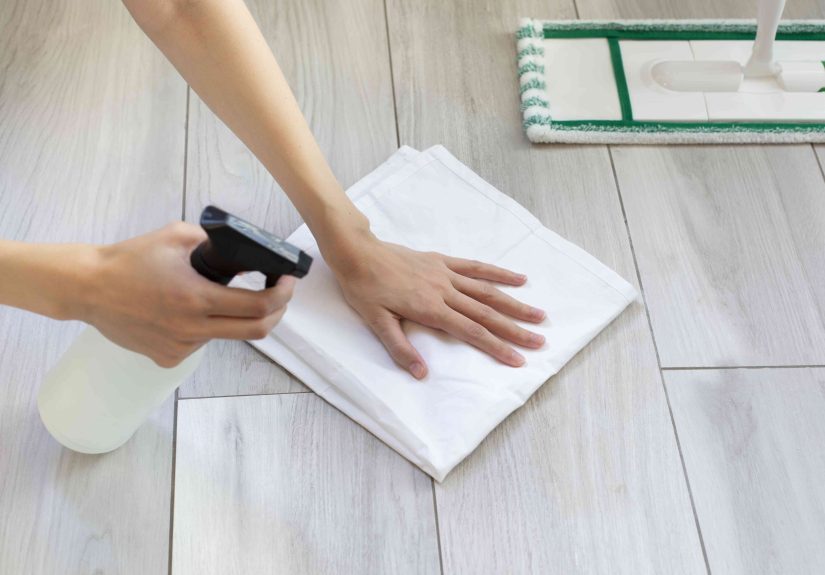
- Mist, don’t pour. Lightly spray cleaner onto the mop pad or the floor in a small area. You want a fine mistnot puddles.
- Mop with the grain. Follow the direction of the planks to reduce streaks and help the floor look more uniform.
- Work in small sections. Think “coffee table sized,” not “entire downstairs in one go.”
- Dry as you go. If you see moisture sitting, buff it with a clean, dry microfiber cloth.
How often? Many homes do well with a damp clean about once a month, while kitchens and busy areas may need it more often.
If your household includes kids, pets, or that one friend who always drops salsa, adjust accordingly.
A Safe DIY Cleaner (If Your Floor’s Care Guide Allows It)
Some major flooring brands suggest diluted vinegar solutions for laminate cleaning, while other guidance emphasizes using manufacturer-approved cleaners.
The safest move is always: check your laminate’s care instructions. If DIY is allowed, keep it gentle and diluted.
- Option A (mild + simple): Warm water + a few drops of mild dish soap. Wring the mop very well.
- Option B (common DIY): Diluted white vinegar in warm water (light concentration), used sparingly and not left sitting.
- Option C (quick-dry idea): A small amount of rubbing alcohol diluted in water can help reduce streaks and speed drying (spot test first).
Whatever you use: don’t “season” your floor like cast iron. If your cleaner leaves a film, you used too much product or didn’t remove it fully.
How to Clean Laminate Floors Without Streaks (The “Why Is It Cloudy?” Fix)
Streaks and haze are usually not a laminate curse. They’re a residue issue. Here’s what typically causes the cloudy look:
- Too much cleaner (especially “all-purpose” products not meant for laminate)
- Dirty mop pads (you’re redistributing grime)
- Over-wetting (water dries unevenly and can leave marks)
- Wax/polish residue from past cleaning attempts
Streak-Free Reset Method
- Dry clean first (vacuum or dust mop).
- Damp mop with plain water using a well-wrung microfiber pad.
- Change pads frequently (use multiple clean pads for one job).
- Buff dry with a clean microfiber cloth in any stubborn hazy areas.
If the haze is from waxy product buildup (common with “shine” products), you may need repeated gentle passes with plain water and clean pads.
Avoid harsh stripping chemicals unless your flooring manufacturer explicitly supports it.
Spot Cleaning: How to Remove Common Laminate Floor Stains
Spot cleaning is where laminate floors really shinebecause you can solve most messes fast without soaking the whole room.
The secret is controlled moisture and the right tool for the stain.
Spills (Coffee, Juice, Pet Accidents)
- Blot immediately with a soft cloth (don’t wipe the spill outward and spread it).
- Clean lightly with a damp cloth and a laminate-safe cleaner if needed.
- Dry the area with a clean towel. This step is not optional if you like your seams flat.
Grease Spots (Kitchen Oops Moments)
- Use a slightly damp microfiber cloth with a tiny amount of laminate cleaner.
- Buff dry afterward to prevent streaks.
Scuff Marks (Shoes, Chair Legs, “Who Dragged the Ottoman?”)
- Start gentle: microfiber cloth + a dab of laminate cleaner.
- Try an eraser sponge (melamine foam) lightlydon’t scrub aggressively.
- Prevent repeats: add felt pads under furniture and keep entry mats clean.
Sticky Stuff (Gum, Wax, Dried Syrup)
- Harden it with an ice pack (especially for gum or wax).
- Gently lift with a plastic scraper/old credit card.
- Wipe clean with a damp cloth and dry.
Ink, Marker, Paint, or Makeup
For tough spots that laugh at regular cleaner, some manufacturer guidance and home-care experts recommend using a small amount of acetone-based nail polish remover
on a clean white cloth. The rules are strict:
- Spot test first in an inconspicuous area.
- Use the smallest amount possible (no pouring directly onto the floor).
- Wipe and then damp-wipe to remove residue, then dry.
Deep Cleaning Laminate Floors: When “Normal Cleaning” Isn’t Enough
Deep cleaning laminate isn’t about using more waterit’s about improving your process:
cleaner pad changes, better pre-vacuuming, and targeted attention in high-traffic zones.
Deep Clean Checklist (Laminate-Safe)
- Vacuum thoroughly (especially along edges and under furniture).
- Use multiple clean microfiber pads so you’re not smearing yesterday’s dirt across today’s floor.
- Use a laminate cleaner and apply it sparingly by misting the pad or floor.
- Detail the corners with a soft cloth wrapped around your finger (it’s oddly satisfying).
- Dry buff in traffic lanes to reduce dullness and bring back a clean, even finish.
If your floor still feels sticky after deep cleaning, the culprit is usually residue: too much cleaner, the wrong cleaner, or a dirty mop head.
Switch to a cleaner made for laminate flooring and keep the mop pad clean.
Can You Disinfect Laminate Floors?
You can, but carefully. Laminate doesn’t like harsh chemicals or soaking. If you’re disinfecting during cold/flu season or after a mess,
use a method that keeps moisture minimal and respects your floor’s care guide.
- Best approach: use a laminate-safe product that states it’s appropriate for your surface, applied lightly.
- Controlled contact: don’t leave wet disinfectant pooling on seams.
- Dry promptly: buff the area after the recommended contact time (if applicable) to avoid moisture damage.
Preventive Maintenance: The Easiest Cleaning Is the Cleaning You Don’t Have to Do
Want laminate floor maintenance to feel effortless? Focus on prevention. It’s less glamorous than a “miracle cleaner,” but it works.
Do These Things and Your Floor Will Thank You Quietly
- Use doormats at entrances and clean them regularly (dirty mats = decorative sandpaper).
- Felt pads under chairs and furniture. Replace them when they get gritty.
- Trim pet nails if you have scratchy little roommates.
- Wipe spills immediately, especially near seams and transitions.
- Avoid dragging heavy itemslift or use a moving pad.
- Skip wax and polish; laminate isn’t meant to be waxed like old-school floors.
Common Mistakes That Ruin Laminate Floors (And How to Avoid Them)
Mistake 1: Using a Steam Mop
Steam feels like the “power wash” of indoor cleaning, but laminate can be vulnerable to heat and moisture forced into seams.
It can also risk warranty issues depending on the brand. Stick to microfiber damp cleaning instead.
Mistake 2: Flood-Mopping Like It’s Tile
Tile can handle a bucket-and-mop routine. Laminate can’t. If water is dripping from your mop, it’s too wet.
Wring until it’s barely dampor use a spray-and-mop method.
Mistake 3: Using “Shine” Products
Many shine enhancers and polishes leave a film that attracts dirt, makes floors slippery, and creates a permanent-looking haze.
If your laminate looks dull, it’s usually residue or abrasionnot a lack of wax.
Mistake 4: Skipping the Dry Clean Step
Mopping without vacuuming first is how you get gritty streaks and a floor that still looks “meh.” Always remove loose dirt before damp cleaning.
A Simple Cleaning Schedule That Actually Works
- Daily (or every other day in busy areas): quick microfiber dust mop, especially kitchen/entry
- Weekly: vacuum with hard-floor attachment, edges included
- Monthly: damp clean with microfiber and laminate-safe cleaner
- As needed: spot clean spills and scuffs immediately
FAQ: Quick Answers for Real-Life Laminate Floor Questions
Can I use vinegar on laminate floors?
Sometimesif your manufacturer’s care guide allows it and you keep it diluted and used sparingly. Vinegar is acidic, so don’t use it full strength,
don’t let it sit, and don’t treat it like a daily tonic. When in doubt, use a laminate-specific cleaner.
What’s the best mop for laminate floors?
A microfiber flat mop is the safest choice because it cleans effectively with minimal liquid and you can swap pads often.
Avoid traditional string mops that hold too much water.
Why do my laminate floors feel sticky after mopping?
Usually residue: too much cleaner, the wrong cleaner, or a dirty mop pad. Try a reset with a clean damp microfiber pad and plain water,
then buff dry. Next time, use less cleaner and change pads more often.
Conclusion: The “Right Way” Is Really Just the Gentle Way
Laminate floors don’t need complicated routines or aggressive products. The winning formula is surprisingly simple:
remove grit often, use minimal moisture, choose laminate-safe cleaners,
and dry fast. If you keep spills from lingering and you avoid steam, wax, and harsh chemicals,
your laminate will keep its clean, even finish without drama.
Real-World Experiences: What People Learn After Living With Laminate
If laminate floors could talk, they’d probably say: “I’m easy to live with, but please stop treating me like ceramic tile.”
In real homes (with real life happening), laminate cleaning is less about perfection and more about avoiding the small habits
that quietly create big problems. Here are some of the most common real-world scenarios people run intoand what tends to help.
1) The Kitchen Traffic Lane That Always Looks Dirty
Kitchens create “invisible grime” faster than almost any room. Cooking oils, fine dust, and tiny food particles build up
in the main walking path between the sink, fridge, and stove. People often respond by mopping more aggressively, which can
lead to streaks or sticky residue. What usually works better is a two-part routine: vacuum first (especially near baseboards
where crumbs hide), then do a controlled damp clean with a microfiber pad you actually swap out mid-clean. That pad change
matters more than doubling the cleaner. If your pad looks like it lost a fight with a soot monster, it’s not “still usable.”
It’s done. Retire it and grab a fresh one.
2) The “Why Is My Floor Cloudy?” Mystery
Cloudiness is almost always a product story, not a laminate story. A common chain of events goes like this:
someone uses a “wood floor cleaner” (often oil-based), then tries to “fix” the streaks by using more product, and suddenly
the floor looks like it’s wearing a fog filter. The practical fix is boringbut effective: stop adding product, damp mop with
plain water using clean pads, and buff dry. It can take a few passes over multiple cleanings, but the haze usually fades as
residue lifts. The key lesson people learn: laminate doesn’t want “conditioning.” It wants “clean and dry.”
3) The Chair-Scratch Situation (A Drama in Three Acts)
Dining chairs are the sneakiest floor vandals because they scratch slowly, so you don’t notice until the light hits the floor
just right and suddenly you see a spiderweb of marks. The fix isn’t a magical cleanerit’s prevention plus gentle cleanup.
Felt pads (the thicker ones) make a huge difference, but only if you replace them when they get gritty. People often forget that
the felt pad itself can collect sand-like debris. Once that happens, you’re basically dragging a tiny Brillo pad around your dining room.
A quick monthly check and swap keeps scratches from stacking up.
4) The “I Used a Steam Mop Once and Now I’m Nervous” Club
Steam mops are satisfying and fast, so it’s understandable why they end up on laminate. Some people use one once or twice and
see no immediate problemthen assume it’s safe forever. The trouble is that moisture and heat can affect seams over time, and
damage isn’t always instant. If someone has already used steam, the best move is to stop, switch to microfiber damp cleaning,
and keep an eye on seams in high-moisture areas (near the sink, dishwasher, or entry doors). If the floor is still flat and tight,
greatkeep it that way by sticking to low-moisture methods.
5) The Fastest “Pro” Habit: Treat Spills Like a Timer Is Running
The biggest difference between laminate that looks new after years and laminate that looks tired after one chaotic season is spill response.
People who keep a small stack of soft cloths handy (kitchen drawer, under the sink, laundry room) tend to protect their floors without even trying.
They blot, wipe, and dry quicklyespecially around seamsand that single habit prevents swelling, edge lift, and discoloration.
It’s not glamorous, but it works. In laminate land, speed beats intensity every time.
The overall real-life takeaway is refreshing: you don’t need expensive gadgets or a complicated routine. You need the basics done well
regular grit removal, minimal moisture, clean mop pads, and quick spill cleanup. Laminate floors are low-maintenance, not no-maintenance.
Treat them gently, and they’ll keep looking like you have your life together… at least from the ankles down.