Table of Contents >> Show >> Hide
- What You’ll Learn
- Why Natural Oven Cleaning Works (No Witchcraft Required)
- Prep: Set Yourself Up for an Easy Win
- Quick Decision Guide: Choose Your Natural Method
- Deep Clean Method: Baking Soda Paste + Vinegar Rinse
- Steam Clean Methods: Natural, Fast, and Weirdly Satisfying
- How to Clean Oven Racks Naturally
- How to Clean Oven Door Glass (Without Scratching It)
- Keep It Clean Longer: Low-Effort Habits That Save You Hours
- Troubleshooting: Stubborn Spots, Weird Smells, and Other Oven Drama
- Conclusion: A Cleaner Oven, a Happier Kitchen, and Zero Chemical Fog
- Real-World Experiences: What Usually Happens When You Go Chemical-Free (and How to Win Anyway)
Your oven has seen things. Pizza cheese that staged a jailbreak. A casserole that bubbled over like it was auditioning for a volcano documentary.
And now you’re standing there thinking, “Do I really have to gas my kitchen with that spray that smells like a science fair accident?”
Good news: you can clean your oven without chemicals (the harsh, fume-y kind) using simple, natural ingredients you probably already own.
The trick isn’t “magic.” It’s time + moisture + gentle abrasionbasically the holy trinity of non-toxic cleaning.
Why Natural Oven Cleaning Works (No Witchcraft Required)
Most oven gunk is a mix of baked-on grease, sugar, and carbonized food bits. Harsh cleaners attack that crud fastbut you can get
similar results naturally by using:
- Heat + steam to soften dried spills (think: loosening a sticker with warm water).
- Baking soda as a gentle abrasive and odor-neutralizer that clings to grime and helps lift it off.
- Vinegar or lemon to help dissolve residue and make wiping easier (and leave the oven smelling like a kitchen again).
- Dish soap to break up grease the way it does on your platesbecause grease is grease, even when it’s living its best life in your oven.
The big secret: natural methods are slower. You’re trading “instant chemical punch” for “let it sit and do the work.”
If you can give your cleaner timeovernight is idealscrubbing drops dramatically.
Safety First (Quick, but Important)
- Make sure the oven is off and cool before spreading pastes or wiping.
- Avoid soaking or saturating heating elements, gas ports, igniters, and vents.
- If your oven has a Steam Clean feature, follow the manualsome manufacturers specifically warn to use water only in that cycle to avoid staining/discoloration.
- Don’t disassemble the oven door unless your manufacturer explicitly instructs it (and you’re comfortable doing it).
Prep: Set Yourself Up for an Easy Win
Grab these supplies
- Baking soda
- White vinegar (or lemon)
- Dish soap
- Warm water
- Microfiber cloths or soft rags
- Non-scratch sponge or scrub pad
- Plastic or silicone spatula (for scraping paste)
- Spray bottle (optional, but nice)
- Old toothbrush (for corners)
Do this before you clean
- Remove racks, thermometers, and any loose trays.
- Sweep or vacuum crumbs and burnt bits from the oven floor (this step is weirdly satisfying).
- Spot-check the mess: Is it light splatter, moderate grease, or “we hosted Thanksgiving twice and forgot about it”?
Quick Decision Guide: Choose Your Natural Method
| Oven Situation | Best Natural Method | Time Needed |
|---|---|---|
| Light spills / mild smell | Steam clean (water or lemon) | 30–60 minutes |
| Greasy film, moderate splatter | Dish soap + warm water + gentle scrub | 30–90 minutes |
| Heavy baked-on grime | Baking soda paste (overnight) + vinegar wipe | 8–12 hours (mostly waiting) |
| Brown oven door glass stains | Baking soda paste + careful wipe | 20–60 minutes |
| Oven racks look like a crime scene | Soak + baking soda + vinegar (or bag method) | 2 hours to overnight |
Deep Clean Method: Baking Soda Paste + Vinegar Rinse
This is the classic DIY oven cleaner approach: gentle, cheap, and wildly effective if you let it sit.
The baking soda does the heavy lifting by clinging to grease and loosening it; the vinegar helps lift residue and makes wiping easier.
Step 1: Make the paste
In a bowl, mix 1/2 cup baking soda with 2–3 tablespoons water until you get a spreadable pastelike frosting,
but less delicious. Add water slowly; you want it thick enough to cling to walls without dripping.
Step 2: Coat the oven interior (avoid the sensitive bits)
Wearing gloves if you like, spread the paste across the oven floor, sides, and back wall. Skip heating elements, gas ports, and vents.
For corners and seams, an old toothbrush works great.
Step 3: Wait (this is where the magic happens)
Close the door and let it sit at least 8 hoursovernight is ideal. If the oven is truly gnarly, longer is fine.
Time is the natural cleaner’s superpower.
Step 4: Scrape and wipe
- Use a plastic or silicone spatula to gently lift the dried paste.
- Wipe with a damp cloth, rinsing often. Expect a gray-ish sludgecongrats, that’s the grime leaving.
Step 5: Vinegar rinse (for residue and deodorizing)
Lightly spray white vinegar on remaining baking soda residue and wipe again with a damp cloth.
You may see fizzingthat’s normal. Don’t chase the bubbles like they’re the whole point; the real win is the wipe-down that follows.
Pro Tip: Less Scrubbing, More Strategy
If a spot is still stuck, re-wet it, dab on a little fresh baking soda paste, and give it 15–30 minutes.
Repeat beats rage-scrubbing every time.
What some experts disagree on (and what to do about it)
You’ll find mixed advice on baking soda for whole-oven cleaning. Some cleaning pros consider it messy or too much work compared to other approaches.
If your priority is chemical-free cleaning, the baking soda method still worksjust plan for the “waiting game” and keep wipes handy.
Steam Clean Methods: Natural, Fast, and Weirdly Satisfying
Steam is your best friend for light soil and “I should’ve cleaned this last month” situations.
It softens grease so you can wipe instead of scrape.
Option A: Simple steam (water only)
- Place an oven-safe dish with water on the middle rack.
- Heat the oven until the water steams (moderate heat is fine).
- Turn off the oven and let it cool until warmnot hot.
- Wipe the interior with a damp cloth and a drop of dish soap if needed.
This is a great “maintenance clean” that keeps grease from turning into a baked-on permanent resident.
Option B: Vinegar steam (manual method, not the built-in cycle)
For a little extra degreasing, add vinegar to the water and heat until steaming. Then wipe while the oven is still warm.
Important: If your oven has a manufacturer “Steam Clean” feature, some brands specifically say don’t add vinegar to that cycle.
Use vinegar steam only as a manual method unless your manual says otherwise.
Option C: Lemon steam (for grease + fresh scent)
Lemon is great when the oven smells like last week’s fish experiment.
Slice lemons, add them to water in an oven-safe dish, warm the oven, then wipe down with the lemony water once it’s safe.
It’s like aromatherapy, but productive.
When Steam Is Enough
Steam cleaning is best for light spills, fresh splatters, and routine upkeep. For thick, blackened buildup, use steam first to softenthen move to baking soda paste.
How to Clean Oven Racks Naturally
Oven racks collect grease like it’s their hobby. The goal is to loosen the grime so you’re not sanding metal like a DIY pirate ship.
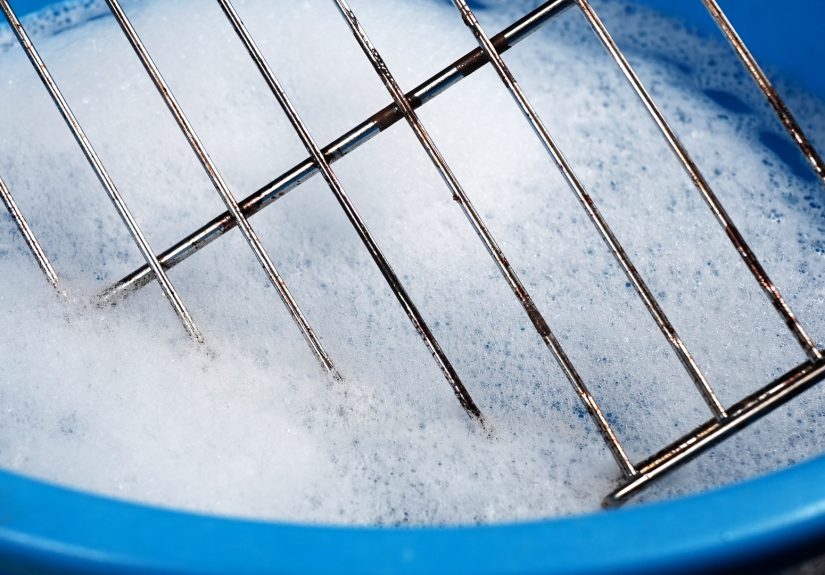
Method 1: Soak + soap (best for moderate grime)
- Place racks in a bathtub or large sink (protect the tub with towels).
- Cover with hot water and add dish soap.
- Soak 30 minutes to a few hours.
- Scrub with a non-scratch pad and rinse well.
Method 2: Baking soda + vinegar soak (best for heavy buildup)
- Lay racks in a tub or large container.
- Sprinkle baking soda generously over the racks.
- Spray vinegar over the baking soda and let it foam.
- Once foaming slows, add hot water and soak (a few hours or overnight).
- Scrub, rinse, and dry completely before returning them to the oven.
Method 3: Bag method (if you have outdoor space)
Put racks in a heavy-duty trash bag, add a splash of vinegar, sprinkle in baking soda, seal the bag, and leave it outside for a few hours.
Then rinse and dry. This keeps the mess containedlike a tiny spa day for your racks, except the spa is a trash bag.
How to Clean Oven Door Glass (Without Scratching It)
That brown haze on oven glass is usually baked-on grease and sugars. The key is gentle abrasion, not brute force.
Quick method: Baking soda paste
- Open the door and apply a thin layer of baking soda paste to the glass.
- Let it sit 20–30 minutes (longer for heavy staining).
- Wipe with a damp cloth, then rinse and dry for a streak-free finish.
Important Note About “Between the Glass”
If the inside-between-the-panels area looks dirty, check your manufacturer instructions. Many experts recommend not disassembling the door yourself unless you’re sure it’s intended for user maintenance.
Keep It Clean Longer: Low-Effort Habits That Save You Hours
The easiest oven to clean is the one you don’t let become a museum exhibit.
Here are simple habits that prevent future baked-on disasters:
1) Wipe “new mess” while it’s still easy
After cooking, once the oven is cool (or just warm), wipe splatters with a damp cloth and a drop of dish soap.
This alone cuts deep-clean frequency dramatically.
2) Catch drips before they carbonize
If you’re baking something likely to bubble over (pies, casseroles, lasagna), put a sheet pan on a lower rack to catch drips.
It’s basically a crumb insurance policy.
3) Emergency spill trick: salt
If something spills and you can’t stop mid-bake, sprinkling salt over the spill (once safe) can help it crust up and become easier to remove later.
Just make sure everything is cool before you clean it up.
4) Use steam as maintenance
Once every couple weeks, run a quick steam session (dish of water warmed in the oven), then wipe down.
This keeps grime from turning into “I need a chisel” territory.
Troubleshooting: Stubborn Spots, Weird Smells, and Other Oven Drama
“There’s still baked-on black stuff!”
Try a second roundbut smaller and targeted:
- Steam first to soften (10–20 minutes), then apply fresh baking soda paste to the spot.
- Wait 30–60 minutes, then gently scrub with a non-scratch pad.
- Repeat as needed. It’s annoying, but it worksand it beats scraping enamel aggressively.
“My oven smells like vinegar / cleaner after I’m done.”
- Wipe again with clean water to remove any leftover residue.
- Let the door stand open for ventilation.
- Warm the oven on low heat for 10–15 minutes (empty) to help odors dissipate.
“Should I just use the self-clean cycle?”
Self-cleaning can reach extremely high temperatures and may produce smoke or fumes depending on what’s inside the oven.
If your goal is specifically cleaning your oven without chemicals, natural methods give you more control and avoid the “incinerator mode” experience.
If you do use self-clean, follow your manual and ventilate well.
“What about a steam-clean feature on my oven?”
If your oven has a built-in Steam Clean cycle, it’s typically intended for small spills and light soil and uses a short cycle with water.
Use it regularly as maintenance, and save the baking soda method for heavy buildup.
Conclusion: A Cleaner Oven, a Happier Kitchen, and Zero Chemical Fog
Cleaning an oven naturally is less about heroic scrubbing and more about smart chemistrywell, kitchen chemistry:
steam softens, baking soda lifts, vinegar or lemon helps finish, and dish soap handles greasy films.
The biggest upgrade you can give yourself is time. Let the baking soda paste sit overnight, use steam to soften messes early,
and do quick wipe-downs so your oven never reaches “archaeological dig” status again.
And if nothing else, remember this: your oven doesn’t need harsh fumes to be clean. It just needs a plan.
Real-World Experiences: What Usually Happens When You Go Chemical-Free (and How to Win Anyway)
People love the idea of a natural oven cleaner until they meet their first “blackened, lacquered-on” spill from a bubbling berry cobbler.
The most common experience is optimism on Day 1followed by a moment on Day 2 where you stare into the oven and whisper, “Is it… mocking me?”
That’s normal. Natural methods work, but they work like a slow cooker, not a microwave.
One pattern shows up again and again: the folks who hate the baking soda method usually didn’t let it sit long enough.
If you spread paste and expect miracles in 20 minutes, you’re signing up for scrubbing. If you leave it overnight,
you’re signing up for wiping. Same ingredients, totally different vibe.
Another super common moment: the “fizz disappointment.” You spray vinegar, it foams, and for a second you feel like a cleaning wizard.
Then you realize the foam doesn’t magically teleport grime into another dimension. The win is what comes after:
vinegar helps loosen residue so your cloth can pick it up. Think of fizz as applause, not the performance.
Steam cleaning has its own learning curve. The first time someone tries it, they often let the oven cool completely before wiping.
Result: the softened grease re-sticks, and they think steam is pointless. The sweet spot is wiping while the oven is still warm
(safe-to-touch warm, not “I’m holding a lava rock” warm). Warmth keeps grease pliable so it lifts off instead of smearing.
Oven racks are where good intentions go to dieunless you use the “soak to surrender” strategy.
People who try to scrub racks dry almost always give up and decide they’ve “earned” new racks.
The reality is you can save a ton of effort by soaking in hot soapy water first, then using baking soda and vinegar for the stubborn spots.
The soak does the boring work. You just show up for the finale.
Door glass is where impatience causes the most regrets. Someone sees brown stains and immediately reaches for the roughest scrubber they own.
That’s how you get scratches, hazy glass, and a memory you’ll carry forever. The better experience is boring but effective:
a thin baking soda paste, a short wait, gentle wiping, and repeating only where needed.
If you’re tempted to go full force, take a breath and remember: you’re cleaning a window, not restoring a cast-iron skillet.
The funniest (and most relatable) experience is the “I cleaned it… and now I notice EVERYTHING.”
Once the oven interior is clean, the knobs look grimy. Then the oven drawer crumbs become visible.
Then you notice the sad little splatter under the range hood. This is not a curse. This is momentum.
If you ride that wave for 10 more minuteswipe the knobs with a damp microfiber cloth, sweep the drawer, and call it a day
you’ll feel like you turned your kitchen into a place where competent people live.
Finally: the best long-term experience comes from tiny maintenance habits, not heroic deep cleans.
People who keep a sheet pan under bubbly dishes, wipe fresh spills once the oven cools, and do a quick steam-and-wipe every couple weeks
rarely face the dreaded “all-day oven cleaning event.” They still deep clean occasionally, surebut it’s a casual Sunday task,
not a dramatic montage with sad music.
So if you’re going natural and it feels slower at first, you’re not doing it wrong. You’re just switching from “chemical speed”
to “strategy speed.” Once you get the timing down, you’ll spend less time scrubbingand more time doing literally anything else,
like baking cookies to celebrate your newly spotless oven. (Or, you know, ordering pizza. No judgment.)