Table of Contents >> Show >> Hide
- What exactly are liver function tests?
- How do at-home liver function tests work?
- How accurate are at-home liver function tests?
- Benefits of at-home liver function tests
- Limitations and risks you shouldn’t ignore
- Who might consider an at-home liver test?
- How to choose a reliable at-home liver function kit
- How to use your results wisely
- Real-life experiences: how at-home liver tests can help
- Conclusion: a helpful toolwhen used the right way
Your liver is one of those overachieving organs that never brags. It quietly detoxifies your blood, processes medications, helps digest your dinner, and stores energy for later. The catch? Liver disease often develops silently, with few obvious symptoms until things are more serious. That’s why liver function tests are such an important part of modern healthcare.
In recent years, at-home liver function tests have joined the scene. These finger-prick kits promise to let you check key liver markers without leaving your couch, then get results online within days. They sound convenient and empoweringbut how much can they really tell you, and when are they a good idea?
In this in-depth guide, we’ll break down how liver function tests work, what at-home liver panels can (and can’t) tell you, who might benefit from them, and how to use your results wiselywithout turning into your own overly anxious lab technician.
What exactly are liver function tests?
Despite the name, “liver function tests” (often shortened to LFTs) don’t measure just one thing. They’re a group of blood tests that look at several substances made by your liver, including enzymes, proteins, and waste products. Together, they give a snapshot of how well your liver is doing its job and whether there may be inflammation or damage.
Common markers in a liver panel
Most laboratory or at-home liver panels will include at least some of the following markers:
- ALT (alanine aminotransferase): An enzyme found mainly in the liver. Elevated ALT often suggests liver cell injury.
- AST (aspartate aminotransferase): Found in the liver, muscles, and other tissues. High AST can signal liver damage but can also rise with muscle injury.
- ALP (alkaline phosphatase): An enzyme found in the liver and bile ducts (and bones). It may increase if there is blockage or bile duct disease.
- GGT (gamma-glutamyl transferase): Often used together with ALP to help distinguish liver and bile duct problems.
- Bilirubin: A yellow waste product processed by the liver and excreted in bile. High levels can cause jaundice and may indicate liver or bile duct problems.
- Albumin and total protein: Proteins produced by the liver. Low levels may suggest impaired liver synthetic function or other systemic illness.
- Prothrombin time (PT/INR): A clotting test that indirectly reflects liver function, since the liver makes many clotting factors.
Doctors interpret these markers together, along with your symptoms, medical history, and sometimes imaging or biopsy, to understand whether there is liver inflammation, blocked bile flow, or reduced liver function.
How do at-home liver function tests work?
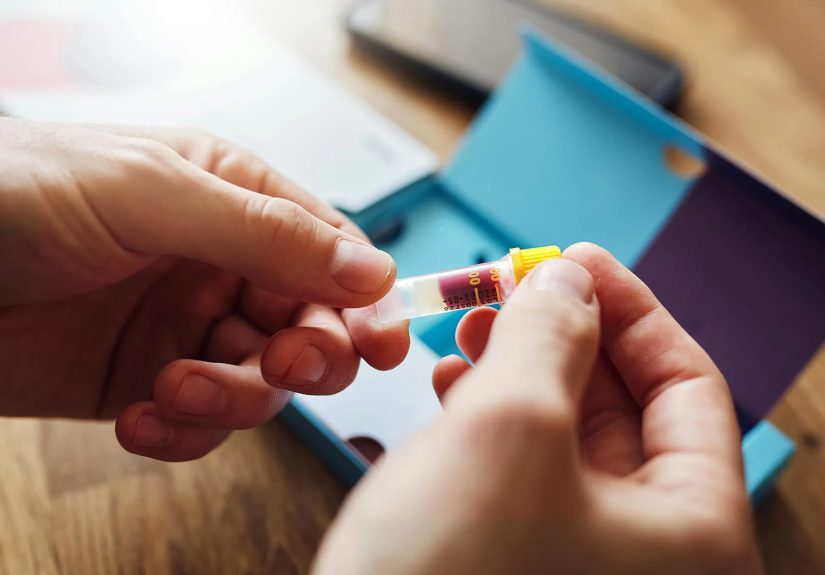
At-home liver function tests are essentially mini blood collection kits. Instead of going to a lab where a phlebotomist draws blood from your vein, you collect a small blood sample yourself from a finger prick and mail it to a certified laboratory for analysis.
The basic steps
- Order the kit: You purchase a kit online or through a pharmacy. Popular options in the U.S. include at-home liver or wellness panels that measure enzymes, bilirubin, and sometimes other markers like cholesterol or inflammation.
- Prepare for testing: Some kits recommend testing in the morning, avoiding heavy exercise beforehand, or fasting for several hours to improve accuracy.
- Collect a finger-prick sample: You use a sterile lancet to prick your fingertip, then collect drops of blood onto a card or into a small tube.
- Mail the sample: The kit includes a prepaid mailer to send your sample to a lab (often CLIA-certified in the U.S.).
- Review results online: Within a few days, you receive an email or app notification with your results, reference ranges, and sometimes brief explanations or optional telehealth follow-up.
What do these home kits actually measure?
The exact panel varies by brand, but many at-home liver tests measure several of the following: ALT, AST, ALP, GGT, total protein, albumin, globulin, and bilirubin. Some more comprehensive kits bundle liver markers with other metabolic tests like HbA1c or markers of inflammation to give a broader snapshot of internal health.
In other words, you’re not getting a “cheap knockoff” of a real liver panel. You’re getting a standard set of blood testsjust with a different collection method.
How accurate are at-home liver function tests?
Here’s the good news: when samples are collected correctly and analyzed by accredited labs, at-home blood tests can be highly accurate and comparable to traditional lab testing. Many providers note that quality-controlled home blood tests, including liver panels, can have sensitivity and specificity over 90% for the markers they measure.
But there are important caveats:
- Sample quality matters: Not filling the card, squeezing your finger too hard, or delaying mailing the sample can all affect results.
- Not all kits are equally validated: Some home tests don’t yet have large clinical studies behind them, and specialists often repeat abnormal home results with a standard venous blood draw before making decisions.
- Panels may be narrower: Many home kits don’t include the full range of tests your doctor might order (like viral hepatitis markers, autoimmune liver antibodies, or imaging studies), so they’re more of a screening or monitoring tool than a full diagnostic workup.
Think of at-home liver testing as a useful data pointnot the final verdict.
Benefits of at-home liver function tests
1. Convenience and privacy
If your schedule is packed, getting to a lab for a blood draw can feel like planning a minor expedition. At-home kits let you collect a sample whenever it fits your day, without waiting rooms, parking stress, or weekday clinic hours. This convenience is one reason at-home blood testing in general is growing quickly.
2. Monitoring ongoing liver issues
People with known liver conditionslike nonalcoholic fatty liver disease, certain genetic disorders, or medication-related liver injurymay need regular blood tests to track trends over time. In collaboration with a healthcare provider, at-home kits can make that follow-up easier and more consistent.
3. Catching potential problems earlier
Liver disease often causes no symptoms in early stages. Yet risk factors such as obesity, type 2 diabetes, high cholesterol, heavy alcohol use, and chronic viral hepatitis are common. An at-home liver panel can’t diagnose these conditions, but it may reveal abnormal markers that trigger a timely conversation with your doctor.
4. Motivating lifestyle change
Seeing liver markers improve after you reduce alcohol intake, lose weight, or adjust medications (under medical supervision) can be incredibly motivating. For some people, objective numbers are more persuasive than generic advice like “eat healthier” or “drink less.”
Limitations and risks you shouldn’t ignore
1. A “normal” test doesn’t guarantee a healthy liver
You can have significant liver disease with only mild or even normal liver enzyme levels. Some chronic conditions progress quietly, and blood tests are just one piece of the puzzle.
If you have risk factors (such as heavy alcohol use, chronic hepatitis B or C, or cirrhosis in the family), you still need regular medical careregardless of an at-home result that appears “fine.”
2. Abnormal results need professional follow-up
An at-home test can tell you that ALT or AST is elevated, but it cannot tell you why. The same lab value could be caused by fatty liver, viral hepatitis, medication side effects, autoimmune disease, or something else entirely.
That’s why specialists recommend using home test results as a trigger to contact your healthcare professional, rather than trying to self-diagnose or self-treat. Many doctors will repeat the panel with a standard venous blood draw and then order additional tests as needed.
3. Risk of anxiety or false reassurance
Some people find numbers reassuring; others find them anxiety-inducing. Without proper context, it’s easy to panic over a mildly elevated enzymeor ignore a subtle abnormality that really does need follow-up. Home testing works best when paired with clear communication from a clinician who understands your overall health.
Who might consider an at-home liver test?
At-home liver function tests may be helpful for adults who:
- Have risk factors such as obesity, metabolic syndrome, type 2 diabetes, or heavy alcohol intake and want an initial screen before seeing a doctor.
- Are taking long-term medications known to affect the liver and have discussed monitoring options with their prescriber.
- Have a diagnosed liver condition and want an easier way to track trends between clinic visits (with their provider’s guidance).
- Prefer a more private, home-based option for initial testing due to anxiety or limited access to in-person labs.
However, at-home tests are not appropriate for people with red-flag symptoms such as yellowing of the skin or eyes (jaundice), confusion, severe abdominal pain, vomiting blood, very dark urine, or swelling of the legs and abdomen. Those situations require urgent in-person medical evaluation.
How to choose a reliable at-home liver function kit
The market for home testing is crowded, so it pays to be picky. When comparing kits, look for:
- Accredited laboratories: Check that the lab processing your sample is CLIA-certified (in the U.S.) or otherwise accredited.
- Clear list of markers: Make sure the kit specifies which enzymes, proteins, and other biomarkers it measures.
- Transparent reporting: Good providers give you actual numbers, reference ranges, and plain-language explanations.
- Turnaround time and support: Look for realistic timeframes (typically 2–5 days after the lab receives your sample) and options to speak with a medical professional or customer support about your results.
- Data privacy: Read the privacy policy so you know how your health data is stored and used.
How to use your results wisely
1. Don’t self-diagnose
Your liver panel is a starting point, not a final answer. If any marker is out of rangeor if you feel unwellcontact your healthcare provider. They may order additional tests (like viral hepatitis panels, ultrasound, or other imaging) to clarify what’s going on.
2. Look at trends, not just one number
A single mildly high result might be related to temporary factors like recent illness, intense exercise, or a new medication. Providers often look at patterns over timeare your liver enzymes steadily rising, stable, or improving? That pattern is more informative than one isolated data point.
3. Pair your results with lifestyle changes
If your doctor confirms that your liver markers are related to lifestyle issues, they may recommend changes like weight loss, limiting alcohol, adjusting medications, or managing diabetes and cholesterol more aggressively. At-home testing can help you see how your efforts are paying off over months and years.
Real-life experiences: how at-home liver tests can help
The following experiences are composites based on common scenarios and medical guidance. They’re not real patient stories, but they illustrate how home liver testing can fit into everyday life when used responsibly.
The wake-up call for silent fatty liver
Imagine a 45-year-old office worker with a busy schedule, a love for takeout, and a family history of type 2 diabetes. He knows he should get regular checkups but keeps procrastinating. One day he orders an at-home wellness panel “just to see.”
The results show mildly elevated ALT and AST, and his total cholesterol is higher than expected. Nothing is dramatically off the charts, but the report flags his liver enzymes as “above normal.” He finally books an appointment with his primary care provider, who repeats the tests, orders an ultrasound, and diagnoses nonalcoholic fatty liver disease (NAFLD) at an early, reversible stage.
With targeted advicemore movement, gradual weight loss, and dietary changeshis follow-up panels over the next year show steady improvement. The at-home testing didn’t diagnose him, but it nudged him into care before more serious damage occurred.
Monitoring medication effects between appointments
Consider a person prescribed long-term medication that can affect the liver. Their specialist orders routine lab tests every few months, but the patient travels frequently for work and struggles to get to a lab on schedule.
After discussing options, they agree to use an FDA-cleared at-home liver panel in between office visits. The patient collects finger-prick samples at home and sends the results to their doctor’s portal. When a panel shows a meaningful jump in ALT and AST, the doctor brings them in for a full workup, adjusts the dose, and monitors closely until the values normalize again.
In this case, convenience testing supports safer long-term therapy, but only because results are interpreted within a medical relationshipnot in isolation.
Reassurance for the “worried well”
On the other side of the spectrum, think about someone who rarely drinks, has no major risk factors, but is extremely health-anxious. They feel tired after a stressful month at work and convince themselves something must be wrong with their liver.
They order an at-home liver test that comes back normal. After a conversation with their healthcare provider about sleep, stress, and mental health, they realize that what they’re feeling may be burnout rather than liver disease. The normal result doesn’t mean “never worry again,” but it provides data that can be reassuring in contextand encourages them to work on lifestyle and stress management instead of catastrophizing.
Key lessons from these experiences
Across these scenarios, a few themes stand out:
- At-home liver tests are most powerful when they start conversations, not when they replace them.
- Numbers create momentum: seeing changes over time can motivate diet, exercise, alcohol reduction, and better medication adherence.
- Medical guidance is non-negotiable: whether results are normal or abnormal, tying them back to your full health picture is crucial.
When used wisely, home testing doesn’t turn you into your own doctor. Instead, it makes you a more informed partner in your care.
Conclusion: a helpful toolwhen used the right way
At-home liver function tests offer a convenient, private way to check important liver markers using a simple finger-prick and mail-in kit. They can help detect abnormal enzymes, encourage earlier medical visits, and support ongoing monitoring of known liver conditions.
But like any test, they have limits. A normal result doesn’t guarantee perfect liver health, and an abnormal result doesn’t reveal the exact cause. The safest and most useful approach is to treat home liver testing as a complement tonot a substitute forcare from a qualified healthcare professional.
If you’re curious about your liver health, especially if you have risk factors, talk with your doctor about whether an at-home liver panel could fit into your overall care plan. Used thoughtfully, these tests can be less about fear and more about informed, proactive control over your health.