Table of Contents >> Show >> Hide
- Why Small Porches Can Look Better Than Big Ones
- Start With a Focal Point, Not a Shopping Cart
- Use Vertical Space Like a Pro
- Choose a Tight Color Palette
- Decorate With Pumpkins, But Be Selective
- Bring in Mums, Grasses, and Seasonal Plants
- Layer Texture for That Cozy Fall Look
- Symmetry Works, But So Does “Almost Symmetry”
- Leave Room to Live, Walk, and Open the Door
- Add Lighting for Instant Evening Charm
- One Chair Is Plenty
- A Simple Formula You Can Copy This Weekend
- Mistakes to Avoid on a Small Fall Porch
- The Best Fall Porch Mood Is the One That Fits Your Home
- Experience-Based Lessons From Decorating Small Front Porches for Fall
Decorating a small front porch for fall is a little like making Thanksgiving dinner in a tiny kitchen: it can absolutely be done, but every inch has to earn its keep. The good news is that a small porch does not need a mountain of pumpkins, a hay bale skyscraper, or enough plaid to scare the neighbors. In fact, pros often recommend the opposite. The best small front porch fall decor is edited, layered, welcoming, and just dramatic enough to whisper, “Yes, I have my life together,” even if there are three shipping boxes hiding just inside the door.
If you want your entry to feel festive without feeling crowded, the secret is to treat your porch like a styled vignette rather than a storage zone for every cute autumn thing you saw in the garden center. A well-decorated fall front porch uses height, color, texture, and scale in smart ways. On a small porch, less is not boring. Less is powerful. Less also means you can still open the door without knocking over a gourd.
Why Small Porches Can Look Better Than Big Ones
Here is the upside nobody tells you: a small front porch is often easier to make look polished. There is less square footage to fill, fewer opportunities for visual clutter, and a much better chance that every decorative element will actually be noticed. When decorating a compact entry, you are not trying to create a full outdoor room. You are creating a warm, seasonal welcome at the front door.
That is why professional stylists tend to focus on a handful of essentials: one strong focal point, a few layered natural materials, a controlled color palette, and enough negative space to keep the whole setup from looking like a pumpkin traffic jam. Think curated, not chaotic.
Start With a Focal Point, Not a Shopping Cart
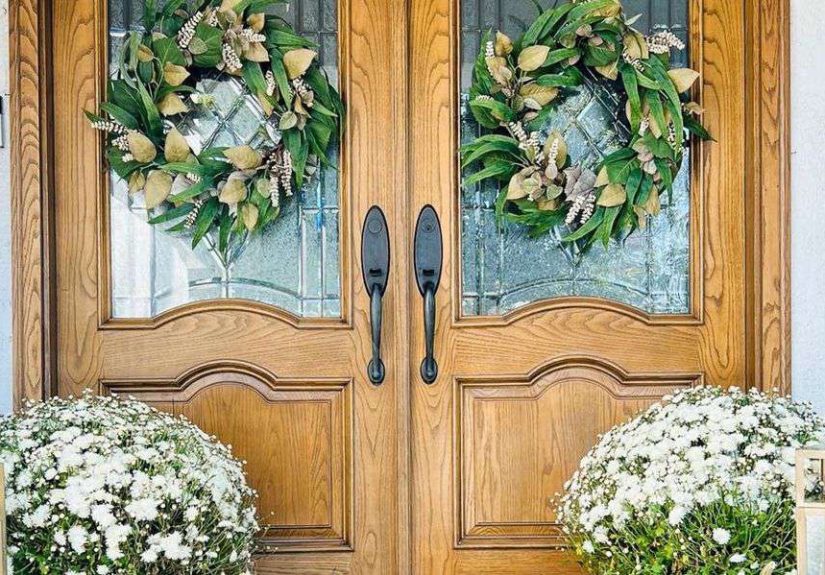
The easiest way to decorate a small front porch for fall is to begin with one anchor item. Usually, that is the front door. A wreath, a dried floral arrangement, a seasonal basket, or even a bold ribbon treatment can instantly tell the eye where to look first. If your door already has color, use it. A black, navy, green, or red door can become part of your fall palette instead of fighting against it.
Once the focal point is in place, build outward. This keeps you from buying seventeen random decorations that all seem adorable in the store but behave like strangers at a bad party once they get home. A wreath on the door, two planters at the base, and a small cluster of pumpkins can already be enough. The trick is to let every piece support the central look.
Best focal points for a small fall porch
- A grapevine or wheat wreath
- A dried-floral door basket
- A statement doormat layered over an outdoor rug
- A pair of matching planters flanking the door
- A lantern grouping with pumpkins beside the entry
Use Vertical Space Like a Pro
When floor space is limited, look up. One of the smartest front porch decorating ideas for fall is to decorate vertically instead of spreading everything across the ground. A hanging wreath, tall ornamental grasses, corn stalk bundles, stacked crates, and slim lanterns all create height without hogging precious square footage.
Vertical decorating also helps a small porch feel more styled and intentional. Tall pieces draw the eye upward and make the entry look balanced. If your porch has columns, railings, or wall space beside the door, use them. A narrow seasonal sign, a hanging basket with trailing greenery, or a vertical cluster of dried stems can make a compact porch look fuller without making it harder to navigate.
This is where restraint matters. You do not need vertical decor on every surface. One tall planter on each side of the door, or one stacked arrangement near the steps, usually does the job beautifully.
Choose a Tight Color Palette
One reason some fall porches look elegant and others look like a clearance bin exploded is color discipline. Pros often recommend sticking to two or three main tones. Classic orange is great, but it is far from your only option. Cream, rust, burgundy, olive, mustard, black, deep green, and soft white can all create a sophisticated autumn look.
If you love traditional fall colors, try mixing orange pumpkins with deep green cabbages or bronze mums to add depth. If you prefer a more refined vibe, use white pumpkins, natural wood, brown baskets, and muted greenery. If your house has modern lines, a monochrome palette with black lanterns, white gourds, and a tan coir rug can look especially sharp.
A small porch benefits from color repetition. Repeat one tone in the wreath, another in the planters, and a third in the pumpkins or textiles. That repetition makes the display feel pulled together, even when the individual pieces are simple.
Decorate With Pumpkins, But Be Selective
No conversation about fall porch decor is complete without pumpkins, the unofficial celebrities of the season. But on a small porch, the goal is not quantity. It is composition. Instead of covering every step with pumpkins in every possible shape and shade, choose a few that vary in size and texture.
A good formula is three to five pumpkins total for a very small porch, or five to seven if you have steps and a bit more room. Mix one large pumpkin, two medium ones, and a few smaller gourds. Group them in odd numbers for a natural look. Tuck them near planters, lanterns, or the base of a chair rather than lining them up like they are waiting for roll call.
Heirloom-style pumpkins, pale green gourds, and white varieties can make a porch feel more designer than cartoonish. Faux pumpkins are also fair game if you want something reusable and less likely to collapse into sadness halfway through October.
Bring in Mums, Grasses, and Seasonal Plants
If pumpkins are the headliners, plants are the supporting cast that make the whole production look expensive. Mums are a classic for a reason. They add fullness, color, and softness, especially when your porch has lots of hard surfaces like brick, concrete, or wood. Ornamental kale, cabbage, pansies, and small evergreen accents can also work beautifully in a fall front entry.
For the prettiest result, place plants in containers with some visual weight. Woven baskets, clay pots, matte black planters, galvanized buckets, and weathered wooden boxes all add texture. If you already have summer planters, simply swap the contents for seasonal ones rather than buying new containers. Your wallet will send a thank-you note.
On a small porch, two planters are often enough. If you want more, vary the heights instead of increasing the number. One tall planter and one shorter container create dimension without crowding the space.
Layer Texture for That Cozy Fall Look
Texture is what makes a porch feel cozy instead of flat. Fall naturally lends itself to layered materials: rough pumpkins, soft mums, woven baskets, rustic wood, dried leaves, plaid textiles, and matte metal lanterns. Even on the tiniest porch, texture creates richness.
One of the easiest tricks is to layer a seasonal doormat over a larger outdoor rug. That small move makes the whole entry look styled. Add a lantern with an LED candle, a basket of gourds, or a plaid throw over a chair, and suddenly your porch feels like it belongs in a magazine rather than in the “before” photo.
Be careful not to overdo the cozy factor. A tiny porch does not need six signs, four pillows, and an emotional support scarecrow. A few tactile materials go much further than a pile of novelty decor.
Symmetry Works, But So Does “Almost Symmetry”
Many professional porch setups use symmetry because it instantly makes an entry feel orderly. Matching planters, paired lanterns, or mirrored pumpkin groupings on either side of the door are reliable choices. Symmetry is especially useful on a small porch because it reduces visual noise.
That said, perfect symmetry is not the only path to a beautiful porch. “Almost symmetry” often looks more natural. For example, you might place a tall planter and lantern on one side of the door and balance it with a shorter planter plus a pumpkin cluster on the other. The overall visual weight feels even, but the porch still has personality.
If your porch is awkwardly shaped, this softer version of symmetry is often the better move. It prevents the setup from looking forced while still feeling intentional.
Leave Room to Live, Walk, and Open the Door
This may sound obvious, but it is one of the most important small-porch rules: do not decorate away the function. You still need to open the door fully, carry groceries inside, welcome guests, and avoid tripping over a decorative gourd on your way to work. Glamour is nice. Safe footing is nicer.
Before you commit to a layout, stand inside the door and open it all the way. Check the walking path. Look at the porch from the driveway, the sidewalk, and straight on. If it feels cramped, remove one item. Then maybe another. Great styling often comes down to editing, not adding.
Add Lighting for Instant Evening Charm
Daytime curb appeal matters, but fall magic really shows up at dusk. Soft lighting can make even the simplest autumn porch decor look special. Lanterns with battery-operated candles are an easy win. String lights tucked around a railing or woven through a garland can also work, as long as the effect stays warm and understated.
If your porch light is harsh, use decorative lighting to soften the mood. A pair of lanterns beside the door can create glow at eye level and make pumpkins and planters feel more intentional. It is a small upgrade with a surprisingly big payoff.
One Chair Is Plenty
On a small porch, seating should feel useful, not crowded. A single rocking chair, bistro chair, or narrow bench can add charm and give you a place to drape a throw or set down a planter. It can also make the porch feel inhabited, which is exactly what you want in the fall: warm, welcoming, and a little bit storybook.
Choose furniture with a slim profile, and skip bulky pieces unless you truly have the room. The chair is not the star. It is the supporting actor with great timing.
A Simple Formula You Can Copy This Weekend
If you want a no-fuss decorating plan, here is a reliable designer-inspired formula for a small porch:
- One wreath on the front door
- Two planters with mums or ornamental grasses
- Three to five pumpkins in mixed sizes
- One lantern or a pair of slim lanterns
- One layered doormat setup
- Optional: one chair or stool with a folded throw
This formula works because it hits all the essentials: height, softness, texture, color, and seasonal personality. It also leaves breathing room, which is what keeps a small porch from looking overworked.
Mistakes to Avoid on a Small Fall Porch
1. Using too many little items
Tiny decor scattered everywhere can make a porch feel fussy. Fewer, larger items usually look better than lots of mini accents.
2. Ignoring scale
Oversized hay bales or giant signs can overwhelm a compact porch. Match your decor to the size of the entry.
3. Mixing too many styles
Farmhouse, spooky, rustic, elegant, and modern can all work, but not all at once. Pick a lane.
4. Forgetting weather
Use outdoor-friendly textiles, secure lightweight items, and protect anything that could blow away or turn soggy.
5. Blocking the entry
Your porch should still function like a porch and not an obstacle course designed by decorative squash.
The Best Fall Porch Mood Is the One That Fits Your Home
The prettiest small front porch ideas are not necessarily the most elaborate. They are the ones that feel consistent with the home itself. A cottage porch might look best with weathered baskets, heirloom pumpkins, and loose greenery. A modern home might call for clean-lined planters, white pumpkins, and black lanterns. A farmhouse-style entry can carry warm woods, plaid layers, and a more rustic mix.
When in doubt, echo what already exists. Repeat the color of the front door. Use materials that match your exterior. Let the architecture guide the styling. Fall decor looks far more expensive when it feels like part of the house instead of an annual costume change.
Experience-Based Lessons From Decorating Small Front Porches for Fall
One of the funniest things about decorating a small front porch for fall is how quickly good intentions can turn into a produce display with boundary issues. What starts as “I just want a cute little autumn moment” can become “Why are there fourteen pumpkins and nowhere to stand?” That is why the best lessons usually come from actual trial and error. After styling compact porches, watching neighbors style theirs, and noticing what looks inviting from the curb versus what looks busy up close, a few real-world truths stand out.
First, small porches respond better to confidence than quantity. The setups that tend to look best are the ones where somebody clearly made a decision and stuck with it. Maybe it is a crisp black-and-white palette with pale pumpkins. Maybe it is a warm harvest look with rust mums and natural baskets. Either way, the porch feels calm. The porches that struggle are usually the ones trying to fit every seasonal idea into one tiny footprint. A wreath, a scarecrow, a welcome sign, nine mini pumpkins, fake leaves, plaid pillows, and a ghost garland might all be cute on their own, but together they can make the front door feel like it needs a referee.
Another common experience is discovering that height matters more than volume. A small porch can look surprisingly luxurious with just one tall planter, one lantern, and a thoughtful pumpkin cluster. Meanwhile, a dozen short objects placed side by side often flatten the whole scene. Once people start layering upward instead of outward, everything gets better. The porch looks more styled, the walkway stays clear, and the eye has somewhere to travel.
There is also a practical lesson that arrives right around the second week of fall: fresh materials are beautiful, but they need a little common sense. Mums need attention. Lightweight decor shifts in the wind. Real pumpkins can age from “storybook charming” to “slightly haunted” faster than expected in bad weather. Many homeowners end up happiest when they mix real and faux elements. A real plant or two gives the porch life, while reusable pumpkins and durable lanterns keep the maintenance manageable.
And finally, the best small fall porches almost always feel personal. Maybe there is an old wooden stool from the garage, a vintage basket from a flea market, or a plaid blanket that comes out every September like a seasonal celebrity. Those touches are what make a porch memorable. Not bigger. Not louder. Just warmer. That is the real pro move: decorate enough to make people smile when they walk up, but leave enough room for the house, the season, and your own style to do the talking.