Table of Contents >> Show >> Hide
- What Is the French Drop, Really?
- What You Need Before You Start
- How to Do the “French Drop”: 8 Steps
- Step 1: Pick your “display” hand and your “taking” hand
- Step 2: Display the coin at the fingertips
- Step 3: Relax your hands (seriously)
- Step 4: Bring the taking hand in from above and slightly in front
- Step 5: The secretlet the coin fall back and get “finger palmed”
- Step 6: Close the taking hand and “carry” the imaginary coin away
- Step 7: Don’t “freeze” the guilty handmake it normal
- Step 8: Reveal the vanishand be smart about the cleanup
- What Makes the French Drop Fooling: Timing + Attention
- Common Mistakes (and How to Fix Them Fast)
- Practice Drills That Actually Work
- A Simple Mini-Routine You Can Perform
- Variations and Next Steps After You Learn the Basics
- Conclusion
- Real-World Experience: What Learning the French Drop Feels Like (500+ Words)
If you’ve ever wanted to make a coin vanish like you’ve got a tiny portal hidden in your palm (very budget-friendly wizardry),
the French Drop is the classic move to learn. It’s simple in concept, sneaky in execution, and endlessly useful.
Done well, it looks like you took the coin with one hand… when the coin never actually left the hand it started in.
This guide breaks the French Drop into 8 clear steps, then shows you how to make it look natural, fix common mistakes,
and turn the move into something that feels like “real” magicnot “I’m definitely hiding something” magic.
What Is the French Drop, Really?
The French Drop is a false transfer: you pretend to take a coin from one hand with the other, but secretly keep the coin behind.
The audience’s brain “fills in” the transfer because it matches what they expect to see when someone grabs a coin.
Important note: the French Drop is often called a “vanish,” but it’s more accurate to think of it as a utility move.
You can use it to vanish, switch, or set up a surprise reappearancelike producing the coin from behind someone’s ear
(which is a classic because it’s funny and because humans are suspiciously full of spare change).
What You Need Before You Start
- A visible coin: Start with a quarter or half dollar-sized coin. Bigger coins are easier to control and easier for spectators to see.
- A soft surface: Practice over a bed, couch, or towel so drops don’t sound like a courtroom gavel announcing your failure.
- A mirror or phone camera: You need the spectator’s view, not the “I know what I’m doing” view.
- Dry hands: If your hands are sweaty, the coin will slide at the worst momentlike it’s trying to escape your magic career.
How to Do the “French Drop”: 8 Steps
-
Step 1: Pick your “display” hand and your “taking” hand
Decide which hand will hold and display the coin (the “display hand”) and which hand will pretend to take it (the “taking hand”).
Most beginners hold the coin in their non-dominant hand and “take” with the dominant hand, but either can work.
The real rule is: pick one way and practice it until it feels boringbecause boring equals natural. -
Step 2: Display the coin at the fingertips
Hold the coin near the fingertips of your display hand so the audience can clearly see it.
A common starting position is to pinch the coin lightly near its edge with the thumb and first fingers.
Tilt the coin slightly toward the audience so it reads as “obviously there.”Goal: Make the coin look like it’s easy to grab. If it looks trapped in a death-grip, the audience will suspect something.
-
Step 3: Relax your hands (seriously)
Tension is the #1 snitch. If your fingers look stiff, spectators don’t even need to know magicthey’ll just know something is up.
Let the display hand look casual. Let the taking hand look like it’s about to do a normal, everyday action:
picking up a coin.A great “tell check” is this: could you freeze-frame your hands and still look like a regular human?
If not, loosen up. -
Step 4: Bring the taking hand in from above and slightly in front
Move the taking hand toward the coin as if you’re going to pinch it. The taking hand’s fingers go in front of the coin,
and the taking thumb goes behind it. From the audience’s angle, this looks exactly like a real grab.Angle tip: Keep the move mostly facing forward. The French Drop is strongest when spectators are generally in front of you,
not far off to your side. -
Step 5: The secretlet the coin fall back and get “finger palmed”
As the taking hand closes like it’s gripping the coin, you do not actually take it.
Instead, the coin stays behind in the display hand and drops into a concealed position (often a finger palm):
nestled along the base of the fingers where it’s hidden when the hand looks relaxed.The timing matters: the coin’s secret drop happens under the “curtain” of the taking hand’s closing fingers.
You’re not racing. You’re syncing. -
Step 6: Close the taking hand and “carry” the imaginary coin away
The taking hand closes fully as though it has the coin. Then it moves away with confidencelike it actually grabbed something.
This is the moment when the audience’s brain finishes the story for you: “He took the coin.”Optional subtlety: Some performers add a tiny “coin twist” right before the moment of transfer.
It can help create a brief retention impressionlike the coin is still visible for a split second.
Use it only if it stays natural and doesn’t look like you’re starting a coin-spinning hobby mid-trick. -
Step 7: Don’t “freeze” the guilty handmake it normal
The display hand (the one secretly holding the coin) should not become a statue.
Keep it natural: lower it slightly, gesture lightly, or let it rest casually.
A classic mistake is to clamp the guilty hand shut like it’s protecting state secrets.Rule: The hand that “has the coin” (the taking hand) gets the attention.
The hand that actually has the coin behaves like it has nothing to hidebecause, socially speaking, it doesn’t. -
Step 8: Reveal the vanishand be smart about the cleanup
When you’re ready, open the taking hand slowly to show the coin is gone.
Let the moment breathe. A vanish is a punchlinedon’t rush it like you’re late for math class.Then you have options:
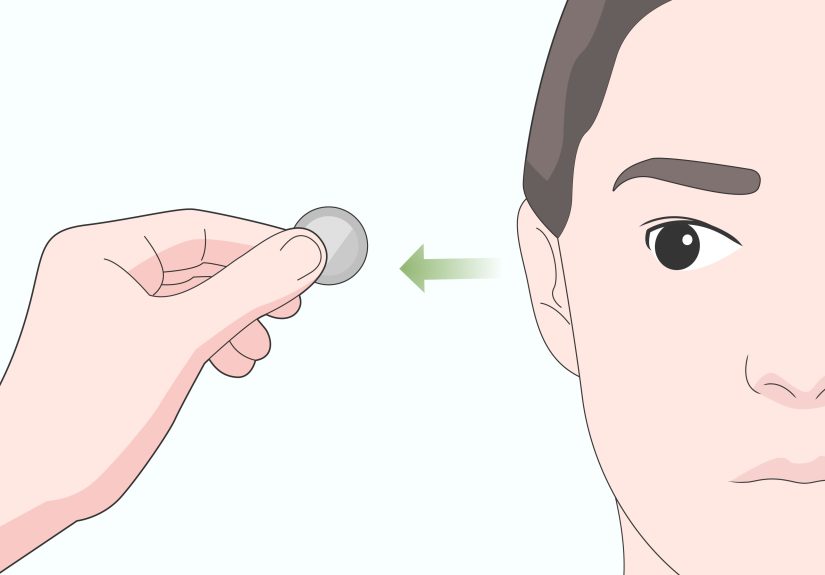
- Immediate reappearance: Produce the coin from behind an ear, under a watch, or from a pocket.
- Delayed reappearance: Continue the routine for a beat, then reveal the coin somewhere impossible.
- Casual ditch: When attention is on the empty taking hand, you can quietly get rid of the hidden coin naturally (e.g., into a pocket) if your routine calls for it.
What Makes the French Drop Fooling: Timing + Attention
The French Drop works because humans are pattern machines. When a hand moves in, fingers close, and the hand moves away,
the brain assumes the object transferredespecially if your motion matches how people normally pick up a coin.
Your job is to control attention without looking like you’re controlling attention. Here are practical ways to do that:
- Look at the taking hand as it “holds” the coin. People tend to follow your eyes.
- Say something on the transfer beat (“Watch closely,” “This is the part I mess up,” “Don’t blink… actually blink, it’s healthier.”).
- Add a tiny action on the taking hand (a tap, a blow, a shake) that gives spectators a reason to stare there.
- Keep the guilty hand moving naturally so it doesn’t scream “EVIDENCE.”
Common Mistakes (and How to Fix Them Fast)
Mistake 1: “Claw hands”
If your taking hand looks like it’s trying to grab a flying insect, it won’t read as a normal pickup.
Fix: Practice picking up a coin for real 10 times. Copy that exact shape and speed when you do the false take.
Mistake 2: The taking hand doesn’t actually look like it takes anything
If your fingers close too early or too late, the audience won’t buy the moment of “contact.”
Fix: Think “touch → close → lift,” all in one smooth rhythm.
Mistake 3: The guilty hand goes dead
Beginners often lock the display hand like it’s holding a live bee.
Fix: Give the display hand a job: point, gesture, or relax it down naturally.
Mistake 4: Flashing from the side
The French Drop is angle-sensitive if people are far to your side.
Fix: Perform with spectators mostly in front. If you’re surrounded, choose a different vanish designed for wider angles.
Mistake 5: Rushing the reveal
If you open the taking hand instantly, spectators don’t have time to “lock in” the idea that the coin is there.
Fix: Hold the closed taking hand for a beat. Let them believe before you prove.
Practice Drills That Actually Work
-
Mirror drill (2 minutes): Do 20 slow reps, focusing on making the taking hand look like a real pickup.
Watch for stiffness, weird finger angles, and the guilty hand freezing. - Phone camera drill (2 angles): Record from straight-on and slightly off to the side. If the vanish looks suspicious from either angle, adjust.
- “Talk while you do it” drill: Say a sentence during the transfer. If you can’t talk naturally, you’re probably tense and over-focused.
- Slow-to-fast ladder: 10 reps slow, 10 medium, 10 natural speed. Don’t jump straight to fastfast is how mistakes become traditions.
A Simple Mini-Routine You Can Perform
Here’s a beginner-friendly script that gives the French Drop a purpose (and gives you built-in misdirection):
- Show the coin: “This is a normal coin. By which I mean it’s the kind that disappears from my bank account every week.”
- Do the French Drop: “Watchif you hold it lightly, it’s easier to…” (do the transfer)
- Focus attention on the taking hand: Blow on it or tap it with a finger.
- Reveal the vanish: Open the taking hand slowly: “…lose.”
- Reappear: Produce from behind the spectator’s ear or from your pocket: “It went looking for friends.”
Variations and Next Steps After You Learn the Basics
Once the core French Drop is solid, you can explore upgrades:
- French Drop as a switch: Pretend to take a coin, but actually leave it behind and “take” a different object (advanced, but powerful).
- Improved handlings: Some classic courses teach refinements to make the transfer more deceptive and the concealment more relaxed.
- Combine with a production: A vanish is strongest when it leads somewherecoin to pocket, coin to table, coin to behind-ear comedy gold.
Conclusion
The French Drop is proof that magic isn’t about superhuman speedit’s about believable motion.
If your hands move like they would in real life, your audience’s brain does most of the work for you.
Practice slowly, film yourself, keep the guilty hand casual, and give the audience a reason to look where you want.
Master this one move and you’ve unlocked a whole family of coin vanishes, switches, and routines.
Not bad for eight steps and one coin that refuses to pay rent.
Real-World Experience: What Learning the French Drop Feels Like (500+ Words)
Beginners almost always have the same first reaction to the French Drop: “Wait… that’s it?”
The method can feel almost too simple, like you’re getting away with something (because you are).
And that simplicity is exactly why the move can become so strong. The French Drop doesn’t rely on complicated finger gymnastics;
it relies on doing something that looks normal enough that people stop questioning it.
In early practice, most people discover a weird truth: the coin isn’t the hard partyour hands are.
Specifically, your hands have opinions. They want to tense up, pose dramatically, and hold suspiciously still.
A new performer will often “act” like they’re doing magic, and that acting becomes the giveaway.
The French Drop gets better the moment you stop performing the move and start performing a normal action.
When the taking hand closes, it should feel like picking up a coin from a table. When the hand moves away, it should feel like carrying something.
When you open the hand, it should feel like you expected to see the coin there too.
Another common experience is the “mirror betrayal.” In the mirror, the vanish can look perfect because you know what’s happening.
Then you record a video and suddenly the guilty hand looks like it’s auditioning for a spy movie:
perfectly still, oddly curled, and hovering at chest height like it’s afraid of gravity.
This is why filming is such a game-changer. The camera doesn’t care about your feelings. It just shows the truth.
Most learners improve quickly once they start looking for two things on video: (1) whether the taking hand truly appears to grab the coin,
and (2) whether the display hand looks innocent after the transfer.
Performing for real people adds a second wave of lessons. The first time you try it for a friend, you might get the dreaded “other hand stare.”
They won’t say anything, but their eyes drift toward the hand that secretly kept the coin, like they’ve developed coin-detecting instincts.
That moment teaches you what books and tutorials repeat for a reason: the vanish isn’t sold by speedit’s sold by attention.
When your eyes, voice, and posture “announce” that the coin is in the taking hand, spectators usually follow your lead.
Even a simple line“Hold on… right here”can pull focus exactly where you want it.
Many learners also notice that the French Drop feels different depending on the coin. A larger coin often feels steadier and reads better visually.
A tiny coin can be harder to display cleanly and easier to fumble. People also learn quickly that the sound of a dropped coin can betray them during practice.
That’s why practicing over a towel or bed is so common: it lowers the noise and lets you focus on smooth timing.
Over time, the move becomes quietnot just in sound, but in vibe.
It stops feeling like a “move” and starts feeling like a moment in a story.
The most memorable milestone is when someone reacts before you even reveal the empty handwhen they lean in, eyebrows up,
because their brain is already convinced the coin is inside your fist.
That’s when the French Drop stops being “a trick you learned” and becomes “something you can perform.”
And the funniest part? The method didn’t change. You did. Your timing got cleaner, your hands got calmer, and your confidence got louder than the secret.