Table of Contents >> Show >> Hide
- First, the not-so-sexy truth about how COVID risk works during sex
- 14 tips for pleasurable safer sex during COVID-19
- 1) Make “the check-in” part of foreplay
- 2) If you’re sick (or maybe sick), postpone the in-person part
- 3) Keep your partner circle small (your immune system will send a thank-you card)
- 4) Time sex around higher-risk moments
- 5) Use testing as a tool, not a magic shield
- 6) Stay up to date on vaccinationespecially if either of you is higher-risk
- 7) Choose better air: ventilation is the unglamorous MVP
- 8) Consider masks (yes, really) when risk is higher
- 9) Minimize face-to-face and kissing if you’re reducing COVID risk
- 10) Try positions and activities that keep faces apart
- 11) Make solo sex a featured act, not a consolation prize
- 12) Use toys and barriers smartly (and clean them like you mean it)
- 13) Don’t forget classic safer sex: condoms, dental dams, and STI testing
- 14) Have an “aftercare + follow-up” plan
- FAQ: The questions people are too shy to ask out loud
- A simple pleasure-first “safer sex” checklist
- Conclusion: safer can still be seriously satisfying
- Real-life experiences: what people actually tried (and what they learned)
COVID-19 may not have been invited to your bedroom, but it’s very good at crashing parties. The good news?
You don’t have to choose between pleasure and prudence. You can have bothby treating sex the
same way we learned to treat everything else during COVID: as a “harm-reduction” situation, not a purity test.
Translation: you pick the level of risk you’re comfortable with, then stack the odds in your favorwithout
turning intimacy into a biology final. This guide walks you through 14 realistic tips that keep the mood alive
while lowering the chances of COVID-19 transmission (and still protecting against STIs and pregnancy, because
those didn’t take a pandemic break either).
First, the not-so-sexy truth about how COVID risk works during sex
Most COVID-19 transmission happens through respiratory particles. Sex usually includes exactly what COVID loves:
close proximity, face-to-face breathing, kissing, heavy breathing, and sometimes talking (or, let’s be honest,
laughing at the worst possible moment).
That means “safer sex during COVID-19” is mostly about reducing respiratory exposure. Hygiene still matters
(especially for overall sexual health), but it’s not the main event for COVID. Think: air, distance, time,
symptoms, and honest conversationsnot just hand sanitizer and hope.
14 tips for pleasurable safer sex during COVID-19
These are arranged from “lowest hassle” to “more intentional.” Mix and match. You don’t need perfection.
You need a plan.
-
1) Make “the check-in” part of foreplay
Yes, it’s a conversation. But it can be a hot conversation: “What do you feel comfortable with tonight?”
Ask about symptoms (even mild ones), recent exposures, and upcoming high-risk events (crowded indoor concerts, flights,
packed work meetings). The goal isn’t interrogationit’s teamwork.Try a simple script: “I’m really into you. Before we get carried away, what’s your risk comfort level right now?”
Consent plus clarity is a power couple. -
2) If you’re sick (or maybe sick), postpone the in-person part
If either of you has symptoms that could be COVID-19, treat that as a “not tonight” for in-person sex.
Instead: text, voice notes, video, fantasy-sharing, or a rain check with details (“Saturday, 8 pm, your place,
and I’m bringing the good lube”). Anticipation is underrated. -
3) Keep your partner circle small (your immune system will send a thank-you card)
Fewer partners generally means fewer transmission pathways. If you’re dating casually, consider a smaller rotation
or a “consistent partner” arrangement for a while. This isn’t moralizingit’s math.Bonus: with fewer people, it’s easier to communicate expectations around testing, symptoms, and boundaries.
-
4) Time sex around higher-risk moments
If one of you just attended a crowded indoor event, traveled, or had a known exposure, consider delaying in-person
intimacy for a few days. If you can’t or don’t want to delay, stack other protections (testing, ventilation, masks,
and avoiding face-to-face).This tip is basically: “Don’t schedule your makeout marathon the morning after a packed nightclub.”
-
5) Use testing as a tool, not a magic shield
COVID-19 tests can reduce uncertainty, but they’re not perfectespecially early in infection. If you’re using rapid
antigen tests, repeating after a negative result (about 48 hours later) improves reliability. If you have symptoms,
a negative rapid test isn’t a free pass; consider retesting and limiting close contact.Practical idea: if you’re planning a date night with close contact, test the day of and be honest about
any symptoms or exposures in the prior week. -
6) Stay up to date on vaccinationespecially if either of you is higher-risk
Vaccination reduces the risk of severe illness and, depending on timing and variants, may also help lower the chance of transmission.
It’s not a moral badge; it’s a health strategy. If one partner is immunocompromised or has higher-risk conditions, this becomes even more important. -
7) Choose better air: ventilation is the unglamorous MVP
If you’re indoors, improve ventilation. Crack windows. Run a fan. Choose rooms with better airflow. If weather allows,
consider sex in a well-ventilated space or even outdoors-adjacent privacy (like a screened porch). Less stagnant air can mean less viral buildup.The vibe can still be romantic. “I opened a window because I want you to breathe easy” is basically poetry.
-
8) Consider masks (yes, really) when risk is higher
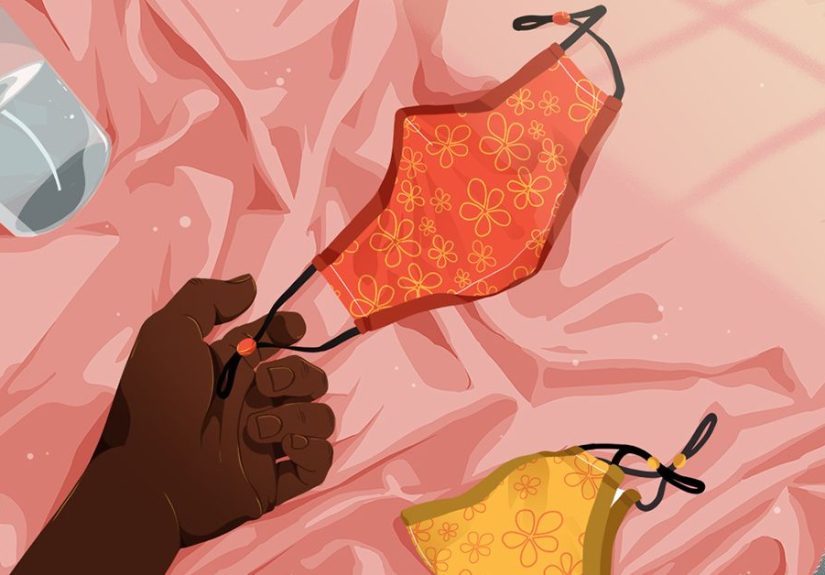
Masks reduce the spread of respiratory particles. If you’re with a partner outside your household during a high-transmission period,
or one of you has elevated risk, keeping masks onat least during face-to-face momentscan lower risk.Pro tip: pick a comfortable, well-fitting mask. If you’re going to wear one during intimacy, comfort is non-negotiable.
-
9) Minimize face-to-face and kissing if you’re reducing COVID risk
Kissing is high-risk because it’s close, face-to-face, and involves saliva. If you’re trying to lower risk,
consider skipping kissing or saving it for when you’re more confident about health status (no symptoms, no recent exposures,
testing strategy, etc.).Instead, lean into other erotic options: kissing other body areas (with awareness and consent), sensual touch, massage, mutual stimulation,
and talking dirty from a safer angle (literally). -
10) Try positions and activities that keep faces apart
If you’re going to have in-person sex during COVID-19 and want to reduce respiratory exposure, consider positions where you’re not breathing directly
into each other’s faces. This is not about turning sex into a geometry assignmentjust small adjustments.Examples: side-by-side, from behind, or other configurations that reduce face-to-face time. You can still be close, affectionate, and connected.
-
11) Make solo sex a featured act, not a consolation prize
Masturbation is typically the lowest-risk sexual activity for COVID-19plus it’s excellent for stress relief and learning what you like.
If you haven’t upgraded your solo routine since 2019, consider this your reminder: you deserve better lighting and fewer interruptions.Add-ons: erotica, audio, toys, fantasy journaling, or mindful touch. Pleasure counts even when you’re alone.
-
12) Use toys and barriers smartly (and clean them like you mean it)
If you’re sharing toys, clean them thoroughly between users and consider using condoms on toys (then changing condoms between partners).
Don’t share toys that can’t be cleaned well. Wash hands before and after. These steps are more about general sexual health and germ control,
but they’re still part of a safer routine.If you’re using lube: water-based works with most condoms and toys, silicone-based lasts longer but may not be compatible with some silicone toys.
Check your toy’s care instructions. -
13) Don’t forget classic safer sex: condoms, dental dams, and STI testing
COVID-19 is not the only health consideration. Condoms and dental dams reduce STI risk, and contraception prevents pregnancy if relevant to you.
If you have new or multiple partners, routine STI testing is part of responsible, sexy adulthood.If you’ve been avoiding clinics, look for telehealth options or local clinics with safety measures. Many services adapted during the pandemic.
-
14) Have an “aftercare + follow-up” plan
Aftercare isn’t only for kinky sexit’s for emotionally intelligent sex. Agree on what happens if someone develops symptoms afterward:
“If either of us feels sick in the next few days, we’ll tell each other right away.”This isn’t awkward; it’s considerate. It also reduces anxiety, whichsurprisecan be a major libido killer.
FAQ: The questions people are too shy to ask out loud
Is COVID-19 an STI?
COVID-19 is primarily a respiratory infection, not a classic sexually transmitted infection. The main concern is close contact and breathing shared air.
Some studies have detected viral material in bodily fluids, but the most consistent route of transmission is through respiratory particles.
What about oral sex?
Oral sex can involve close face-to-body contact and sometimes face-to-face proximity. If you’re reducing COVID risk, consider avoiding activities that put
faces very close together for long periods, and use barriers (like condoms or dental dams) for STI risk reduction.
Should we shower after sex to prevent COVID?
Showering is great for comfort and hygiene, but it’s not the main COVID prevention strategy. COVID risk is far more about shared air than what’s on your skin.
Still: washing hands before and after is a solid baseline habit, especially when toys are involved.
How do we handle mismatched risk tolerance?
Treat it like any compatibility issue: talk, negotiate, and respect boundaries. “No” is a complete sentence. So is “Not without masks,” or “Not until we’ve tested,”
or “Let’s do virtual tonight.” The relationship you protect first is the one you have with your own body.
A simple pleasure-first “safer sex” checklist
- Before: quick symptom/exposure check-in, decide your comfort level, confirm contraception/STI plan if relevant.
- Set the space: improve airflow, grab supplies (condoms, lube, wipes, a clean towel), silence notifications.
- During: prioritize activities that feel good and fit your risk plan (maybe less kissing, less face-to-face time).
- After: clean toys, wash hands, do aftercare, and agree to update each other if symptoms pop up.
Conclusion: safer can still be seriously satisfying
Pleasurable safer sex during COVID-19 isn’t about fearit’s about intention. You can lower risk by checking in honestly, keeping partner circles smaller,
using testing wisely, choosing better ventilation, and adjusting the “face-to-face” parts of intimacy when needed. And you can do it without turning sex into
a sterile checklistbecause joy is a health resource, too.
If you’re unsure what’s right for youespecially if you or a partner is higher-riskconsider talking with a healthcare provider. The best plan is the one you’ll
actually use, and the sexiest thing you can bring to the room is mutual care.
Real-life experiences: what people actually tried (and what they learned)
To make this less theoretical, here are a few common, experience-based scenarios people have shared publicly and repeatedly during the pandemicalong with the
lessons that stuck. Think of these as “field notes from real life,” not perfection stories.
The “we tested, so we’re invincible” moment. A lot of people discovered the hard way that a single negative rapid test isn’t a magical invisibility cloak.
Someone felt totally fine, tested negative that afternoon, met up, and then woke up the next day with a sore throat. The lesson wasn’t “testing is useless.”
The lesson was “testing is a tool with timing.” People started pairing tests with symptom checks and honest exposure talkplus repeating tests when it mattered.
That combo reduced anxiety, and weirdly, it made intimacy feel more relaxed because everyone knew the plan.
The “window open = mood killer” myth. Plenty of couples thought ventilation would ruin the vibeuntil they tried it.
A cracked window, a fan on low, cozy blankets, and suddenly it felt less like “infection control” and more like “romantic cabin energy.”
Once people reframed airflow as part of creating a comfortable space (fresh air, less stuffy heat, fewer headaches), it stopped feeling clinical.
Some even built rituals: light a candle, queue a playlist, open the window. The brain loves routines, and libido often does too.
The “no kissing” negotiation. For many, kissing was the hardest boundary. One common workaround was to set a temporary agreement:
“We’ll skip kissing tonight, but we’ll add more sensual touch and take our time.” People leaned into massage, eye contact from a safe angle, longer cuddling,
or playful teasing. What surprised them was that removing one “default” element made them explore othersand for some, that actually increased pleasure.
Not kissing wasn’t “less intimate.” It was “intimate in a different way.”
The rise of creative digital intimacy. Some folks who thought sexting was “not for me” realized it could be deeply connecting when done with care.
The best experiences weren’t explicit scripts copied from the internet; they were personalized and playful: “What would you do if you were here?”
or “Describe your favorite part of last time.” People learned to set boundaries (“No screenshots,” “Only when I’m home alone,” “Stop anytime”) and found
that confidence in communication often carried over into better in-person sex later.
The “we didn’t talk, and now we’re stressed” lesson. The most common regret wasn’t about a specific position or precautionit was about silence.
When partners skipped the COVID conversation, they often spent the next few days spiraling: “Was that safe? Should I tell them I’m worried? Should I test again?”
The people who felt best afterward were the ones who made a plan up front, even if it was simple. A two-minute check-in saved days of anxiety.
And less anxiety tends to mean better sleep, better mood, andyesbetter sex.
Bottom line from these experiences: the goal isn’t to eliminate risk completely (life rarely offers that). The goal is to align your choices with your values:
pleasure, health, honesty, and respect. When those line up, intimacy feels saferand often, more satisfying.