Table of Contents >> Show >> Hide
- Before You Start: A 20-Second Safety Mindset
- Step 1: Ask Permission and Suit Up Like You Mean It
- Step 2: Read the Room (and the Horse) From a Distance
- Step 3: Approach at an Angle Toward the Shoulder (Not Head-On)
- Step 4: Let the Horse “Smell Hello” First
- Step 5: First Touch = Neck or Shoulder, Slow and Steady
- Step 6: Know the Safe Zones (and the “Absolutely Not” Zones)
- Step 7: Try a Simple “Interaction” (Only With the Handler’s Help)
- Step 8: Learn the “Nope” Signals (and What to Do About Them)
- Step 9: End the Meeting on a Calm, Positive Note
- Quick FAQ for First-Time Horse Meetings
- Conclusion: A Safe First Hello Builds Real Confidence
- Extra: Real Experiences Meeting Horses for the First Time (What People Don’t Tell You)
- SEO Tags
Meeting a horse for the first time is a little like meeting someone who can bench-press your car, run faster than your
Wi-Fi, and still be offended if you walk up like a loud, flailing windmill. Horses are prey animals with strong instincts,
big bodies, and surprisingly delicate opinions about personal space. The good news: you don’t need to be “a horse person”
to have a safe, positive first encounter. You just need a plan, calm energy, and the humility to let the horse finish its
sniff-based background check before you try to become friends.
This guide breaks down the classic beginner-safe approachhow to dress, where to stand, what to do with your hands, how
to read “I’m chill” versus “please don’t,” and how to leave a great first impression. Follow these nine steps and you’ll
look like you’ve done this before (even if your knees are quietly writing their resignation letter).
Before You Start: A 20-Second Safety Mindset
Horses don’t wake up thinking, “How can I ruin a tourist’s day?” Most accidents happen because humans surprise a horse,
ignore early warning signs, or stand in the wrong place at the wrong time. Your goal is simple:
be predictable, be visible, and be gentle. Also: listen to the handler. If they say “not today,” believe them.
- Assume the horse can move faster than you. Because it can.
- Assume the horse can weigh more than your doubts. Because it does.
- Assume calm wins. It almost always does.
Step 1: Ask Permission and Suit Up Like You Mean It
Before you approach, ask the handler two questions: “Is it okay if I meet this horse?” and “How does this horse like to be
greeted?” That second question matters. Some horses love attention; others prefer a slower introduction.
What to wear (and what to avoid)
- Closed-toe shoes (boots are best). Horses step where horses step.
- Skip dangling scarves, swinging bags, and noisy accessories that can flap or startle the horse.
- Tie back long hair and remove anything you’d cry about if it got yanked.
- Don’t bring snacks in your pockets unless the handler says it’s fine. Horses have opinions about surprise carrots.
If you’re visiting a barn, follow posted rules: no running, no yelling, no sudden chaos. Barns are basically libraries, but
with hooves.
Step 2: Read the Room (and the Horse) From a Distance
Before you step into the horse’s space, take 10–15 seconds to watch. You’re looking for a relaxed posture and
“available” attention. This isn’t mysticalit’s practical risk management.
Green-light signs (generally calm)
- Soft eyes, relaxed face, normal breathing
- Weight distributed evenly, standing quietly
- Ears relaxed or gently moving as the horse listens
Yellow/red-light signs (give space, let the handler decide)
- Ears pinned flat back (often a warning that the horse is upset and wants space)
- Eyes wide with lots of white showing (fear or agitation)
- Tail “snapping,” strong swishing, stomping, pawing (agitation or protest)
- Horse is focused on something else (food, another horse, a spooky corner of the universe)
If you see warning signs, don’t “prove you’re not scared” by marching closer. The bravest move is stepping back and letting
the handler manage the situation.
Step 3: Approach at an Angle Toward the Shoulder (Not Head-On)
Horses have blind spots directly in front and directly behind them, and they can startle if you appear suddenly in those
zones. The beginner-friendly approach is slow, calm, and angled toward the shoulder so the horse can see you,
track you, and decide you’re not a predator wearing sneakers.
Your body language matters
- Walk, don’t rush. No running, no lunging, no “Surprise! Friendship!”
- Keep your shoulders relaxed and your hands quiet at your sides.
- Speak softly so the horse knows you’re coming (“Hi there, buddy” works better than “OMG HORSE”).
If the horse steps away, don’t chase. Pause, breathe, and let the handler guide you. Chasing turns your “hello” into a
low-budget action movie.
Step 4: Let the Horse “Smell Hello” First
Horses learn a lot through smell. The first greeting is often a sniff. With the handler’s okay, offer your hand slowly
(think “presenting,” not “poking”). Keep fingers togetherno wiggling like bait in a fishing tournament.
How to offer your hand safely
- Stand near the shoulder, turned slightly sideways (less threatening than squared-up)
- Extend your hand slowly toward the muzzle area without reaching straight at the face
- Let the horse come to you for the sniff
If the horse doesn’t want to sniff you, that’s not a personal rejection. It’s a boundary. Respect it. Boundaries are classy.
Step 5: First Touch = Neck or Shoulder, Slow and Steady
When you pet a horse for the first time, start where most horses are comfortable: the neck or shoulder.
Avoid the face and forehead at firstmany horses are sensitive there, and humans are famously bad at “gentle surprise pats.”
The “safe petting” technique
- Place your hand on the shoulder or neck with light pressure.
- Rub gently in a calm, steady motion (not rapid tapping).
- Move slowly; don’t jump from shoulder to nose like you’re speed-running affection.
Bonus tip: a horse’s skin can be sensitive, especially around the head, belly, and legs. If the horse flinches or tenses,
soften your touch or stop and reset. Your goal is comfort, not “maximum pats per minute.”
Step 6: Know the Safe Zones (and the “Absolutely Not” Zones)
Most first-time mishaps come from standing in a danger zone. The safest place around a horse on the ground is usually
slightly forward of the left shoulder (with supervision). The riskiest places are directly behind and directly in
front.
Moving around the horse safely
- Never stand directly behind a horsethat’s where kicking happens.
- If you need to pass behind, do it the safe way: either
very close with a hand on the horse (so a kick has less force), or
far enough away to be out of range. Don’t linger a few feet behindclassic danger zone. - When leaving, walk away quietly. Don’t sprint off like you just stole the crown jewels.
If you’re in a stall, safety rules get stricter. Space is limited, and it’s harder to exit quickly. Wait until the horse is
aware of you and positioned safely before you step inside.
Step 7: Try a Simple “Interaction” (Only With the Handler’s Help)
Petting is great, but if the handler offers, a short guided task can help you understand the horse’s space and movement.
Keep it simple: one or two steps of leading, a calm brush stroke on the neck, or standing quietly while the horse relaxes.
If you’re allowed to lead the horse
- Use a halter and lead rope (not random grabbing of equipment).
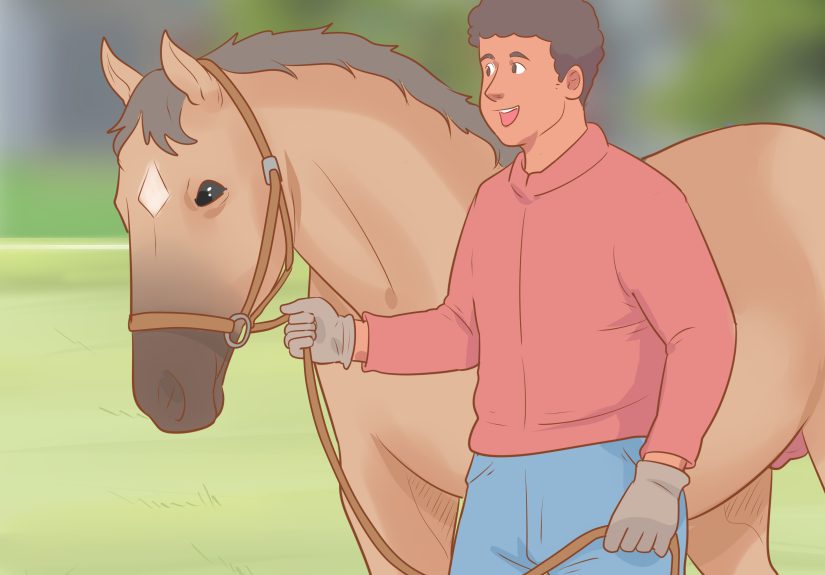
- Walk beside the horse, not ahead or behind. Stay near the shoulder area.
- Never wrap the rope around your hand or wrist. Fold excess rope in loops so it can slide if needed.
- Turn the horse away from you when changing directions to reduce the chance of getting stepped on.
Remember: a horse is stronger than you. Control is about positioning, timing, and calm cuesnot a tug-of-war you intend to win.
Step 8: Learn the “Nope” Signals (and What to Do About Them)
Horses are honest communicators if you watch them. A lot of “bad behavior” is really the horse saying, “I’m uncomfortable,”
and the human saying, “Anyway…”
Common warning signals
- Ears pinned back: often irritation, anxiety, or “please give me space.”
- Eyes wide, white showing: fear or stress; the horse may bolt or react quickly.
- Tail snapping/ringing or strong swishing: agitation.
- Pawing or stomping: frustration, protest, or escalating tension.
What to do in the moment
- Freeze your hands. Stop petting or moving closer.
- Take one slow step back toward a safer position near the shoulder (or out of the space).
- Let the handler take over. You are not auditioning for “Horse Whisperer: The Musical.”
If a horse feels crowded, cornered, or surprised, it may kick, bite, or bolt. Your job is to reduce pressure, not add a
motivational speech.
Step 9: End the Meeting on a Calm, Positive Note
The best first meeting ends before anyone gets tired, overstimulated, or sloppy. When the interaction feels calm and
successful, wrap it up.
How to exit gracefully
- Stop petting, pause for a second, then step away slowly.
- Keep your voice calm; avoid sudden movements.
- Thank the handler and ask what went well (and what to do differently next time).
Ending calmly teaches the horse that humans are predictable. And predictability is basically the love language of prey animals.
Quick FAQ for First-Time Horse Meetings
Should I feed a horse a treat when I meet it?
Only if the handler says yes. Treats can encourage mugging (the horse searching your pockets), crowding, or nipping. Many
programs prefer horses to be caught and greeted without food to reduce risky behaviorespecially around groups.
Where should I stand if I’m nervous?
Nervous is fine. Stand near the horse’s shoulder with the handler between you and the horse if needed. “Nervous” becomes unsafe
when it turns into sudden movements or indecision. Slow and steady beats panic every time.
Is it okay to hug a horse?
For a first meeting, skip it. Many horses don’t enjoy being squeezed, and it puts your body in awkward positions if the horse shifts.
Earn trust firstsave the dramatic embraces for your high school reunion.
Conclusion: A Safe First Hello Builds Real Confidence
Meeting a horse for the first time isn’t about being fearlessit’s about being respectful. Ask permission, approach at an angle
toward the shoulder, let the horse sniff, start your first touch on the neck or shoulder, stay out of blind spots, and watch for
“nope” signals like pinned ears or tense body language. If you do those things, you’ll keep yourself safe and give the horse a
calm experience, which is the fastest route to trust.
Next time you’re around horses, you’ll feel the difference: less guessing, more confidence, and a lot fewer moments where you
wonder if your life insurance covers “unexpected hoof-related decisions.”
Extra: Real Experiences Meeting Horses for the First Time (What People Don’t Tell You)
The first time I ever met a horse up close, I thought the main challenge would be “not getting kicked.” Turns out the real
challenge was “not acting like a confused squirrel.” My brain knew the rulesmove slowly, speak softly, approach the shoulderbut
my body wanted to do that thing humans do when they’re excited: speed up, talk louder, and wave their hands like they’re directing air traffic.
Horses notice everything. The moment I got bouncy, the horse’s ears flicked back and forth like it was buffering my personality.
The handler gently said, “Take a breath.” I did. The horse softened. Lesson one: horses don’t need you to be brave; they need you to be steady.
Another surprise: the sniff. People imagine a horse sniffing politely like a dog. In reality, some horses do a full
investigative scannose to hand, then a quick check of your jacket, your pockets, your general life choices. If you pull away
too fast, they can startle or get suspicious. The best advice I got was to treat the sniff like a handshake: offer your hand,
let the horse choose the timing, and don’t take it personally if they decide you’re “fine” and move on. Horses are efficient.
They don’t linger for small talk.
I’ve also watched first-timers make the same mistake again and again: going straight for the forehead because it feels like petting
a big dog. Many horses tolerate it, but some hate itespecially if they’ve had unpleasant handling around the head. I’ve seen a
horse toss its head hard enough to make a newbie jump back like they’d touched a hot stove. If you start at the neck/shoulder and
work slowly, you give the horse time to relax and you give yourself time to learn its preferences. And yes, horses have preferences.
One mare I knew loved a scratch at the base of her neck and would lean into it like, “Finally, someone with manners.” Another gelding
preferred long, calm rubs on the shoulder and would step away if you scratched too fast. Lesson two: let the horse teach you what “nice” means.
The most confidence-building first interaction I’ve seen isn’t pettingit’s standing quietly. A good barn instructor will sometimes
have a nervous visitor simply stand near the shoulder and breathe, letting the horse look, sniff, and settle. That sounds boring until
you notice what’s happening: the horse is deciding you’re safe, and you’re learning you can be near a large animal without needing to
control the moment. When the visitor finally reaches out and touches the shoulder, it’s smoother, safer, and way less dramatic.
Lesson three: calm proximity is a skill, and it pays off.
Finally, the “exit” matters more than people realize. I’ve seen first-timers have a perfect greeting and then ruin the vibe by
suddenly stepping away fast, squealing, or turning and darting like they’re late for a flight. Horses notice that shift and can get
tense. The best exits are boring: stop petting, pause, step back, and walk away quietly. If you can end calmly, you’re already doing
what experienced handlers doleaving the horse emotionally neutral instead of amped up. Lesson four: don’t make the goodbye the scariest part.
If you take anything from these stories, let it be this: your first horse meeting should feel almost uneventful. No big gestures,
no “I must prove myself,” no speed. Just quiet respect, clear boundaries, and a steady “hello.” Horses remember that kind of human.