Table of Contents >> Show >> Hide
- Why Wine Bottles Feel Hard to Open
- The Best Tool for Most People: A Waiter’s Corkscrew
- How to Use a Winged Corkscrew Without Fighting It
- How to Use an Electric Wine Opener
- How to Open a Screw-Cap Wine Bottle Gracefully
- How to Open Sparkling Wine Safely
- What to Do When the Cork Is Stuck
- How to Open an Older Bottle
- Can You Open Wine Without a Corkscrew?
- Common Mistakes That Make Opening Wine Harder
- How to Choose the Right Wine Opener
- Serving Tips After the Bottle Is Open
- Real-Life Experiences: Opening Wine Without the Awkward Struggle
- Conclusion
Opening a wine bottle should feel like the beginning of a good evening, not an arm-wrestling match with a stubborn piece of tree bark. Yet for many people, the moment the cork appears, confidence disappears. The foil tears badly, the corkscrew goes in crooked, the cork snaps halfway, and suddenly the kitchen feels like a live-action puzzle room.
The good news is that opening wine smoothly is not about brute strength. It is about using the right tool, keeping the bottle steady, placing the screw correctly, and letting leverage do the heavy lifting. Whether you are using a waiter’s corkscrew, a winged opener, an electric wine opener, or trying to rescue a stuck cork, the goal is the same: calm hands, controlled movement, and zero drama.
This guide explains how to open a wine bottle without struggling, using simple, practical steps anyone can follow. No sommelier vest required. No mysterious restaurant magic. Just clear technique, a few smart safety habits, and enough confidence to open the bottle before the cheese board starts looking lonely.
Why Wine Bottles Feel Hard to Open
Most wine-opening problems come from small mistakes that snowball. The corkscrew is pushed off-center. The worm, which is the spiral part of the corkscrew, is not inserted deeply enough. The bottle is held loosely. The foil is hacked away with the enthusiasm of a pirate. Then the cork gets pulled at an awkward angle, and suddenly you are negotiating with a beverage.
Natural corks can also vary. Some are firm and springy, while older corks may become dry, brittle, or crumbly. Synthetic corks can be tougher to pierce and may need a little extra patience. Sparkling wine adds another challenge because pressure builds inside the bottle, so the cork must be controlled from the moment you touch the cage.
The secret is to slow down at the beginning. A neat setup makes the pull easier. Think of it like parallel parking: if you start crooked, the rest of the process becomes a tiny public embarrassment.
The Best Tool for Most People: A Waiter’s Corkscrew
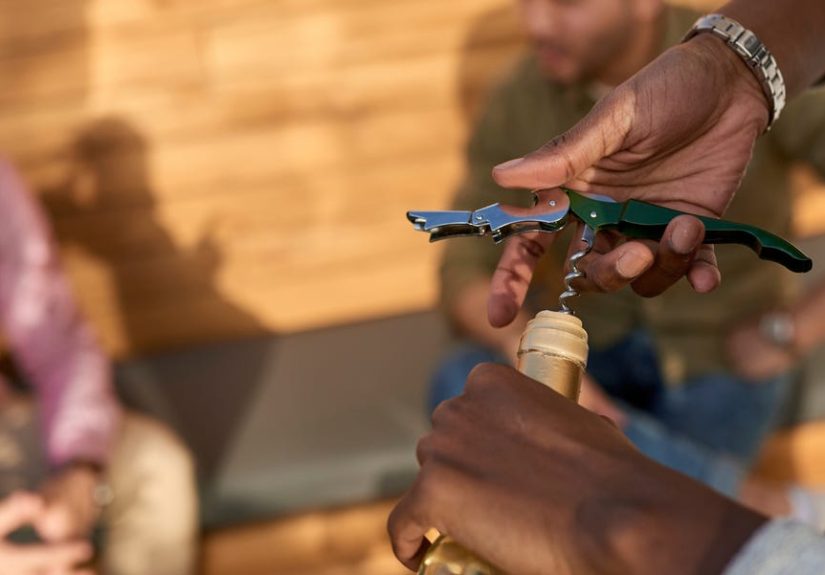
A waiter’s corkscrew, also called a wine key, is the compact opener used by many servers, bartenders, and wine professionals. It usually includes a small foil knife, a spiral worm, and a hinged lever. It may look simple, but that little lever is the reason you do not need superhero forearms.
Step 1: Place the Bottle on a Stable Surface
Set the bottle upright on a counter or table. Hold the neck firmly with your non-dominant hand. Do not clamp the bottle between your knees unless you enjoy turning dinner into slapstick theater.
Step 2: Cut the Foil Cleanly
Use the small knife on the corkscrew or a proper foil cutter. Cut around the neck just below the lower lip of the bottle. This gives you a cleaner pour and keeps foil away from the wine. Make a full circle, lift the foil cap, and remove it. If the first cut is not perfect, do not panic. Wine is forgiving. Foil is not a moral test.
Step 3: Center the Worm
Place the sharp tip of the worm in the center of the cork. This is the most important part. If you start too far to one side, the cork may break or come out at an angle. Press down gently and begin twisting clockwise. Keep the corkscrew vertical as it enters the cork.
Step 4: Twist Until One Coil Remains Visible
Most corks need about five or six turns. Stop when only one curl of the worm remains above the cork. If you do not insert it far enough, the cork may tear. If you drive it all the way through, tiny cork crumbs may fall into the wine. A little cork dust is not the end of the world, but guests tend to notice floating surprises.
Step 5: Use the First Lever Notch
Rest the first notch of the hinged lever on the lip of the bottle. Hold it in place and lift the handle upward. The cork should rise partway out of the bottle. Do not yank. The lever is there to help you, not to launch the cork into a lampshade.
Step 6: Switch to the Second Notch
If your wine key has a double hinge, move to the second notch once the cork is halfway out. This gives you better leverage for the final pull. Lift again slowly until the cork is almost free.
Step 7: Finish by Hand
When the cork is nearly out, grip it and gently twist it free. A quiet little pop is fine. A thunderclap is unnecessary. Wipe the rim with a clean napkin, pour a small taste if you like, and enjoy your victory.
How to Use a Winged Corkscrew Without Fighting It
A winged corkscrew is the opener with two arms that rise as you twist. It is popular because it looks obvious: twist the top, push the wings down, and the cork comes out. Usually. The trick is to keep everything straight.
Simple Winged Corkscrew Method
First, remove the foil and place the circular base of the opener directly over the bottle mouth. Center the worm on the cork. Twist the handle clockwise while keeping the opener upright. As the worm goes down, the two wings will rise. When both wings are fully raised, place one hand on each wing and press down evenly.
The cork should lift out smoothly. If one side goes down faster than the other, the opener may tilt, and the cork may come out unevenly. Press both wings at the same time, like you are calmly lowering two tiny drawbridges.
How to Use an Electric Wine Opener
An electric wine opener is a great option if you open wine often, entertain guests, or have limited hand strength. It also helps if you simply prefer pressing a button over performing a countertop ballet.
To use one, remove the foil first. Place the bottle upright on a firm surface. Center the electric opener directly over the cork and keep it straight. Press the down or remove button, depending on the model, and let the opener insert the worm and pull the cork. Once the cork is out, use the release button to eject it from the opener.
The biggest mistake with electric openers is leaning them sideways. Let the device do the work, but guide it vertically. If it starts crooked, stop and reset before the cork is damaged.
How to Open a Screw-Cap Wine Bottle Gracefully
Not every good wine uses a cork. Many excellent bottles, especially crisp whites and casual reds, use screw caps. The opening method is simple: grip the lower skirt of the cap with one hand, hold the bottle with the other, and twist. You may hear a clean crack as the seal breaks.
For a more polished table move, hold the cap steady and twist the bottle from the base. This looks smoother and gives you better control. Also, no, a screw cap does not automatically mean the wine is cheap. It means you get to drink it faster, which is a respectable engineering decision.
How to Open Sparkling Wine Safely
Sparkling wine is different from still wine because the bottle is under pressure. That means the cork can move quickly if you are careless. The goal is not a loud pop. The elegant sound is a soft sigh, as if the bottle just remembered it booked a spa appointment.
Step 1: Chill the Bottle
Cold sparkling wine is easier to control. A well-chilled bottle reduces foaming and makes the cork less eager to escape. Do not shake the bottle, even as a joke. Sparkling wine remembers.
Step 2: Remove the Foil While Holding the Cork
Peel away the foil, but keep your thumb over the cork and cage. Once the foil is gone, loosen the wire cage while maintaining control. Some people remove the cage completely; others keep it loosely around the cork for grip. Either way, never point the bottle at your face, a guest, a window, or anything you do not want to explain later.
Step 3: Use a Towel and a 45-Degree Angle
Drape a clean towel over the cork. Hold the bottle at about a 45-degree angle, pointed safely away from people. Grip the cork firmly through the towel with one hand.
Step 4: Twist the Bottle, Not the Cork
With your other hand, slowly twist the base of the bottle. Keep the cork steady. You will feel pressure pushing upward. Resist it gently and allow the cork to ease out slowly. A quiet release means you did it right. A flying cork means the bottle won the argument.
What to Do When the Cork Is Stuck
A stuck cork is not a disaster. First, check whether the worm is deep enough. If only the tip of the screw is in the cork, remove it and reinsert it straight down the center. Use the lever slowly instead of pulling hard by hand.
If the cork is halfway out and refuses to move, twist it gently while pulling upward. Avoid rocking too aggressively, because that can break the cork. If it starts to crumble, pause. Trying harder is how a mildly annoying cork becomes a confetti cannon.
How to Handle a Broken Cork
If the cork breaks, insert the corkscrew into the remaining piece at a slight angle, aiming through the strongest part of the cork. Twist carefully and pull slowly. If bits fall into the bottle, pour the wine through a fine-mesh strainer, coffee filter, or clean cheesecloth into a decanter or pitcher. The wine is usually still perfectly drinkable, even if the cork has made a dramatic personal statement.
How to Open an Older Bottle
Older wine can have fragile corks. For mature bottles, a standard corkscrew may not always be the best tool. A two-prong opener, often called an ah-so or butler’s friend, slides down the sides of the cork instead of drilling through the center. This can help remove delicate corks more intact.
To use an ah-so, remove the foil, insert the longer prong between the cork and glass, then insert the shorter prong on the opposite side. Wiggle the opener gently downward until both prongs are fully seated. Then twist and pull upward slowly. This is not a race. Older corks deserve patience, like grandparents and sourdough starters.
Can You Open Wine Without a Corkscrew?
Yes, but it is usually better to find a corkscrew. Many viral hacks are messy, unsafe, or likely to damage the bottle. Using heat, banging the bottle inside a shoe, or attacking the cork with sharp objects can lead to broken glass, spilled wine, or an evening that ends with everyone watching you sweep the floor.
If you truly have no opener, the safest emergency methods are the ones that avoid striking the bottle. A long screw and a hammer claw can work: twist the screw into the cork, leave enough exposed to grip, and pull gently with the hammer claw. A sturdy key can sometimes be inserted at an angle, twisted, and pulled, though this requires patience and a strong key. Another option is pushing the cork into the bottle with the handle of a wooden spoon, but only if you accept that the cork will float in the wine.
Use these tricks only when necessary. The best wine-opening hack is owning a simple wine key and knowing where you put it.
Common Mistakes That Make Opening Wine Harder
Starting Off-Center
If the worm enters near the edge, the cork can split. Always aim for the middle.
Pulling Instead of Levering
A corkscrew is designed to use leverage. Let the notch or wings do the work. Pulling straight up with all your strength is how countertops get bumped and friendships get tested.
Not Inserting the Worm Deep Enough
A shallow grip tears the cork. Insert the worm until about one coil remains visible.
Using a Dull Foil Knife Carelessly
Cut slowly and away from your fingers. Better yet, use a foil cutter if you are nervous around blades.
Opening Sparkling Wine Warm
Warm bubbly foams more and is harder to control. Chill it first, point it away from people, and twist the bottle slowly.
How to Choose the Right Wine Opener
If you want one dependable tool, choose a double-hinged waiter’s corkscrew. It is compact, affordable, and effective once you learn the motion. If you want something easy for casual use, a winged corkscrew is friendly and familiar. If hand strength is a concern, an electric opener can make the process nearly effortless.
For older bottles, consider keeping an ah-so opener in a drawer. For sparkling wine, you do not need a corkscrew at all. You need a towel, a steady hand, and the wisdom not to aim the cork at your uncle’s new television.
Serving Tips After the Bottle Is Open
Once the cork is out, wipe the rim with a clean cloth. If the wine is older, check for sediment before pouring. If the cork smells musty, wet cardboard-like, or unpleasant, the wine may be flawed. A small taste helps confirm whether the bottle is sound.
Serve white, rosé, and sparkling wines chilled, but not icy cold unless that is your preference. Reds often taste better slightly cooler than room temperature, especially lighter styles. And remember that a standard serving of table wine is generally considered five ounces. Enjoying wine is not improved by turning the pour into a soup bowl.
Real-Life Experiences: Opening Wine Without the Awkward Struggle
The first time many people open wine in front of others, the bottle suddenly feels like a stage prop in a talent show they did not audition for. Someone hands you the corkscrew. Everyone keeps talking, but you can feel the room quietly checking your technique. This is exactly when the corkscrew decides to fold the wrong way, the foil clings to the neck, and your hands forget how circles work.
The easiest way to avoid that moment is to practice once when nobody is watching. Open a simple bottle at home and focus on the sequence: cut the foil, center the worm, twist straight, use the first notch, switch to the second notch, finish by hand. After doing it a few times, the movement becomes natural. It is less like solving a problem and more like unlocking a door.
One useful hosting habit is to open the first bottle in the kitchen before guests gather around. This removes pressure and gives you time to fix small issues. If the cork breaks, you can strain the wine quietly. If the foil tears badly, nobody has to know. Hosting is partly hospitality and partly controlled illusion.
Another real-world tip: do not wait until the table is crowded. Wine bottles need elbow room. If you try to open one between a salad bowl, three glasses, a candle, and someone’s phone, you are inviting chaos. Clear a small area, place the bottle on a stable surface, and keep a napkin nearby. A clean workspace makes the process feel calmer.
For picnics, beach houses, cabins, and vacation rentals, pack a small wine key in your kitchen bag. Many people remember the wine and forget the opener, which is how otherwise intelligent adults end up Googling “how to open wine with a shoe.” A wine key takes almost no space and can save the evening from turning into a workshop demonstration.
If you often open wine for family dinners, consider matching the tool to the crowd. A waiter’s corkscrew is perfect if you are comfortable using leverage. A winged opener is easier for guests who do not open wine often. An electric opener is helpful for anyone with wrist discomfort, arthritis, or limited grip strength. The best opener is not the fanciest one; it is the one you can use confidently without muttering at it.
There is also an emotional side to opening wine. People sometimes rush because they feel watched. Slow down instead. A smooth opening looks confident because it is controlled, not because it is fast. Restaurants do not open wine by wrestling the bottle into submission. They use small, practiced motions. That is the whole secret.
And when something goes wrong, keep your sense of humor. A broken cork is not a failed dinner. A bit of cork in the glass is not a scandal. Strain it, pour again, and move on. Wine is meant to make a meal more enjoyable, not to judge your hand-eye coordination.
The real experience lesson is simple: struggling usually happens before the cork moves. Once you set up correctly, the rest is easy. Center the screw, keep the opener straight, trust the lever, and do not rush the final pull. Open the bottle like you have all the time in the world, even if the pasta is already on the table.
Conclusion
Learning how to open a wine bottle without struggling is mostly about technique, not strength. A clean foil cut, a centered corkscrew, steady leverage, and a patient final pull will solve most cork problems. For winged and electric openers, alignment is everything. For sparkling wine, control and safety matter more than showy popping. For older bottles, gentle tools and slower movements protect fragile corks.
Keep a reliable opener nearby, practice the basic steps, and avoid risky internet hacks unless you truly have no other option. Once you understand the process, opening wine becomes quick, neat, and surprisingly satisfying. The cork comes out, the glass gets filled, and the evening can finally get to the important part: deciding who gets the last piece of cheese.
Note: Wine should be enjoyed responsibly and only by adults of legal drinking age.
![18 Best Types of Charts and Graphs for Data Visualization [+ How to Choose]](https://corkopencoffee.org/wp-content/uploads/2026/05/18-best-types-of-charts-and-graphs-for-data-visualization-how-to-choose-qKM1PBYG-thumb.jpg)