Table of Contents >> Show >> Hide
- Why Remove Followers on Twitter?
- Quick Answer: Can You Remove Followers on Twitter?
- Method 1: Remove a Twitter Follower From Your Followers List
- Method 2: Remove a Follower From Their Profile Page
- Method 3: Use the Soft Block or Full Block Method
- Bonus Privacy Move: Protect Your Posts
- Remove, Mute, Block, or Protect: Which Should You Choose?
- Can Removed Followers Tell They Were Removed?
- Can Removed Followers Follow You Again?
- How to Remove Multiple Followers on Twitter
- Safety Tips Before Removing Followers
- Common Mistakes to Avoid
- Real-World Experience: What It Feels Like to Clean Up Your Twitter Followers
- Conclusion
- SEO Tags
Sometimes your Twitter follower list starts looking less like a community and more like a garage sale after a thunderstorm: bots, random accounts, old acquaintances, aggressive strangers, and maybe one person whose only personality trait is replying “ratio” to everything. The good news? You can clean it up without making a dramatic public announcement, changing your username, or pretending you moved to a cabin with no Wi-Fi.
Today, Twitter is officially called X, but millions of people still search for “how to remove followers on Twitter,” so we’ll use both names naturally. Whether you want to remove a follower quietly, stop someone from following you again, or make your account more private, this guide walks you through three quick and easy ways to manage unwanted followers on Twitter/X.
Before we jump in, here is the key idea: removing a follower is different from blocking them. When you remove someone, they are quietly taken off your follower list. They may not receive a notification, but they can follow you again if your account is public. Blocking is stronger. It prevents the account from following or interacting with you, although public-post visibility rules on X have changed over time. If privacy is your goal, the best setup is often a mix of removing followers, blocking problem accounts, and protecting your posts.
Why Remove Followers on Twitter?
Twitter can be useful, entertaining, and occasionally a little like being trapped in a group chat with the entire planet. Your follower list affects who regularly sees your posts, who can amplify your content, and how comfortable you feel sharing thoughts, jokes, work updates, or personal opinions.
You might want to remove Twitter followers for several reasons. Maybe your account is followed by spam profiles with suspicious links. Maybe an old coworker, client, classmate, or former friend is watching your posts a little too closely. Maybe you are reshaping your personal brand and want your audience to be more relevant. Or maybe you simply looked at your followers and thought, “Who invited the egg avatar convention?”
Removing followers is also useful for creators, small business owners, students, journalists, and professionals who want a cleaner audience. A healthy follower list can improve engagement quality. It can reduce weird replies. It can make your account feel less noisy. It can also give you a little more control without having to delete your account and start fresh.
Quick Answer: Can You Remove Followers on Twitter?
Yes. Twitter/X lets you remove a follower from following you, mainly through the web version. You can usually do this from your Followers list or from the follower’s profile page by using the three-dot menu and selecting “Remove this follower.” After confirmation, the account is removed from your followers.
However, there is one important catch: removing someone does not stop them from following you again if your posts are public. Think of it like politely escorting someone out of a party but leaving the front door unlocked. If you want to stop them from returning, you may need to block them or protect your posts.
Method 1: Remove a Twitter Follower From Your Followers List
This is the cleanest and most direct way to remove followers on Twitter. It works best when you already know the person is on your follower list and you want to remove them quietly.
Steps to Remove a Follower From the Followers List
- Open Twitter/X in a web browser.
- Log in to your account.
- Go to your profile page.
- Click or tap your follower count to open your Followers list.
- Find the account you want to remove.
- Select the three-dot menu next to that account.
- Choose “Remove this follower.”
- Confirm by selecting “Remove.”
That is it. No confetti, no awkward notification, no giant sign saying “You have been removed from this person’s digital living room.” The account simply stops following you.
Best For
This method is best when you want a low-drama cleanup. For example, if a random spam account follows you after you post about a trending topic, you can remove it from your list in seconds. It is also useful for people who manage professional accounts and want to keep their audience relevant without using harsher controls.
What Happens After You Remove a Follower?
Once removed, the account will no longer see your posts automatically in its following timeline. But if your account is public, that person can still visit your profile and view your public posts. They may also be able to follow you again later. So, if the follower is only mildly annoying, removal may be enough. If the follower is harassing you, stalking your posts, impersonating someone, or repeatedly refollowing, use blocking or protected posts instead.
Method 2: Remove a Follower From Their Profile Page
The second easy way to remove a follower on Twitter is to go directly to that person’s profile. This is handy when you see the account in your notifications, replies, search results, or a mutual conversation and want to handle it right away.
Steps to Remove a Follower From Their Profile
- Open Twitter/X in a browser.
- Search for the account or click their username from a post, reply, or notification.
- Go to their profile page.
- Click or tap the three-dot menu.
- Select “Remove this follower.”
- Confirm the removal.
This method saves time because you do not have to scroll through your full follower list. If your account has thousands of followers, scrolling can become a sport nobody asked to play. Going straight to the profile is faster and more precise.
Best For
Use this option when you notice a specific follower behaving oddly. For instance, maybe an account keeps liking every post within ten seconds, replies with copy-paste promotional links, or appears to be monitoring your activity. Visiting the profile and removing the follower directly is quick and simple.
Important Limitation
The “Remove this follower” feature may not appear everywhere in the mobile app interface. If you do not see it, try using X.com in a desktop browser or mobile browser. Interface labels also change occasionally, so look for the three-dot “More” menu on the profile or follower list.
Method 3: Use the Soft Block or Full Block Method
If the remove option is not available, or if someone keeps following you again, blocking becomes the stronger tool. There are two versions: a soft block and a full block.
What Is a Soft Block?
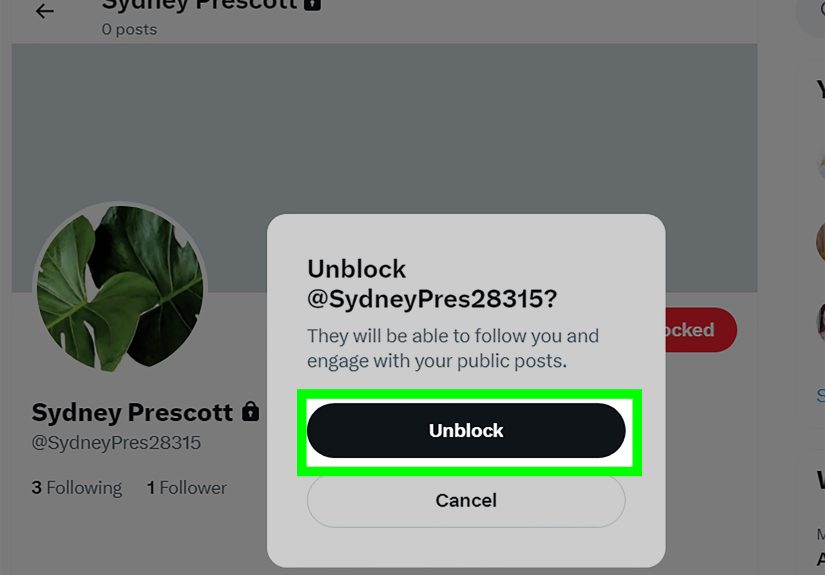
A soft block means you block the person, then unblock them. Blocking forces the account to stop following you. Unblocking afterward means you are not keeping them on your block list. It is a slightly sneaky little maneuver, like moving someone’s chair away from the table and then acting natural.
Steps to Soft Block a Twitter Follower
- Go to the follower’s profile.
- Select the three-dot menu.
- Choose “Block.”
- Confirm the block.
- After the account is blocked, select “Unblock” if you do not want to keep them blocked.
After this, the account should no longer be following you. This is especially useful on mobile if you cannot find the regular “Remove this follower” option.
When to Use a Full Block Instead
Use a full block when removal is not enough. If someone is harassing you, sending unwanted messages, tagging you repeatedly, impersonating another person, or refollowing after removal, blocking is the safer choice. Blocking helps restrict the account from following you and interacting with you directly.
A full block is also better if the issue is not just “I do not want this person following me,” but “I do not want this person contacting me.” That is a different level of boundary, and it deserves a stronger response.
Bonus Privacy Move: Protect Your Posts
Removing followers is useful, but it does not fully control who can follow you in the future. If you want to approve followers manually, protect your posts.
How to Protect Your Posts on Twitter/X
- Open Twitter/X.
- Go to “Settings and privacy.”
- Select “Privacy and safety.”
- Open “Audience and tagging.”
- Turn on “Protect your posts.”
Once your posts are protected, new followers must send a request. You can approve or deny them. Your posts become visible only to your approved followers. This is the closest thing Twitter has to putting a velvet rope outside your profile.
Protected posts are great for personal users, students, private communities, and people who want to share with a smaller circle. But they may not be ideal for creators, businesses, journalists, public figures, or anyone trying to grow reach. Public posts are easier to discover; protected posts are more controlled. Choose based on your goal.
Remove, Mute, Block, or Protect: Which Should You Choose?
Not every annoying follower deserves the same response. Sometimes removal is enough. Sometimes blocking is necessary. Sometimes you just need to mute someone because their posts are exhausting but not dangerous.
Choose “Remove Follower” If:
- You want a quiet cleanup.
- The follower is irrelevant, spammy, or mildly uncomfortable.
- You do not need to stop them from seeing your public profile.
- You want to avoid a more obvious action like blocking.
Choose “Soft Block” If:
- The remove option is not available in your app.
- You want to force the account to unfollow you.
- You do not want to keep the person blocked permanently.
- You are doing a quick follower cleanup from mobile.
Choose “Block” If:
- The person is harassing, threatening, or repeatedly contacting you.
- The account keeps following you again.
- You want to restrict direct interaction.
- You need a clear boundary.
Choose “Protect Your Posts” If:
- You want to approve new followers manually.
- You use Twitter mainly for personal updates.
- You do not care about public reach.
- You want more privacy going forward.
Can Removed Followers Tell They Were Removed?
Twitter/X does not typically send a notification saying, “Congratulations, you have been removed.” That would be wildly dramatic and, frankly, very on-brand for the internet. Still, the person may eventually notice. If they visit your profile, they might see that they are no longer following you. If your posts are protected, they may need to request access again.
In most casual cases, people never notice. Many users follow hundreds or thousands of accounts. One quiet removal is unlikely to set off alarms. But if the person is watching your account closely, they may figure it out.
Can Removed Followers Follow You Again?
Yes, if your account is public. Removing a follower does not ban them from returning. They can click Follow again later. If you want to stop that, block the account or protect your posts so you can approve follower requests manually.
This is why removal is best for light cleanup, while blocking and protected posts are better for safety and privacy. Think of removal as tidying your room. Think of blocking as changing the lock. Think of protected posts as installing a doorbell camera and deciding who gets in.
How to Remove Multiple Followers on Twitter
Twitter/X does not provide a simple built-in bulk removal button for regular users. If you want to remove many followers, you usually need to do it one account at a time. This is annoying, yes, but it also helps prevent accidental mass actions. Nobody wants to wake up and realize they removed 800 followers because their elbow hit the mouse.
Be careful with third-party tools that promise bulk follower removal. Some tools may require account access, and giving unnecessary permissions can create security risks. Before using any third-party app, check what permissions it requests, whether it is reputable, and whether you can revoke access afterward. When in doubt, manual cleanup is slower but safer.
Safety Tips Before Removing Followers
If the follower is merely annoying, remove or mute them. If the follower is abusive, document the behavior before taking action. Screenshots can help if you need to report harassment. If someone is threatening you, impersonating you, sharing private information, or encouraging others to target you, use Twitter/X reporting tools and consider blocking.
Also review your own profile. Remove sensitive details from your bio, location, old posts, and pinned content if you are concerned about privacy. Public profiles can appear in search engines, and older public posts may remain visible in search results for a while even after changes. A follower cleanup is helpful, but privacy works best when your whole account setup supports it.
Common Mistakes to Avoid
Removing When You Really Need to Block
If someone is harmful, do not rely on removal alone. A public account allows people to return. Blocking or protecting your posts is more appropriate for persistent unwanted attention.
Assuming Removal Makes Old Posts Private
Removing a follower does not erase what they have already seen. It also does not make public posts private. If you need privacy, protect your posts and review your posting history.
Trusting Random Cleanup Tools Too Quickly
Some follower-management tools can be useful, but others are risky. Avoid tools that ask for your password directly, promise magical growth, or require broad permissions without a clear reason.
Real-World Experience: What It Feels Like to Clean Up Your Twitter Followers
Cleaning up your Twitter followers is one of those small digital chores that feels strangely satisfying once you start. At first, you may feel dramatic. You hover over the three-dot menu like you are making a historic decision. “Should I remove this bot with a profile picture of a luxury watch? What if it had feelings?” It does not. Remove it.
The first experience many users notice is how much lighter their account feels after removing obvious spam followers. You know the accounts: zero posts, 4,000 following, three followers, and a bio that says something like “crypto success expert” with twelve rocket emojis. These accounts usually do nothing for your engagement, your credibility, or your peace of mind. Removing them can make your follower list look more human and less like a robot convention held in a discount electronics store.
Another common experience is realizing that follower management is not just about numbers. For years, social media trained people to treat follower count like a scoreboard. More followers meant more importance, more reach, more proof that someone somewhere approved of your breakfast opinions. But not every follower is valuable. A smaller, more relevant audience can be better than a large audience filled with bots, inactive accounts, or people who make you hesitate before posting.
Personal accounts often benefit the most. Imagine you are a student, teacher, designer, job seeker, or professional who posts a mix of personal thoughts and career updates. You may not want random strangers or old contacts watching every joke, complaint, or late-night observation. Removing followers gives you a sense of control. It reminds you that your profile is not public property just because it lives on a public platform.
Business and creator accounts experience follower cleanup differently. If you run a brand account, you may not want to remove too many people casually because reach matters. Still, cleaning up fake-looking followers can improve the quality of engagement. A real audience that comments, clicks, shares, and buys is more valuable than a bloated follower count full of accounts that never interact. Vanity metrics look nice in screenshots, but useful metrics pay the bills.
The emotional part can be surprising. Removing an old friend, former coworker, or ex can feel awkward even when it is the right choice. But online boundaries are still boundaries. You do not owe everyone permanent access to your thoughts. If someone’s presence changes how freely you communicate, that is useful information. The remove button exists for a reason.
The biggest lesson is simple: follower cleanup should be routine, not a crisis. Check your followers occasionally. Remove obvious spam. Block harmful accounts. Protect your posts if privacy matters more than reach. Social media becomes easier to use when your audience feels intentional rather than accidental. You do not need to turn your account into a fortress, but you are allowed to close the gate when the raccoons start wandering in.
Conclusion
Learning how to remove followers on Twitter is quick, practical, and worth knowing. The easiest method is to use the “Remove this follower” option from your Followers list or from the person’s profile page on X.com. If that option is not available, a soft block can remove the follower by briefly blocking and unblocking them. For serious issues, use a full block or protect your posts so you can control who follows you in the future.
The best choice depends on your goal. Want quiet cleanup? Remove the follower. Want a mobile workaround? Soft block. Want a firm boundary? Block. Want long-term privacy? Protect your posts. Twitter/X may be loud, messy, and occasionally powered by pure caffeine and argument, but your follower list does not have to be.
Note: Twitter/X menus and labels may change over time. If you do not see “Remove this follower” in the app, try using X.com in a desktop or mobile browser and check the three-dot menu on the follower list or profile page.