Table of Contents >> Show >> Hide
- Why Oil Stains Are So Stubborn (And Why Water Alone Loses)
- 60-Second Triage Before You Do Anything
- The Go-To Method (Works for Most Washable Fabrics)
- What If the Oil Stain Was Already Washed (Or Worse… Dried)?
- Fabric-Specific Cheat Sheet (Because Not All Clothes Are Built the Same)
- Common Oil Stains (And What Changes)
- What Not to Do (Unless You Want the Stain to Stay Forever)
- Prevention (A.K.A. Future You Will Be Grateful)
- Real-Life Experiences (500+ Words of “Yep, That Happened” Scenarios)
- Conclusion: The Oil-Stain Exit Strategy That Actually Works
- SEO Tags
Oil stains are like that one friend who says “I’ll be quick” and then moves into your guest room. You wash the shirt, you dry it, you wear it again… and there it is: the shiny, slightly darker “hi, I’m still here” spot.
The good news: most oil and grease stains can be removed (even the ones that already survived a wash). The trick is using the right combo of absorption + surfactant + patience, and avoiding the #1 stain-setter of all time: heat.
What this guide is based on: widely recommended laundry methods from major U.S. home-care publications and detergent/cleaning brands (think: cleaning labs, appliance-testing orgs, and stain-removal guides), rewritten into one simple, no-fluff playbook.
Why Oil Stains Are So Stubborn (And Why Water Alone Loses)
Oil doesn’t mix with water. That’s basically the stain’s entire personality. When you rinse a greasy spot with plain water, you’re mostly just making the fabric damp while the oil clings to the fibers like it pays rent.
To remove oil stains from clothes, you typically need:
- An absorbent (baking soda, cornstarch, baby powder) to pull up excess oil
- A surfactant (dish soap, liquid laundry detergent) to break oil into washable pieces
- Gentle agitation (your fingers, a soft toothbrush) to work the cleaner into the fibers
- Time (a few minutes to an hour) so the products can do their job
60-Second Triage Before You Do Anything
1) Check the Care Label (Yes, Really)
If the label says “Dry Clean Only,” believe it. Many “dry clean” items can sometimes be spot-treated, but the safe move is to do minimal blotting and take it inespecially for silk, wool, structured garments, or anything that might watermark.
2) Blot or Scrape FirstDon’t Rub
If it’s fresh oil (salad dressing, cooking oil, butter), gently blot with a clean paper towel or cloth. If there are solids (pizza grease + cheese bits), scrape carefully with a dull edge (like a spoon). Rubbing pushes oil deeper into the fabric.
3) Keep It Away From the Dryer Until It’s Gone
Heat can “bake” residue into fibers. If you can still see a shadow or a slightly shiny patch, do not dry it yet. Air-dry, inspect, then repeat treatment if needed.
The Go-To Method (Works for Most Washable Fabrics)
This method is ideal for cotton, denim, polyester, poly-blends, and many everyday shirts and pants. It’s also great for removing cooking oil stains and greasy food stains.
Step-by-step: Dish Soap + Absorbent + Proper Wash
- Blot excess oil. Press (don’t scrub) with a towel to lift as much as possible.
- Cover the stain with an absorbent powder. Use baking soda or cornstarch. Make a generous layer and let it sit 15–60 minutes (longer for bigger stains). Then brush or shake it off into the trash.
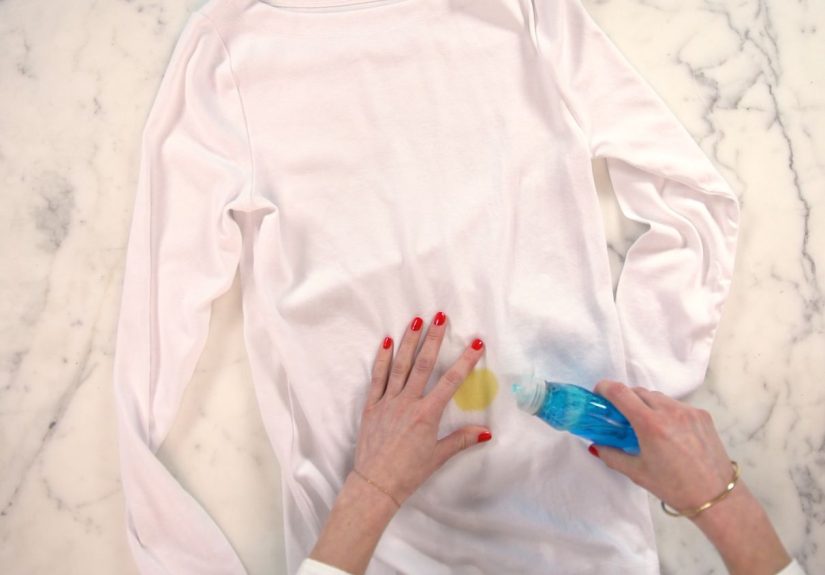
- Apply dish soap (or liquid laundry detergent) directly. A small squirt is enough. Choose a basic dishwashing liquid that’s meant to cut grease. Work it in gently with your fingers or a soft toothbrush.
- Let it sit. Give it 5–10 minutes for fresh stains; 20–30 minutes for older or heavier stains.
- Rinse from the back of the fabric. Use the warmest water the care label allows. Rinsing from the back helps push oil and soap out rather than deeper in.
- Wash with a quality detergent. Use the warmest/hottest water safe for the fabric (check the label). Add an extra rinse if the item feels soapy.
- Inspect before drying. If you still see a stain shadow, repeat the steps. If it’s gone, air-dry or tumble dry as usual.
Pro tip: If the stain is large, treat both sides of the fabric. Oil likes to travel. It’s basically on a road trip through your shirt.
What If the Oil Stain Was Already Washed (Or Worse… Dried)?
Don’t panic. A set-in grease stain is tougher, but it’s not unbeatable. The main idea: you’re re-softening the oil residue, then giving surfactants enough time and agitation to lift it.
Option A: The “Paste” Method (Great for Set-In Stains)
- Make a paste with dish soap + baking soda (think: thick frosting consistency).
- Spread it over the stain and gently work it in with a soft toothbrush.
- Let it sit 30–60 minutes.
- Rinse warm and wash again in the hottest water safe for the garment.
- Air-dry and inspect. Repeat if needed.
Option B: Heavy-Duty Pre-Treaters (When You Want Backup)
If DIY isn’t cutting it, use a dedicated stain remover or laundry pretreat product designed for grease. Follow the label, give it time to work, then wash. This is especially useful for “mystery grease” stains you only notice after laundry day.
Option C: Old-School Bar Soap (Surprisingly Effective)
Stain-removing laundry bars (the kind your grandma would absolutely trust more than your entire phone) can work well on grease. Wet the stain, rub the bar directly into the fabric, let it sit, then wash.
Option D: Solvent Tricks (Use With Caution)
Some guides mention solvent-based approaches for truly stubborn, old oil stains on durable fabrics (like certain workwear). If you go this route:
- Test in an inconspicuous spot first (colorfastness matters).
- Use only on sturdy, washable fabrics (not silk/wool/leather).
- Wash thoroughly afterward and avoid heat until the stain is fully removed.
- If the garment is valuable or delicate, a professional cleaner is safer.
Fabric-Specific Cheat Sheet (Because Not All Clothes Are Built the Same)
Cotton & Denim
These fibers absorb oil fast. Use the full absorbent + dish soap method, then wash warm/hot if allowed. Repeat before drying.
Polyester, Nylon, and Blends
Oils may sit on the surface at first, but they can cling over time. Pre-treat well, wash warm if permitted, and don’t skip the inspection step.
Athleisure & Performance Fabrics
Avoid heavy fabric softeners (they can trap residues). Use a small amount of dish soap to pre-treat, then a quality detergent. Extra rinse helps prevent lingering buildup.
Wool & Silk
Treat gently: blot, then use a mild solution (diluted detergent) and minimal agitation. If in doubtespecially for large stainstake it to a dry cleaner. These fabrics can distort or watermark easily.
Linen
Linen can handle solid stain treatment but can show “rings” if over-wet in one spot. Work from the outside in, rinse thoroughly, and air-dry flat when possible.
Leather & Suede
Do not soak. Use absorbent powders first and consult a leather/suede care specialist for anything major. Water can make it worse.
Common Oil Stains (And What Changes)
Cooking Oil (Olive, Canola, Avocado Oil)
Usually responds well to absorbent powder + dish soap. The faster you treat it, the fewer rounds you’ll need.
Greasy Food (Pizza, Burgers, Fried Chicken)
Often a combo stain: grease + protein + sauce. Scrape solids, treat oil first, then wash. If there’s a colored residue afterward (like tomato), treat that as a separate stain.
Butter & Dairy Fat
Similar to grease, but can smear easily. Blot first, then dish soap, then wash warm if allowed.
Motor Oil / Mechanical Grease
Heavier and more stubborn. Pretreat aggressively, consider a specialty degreasing pretreat product, and expect multiple rounds. Keep it out of the dryer until it’s fully gone.
What Not to Do (Unless You Want the Stain to Stay Forever)
- Don’t machine-dry “just to see.” That’s how stains become permanent roommates.
- Don’t iron over it. Heat + oil is not a romantic comedy; it’s a tragedy.
- Don’t rub aggressively. It can spread the stain and rough up fibers.
- Don’t drown it in random hacks. Grease stains need absorbents and surfactants, not a chemistry experiment fueled by internet dares.
Prevention (A.K.A. Future You Will Be Grateful)
- Keep a tiny stain kit (travel-size dish soap + a mini brush) if you’re a repeat offender with lunch.
- Spot-treat before the hamper. Even a quick dab of detergent helps stop oil from setting.
- Aprons are underrated. They’re basically armor you can wash.
- Inspect under bright light before dryingoil stains can hide until heat makes them obvious.
Real-Life Experiences (500+ Words of “Yep, That Happened” Scenarios)
Below are a few real-world-style situations people commonly run intoand how the oil stain removal playbook actually looks when you’re living life at full speed (and occasionally wearing your dinner).
Scenario 1: The Pizza Night Ambush
You’re having a perfectly normal slice of pizza. You’re happy. You’re carefree. And thengravity remembers it has a job. A drop of grease lands on your favorite light-gray T-shirt, the one that makes you look like you have your life together.
The fastest save here is blot + powder. You press a paper towel on it (no rubbing), sprinkle baking soda, and let it sit while you finish eating like nothing happened. Fifteen to thirty minutes later, you brush it off, add a dab of dish soap, wait five minutes, and rinse warm. Wash as usual, then air-dry and inspect. Most fresh grease stains come out in one round if you treat them before the oil bonds deeply with the fibers.
Scenario 2: The “I Already Washed It” Discovery
This one is brutal: you only notice the stain after laundry day. The shirt is clean, folded, and smugexcept there’s a faint shiny oval right at stomach level, where the universe placed it for maximum visibility.
This is where the dish soap + baking soda paste earns its reputation. You make a thick paste, work it into the stain with a soft toothbrush (gently, like you’re polishing a tiny, annoying gemstone), and let it sit 45 minutes. Then rinse warm and wash again using the hottest water the care label allows. Air-dry, check under good light, and repeat if needed. The key lesson: don’t dry until it’s gone. A second pass usually works because the paste has time to loosen residue that a quick wash couldn’t touch.
Scenario 3: The Cooking Oil “Splash Zone” on Jeans
Jeans are sturdy, but they’re also oil magnets. A quick splatter while sautéing can look minor… until it oxidizes and turns into a darker patch that screams “I was near a frying pan.”
The move: powder first (cornstarch works great on denim), then dish soap, then wash warm/hot if permitted. If the stain is older, do the paste method and let it sit longeran hour is not excessive for denim. The payoff is big: once the oils lift, denim usually returns to a consistent color without that “wet spot” look.
Scenario 4: The Workwear Grease Mystery
Sometimes you don’t even know what the grease is. You just know it’s on your hoodie after a day of errands, or your uniform after a shift, or your kid’s pants because children are basically magnets for chaos.
In these cases, the best approach is simple and repeatable: treat with dish soap, wait, wash, inspect, repeat. If you’re dealing with multiple small spots, you can pre-treat them all and let the garment sit until wash day (just don’t let products dry out on delicate fabrics). This is also where a dedicated grease pretreat product can save timeespecially when the stains are numerous and you’d rather not spend your evening doing spot-treating like it’s a hobby.
Bottom line from these scenarios: oil stains feel dramatic, but they respond to the same calm routine. Absorb. Break down. Rinse. Wash. Inspect. Repeat if needed. No panic, no dryer, no weird potions.
Conclusion: The Oil-Stain Exit Strategy That Actually Works
If you remember only three things, make it these: act fast, use powder + soap, and avoid heat until the stain is gone. Most “ruined” clothes aren’t ruinedthey’re just one good pretreat away from looking brand-new again.
Keep dish soap and baking soda in your mental toolkit, inspect before drying, and don’t be afraid to repeat a treatment cycle. Oil stains are persistent, but you’re allowed to be more persistent.