Table of Contents >> Show >> Hide
- Why Walking in Snow Can Be More Dangerous Than It Looks
- What To Do Before You Step Outside
- How To Walk in Snow Without Wiping Out
- The Biggest Winter Walking Hazards To Watch For
- How To Stay Warm Without Overdoing It
- Signs You Should Go Inside Immediately
- Winter Walking Safety for Kids, Older Adults, and Anyone Recovering From Injury
- What To Do If You Start To Slip
- Real-World Winter Walking Experiences and Lessons
- Conclusion
Snow looks magical in photos, on postcards, and through the window while you are holding a hot drink and making dramatic comments like, “Wow, it’s really coming down out there.” It becomes less magical the second you step onto an icy sidewalk that feels like it was designed by a prank-loving weather goblin. That is where winter walking safety matters.
If you live where sidewalks disappear under snow, parking lots turn into skating rinks, and every stair seems to hide a thin sheet of black ice, knowing how to walk in snow is not a cute seasonal skill. It is practical self-defense. A good winter walk is not about speed, style, or pretending you are invincible in trendy sneakers. It is about traction, balance, visibility, warmth, and paying attention to the hazards that winter quietly places under your boots.
This guide covers how to walk in snow safely, how to avoid common winter hazards, what to wear, how to spot trouble before trouble spots you, and what to do when cold weather turns from annoying to risky. Think of it as your no-nonsense, slightly humorous survival manual for getting from point A to point B without slipping, freezing, or starring in someone else’s doorbell camera compilation.
Why Walking in Snow Can Be More Dangerous Than It Looks
Most people think winter walking is mainly about not falling. That is a big part of it, but it is not the whole story. Snow and ice reduce traction, which makes slips and falls more likely. Cold air, wind, and wet clothing can also raise the risk of frostbite and hypothermia. Add shorter daylight hours, low visibility, piles of plowed snow near intersections, hidden curbs, falling icicles, and distracted drivers, and a simple walk can become surprisingly complicated.
Fresh snow can hide uneven pavement, potholes, and slick patches underneath. Packed snow often becomes compressed ice. A shiny patch may be obvious, but black ice can look like harmless wet pavement. Even cleared sidewalks can stay dangerous if melting snow refreezes overnight. In other words, winter is not just cold. It is sneaky.
What To Do Before You Step Outside
Check the weather and the surface conditions
Before you head out, look at the forecast and not just the temperature. Pay attention to freezing rain, wind chill, snowfall intensity, and whether conditions are expected to worsen while you are out. A sidewalk that is manageable at 8 a.m. may become a skating audition by 8:30.
Give yourself extra time
Winter walking is not the season for rushing. When people hurry on slippery ground, they take longer strides, lean forward, and stop paying attention to their footing. That is how a normal commute turns into a dramatic arm-flailing event. Leave earlier than usual so you can slow down without panicking.
Choose the safest route, not the shortest one
The fastest route is useless if it includes steep sidewalks, untreated stairs, dark shortcuts, or busy roads with poor shoulder space. Look for paths that are plowed, salted, well lit, and frequently used. Sidewalks near building entrances, transit stops, and parking lots often become slick from constant foot traffic and melt-refreeze cycles, so build that into your plan.
Dress for traction and warmth
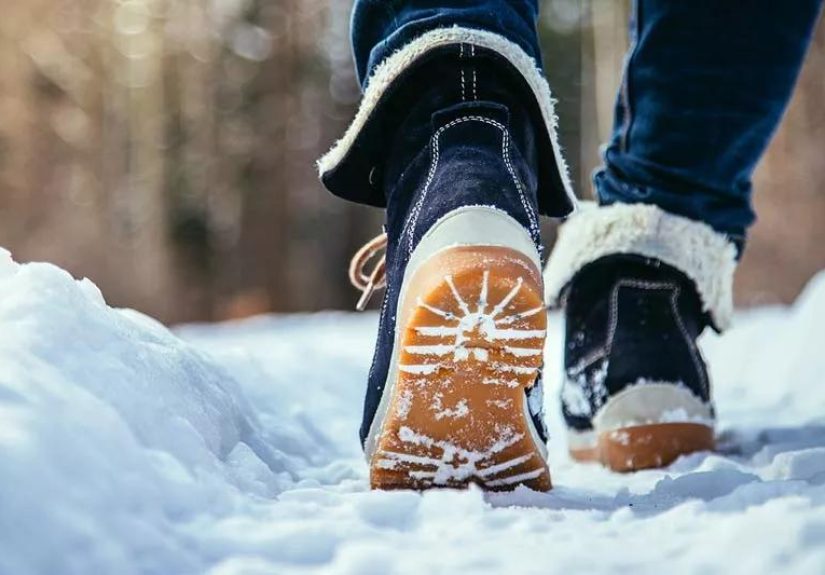
The best winter walking outfit starts at your feet. Wear insulated, water-resistant boots with deep tread and stable soles. Low heels are better than tall ones, and smooth-bottom shoes are basically an invitation to gravity. If you regularly walk on packed snow or ice, traction devices such as ice cleats can provide extra grip.
Dress in layers so you can stay warm without overheating. A moisture-wicking base layer, an insulating middle layer, and a wind- and water-resistant outer layer usually work well. Avoid getting sweaty if you can help it, because damp clothing pulls heat away from your body faster. Cover exposed skin with gloves or mittens, a hat, and a scarf or neck gaiter. Your ears, fingers, toes, nose, and cheeks are not fans of freezing wind.
How To Walk in Snow Without Wiping Out
Use the “penguin walk”
Yes, it sounds silly. Yes, it works. When surfaces are slick, take short, slow, flat-footed steps and keep your center of gravity over your feet. Slightly point your feet outward and keep your knees loose. This reduces the chance of your foot sliding forward faster than your dignity can keep up.
Why does this help? Long strides shift your weight between feet and make it easier to slip. Short steps keep your body more centered and stable. Think less runway model, more cautious penguin who has seen things.
Keep your hands free
Do not walk with your hands in your pockets on icy ground. Your arms help you balance, and if you do slip, you will want the ability to react. A backpack or crossbody bag is often better than carrying multiple items in your hands. If you must carry something, keep it light and balanced.
Look ahead, not just down
You should watch your footing, but do not stare only at your shoes. Scan several steps ahead for darker patches, slushy areas, ridges of packed snow, curb edges, and transitions from pavement to tile or concrete. Outdoor surfaces can be slick, but so can entry mats, polished indoor floors, and stair landings after snow gets tracked inside.
Use handrails whenever they are available
Stairs, ramps, and sloped walkways are prime winter hazard zones. Hold the handrail from start to finish, not halfway through when you already feel like you are in trouble. If there is an elevator available and the stairs are icy or wet, choosing the elevator is not laziness. It is strategy.
Step carefully getting in and out of vehicles
One overlooked winter hazard is the moment you step out of a car onto a surface you cannot fully see. Test the ground before committing your full weight. The same goes for stepping off buses, curbs hidden by snow, and driveway edges where plows leave uneven piles.
The Biggest Winter Walking Hazards To Watch For
Black ice
Black ice is one of the nastiest winter surprises because it can look like plain wet pavement. It often forms in shaded areas, on bridges, on steps, near gutters, and anywhere meltwater refreezes. If the surface looks suspiciously glossy or darker than the surrounding pavement, assume it is slick and adjust immediately.
Snow-covered obstacles
Snow can hide curbs, cracks, uneven pavement, tree roots, utility covers, and potholes. A fluffy-looking path may have all the charm of a trapdoor. Step carefully, especially near the edges of sidewalks and parking lots.
Overhead dangers
Winter hazards are not only underfoot. Icicles, roof ice, heavy snow sliding from awnings, and branches weighed down by ice can all fall without warning. Avoid walking directly under building edges or trees after a storm or during a thaw.
Downed power lines
After ice storms and heavy snow, damaged or fallen power lines can be deadly. Stay far away from any downed wire or anything touching it. Do not step over it, do not go near puddles around it, and do not assume it is harmless because it looks quiet. Quiet is not the same as safe.
Traffic and poor visibility
Winter means less daylight, more snowbanks near intersections, foggy glasses, and drivers dealing with slippery roads and longer stopping distances. If you are walking near traffic, wear bright or reflective gear when it is dark or snowing. Make eye contact with drivers before crossing. Never assume a car can stop quickly on slush or ice just because it legally should.
How To Stay Warm Without Overdoing It
There is a weird winter trap where people are either underdressed and freezing or overdressed, sweating, and accidentally making themselves colder. The goal is to stay warm and dry. Use layers you can adjust. If you are walking fast or trudging through deeper snow, you may heat up quickly. Open a zipper or remove one layer before you get sweaty enough to soak your clothes.
Warm socks matter. So do dry socks. Wet feet lose heat fast and make walking more uncomfortable and less stable. If you are commuting or spending extended time outdoors, carrying a spare pair of socks is not overkill. It is elite winter behavior.
Hydration matters too. Cold weather can trick you into feeling less thirsty, but your body still needs fluids. Warm, nonalcoholic drinks can help after you come back inside. Alcohol may feel cozy for about five theatrical minutes, but it is not a winter safety plan.
Signs You Should Go Inside Immediately
Frostbite warning signs
Watch for numbness, tingling, stinging, unusual paleness, hard or waxy-looking skin, or skin that turns red and then pale. Fingers, toes, ears, nose, and cheeks are common trouble spots. If you suspect frostbite, get indoors and warm the area gently. Do not rub it, do not massage it, and do not keep walking on frostbitten feet unless you absolutely have to.
Hypothermia warning signs
Shivering is often an early clue, but more serious signs can include confusion, slurred speech, drowsiness, clumsiness, fumbling hands, and trouble walking. That is not a “walk it off” situation. Get to warmth right away and seek medical help if symptoms are significant or worsening.
Winter Walking Safety for Kids, Older Adults, and Anyone Recovering From Injury
Some people need extra caution in winter, including children, older adults, and anyone with balance problems, joint pain, recent surgery, or limited mobility. For these walkers, traction matters even more, and so does route choice. Sidewalks with handrails, flatter terrain, and frequent indoor warm-up options are worth prioritizing.
Kids need gear that keeps them warm but does not block their vision or hearing. Scarves should not cover their eyes, and hoods should not make them oblivious to traffic. Older adults may benefit from supportive winter boots, walking poles where appropriate, and slower pacing. There is no prize for pretending icy steps are not icy.
What To Do If You Start To Slip
If you feel yourself slipping, try not to stiffen like a frozen statue. Bend slightly, keep your knees loose, and try to regain your balance by widening your stance. If a fall seems unavoidable, protect your head and avoid reaching straight back with an outstretched hand, which can lead to wrist injuries. Falling is never ideal, but falling slightly less dramatically is still a win.
After a fall, take a moment before jumping up. Check for pain, dizziness, or difficulty putting weight on a limb. Winter falls can bruise pride, but they can also cause sprains, fractures, and head injuries. If something feels off, get help.
Real-World Winter Walking Experiences and Lessons
Anyone who has spent a real winter outdoors learns quickly that snow does not create one single walking condition. It creates a rotating cast of troublemakers. Fresh powder is different from wet slush. Packed snow behaves differently from refrozen sidewalks. A cold sunny morning can feel manageable until you hit the shady patch behind a building that has been icy since Tuesday and will probably remain icy until spring decides to answer your calls.
One of the most common experiences is the false sense of confidence that comes right after the first few steps. You leave home, the driveway seems fine, and you start thinking, “This isn’t bad at all.” Then you reach the apartment stairwell, the grocery store parking lot, or the smooth concrete outside an office entrance and discover that the real danger is not the obvious snow. It is the nearly invisible layer of ice waiting where people least expect it.
Commuters know this lesson well. The walk from a warm car to a building can be more dangerous than the long walk down the block because parking lots collect meltwater, tire-packed slush, and hidden ridges of ice. Many people slip not on the big snowy stretch, but in the last twenty feet, when they are mentally already inside and thinking about coffee, email, or lunch. Winter punishes daydreaming.
There is also the classic bus stop experience. You stand on what looks like compact snow, shift your weight once, and realize you are balancing on slick ice polished by dozens of boots. Suddenly your backpack feels heavier, your gloves feel clumsier, and you become deeply interested in any nearby pole or railing. That moment teaches an important winter truth: stable-looking ground and actually stable ground are not the same thing.
Dog walkers learn another version of this lesson. A cheerful dog pulling toward a squirrel turns a normal sidewalk into a physics exam. Deep snow near curbs can hide holes, salted patches can give way to slush, and leashes can yank balance sideways at exactly the wrong moment. Winter walking with pets is often less “peaceful morning stroll” and more “low-speed tactical operation.”
Parents walking with children see winter hazards from yet another angle. Kids love snowbanks, puddles, shortcuts, and every surface adults instinctively avoid. A path that feels mildly inconvenient to a grown-up may look like a playground to a child in puffy boots. That is why winter walking with kids is part travel and part negotiation. Slow down, hold hands near traffic, and expect surprise detours toward the deepest snow available.
Older adults often describe winter walking as exhausting not only because of the physical effort, but because of the constant mental calculation. Every step requires attention. Every curb needs testing. Every shaded patch raises suspicion. That can be frustrating, but it is also smart. Caution in winter is not weakness. It is experience wearing sensible boots.
The most useful lesson from all these winter walking experiences is simple: the people who stay safest are rarely the fastest or boldest. They are the ones who assume conditions can change block by block, keep their hands free, choose the treated path, use handrails without apology, and accept that waddling like a penguin for two minutes is much better than limping like a hero for two weeks.
Conclusion
Learning how to walk in snow and avoid winter hazards is really about respecting conditions that can change in seconds. Wear the right boots, dress in layers, take short careful steps, use handrails, keep your hands free, stay visible, and assume suspicious surfaces are guilty until proven innocent. Add awareness of frostbite, hypothermia, traffic, overhead ice, and downed power lines, and you are already far ahead of most people hustling across a slippery sidewalk with coffee in one hand and confidence in the other.
Winter walking does not have to be miserable, and it definitely does not have to end in a fall. Move slower, plan smarter, and let the penguins be your seasonal role models. They may not have road salt, but they understand traction better than the rest of us.