Table of Contents >> Show >> Hide
- Why Blackberries Spoil So Fast
- The Golden Rule: Do Not Wash Blackberries Until You Need Them
- How to Wash Blackberries the Right Way
- Should You Use a Vinegar Wash?
- How to Store Blackberries So They Last Longer
- How Long Do Blackberries Last?
- Common Mistakes That Make Blackberries Go Bad Faster
- What to Do If Your Blackberries Are Already Soft
- Can You Freeze Blackberries?
- The Best Simple Routine for Maximum Shelf Life
- Experience-Based Notes: What Actually Happens in Real Kitchens
- Final Thoughts
- SEO Tags
Blackberries are delicious little drama queens. Treat them gently, keep them cool, and they reward you with juicy, glossy sweetness. Ignore them on the counter for too long, trap them in moisture, or wash them like you are hosing down a muddy truck, and suddenly your beautiful berries turn into a science project.
If you have ever opened a carton of blackberries and found one fuzzy berry trying to ruin everyone else’s day, you are not alone. Blackberries are one of the most delicate fruits in the refrigerator. They bruise easily, hold moisture in all their tiny nooks, and spoil faster than sturdier produce. The good news is that the right washing method can help you enjoy them safely without shortening their life more than necessary.
This guide explains exactly how to wash blackberries so they last, when to wash them, how to dry them, how to store them, and which common mistakes send them straight from snack to sadness. If your goal is fresh, firm berries that survive beyond “I bought these yesterday,” you are in the right place.
Why Blackberries Spoil So Fast
Blackberries are fragile by nature. Their skin is thin, their structure is tender, and their clustered shape gives moisture plenty of places to hide. That means three things work against them almost immediately: bruising, trapped moisture, and mold spread.
One damaged berry can quickly affect the rest of the container. A little leakage becomes a lot of stickiness. A little softness becomes collapse. A tiny patch of mold becomes the berry version of office gossip: it travels fast. That is why proper handling matters before you even think about rinsing them.
If you want blackberries to last, your strategy is simple: reduce extra moisture, remove damaged fruit early, and keep the berries cold without crushing them. Washing is part of that plan, but timing is everything.
The Golden Rule: Do Not Wash Blackberries Until You Need Them
Here is the big rule most people need to hear: if you want blackberries to last longer, do not wash them the minute you get home. It feels responsible. It looks organized. It is also usually the reason berries go downhill faster.
Why? Because water left on the fruit encourages faster spoilage. Even a light rinse adds surface moisture, and blackberries are not exactly built like bowling balls. They are more like tiny fruit chandeliers. Water gets caught between drupelets, settles into crevices, and creates a damp environment that mold absolutely loves.
So, if you are meal-prepping for the week, the best move is usually to store blackberries unwashed and clean only the portion you plan to eat that day. If you truly need to wash them ahead of time, the berries must be dried very thoroughly before they go back into the refrigerator. “Mostly dry” is not the goal. “No obvious moisture at all” is the goal.
How to Wash Blackberries the Right Way
If you are ready to eat them now, or you are prepping them for the freezer or a recipe, here is the safest and gentlest way to wash blackberries without turning them into purple confetti.
1. Sort the berries first
Before any water touches the fruit, pour the blackberries onto a clean plate, tray, or paper towel and inspect them. Remove any berries that are moldy, leaking badly, badly bruised, or shriveled. Also remove stems, leaves, and obvious debris.
This step matters more than people think. Washing a spoiled berry with good berries does not magically make it a good berry. It just gives the problem a bath.
2. Use a colander or fine-mesh strainer
Place the berries in a colander or fine-mesh strainer. Do not jam them in tightly. Blackberries hate being stacked and squeezed. Give them a little breathing room.
3. Rinse with cool running water
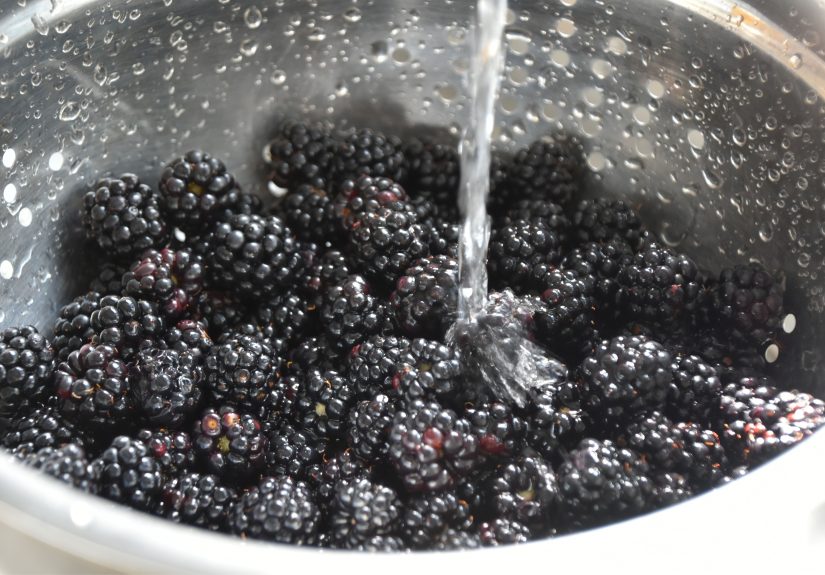
Run cool water gently over the berries for several seconds while lightly moving the container with your hands. The goal is a gentle rinse, not a berry jacuzzi. You want to wash away dirt and surface residues without soaking the fruit for an extended period.
If a few berries need extra attention, use your fingertips very lightly. No scrubbing. No pressing. No heroic turbulence.
4. Skip soap, bleach, and commercial produce wash
Blackberries should be washed with water, not dish soap, not hand soap, not bleach, and not whatever dramatic potion the internet invented this week. Soap can leave residues that are not meant to be eaten, and harsh cleaning products are absolutely not appropriate for delicate fruit.
If your berries look normal and fresh, cool running water is enough for home use. That is the standard method for produce safety at home.
5. Drain immediately
Once rinsed, let excess water drain right away. Do not let the berries sit in a pool of water in the sink. And do not leave the colander parked there while you answer one email, then another, then somehow end up reorganizing your spice drawer.
6. Dry them very thoroughly
This is the make-or-break step. Spread the berries in a single layer on paper towels or a clean kitchen towel. Gently pat them dry with another towel. Then let them air-dry for a few minutes if needed.
If you are washing blackberries to store for later, thorough drying is non-negotiable. Damp berries may look innocent for a few hours, but they tend to unravel quickly in the refrigerator.
Should You Use a Vinegar Wash?
You have probably seen the popular vinegar trick online. The idea is usually to soak berries briefly in a diluted vinegar solution and then rinse them with clean water. Some home cooks swear it helps. Some produce guides note that vinegar may reduce some bacterial contamination. But there is an important catch: it can affect flavor and texture, and soaking delicate fruit can shorten quality if you are not careful.
For blackberries, a plain cool-water rinse is usually the simplest and safest everyday method. If you choose to use a diluted vinegar rinse anyway, keep it brief, rinse the berries again with clean water, and dry them exceptionally well. Otherwise, you may win the battle against grime and lose the war against mush.
In other words, vinegar is optional. Dryness is essential.
How to Store Blackberries So They Last Longer
Once your blackberries are home, storage becomes the real game. Washing matters, but what happens after washing matters even more.
Store unwashed berries whenever possible
If you are not eating them right away, keep them unwashed. This simple decision often buys you more time than any fancy trick.
Use a shallow container
Blackberries do better when they are spread out, not piled deep. A shallow container reduces crushing and improves airflow. The original clamshell is often perfectly fine if the berries are in good shape and the container is clean and ventilated.
Keep them cold
Refrigerate blackberries as soon as possible. Heat is not their friend. The longer they sit at room temperature, the faster quality drops. If you bought them at a farmers market or grocery store and have errands to run, try not to let them ride around in a warm car like tiny edible passengers with no survival skills.
Use paper towels if the berries seem damp
If the berries or container have visible moisture, line the bottom with a paper towel or transfer the fruit carefully to a shallow container lined with paper towel. This helps absorb extra moisture that can speed up mold growth.
Do not seal them airtight
Blackberries need some airflow. A tightly sealed container can trap moisture, which is exactly what you are trying to avoid. Think breathable, not swampy.
Check them daily
It takes less than a minute to remove a soft or moldy berry before it affects the rest. That tiny daily check can save the container.
How Long Do Blackberries Last?
Blackberries are not marathon fruit. They are sprint fruit. At peak quality, many blackberries are best eaten within about one to three days, especially if they were very ripe when purchased. With excellent starting quality and careful storage, they may last a bit longer.
The real answer depends on how fresh they were at the store, how warm they got on the trip home, whether any berries were already damaged, and whether moisture collected in the package. That is why two cartons bought on the same day can behave like completely different life forms.
If your blackberries are glossy, firm, and dry, you have time. If they are already soft, dull, or damp, the clock is moving faster than you think.
Common Mistakes That Make Blackberries Go Bad Faster
- Washing all of them at once for the whole week. This is the classic mistake. It feels efficient, but often cuts shelf life.
- Soaking them too long. Blackberries are delicate. A long soak encourages waterlogging and softness.
- Putting wet berries back in the fridge. Moisture is the villain in this story.
- Ignoring one moldy berry. That one berry is not “mostly fine.” It is a warning label.
- Using a deep bowl. The berries on the bottom get crushed, leak juice, and start a chain reaction.
- Leaving them on the counter for too long. Room temperature is great for avocados that need encouragement. Blackberries do not need encouragement. They need refrigeration.
What to Do If Your Blackberries Are Already Soft
Soft blackberries are not always a lost cause. If they are not moldy and do not smell fermented, you can still use them quickly in smart ways:
- Spoon them over yogurt or oatmeal
- Blend them into smoothies
- Cook them into a quick sauce for pancakes or cheesecake
- Fold them into muffins or cobbler
- Freeze them for later baking
The trick is speed. Once blackberries soften noticeably, your best strategy is to use them now, not hold a team meeting about their future.
Can You Freeze Blackberries?
Absolutely. In fact, freezing is one of the best ways to save blackberries that you will not eat in time. Wash them gently, dry them very well, and spread them in a single layer on a tray or baking sheet. Freeze until firm, then transfer them to a freezer-safe bag or container.
Freezing them first in a single layer helps keep them from clumping into one giant purple iceberg. Later, you can grab a handful for smoothies, sauces, baked goods, or breakfast without chiseling away at a frozen berry brick.
The Best Simple Routine for Maximum Shelf Life
If you want the shortest answer possible, here it is:
- Bring blackberries home and refrigerate them promptly.
- Sort out any damaged berries right away.
- Store them unwashed in a shallow, breathable container.
- Use a paper towel if the berries seem damp.
- Wash only the portion you plan to eat.
- Rinse gently under cool water and dry thoroughly.
That is the system. No magic powder. No expensive gadget. No berry meditation circle. Just smart timing, gentle washing, and dryness.
Experience-Based Notes: What Actually Happens in Real Kitchens
In real life, people usually learn blackberry care the hard way. Someone buys two beautiful cartons with ambitious plans: smoothies, breakfast bowls, maybe a virtuous afternoon snack. The berries go into the refrigerator, then life happens. One busy workday turns into two, and by the time the carton is opened again, there is a soft berry in one corner and everyone starts negotiating with reality. “Maybe they are still okay?” Sometimes yes. Sometimes the berries have quietly entered their villain era.
One of the most common experiences is the “I washed everything at once because I was trying to be organized” moment. On paper, this sounds like a good system. In practice, blackberries often come out of that routine a little too wet, a little too bruised, and a lot shorter-lived. People mean well. The berries do not care. They simply respond to moisture like tiny fruit pessimists and start breaking down sooner.
Another familiar scenario happens with grocery-store clamshells. You get home, notice a little condensation, and tell yourself you will deal with it later. Later is often when one berry has leaked juice at the bottom and the rest are starting to soften from the moisture trapped underneath. A quick transfer to a shallow container with a paper towel can make a surprising difference. It is not glamorous, but neither is explaining to yourself why eight dollars’ worth of berries now look like a jam preview.
Farmers market blackberries bring their own lesson. They often taste amazing because they are ripe, fragrant, and local. They can also be even more perishable. People sometimes assume fresher means tougher. It usually means the opposite. Beautiful ripe berries need faster attention, colder storage, and less countertop admiration. They are for eating soon, not for decorating the refrigerator with good intentions.
Families also discover that blackberries last better when handled in smaller portions. Instead of passing around the whole container and letting everyone dig in repeatedly, it helps to wash only what will be eaten right then. Less handling means less bruising. Less bruising means less juice leakage. Less leakage means fewer chances for the entire batch to go downhill. Blackberry care, it turns out, is often just a series of small, boring decisions that save the fruit.
And then there is the freezer lesson, which many home cooks learn after one too many disappointing cartons. If the berries are looking good but the week is getting away from you, freezing them is not surrender. It is a rescue mission. A tray, a little space in the freezer, and a labeled bag can turn “Oops, we are not going to finish these” into future cobbler, smoothie, or sauce. That is a much happier ending than discovering mold the night before trash pickup.
The overall experience is pretty consistent: blackberries reward quick sorting, gentle washing, thorough drying, and realistic timing. They are not difficult, exactly. They are just unforgiving. Once you accept that, caring for them gets much easier.
Final Thoughts
If you want blackberries to last, the secret is not aggressive washing. It is smart washing. Keep them unwashed until you need them, rinse gently under cool running water, dry them thoroughly, and store them cold in a shallow container with good airflow.
That approach gives you the best balance of freshness, food safety, and shelf life. In other words, you get berries that are clean enough to eat, dry enough to last, and far less likely to turn into a fuzzy refrigerator disappointment.
Blackberries may be delicate, but they are not impossible. Handle them like the fragile little treasures they are, and they will behave a lot better. Handle them like marbles in a sink, and well, enjoy your emergency smoothie.