Table of Contents >> Show >> Hide
- Why Scarf Styling Changes With the Weather
- Look 1: The Light Wrap for Mild Winter Days
- Look 2: The Wrapped Knot for Real Cold
- Look 3: The Oversized Scarf Wrap for Harsh Weather
- Common Winter Scarf Mistakes to Avoid
- How to Make These Scarf Looks Feel Personal
- Real-Life Experiences: What Wearing a Winter Scarf Actually Feels Like
- Final Takeaway
- SEO Tags
Winter scarves have a funny reputation. On one hand, they are practical heroes that keep your neck from turning into an ice sculpture. On the other, they are often treated like an afterthought: grabbed in a panic, wrapped once, and sent out into the world like a last-minute apology to cold weather. That is a tragedy. A scarf can do more than keep you warm. It can sharpen a coat, soften a blazer, brighten a sea of black wool, and rescue a tired winter outfit from looking like every other person in line for coffee.
If you have ever stood in front of the mirror wondering why your scarf makes you look either swallowed by fabric or like you lost a fight with a curtain, the fix is not buying ten more scarves. The real secret is knowing how to match the scarf to the weather, the outfit, and the mood. A sleek scarf for a polished city look is different from the oversized wrap that gets you through biting wind. Likewise, a decorative drape for a mild winter afternoon should not be doing the same job as a bulky commuter scarf in sleet.
That is why the smartest way to wear a winter scarf is not by memorizing one “perfect” knot. It is by building a few reliable looks you can repeat all season long. Below, you will find three chic scarf outfits for different winter conditions, plus the styling logic behind each one. Think of it as your cold-weather cheat sheet: less fuss, more elegance, and far fewer moments where your scarf is trying to strangle you while you cross the street.
Why Scarf Styling Changes With the Weather
Before we get into the outfits, it helps to understand one simple truth: not all winter weather feels the same, so not all scarf styling should look the same. On a cool but manageable day, you want polish and movement. On a truly cold day, you want insulation without looking overly bundled. On a windy, miserable day, you want coverage and structure, because fashion is lovely, but so is keeping your face attached.
Fabric matters here. Softer lightweight scarves, including finer wool blends and merino styles, work well for mild or active winter days because they are easier to layer and less likely to feel stuffy indoors. Cashmere and alpaca-blend scarves look especially elevated and cozy for dressier outfits. Oversized wool or blanket scarves are the heavy hitters when the forecast looks rude. The bigger the scarf, the more options you have: wrap it, drape it, wear it like a hood, or create that expensive-looking volume fashion editors adore every winter.
Length and width matter, too. A long scarf gives you styling options, while a wide scarf offers drama and warmth. If your coat already has a strong shape, like a structured blazer coat or a double-breasted wool overcoat, choose a scarf with clean lines so the outfit does not become bulky. If your outerwear is minimal, that is your cue to let the scarf do a little acting.
Look 1: The Light Wrap for Mild Winter Days
Best for: 40s to 50s, dry weather, city errands, lunch dates, casual office days
The first chic winter scarf look is for the kind of day that is technically cold, but not dramatic enough to justify dressing like you are trekking through a mountain pass. This is where the light wrap shines. Choose a medium-length scarf in cashmere, fine wool, or a soft blend with a fluid drape. You want warmth, yes, but you also want movement. This look is less “survival blanket” and more “I casually understand proportions.”
Start with a neutral base: straight-leg jeans or tailored trousers, a fitted knit, ankle boots, and a wool coat or trench-style winter coat. Now drape the scarf evenly around your neck and let both ends fall down the front. That sounds simple because it is. Chic styling often lives in tiny details, not circus tricks. The key is to keep the scarf flat and smooth rather than twisted into a rope. You want it to lengthen the silhouette, not puff it up.
This is also the easiest look for adding color. If your winter wardrobe leans on camel, charcoal, navy, black, or cream, a scarf in burgundy, forest green, bright red, soft blue, or plaid instantly wakes everything up. A colorful scarf can do the work of an entire personality shift without requiring you to buy a neon coat you will regret by February.
For extra polish, try the one-shoulder drape. Put the scarf around your neck, then toss one end behind your shoulder while leaving the other end in front. It looks intentional, editorial, and mildly French, which is a dangerous combination because it can make you feel superior in line at the pharmacy.
Style formula: tailored coat + knit sweater + straight-leg denim or trousers + leather boots + softly draped scarf
Why it works: This look creates vertical lines, keeps your outfit sleek, and gives you warmth without overwhelming your frame. It is ideal when you are moving between chilly sidewalks and overheated interiors.
Look 2: The Wrapped Knot for Real Cold
Best for: cold commutes, office mornings, weekend markets, temperatures near freezing
Now we are entering true winter territory. Not blizzard territory, but the kind of cold where you understand why people become emotionally attached to soup. For this weather, you need a scarf style that insulates while still looking put together. Enter the wrapped knot.
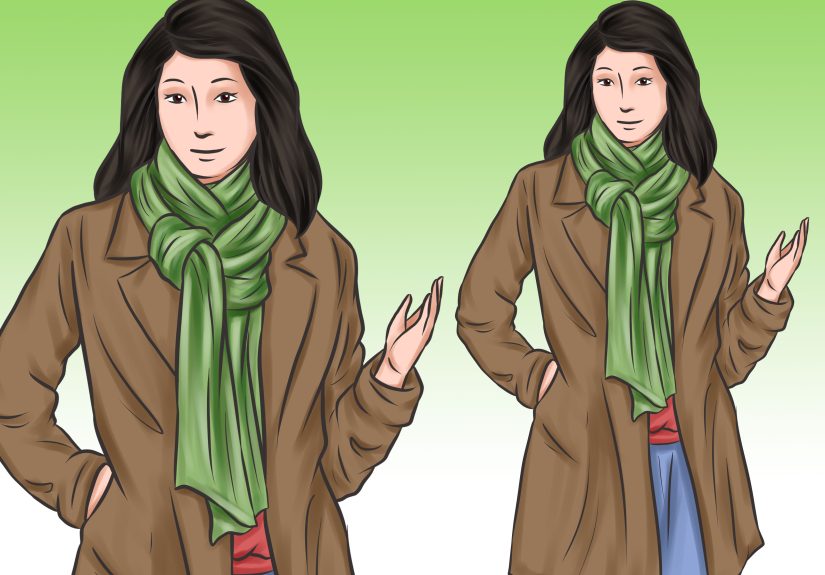
Use a longer scarf in wool, cashmere, or an alpaca blend. Fold the scarf in half lengthwise, place it around the back of your neck, and pull the loose ends through the loop. This classic move works because it locks the scarf in place, traps warmth close to the neck, and pairs beautifully with tailored outerwear. It is a classic for a reason. Some styling tricks go out of fashion. Being warm and looking expensive does not.
To keep it chic, do not yank the knot too tight. Leave a little softness and volume near the collarbone so the scarf feels relaxed instead of militaristic. Pair it with a long wool coat, a turtleneck, slim trousers or dark denim, and knee-high boots or loafers with socks if the day is cold but not slushy. If your coat is minimalist, this is a great place to introduce texture through ribbing, fringe, or a subtle check pattern.
This is also the most office-friendly winter scarf outfit. A looped scarf under a structured coat looks sharp while still being practical. When you get indoors, loosen it slightly and let it rest around your neck instead of removing it immediately. That small styling move keeps the outfit cohesive and saves you from carrying a scarf around like a confused extra in a holiday movie.
Want the outfit to look more modern? Go tonal. Pair a camel coat with a tan scarf, or a gray coat with a charcoal scarf. Monochrome winter dressing looks expensive because the eye reads it as deliberate. Matching does not have to be perfect. In fact, slightly different shades often look richer than exact twins.
Style formula: wool coat + turtleneck + slim trousers or dark denim + polished boots + looped scarf knot
Why it works: The scarf becomes functional insulation while still adding softness and dimension. It is secure, flattering, and especially good for windy commutes.
Look 3: The Oversized Scarf Wrap for Harsh Weather
Best for: wind, snow flurries, travel days, outdoor events, bitter cold
This is the look for when winter decides to show off. If the air hurts your face, your scarf needs to do more than accessorize. It needs to perform. The oversized scarf wrap is the answer.
Choose a blanket scarf or wide wool scarf with enough size to cover your neck and part of your chest. Start by wrapping it once around your neck, then spread the remaining fabric so it covers the upper body a bit like a shawl. If the weather is especially brutal, pull one side higher over your chin or even over your head for extra protection. This trick looks fashion-forward and practical, which is one of the most satisfying combinations in winter dressing.
The best outfit base for this look is streamlined. Wear leggings with tall boots and a long coat, or straight jeans with a fitted sweater and a clean overcoat. Because the scarf is voluminous, the rest of the outfit should stay simple. Let the scarf be the drama. It earned the role.
Texture plays a major role here. A brushed wool scarf, a thick fringe, or a soft oversized plaid adds visual interest to an otherwise plain winter uniform. If you travel often, this style is especially useful. An oversized scarf can function as an in-flight blanket, a shoulder wrap in a freezing restaurant, or an emergency hood when the weather turns ugly faster than expected.
If you worry that a big scarf will swallow you, define the rest of the silhouette. Keep your coat open enough to show a column of color underneath, or choose boots with a slight heel to balance the volume on top. A huge scarf looks intentional when the outfit beneath it has shape.
Style formula: long clean coat + fitted knit + straight jeans or leggings + boots + oversized wrapped scarf
Why it works: It offers serious warmth, protects against wind, and gives even the simplest outfit that cozy, fashion-editor-on-the-go effect.
Common Winter Scarf Mistakes to Avoid
1. Picking a scarf that fights your coat
A thick bulky scarf with a bulky puffer can sometimes work, but only if the colors and proportions are controlled. Otherwise, it becomes a lot of fabric having a loud disagreement.
2. Ignoring indoor comfort
If you spend all day moving between outdoors and heated interiors, choose a scarf you can loosen and rest on your shoulders. A beautiful scarf that turns into a portable sauna by noon is not helping.
3. Using decorative scarves for brutal weather
A slim silk scarf can look gorgeous, but it is not going to save you in a sharp winter wind. Style and function should cooperate, not ghost each other.
4. Forgetting color balance
A scarf can either blend for elegance or contrast for energy. Both work. Randomness does not. Decide whether the scarf is your quiet supporting actor or the star.
How to Make These Scarf Looks Feel Personal
The best winter scarf outfit is not always the trendiest one. It is the one that fits your real life. If you walk to work, prioritize warmth and secure knots. If you drive everywhere, go lighter and more decorative. If you wear mostly black, use scarves for color. If your closet is already colorful, try tonal neutrals and interesting textures instead.
You can also use scarves to shift the tone of the same coat. A camel coat with a cream cashmere scarf feels classic. The same coat with a red plaid blanket scarf feels playful. The same coat with a charcoal narrow scarf suddenly looks sharp and urban. One coat, three moods, zero need for a shopping spiral at midnight.
Real-Life Experiences: What Wearing a Winter Scarf Actually Feels Like
There is a big difference between a scarf that looks good in a photo and a scarf that works in real life. That difference usually appears around 8:15 in the morning, when the sidewalk is cold, your coffee is too hot, and the wind comes at your face like it has a personal issue. A good scarf changes that entire experience. Instead of bracing against the weather, you feel protected. You stand a little taller. Your coat sits better. Even your pace changes. You stop fussing and start moving.
On mild winter days, the experience is more about polish than survival. A softly draped scarf makes a basic outfit feel finished, especially when the rest of your look is simple. A sweater, jeans, boots, and coat can feel ordinary until the scarf adds color or texture. Suddenly, the outfit looks considered. It is the sort of detail people notice without always being able to explain why. They just know you look pulled together, and honestly, that is a lovely little form of power.
For commuters, scarves become part of a daily ritual. Wrap, tuck, check the mirror, grab the bag, head out. Over time, you realize which scarf styles stay in place, which fabrics itch, and which oversized scarf feels like carrying your own central heating system. The most practical scarf is often the one you reach for without thinking. It works with multiple coats, does not slip every five seconds, and still looks presentable when you pull it off indoors.
Travel creates another kind of scarf experience. Airports, train stations, and long car rides all reward the oversized winter scarf. It can become a neck wrap, shoulder blanket, pillow substitute, or emergency layer in a freezing terminal. Many people discover on travel days that the scarf they bought for style ends up earning its keep through pure usefulness. That is when an accessory becomes part of your routine instead of just part of your outfit.
Then there are the emotional experiences attached to winter scarves. Certain scarves become tied to seasons of life: the plaid one worn on holiday trips, the black cashmere one that made every work outfit feel more adult, the oversized cream scarf that appeared in every photo one particularly cold year. Winter accessories often carry memory because they are with you in repeated moments: the morning walk, the school run, the coffee stop, the evening dinner when you drape it over your shoulders and keep wearing it because it still looks elegant.
That is the real charm of a winter scarf. It is useful, yes, but it also creates atmosphere. It softens harsh weather. It adds a feeling of comfort before you even get where you are going. And when the scarf is styled well, it does not just protect you from the season. It becomes part of how you enjoy it.
Final Takeaway
If you want to know how to wear a winter scarf and actually look chic doing it, the answer is simpler than it seems: match the scarf to the weather, keep the outfit silhouette in mind, and let the scarf play a clear role. On mild days, drape it lightly. On colder days, loop it with intention. In harsh weather, go oversized and let it wrap like it means business.
A great winter scarf is not just an accessory. It is a styling tool, a comfort layer, and sometimes the only thing standing between you and a very cranky walk home. Use it wisely, and winter outfits stop feeling repetitive. They start feeling smart, elegant, and a little bit luxurious, even when the forecast is trying to humble everyone.