Table of Contents >> Show >> Hide
- What Is a Petition, Really?
- 13 Steps to Writing a Petition That Actually Gets Results
- Step 1: Get Crystal Clear on Your Goal
- Step 2: Identify the Right Decision Maker
- Step 3: Do Your Homework
- Step 4: Choose a Strong, Shareable Title
- Step 5: Write a Clear Opening Statement
- Step 6: State Your Specific Ask
- Step 7: Explain Why It Matters (And to Whom)
- Step 8: Keep It Focused and Readable
- Step 9: Design the Signature Section
- Step 10: Add Pictures and Visuals
- Step 11: Choose Online, Offline, or Both
- Step 12: Share and Collect Signatures Strategically
- Step 13: Deliver the Petition and Follow Up
- Legal and Practical Considerations
- Common Mistakes When Writing a Petition
- Real-World Experiences and Lessons From Writing Petitions
- Conclusion: Your Petition Is a Starting Line, Not a Finish Line
If you’ve ever shouted “There ought to be a law!” at your phone, your boss, or the city council livestream, congratulations you’re already halfway to starting a petition. A good petition is simply a written request that clearly explains what needs to change, who can change it, and why other people should care enough to sign their name.
From community issues (like saving a park) to national causes (like protecting voting rights), petitions are one of the easiest ways to turn individual frustration into collective pressure. Platforms such as Change.org show that well-written petitions with a strong story and a clear decision maker can build huge momentum and even win major policy changes.
In this guide, you’ll learn how to write a petition in 13 practical steps, plus how to add pictures, collect signatures online and offline, and avoid common mistakes that sink good causes. Think of this as the wikiHow-style walkthrough you wish you’d had the first time you tried to “fix everything” with a Google Doc and a dream.
What Is a Petition, Really?
A petition is a written request signed by multiple people urging a specific decision maker to take a specific action. Unlike a ranty social media post, a strong petition:
- Names a clear goal (“Install speed bumps on Maple Street”).
- Targets a specific decision maker (“City of Springfield Traffic Department”).
- Uses facts, personal stories, and a concise demand to persuade.
- Includes a way for supporters to add their names and contact info.
Whether you’re using an online platform or collecting signatures with a clipboard, the fundamentals of how to write a petition stay the same.
13 Steps to Writing a Petition That Actually Gets Results
Step 1: Get Crystal Clear on Your Goal
Before you write a single word, decide exactly what you want to achieve. Vague petitions (“Stop bad things”) rarely work. Successful petitions focus on a specific outcome, like:
- “Restore evening bus service on Route 12 after 7 p.m.”
- “Update our company’s parental leave policy to 12 weeks paid leave.”
- “Protect Oakwood Park from commercial development.”
Advocacy groups and petition guides all emphasize this: narrow your ask so the decision maker can say “yes” without rewriting the entire universe.
Step 2: Identify the Right Decision Maker
Next, figure out who actually has the power to fix the problem. This might be:
- A school principal or superintendent
- A city council member or mayor
- A company’s CEO or HR department
- A government agency or committee
Petition guides from groups like the ACLU and grassroots coalitions stress the importance of targeting the real decision maker, not just a famous name. If you’re not sure, call an office, check the organization’s website, or ask a local advocacy group who handles your issue.
Step 3: Do Your Homework
Now do a bit of research so your petition is accurate and credible. Look up:
- Existing policies, laws, or company rules
- Relevant statistics (accident rates, costs, health impacts)
- Past attempts to fix this issue and how they went
Petitions that rely on rumors or half-facts are easy to ignore. Petitions that quote official numbers or agency reports are much harder to brush off. This research also helps you anticipate objections (“We can’t afford it”) and respond to them in your text.
Step 4: Choose a Strong, Shareable Title
Your title is the first thing potential supporters see especially on online platforms. Change.org suggests keeping it short, solution-focused, and easy to understand at a glance. For example:
- Not great: “Our Neighborhood Is Being Destroyed”
- Better: “Stop the Demolition of Historic Maple Row Homes”
- Not great: “Dogs Deserve Better”
- Better: “Allow Dogs in Willow Park from 6–9 p.m.”
Ask yourself: Would my friend understand this title if they saw it in a text message with no context? If not, simplify.
Step 5: Write a Clear Opening Statement
The first one or two sentences should quickly answer three questions:
- What is happening?
- Why is it a problem?
- What needs to change?
For example:
“The city plans to cut evening bus service on Route 12, leaving hospital workers and students without reliable transportation. We’re calling on the City Transit Board to keep Route 12 running until at least 10 p.m.”
Keep it short, direct, and free of insider jargon. Legal petitions (like court filings) have strict formats, but community and online petitions work best when written in plain, everyday language.
Step 6: State Your Specific Ask
After your opening, spell out exactly what you want the decision maker to do. Use clear, action-focused language like:
- “We ask the School Board to reinstate the after-school tutoring program starting this fall.”
- “We urge the company to adopt the following parental leave policy…”
- “We call on the mayor to veto Ordinance 218-24.”
This “ask” section is crucial. Petition templates from advocacy organizations often show it in bold or as a separate paragraph so no one can miss it.
Step 7: Explain Why It Matters (And to Whom)
Now, use the body of your petition to build your case. Combine:
- Facts data about cost, safety, health, or fairness.
- Stories personal experiences from people affected.
- Values appeal to community ideals like safety, equality, or opportunity.
For example, a petition to fix a dangerous intersection might describe a near-accident, then note crash statistics from a traffic study. Advocacy guides emphasize using specific examples over generic statements to make the issue feel urgent and real.
Keep your tone firm but respectful. Remember: you want the decision maker to say “yes,” not dig in out of annoyance.
Step 8: Keep It Focused and Readable
People are more likely to sign a petition they can finish reading before their coffee cools down. Tips from legal and advocacy guides include:
- Stick to one main issue per petition.
- Use short paragraphs and bullet points for complex details.
- Avoid all-caps shouting and long, emotional rants.
If you have multiple related demands (for example, three specific policy changes), present them as a short, numbered list so readers can scan quickly.
Step 9: Design the Signature Section
Every petition needs a way to capture signatures and, ideally, contact information. On paper, that usually means columns for:
- Name (printed)
- Signature
- City or ZIP code
- Email or phone (optional, but helpful for follow-up)
If you’re collecting signatures online, the platform will handle this for you, but you can usually customize what data is required. Remember that each extra field can lower completion rates, so only ask for information you really need.
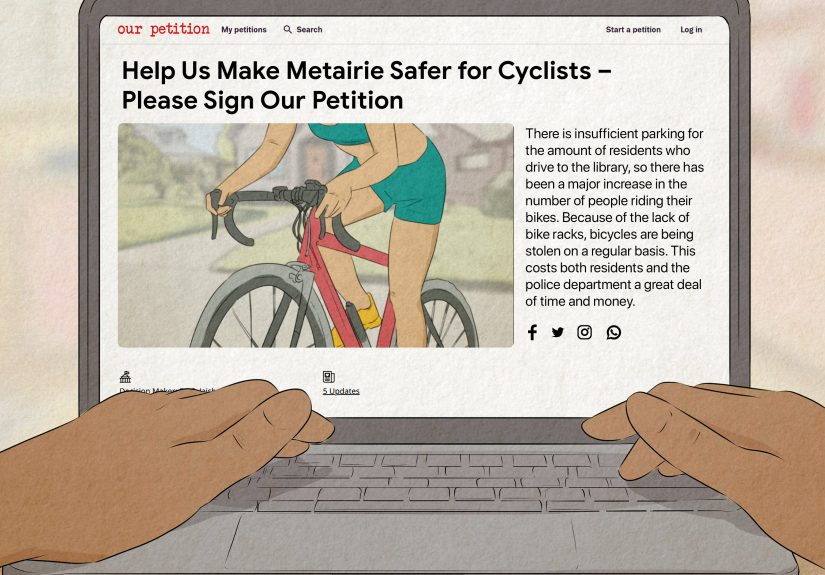
Step 10: Add Pictures and Visuals
Even though signatures do the official talking, images pull people in. Many successful petitions include:
- A clear main image (the park you’re defending, the school building, the affected community)
- Optional supporting photos or infographics in updates or campaign pages
Guides from popular petition platforms recommend using a single strong image rather than a cluttered collage think “one powerful photo” over “digital scrapbook.” If you’re modeling a wikiHow-style article, you might also include step-by-step illustrations showing how to collect signatures, talk to people, or hand-deliver the petition.
Step 11: Choose Online, Offline, or Both
Next, decide how you’ll actually gather signatures:
- Online petitions reach people quickly, are easy to share, and can track progress in real time.
- Paper petitions are great for local issues, events, and face-to-face organizing.
- Hybrid campaigns combine both and can be very powerful.
Platforms like Change.org and other petition tools make it simple to create an online petition and share it via email and social media. For in-person canvassing, organizers suggest clipboards, extra pens, and a simple script so volunteers feel comfortable talking to strangers.
Step 12: Share and Collect Signatures Strategically
Now comes the part where your petition leaves your laptop and meets the world. Effective campaigns typically:
- Start by asking friends, coworkers, and allies to sign and share.
- Use social media posts, stories, and short videos to explain the issue.
- Reach out to community groups, unions, student clubs, or nonprofits that care about the issue.
- Collect signatures at events, meetings, or high-traffic public areas, respecting local rules.
Organizing guides emphasize ongoing follow-up: ask signers to share the petition, invite them to events, and keep them updated on progress. Momentum grows when people feel like part of a living campaign, not just a name on a list.
Step 13: Deliver the Petition and Follow Up
Once you’ve collected a solid number of signatures, plan how you’ll deliver your petition. Options include:
- Hand-delivering printed pages at a council meeting or office visit
- Emailing the petition to the decision maker with a cover letter
- Organizing a small rally or “petition drop-off” with local media present
Many advocacy toolkits recommend turning delivery into a visible event it signals that real people are watching and care about the response. After delivery:
- Update your signers on what happened.
- Thank the decision maker if they respond positively.
- Consider next steps (meetings, public comments, additional actions) if the answer is “no” or “maybe later.”
Legal and Practical Considerations
Most everyday petitions (school, workplace, community, online campaigns) don’t require a lawyer. However, some types like formal legal petitions to a court or government agency have strict formatting and procedural rules. Legal guides stress that these documents must meet specific requirements, be signed under penalty of perjury, and follow court rules.
For public, political petitions (for ballot measures, recalls, or official government petitions), there may also be rules about where you can collect signatures, who can sign, and how many signatures are needed. Civil liberties organizations note that petitioning in public spaces is usually protected as free speech, but local regulations still apply. When in doubt, check your state or local rules or consult an advocacy group.
Common Mistakes When Writing a Petition
Even passionate campaigns can stall if the petition itself misses the mark. Watch out for:
- Vague demands: “Fix the system!” doesn’t tell anyone what to do.
- Too much jargon: Avoid insider legal or technical language unless your audience is experts.
- Overly long text: If your petition reads like a 40-page novel, most people won’t finish it.
- Attacks and insults: It can feel good to vent, but it rarely helps persuade a decision maker.
- Ignoring next steps: Petitions work best as part of a larger strategy (meetings, media, lobbying), not by themselves.
The good news? All of these are fixable with a bit of editing and feedback from a few trusted readers before you launch your petition.
Real-World Experiences and Lessons From Writing Petitions
On paper, the 13 steps above look clean and tidy. In real life, petition campaigns are a little messier and honestly, that’s where the fun (and learning) happens.
Imagine a small group of neighbors who discover that a beloved local park is slated to be turned into a parking lot. They do the basics: figure out that the city planning commission is the key decision maker, write a short petition asking the commission to reject the development plan, and set up an online petition. So far so good.
But the campaign really takes off when they start having conversations. At a Saturday farmers’ market, two volunteers with clipboards and a simple script “Do you have a minute to help save Oakwood Park?” collect hundreds of signatures in one morning. People share their memories of teaching their kids to ride bikes there or walking their dogs at sunrise. Those stories end up in the petition text, giving it more emotional punch and making it feel like a community’s voice rather than a lone complaint.
Another example: a group of employees in a mid-sized company wants better parental leave. Instead of firing off an angry email, they quietly gather information on what similar companies offer, talk with HR about current policies, and then draft a petition that calls for a clear, realistic standard 12 weeks of paid leave for all new parents. They share the petition privately at first, using personal messages rather than mass emails, which helps avoid backlash and builds trust. When they eventually present the petition to leadership, it comes with data, stories from employees, and a respectful, solution-oriented tone. Management may not agree to every detail, but the petition opens the door to serious negotiation.
From campaigns like these, a few experience-based lessons keep showing up:
- Your first draft won’t be perfect and that’s okay. Most strong petitions went through at least one round of edits. Friends and allies can spot jargon, confusing sentences, or missing details that you’ve stopped seeing.
- Personal stories beat abstract outrage. People sign because they feel a connection. A single concrete story a student left stranded when late buses were cut, or a worker forced to return to work days after giving birth often persuades more people than a page of statistics.
- Momentum matters more than perfection. Petitions don’t have to go viral overnight. Many successful campaigns grew steadily: 20 signatures from close contacts, 100 from co-workers, 500 from community outreach, then thousands after local media coverage.
- Rejection isn’t the end. Sometimes the decision maker says no the first time. Experienced organizers treat petitions as a way to identify supporters and build a contact list, not a one-shot magic trick. The same people who signed your petition might show up for a town hall, write letters, or vote in a key election later.
- You will learn by doing. The first time you ask strangers to sign, you might stumble over your words or worry about bothering people. By the tenth conversation, you’ll have a polished 20-second explanation and a sense of which points make people’s eyes light up instead of glaze over.
Finally, remember that anyone can start a petition. You don’t need a law degree, a massive following, or permission from a national organization. You need a clear goal, a bit of research, and the courage to ask other people to stand with you. The process of planning, writing, and promoting your petition will teach you about your community, your rights, and your own voice and sometimes, it will win exactly the change you set out to create.
Conclusion: Your Petition Is a Starting Line, Not a Finish Line
Writing a petition is more than filling in a template. It’s a way to turn frustration into action, bring people together around a clear goal, and show decision makers that real human beings are paying attention. When you define a specific ask, choose the right decision maker, tell a compelling story, and then share your petition strategically, you’re not just collecting signatures you’re building a small but mighty campaign.
Start with the 13 steps in this guide, learn from each conversation, and don’t be afraid to revise as you go. The next time you catch yourself thinking “Somebody should do something about this,” remember: with a well-written petition, that “somebody” can be you plus a whole lot of new friends signing right beside you.