Table of Contents >> Show >> Hide
- Why We Decided to Build Custom Newel Posts
- Before You Start: Design First, Ego Second
- Materials We Used
- How We Built Our Custom Newel Posts
- Step 1: We Evaluated the Existing Post
- Step 2: We Measured Everything Twice and Then Once More for Drama
- Step 3: We Built the Main Box Around the Core
- Step 4: We Added the Base to Give It Weight
- Step 5: We Built the Cap
- Step 6: We Filled, Caulked, and Sanded Like People Who Had Made Questionable Choices
- Step 7: We Primed and Painted for a Built-In Look
- Step 8: We Checked the Final Alignment with the Rail System
- Lessons We Learned During the Build
- Mistakes to Avoid When Building Custom Newel Posts
- Why This DIY Staircase Project Was Worth It
- Our Experience Building and Living With These Custom Newel Posts
- SEO Tags
If you have ever looked at your staircase and thought, “Wow, this rail system has all the charisma of unsalted crackers,” welcome. That was us. Our stairs were functional, technically speaking, but the newel posts were small, plain, and about as memorable as a beige waiting room. We wanted something chunkier, more custom, and far more expensive-looking than our actual budget would allow. So we built our own custom newel posts.
This tutorial walks through the process we used to turn basic stair posts into substantial, tailored architectural details. The goal was simple: create a custom newel post design that looked built-in, matched the style of the house, and still respected the fact that a newel post is not just decoration. It is part of the staircase system, which means it has to look good and stay solid.
If you are planning a DIY staircase makeover, building custom newel posts can make a dramatic difference without requiring a full stair rebuild. In our case, we combined practical carpentry, careful measuring, and a healthy fear of crooked trim.
Why We Decided to Build Custom Newel Posts
The staircase is one of the first things people notice in a home, especially near an entryway. Skinny, builder-grade posts can make the whole stair rail feel undersized, even when the rest of the space looks polished. We wanted our staircase to feel intentional, not like it came free with a gallon of contractor paint.
Custom newel posts gave us a few major advantages:
- They made the staircase look more substantial and high-end.
- They allowed us to match the trim style in the rest of the house.
- They were more affordable than ordering oversized custom millwork.
- They let us work with our existing structure instead of tearing everything apart.
That last point mattered a lot. In many stair projects, the smartest move is not removing every existing post and starting from scratch. Sometimes the best path is to keep the structural core or existing anchor point and build a custom exterior around it. That approach can save time, reduce demolition, and protect the stability of the handrail system.
Before You Start: Design First, Ego Second
Before cutting anything, we spent time figuring out exactly what kind of newel posts we wanted. This step is not glamorous, but it saves you from building a post that looks amazing in the garage and weirdly chunky once it is installed.
1. Decide on the style
We chose a square, paneled look rather than a turned post. Square posts tend to work well in transitional, farmhouse, traditional, and even modern homes depending on the trim details. They are also easier for many DIYers to build because the joinery is more straightforward.
2. Figure out the proportions
The width of the post matters just as much as the height. A newel that is too narrow can look flimsy. One that is too bulky can look like a fence post wandered indoors and made itself comfortable. We sketched a few options and compared them to our stair rail, balusters, treads, and nearby trim. The sweet spot was a post that felt visually heavier than the rail but still proportionate to the space.
3. Plan for the cap and base
The magic is often in the details. A simple square shaft can look unfinished unless it has a well-scaled cap, a defined base, or paneled faces. We built ours with a larger base plinth, a clean center section, and a finished cap that gave it a custom furniture-style look.
4. Respect the structure
This part is not optional. If your newel post is part of the actual railing support, the decorative outer shell does not replace proper fastening. A pretty wrap over a wobbly core is still a wobbly post, just with better manners. Make sure the post is securely anchored before you start dressing it up.
Materials We Used
Our exact material list depended on the parts we were covering and the finish we wanted, but this was the general setup:
- Existing structural post or solid core support
- MDF or poplar for paint-grade panels and trim
- Plywood or smooth panel stock for wider faces where needed
- Wood glue
- Construction adhesive
- Brad nails or finish nails
- Wood filler
- Caulk
- Primer and paint
- Level, clamps, miter saw, nailer, drill, and sander
If you want a stained finish instead of paint, choose a better wood species from the beginning. Paint-grade materials are forgiving and budget-friendly, but they are not the heroes of a stained staircase reveal.
How We Built Our Custom Newel Posts
Step 1: We Evaluated the Existing Post
First, we checked what we were actually working with. Was the existing post solid? Was it plumb? Was it securely fastened to the tread, floor, or framing? Did the railing connection feel sturdy?
If a post wiggles before you wrap it, fix that problem first. There is no amount of trim magic that will make loose structure behave. We tightened, reinforced, and confirmed everything was stable before moving forward.
Step 2: We Measured Everything Twice and Then Once More for Drama
We measured the full height of the visible post, the width of the existing core, the location of the handrail connection, the distance from adjacent trim, and the finished size we wanted. Then we drew the post in sections: base, shaft, and cap.
This helped us decide where panel breaks would land and how thick each trim layer should be. A good custom newel post looks intentional because the proportions repeat other millwork in the house. We borrowed cues from our baseboards, window casing, and staircase trim so the final post felt consistent.
Step 3: We Built the Main Box Around the Core
Our custom newel post was essentially a built-up box around the structural center. We cut the side pieces to length and dry-fit them around the post first. Dry fitting is one of those steps that feels skippable until you realize you have nailed a slightly trapezoidal box into place and now live with it emotionally forever.
Once the fit looked good, we used adhesive and finish nails to attach the panels. We worked slowly, checking for square as we went. Clamps helped keep the pieces tight and aligned while the adhesive set.
If you are wrapping an existing post, the goal is a snug, even shell. If you are building a hollow box newel over a mounting block or anchor system, keep the inside dimensions precise enough to fit cleanly without forcing the parts.
Step 4: We Added the Base to Give It Weight
The base is what makes a custom newel look grounded instead of skinny. We built out the lower section with thicker trim pieces and a wider plinth so the post had visual weight at the bottom. This is a small design trick with a big payoff. A heavier base makes the whole staircase look more permanent and more expensive.
We kept the layers symmetrical on all visible sides and made sure the base transitions were clean. A bulky base can look elegant. A lopsided bulky base looks like a rushed DIY apology.
Step 5: We Built the Cap
At the top, we created a cap that was slightly larger than the shaft below it. This gave the post a finished look and tied in nicely with the handrail. Depending on your style, you can keep the cap minimal, add stepped trim, or include a more decorative profile. Ours was simple and square because we wanted timeless, not theme-park colonial.
We assembled the cap pieces carefully, sanded the edges, and attached them so the overhang was even on all sides. That detail matters more than you think. Uneven overhangs are one of those tiny visual issues that silently bother you every time you walk by.
Step 6: We Filled, Caulked, and Sanded Like People Who Had Made Questionable Choices
Once the structure was complete, we filled nail holes, caulked seams, and sanded every visible surface. This is where the project stops looking like stacked boards and starts looking like millwork.
Caulk helped blend the transitions, especially where trim met panels. Wood filler handled nail holes and small imperfections. Then we sanded again. And then once more, because painted finish work has a special ability to spotlight every flaw you hoped no one would notice.
Step 7: We Primed and Painted for a Built-In Look
For a paint-grade staircase, prep is everything. We used a high-quality primer, lightly sanded between coats, and finished with durable trim paint. The result was a smooth, cohesive surface that made the custom newel posts look like they had always belonged there.
If your staircase gets heavy traffic, choose a finish that can handle bumps, hands, bags, and the occasional child using the railing like a dramatic stage entrance.
Step 8: We Checked the Final Alignment with the Rail System
After the posts were complete, we checked the transitions into the handrail and surrounding stair parts. This final review matters because the newel post should not feel like a separate object glued onto the stairs. It should feel like the anchor that organizes the whole railing system.
We looked at the reveal lines, cap height, sightlines from the bottom of the stairs, and how the post related to nearby balusters and trim. Small adjustments here can make the difference between “nice DIY” and “wait, you built that?”
Lessons We Learned During the Build
Custom does not mean complicated
One of the biggest surprises was how achievable this project was once we broke it into layers. We did not carve elaborate columns or commission exotic millwork. We used simple materials, careful measuring, and trim details to create the illusion of a more expensive staircase.
Symmetry matters more than fancy tools
You can build beautiful newel posts with basic tools if your measurements are consistent and your layout is thoughtful. The eye notices uneven margins and crooked caps long before it notices whether you used some mythical professional-only jig blessed by stair wizards.
Paint hides less than you think
Everyone says paint hides imperfections. Paint also introduces imperfections to their extended family. The smoother your prep, the better the final result.
Structure comes before style
This is the most important takeaway. Custom trim and box newel wraps are fantastic design tools, but they do not replace proper anchoring. Any newel that serves as a railing support needs solid attachment to framing, tread structure, or an appropriate mounting system. Decorative work is the finish line, not the foundation.
Mistakes to Avoid When Building Custom Newel Posts
- Ignoring the structural core: If the post is loose, fix it before adding finish materials.
- Choosing awkward proportions: An oversized post can overwhelm a small staircase.
- Skipping dry fit: Nothing humbles a DIY project faster than discovering your “perfect” pieces do not close around the core.
- Rushing finish prep: Nail holes, seams, and rough edges will show.
- Forgetting the whole staircase: The post should match the handrail, balusters, and trim style around it.
Why This DIY Staircase Project Was Worth It
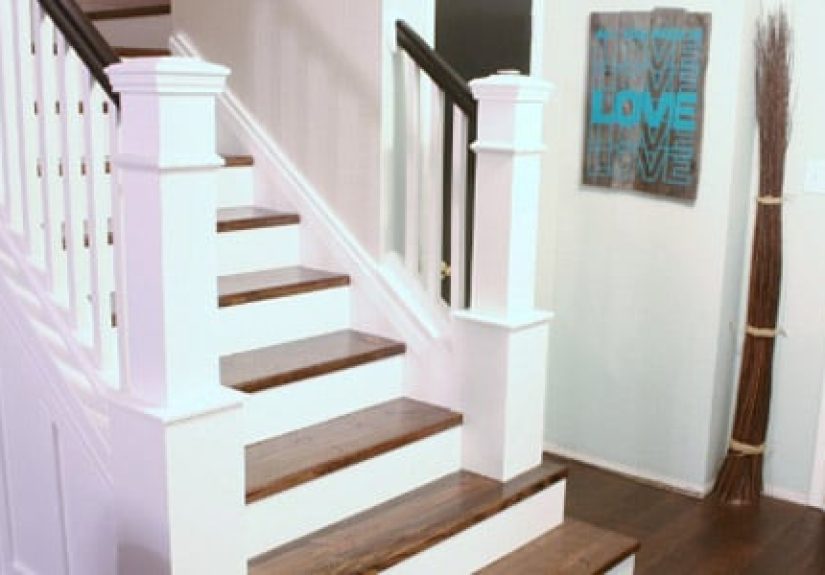
Of all the upgrades we made, these custom newel posts delivered one of the biggest visual transformations for the money. They changed the feel of the entire staircase. What once looked builder-basic suddenly looked tailored, heavier, and much more finished.
That is the beauty of a strong stair detail. The post is not the biggest feature in the house, but it has a surprising amount of visual influence. When it feels custom, the whole entry feels elevated.
So if you are considering a custom newel post tutorial project, do not be intimidated. Start with a solid plan, take measurements seriously, build in layers, and remember that half the success is in the prep and proportions. The other half is resisting the urge to declare it done before sanding.
Our Experience Building and Living With These Custom Newel Posts
After the sawdust settled and the paint dried, we realized the custom newel posts did more than improve the staircase. They changed how the whole entry felt. Before the project, the stairs looked like an afterthought. They did their job, sure, but they did not add anything to the room. Once the new posts were in place, the staircase suddenly felt intentional, almost like a built-in furniture piece rather than a standard construction element. That shift was bigger than we expected.
One of the most satisfying parts of the project was seeing how much impact came from relatively simple materials. We did not use rare hardwoods, custom-turned pieces, or specialty fabrication. We used practical boards, trim, adhesive, patience, and repeated measuring. That gave us a lot of confidence for future stair remodel projects. It reminded us that many high-end details are really just smart layering and clean execution.
We also learned that these projects have a strange emotional arc. At first, you feel excited because you are improving something obvious. Then, halfway through, your staircase looks worse than when you started, and you briefly wonder whether you have ruined your home in the name of character. Then the trim goes on, the seams disappear, the paint evens out, and suddenly you are standing there admiring a post like it is a member of the family. A very square, silent family member.
Living with the finished result has been the best part. The newel posts feel sturdier, look cleaner, and photograph beautifully, which matters more than some people admit. They also help the handrail and balusters make more visual sense. The entire staircase now feels balanced from bottom to top. Guests notice it right away, even if they do not always know the term “newel post.” They just know the stairs look more custom.
If we built them again, we would still follow the same overall process, but we would make a few improvements. We would pre-plan the paint schedule more carefully, spend even longer on sanding between coats, and mock up the cap dimensions in cardboard before cutting finish material. Those little planning steps save time and help avoid waste.
Most of all, this project reinforced something we keep seeing in home improvement: small architectural upgrades often have an outsized effect. You do not always need a full renovation to make a space feel elevated. Sometimes you just need one strong detail done really well. For us, that detail was the custom newel post. It gave the staircase presence, connected the trim style throughout the house, and made the whole area feel more finished.
So yes, building custom newel posts took effort. There was measuring, trimming, filling, sanding, repainting, and at least one moment of suspicious silence when a cut did not go as planned. But it was worth it. The project gave us a staircase that looks custom, feels more substantial, and no longer blends into the background. And in the grand tradition of DIY, it also gave us the right to stare at the finished post and say, to absolutely no one in particular, “We made that.”