Table of Contents >> Show >> Hide
- Why Random Desk Objects Make Such Good Art Materials
- The Surreal Charm of Seeing More Than What Is There
- How a Simple Illustration Practice Can Become a Story
- Why This Art Style Feels So Shareable
- The Creative Process: From Desk Clutter to Dream World
- What This Style Teaches About Creativity
- Examples of Desk Objects Turned Into Surreal Worlds
- Why Artists and Beginners Should Try It
- The Beauty of Small Worlds
- How to Make Your Own Surreal Desk-Object Drawings
- 500-Word Experience Section: What It Feels Like to Draw Around Desk Objects
- Conclusion
Every work desk has two personalities. The first is the responsible one: pens lined up, sticky notes pretending to be a productivity system, and a coffee mug that says something optimistic while containing cold coffee from three hours ago. The second personality is pure chaos: paper clips, charging cables, eraser crumbs, bottle caps, receipts, coins, tape, keys, snack wrappers, and at least one mystery object nobody remembers buying.
But what if that mess is not a mess at all? What if the random objects on a desk are actually mountains, moons, bridges, boats, strange creatures, tiny planets, secret doorways, and floating cities waiting for a pen to wake them up?
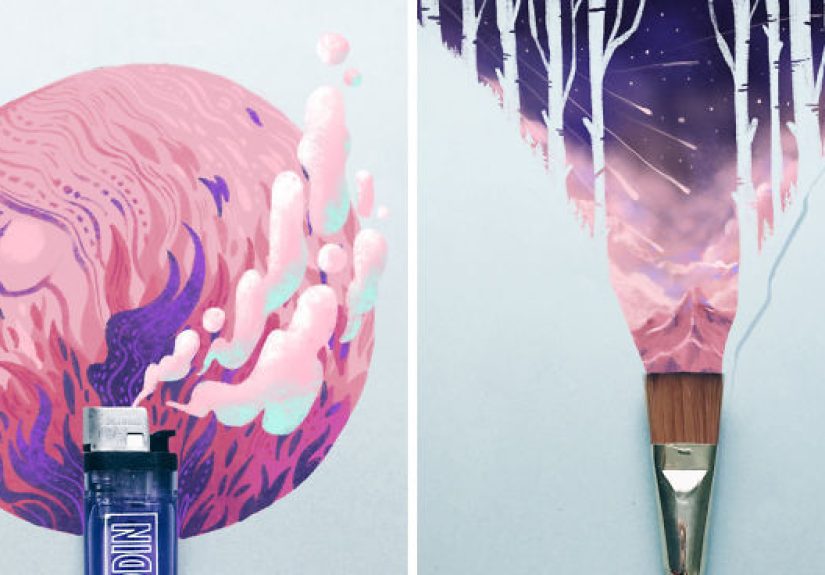
That is the magic behind the creative idea: drawing around random objects found on a work desk to create surreal new worlds. It is part illustration, part imagination workout, part visual joke, and part “I was supposed to clean my desk, but accidentally invented a universe.” Instead of treating a paper clip as a paper clip, the artist sees it as a roller coaster track. A pencil shaving becomes a dragon’s wing. A USB cable turns into a river. A binder clip becomes the mouth of a whale, because apparently office supplies have been dramatic this whole time.
This style belongs to a larger tradition of found object art, surreal illustration, everyday object drawing, and mixed-media creativity. Artists have long used ordinary objects to challenge what art can be. The Surrealists arranged unexpected items to unlock dreamlike associations. Marcel Duchamp changed art history by presenting ordinary objects as art through the power of selection and context. Robert Rauschenberg blurred the line between painting, sculpture, and real-world materials. Contemporary illustrators such as Christoph Niemann, Javier Pérez, Victor Nunes, and Gilbert Legrand have shown how fruits, tools, food, scissors, pencils, and household items can become humorous characters or poetic images.
Yet the desk version feels especially personal. A desk is where ideas are born, ignored, revived, spilled on, and occasionally buried beneath snack evidence. Turning its objects into surreal worlds makes creativity feel close, affordable, and wonderfully human.
Why Random Desk Objects Make Such Good Art Materials
The best thing about desk-object illustration is that it begins with what is already there. You do not need expensive paint, a studio with dramatic north-facing windows, or a beret that says, “I understand composition.” You need curiosity, a pen, a surface, and a willingness to look at ordinary objects as if they are undercover characters in a fantasy novel.
A work desk naturally collects small objects with interesting shapes. Scissors have loops and blades. Paper clips have curves. Rubber bands stretch into organic lines. USB drives have blocky forms. Erasers look like tiny buildings. Tape rolls resemble portals. A crumpled sticky note can become a mountain range, a storm cloud, or the cape of a very stressed superhero.
These objects work because they already have strong visual personalities. They bring texture, shadow, scale, and surprise into the drawing. When placed on paper and surrounded by ink, they become more than props. They become part of the world.
The Object Becomes the Starting Point
Traditional drawing often begins with a blank page and a planned subject. Desk-object art flips that process. The object comes first. The artist studies its shape, angle, color, and shadow, then asks, “What else could this be?”
A blue pushpin might become the roof of a tiny observatory. A pen cap might become a submarine. A key might become an ancient bridge. A pair of earbuds might become vines in a floating jungle. This playful limitation actually makes the creative process easier. Instead of facing infinite possibilities, the artist begins with one strange clue.
That is why this method is so useful for artists, writers, designers, and anyone who wants to train their imagination. Constraints do not kill creativity. They give it something to wrestle with. And sometimes that “something” is a stapler that looks suspiciously like a sleeping crocodile.
The Surreal Charm of Seeing More Than What Is There
Humans are excellent at finding patterns. We see faces in electrical outlets, animals in clouds, and emotional betrayal in a printer error message. This tendency is connected to pareidolia, the habit of perceiving familiar forms in random or vague visual information. For artists, pareidolia is not a mistake. It is a superpower.
When an artist looks at a binder clip and sees a spaceship, the mind is doing something beautiful: it is refusing to stop at the obvious answer. It is building a bridge between reality and imagination. That bridge is where surreal art lives.
Surrealism has always loved this kind of visual surprise. A dream does not ask whether a fish can wear a hat, whether a staircase can lead into the moon, or whether a spoon can become a silver lake. It simply presents the image and expects you to keep up. Desk-object illustration works the same way. It says, “Here is a coin. Also, it is now a golden sun over a city of miniature travelers. Please act normal.”
How a Simple Illustration Practice Can Become a Story
One of the most interesting examples of this approach came from an artist who used random work-desk objects as part of a nightly illustration practice. What began as a small creative exercise developed into a whimsical illustrated world with emotional storytelling. The objects were not just decorative pieces; they became landscapes, signals, obstacles, shelters, and symbols inside a larger narrative.
This is where desk-object art becomes more than a clever visual trick. A single image can be funny, but a series can become a universe. The artist can introduce recurring characters, visual themes, and emotional tension. A tiny traveler may cross paper mountains made from folded notes. A glowing object may become a moon that appears in every scene. A pencil may become a tower where someone waits. A rubber band may become a dangerous bridge. Suddenly, the desk is not just a desk. It is a map.
Objects Can Carry Emotion
Because desk objects are familiar, they create instant emotional contrast when placed in surreal settings. A bottle cap is ordinary, but as the roof of a lonely hut under a drawn night sky, it becomes tender. A broken pencil is ordinary, but as the mast of a ship sailing through ink waves, it becomes heroic. A tangled charging cable is annoying in real life, but in art it can become a forest, a storm, or a maze.
This emotional transformation is the heart of the style. The viewer recognizes the object and the fantasy at the same time. That double recognition creates delight. It also creates meaning. The artwork quietly reminds us that imagination does not erase reality; it reinterprets it.
Why This Art Style Feels So Shareable
Everyday object drawings often perform well online because they reward quick recognition. Viewers immediately understand the “before” and “after.” They see the object, then they see what the artist turned it into. That tiny moment of surprise makes people pause, smile, and share.
Social media audiences love visual ideas that are simple enough to understand in a second but clever enough to remember later. Desk-object surreal worlds fit perfectly into that space. A paper clip becoming a dragon skeleton or a coffee stain becoming a desert planet is instantly readable. It also feels personal because everyone has similar objects around them.
The style invites the viewer to participate. After seeing one image, people naturally look around their own desks and wonder what their objects could become. A stapler may no longer be a stapler. It may be a whale, a bunker, a train, or a grumpy office dinosaur with excellent posture.
The Creative Process: From Desk Clutter to Dream World
Creating surreal worlds from desk objects sounds spontaneous, and sometimes it is. But strong pieces usually follow a thoughtful process. The artist studies the object first, then explores several possible interpretations before committing to a scene.
Step 1: Choose an Object With an Interesting Shape
The best objects have silhouettes that suggest movement, character, or structure. Curved objects often become creatures, rivers, vines, or clouds. Rectangular objects become buildings, doors, vehicles, or platforms. Round objects become planets, eyes, balloons, moons, or wheels. Transparent objects can become water, glass towers, or ghostly portals.
Good choices include coins, clips, keys, erasers, pen caps, tape rolls, leaves, batteries, snack wrappers, pins, buttons, charging cables, rulers, and small tools. The object does not need to be beautiful. In fact, slightly boring objects often produce the funniest results.
Step 2: Rotate It Until It Says Something
Rotation changes meaning. A pen cap standing upright might be a tower. Lying sideways, it may become a submarine. Tilted diagonally, it could be a rocket escaping a tiny planet. Artists often rotate objects, move the light source, and test different placements before drawing.
This is one reason the method is so effective for creative training. It teaches flexible thinking. The goal is not to force one idea. The goal is to stay curious long enough for a better idea to appear.
Step 3: Build a Scene Around the Object
Once the object suggests a role, the artist draws the surrounding world. A tape roll becomes a portal, so the drawing needs travelers, stars, ruins, or a strange landscape beyond the opening. A binder clip becomes a monster’s mouth, so the artist adds tiny explorers, warning signs, and maybe one brave character who clearly did not read the warning signs.
The trick is to let the object remain visible. The viewer should still recognize it. The magic happens when reality and fantasy coexist instead of one hiding the other.
Step 4: Add Scale and Story
Scale makes desk-object art feel surreal. A paper clip can become enormous if a tiny character stands beside it. A crumb can become a boulder. A button can become a landing pad. A pencil shaving can become a curled wave large enough to swallow a ship.
Story gives the image emotional weight. Who lives in this world? What are they searching for? What danger or wonder does the object create? Even a simple caption can transform the drawing from a clever sketch into a tiny scene with mystery.
What This Style Teaches About Creativity
Drawing around random objects teaches a lesson that applies far beyond illustration: creativity is often a new relationship between existing things. The artist does not invent the paper clip. The artist invents a new way of seeing it.
This matters because many people think creativity requires a lightning bolt of inspiration. In reality, creative work is often closer to noticing. It is the ability to pay attention to what everyone else overlooks. A cluttered desk becomes a creative playground because the artist treats ordinary materials as invitations.
This approach also lowers the pressure of making art. A blank page can feel intimidating. A blank page with a random object on it feels like a puzzle. The object gives the artist something to respond to, and response is easier than invention from nothing.
Examples of Desk Objects Turned Into Surreal Worlds
Imagine placing a black binder clip on a white page. Its metal arms rise like antennae. With a few drawn windows, ladders, and stars, it becomes a deep-space research station. Tiny astronauts float nearby. One is probably asking where the office snacks went.
A roll of tape can become a glowing moon gate. Draw a desert around it, add travelers approaching from the horizon, and suddenly the tape is no longer office supply inventory. It is the entrance to a lost civilization.
A crumpled sticky note can become a golden mountain. Add climbers, clouds, flags, and a tiny dragon sleeping in one folded corner. The wrinkles become ridges. The shadow becomes a valley.
A charging cable can become a winding river through a miniature kingdom. The connector becomes a castle gate. The tangled part becomes a forbidden forest. The whole image quietly admits what we already know: cables are chaotic because they are practicing to become fantasy maps.
A paper clip can become the skeleton of an ancient sea creature. A coin can become a sun over a drawn skyline. An eraser can become a cliff. A pencil can become a bridge between two impossible islands. A coffee ring can become the orbit of a lonely planet.
The more ordinary the object, the stronger the transformation feels. That is the joy of the style: it proves that wonder does not always arrive wearing glitter. Sometimes it arrives as a thumbtack.
Why Artists and Beginners Should Try It
This technique is excellent for beginners because it removes the pressure to create perfect art. The goal is not realism. The goal is imagination, composition, and visual play. Even rough drawings can work if the idea is clever.
For experienced artists, desk-object illustration is a strong warm-up exercise. It trains observation, metaphor, visual storytelling, and problem-solving. It also encourages artists to loosen up. Not every piece needs to become a masterpiece suitable for a museum wall guarded by someone whispering “no flash photography.” Some pieces can simply be delightful, strange, and alive.
The method is also useful for creative blocks. When ideas feel stuck, choosing a random object creates momentum. You are no longer asking, “What should I draw?” You are asking, “What could this become?” That question is smaller, friendlier, and far less dramatic.
The Beauty of Small Worlds
There is something comforting about miniature surreal worlds. They remind us that imagination can fit into small spaces. A desk can contain a kingdom. A paper scrap can hold a mountain. A coin can become a star. A pencil can become a tower. The scale is tiny, but the emotional effect can be surprisingly large.
In a world full of fast content, desk-object drawings feel refreshingly handmade. They show the artist’s eye, hand, humor, and patience. They also celebrate the physical world. The object has weight. It casts a shadow. It refuses to be perfectly digital. That physical presence gives the artwork warmth.
These illustrations also encourage viewers to slow down. They ask us to look twice. First we see the object. Then we see the world. Then, if the piece is especially good, we look back at our own desk and realize it has been quietly auditioning for an art career all along.
How to Make Your Own Surreal Desk-Object Drawings
Start by clearing a small space, not the whole desk. Let us be realistic; full desk cleaning is a separate emotional journey. Choose three to five small objects and place one on a blank sheet of paper. Rotate it. Squint at it. Move it closer to the edge. Turn on a lamp and notice the shadow.
Ask simple questions. Does it look like a creature, a vehicle, a building, a landscape, or a piece of weather? Could it be huge? Could it be tiny? Could it be dangerous? Could it be funny? Could it belong in a dream?
Then draw lightly around it. Add one character or detail to establish scale. If your object is a mountain, draw a climber. If it is a moon, draw rooftops below it. If it is a monster, draw someone reacting to it. The reaction often sells the story.
Use simple lines at first. Do not overcomplicate the image. The object should remain the star. Add texture, shadows, and background details only after the main idea is clear.
Finally, give the piece a title. A title can add humor, mystery, or emotion. “The Last Bus to Planet Stapler” may not win a national poetry award, but it absolutely deserves a place in your sketchbook.
500-Word Experience Section: What It Feels Like to Draw Around Desk Objects
The first time I tried drawing around random objects on my desk, I expected a cute five-minute doodle. I did not expect to become emotionally invested in the heroic journey of a paper clip. But that is the danger of this art form: it begins as play, and then suddenly a tiny ink traveler is crossing a metal bridge toward a moon made from a button, and you are whispering, “Be brave, little guy.”
The experience starts with embarrassment, honestly. You stare at a pen cap for far too long. You rotate it. You tilt your head. You wonder whether this is creativity or simply what happens when you drink coffee too late in the day. Then, without warning, the object changes. The pen cap becomes a lighthouse. The eraser becomes a cliff. The rubber band becomes a portal that looks unstable but exciting, which is exactly the kind of portal fictional characters should avoid and always enter anyway.
What surprised me most was how relaxing the process felt. There was no need to make a perfect drawing. The object gave me permission to be playful. If a line looked crooked, it could become a hill. If a shadow appeared in the wrong place, it could become fog. Mistakes did not ruin the drawing; they became part of the world. That is a rare and lovely feeling, especially when so much creative work online looks polished within an inch of its life.
I also noticed that each object suggested a different mood. A coin felt sunny and mythic. A key felt secretive. A tangled cable felt adventurous but slightly threatening, like a forest that charges your phone. A torn piece of paper felt lonely and poetic. A binder clip felt dramatic, probably because binder clips always look like they are either shouting or judging your filing system.
The best moments came when the drawing surprised me. I might begin with the idea of turning a tape roll into a wheel, then realize it worked better as a moon, then add a tiny village beneath it, then add a character looking up, and suddenly the whole image had a quiet story. That shift from object to scene to emotion is addictive.
This kind of art also changed how I looked at my workspace afterward. The desk stopped being clutter and became raw material. A snack wrapper was no longer evidence of poor discipline; it was a possible silver river. A receipt could be a scroll. A pencil shaving could be a curled wave. Even dust had potential, though I admit “dust-based worldbuilding” is a harder sell.
Most importantly, drawing around desk objects reminded me that creativity does not always need a grand entrance. Sometimes it starts with whatever is within arm’s reach. You do not have to wait for perfect conditions, expensive supplies, or a thunderclap of inspiration. You can begin with a paper clip, a pen, and ten quiet minutes. That is enough to open a door.
Conclusion
I Draw Around Random Objects I Find On My Work Desk To Create Surreal New Worlds is more than a charming title. It is a creative philosophy. It says that ordinary objects are not boring; they are unfinished stories. A desk is not just a place for work. It can be a landscape, a theater, a galaxy, a tiny kingdom, or a dream machine disguised as office clutter.
This art style connects the history of found object art with the freshness of modern illustration. It borrows the Surrealist love of strange combinations, the readymade tradition of recontextualizing objects, and the internet-friendly joy of quick visual surprise. But at its heart, it remains beautifully simple: look closely, imagine freely, and draw what only you can see.
Whether you are an artist, a beginner, a designer, a student, or simply someone with a desk that looks like a stationery store had a small emotional breakdown, this practice is worth trying. Your next surreal world may already be sitting beside your keyboard, pretending to be a paper clip.
Note: This article is original, web-ready content synthesized from real information about found object art, Surrealism, everyday object illustration, visual creativity, and contemporary artists who transform ordinary materials into imaginative scenes.