Table of Contents >> Show >> Hide
- Who Is Rusty, and Why Do These Comics Hit So Hard?
- 19 Relatable Comic Situations Rusty Captures So Well
- 1. The “Are You Mad at Me?” spiral
- 2. Performing for the internet
- 3. Being loud while uninformed
- 4. Adulting like a confused substitute teacher
- 5. Remote work and its weird little delusions
- 6. Apologizing in increasingly ridiculous ways
- 7. Wanting love, but specifically cinematic love
- 8. Sensitivity as a full-time condition
- 9. Public opinions and private regret
- 10. Existential thoughts dressed as animal jokes
- 11. Pets as accidental heroes
- 12. Dating imaginary versions of real people
- 13. Herd mentality in nicer clothes
- 14. Foggy thinking and daily confusion
- 15. Over-romanticizing nonsense
- 16. The silent absurdity of background life
- 17. Human feelings projected onto nature
- 18. Social scenes that look ordinary until they really do not
- 19. The twist ending that leaves a tiny emotional bruise
- Why Rusty’s Awkward Humor Feels So Good Right Now
- Experiences That Make Rusty’s Comics Feel Personal
- Final Thoughts
- SEO Tags
Some comics try to change your life. Some try to expose society’s deepest flaws. And some stroll into the room, trip over the rug, spill iced coffee on their own shoes, and somehow become the smartest thing you’ve seen all week. That last category is where Rusty shines.
Rusty Epstein, the Boston-based writer and artist behind Bummer Party, has built a style that feels like the cartoon version of your most embarrassing inner monologue. His one-panel humor takes everyday discomfort, social weirdness, online brain rot, and low-stakes existential panic, then flips them into jokes that are both ridiculous and painfully recognizable. The result is the kind of laugh that starts with “Ha!” and ends with, “Okay, wow, that is absolutely me.”
That is exactly why a collection like “I Just Want People To Laugh”: 19 Relatable Comics By Rusty works so well. These comics are funny, yes, but they also tap into something larger: people are drawn to humor that helps them cope with awkwardness, release tension, and feel seen. When a joke captures the absurd side of normal life, it does more than entertain. It reassures us that everyone else is also improvising their way through meetings, texts, small talk, and modern existence in general.
In other words, Rusty is not just making jokes. He is turning life’s daily nonsense into comic relief with excellent timing and zero interest in pretending any of us are fully in control. Bless him for that.
Who Is Rusty, and Why Do These Comics Hit So Hard?
Rusty’s appeal starts with clarity. His cartoons usually look simple at first glance, but the joke sneaks up on you. He sets up a familiar situation, then bends it sideways until the scene becomes just weird enough to expose the truth underneath. That truth is often something small and very modern: the need for validation, the fear of sounding dumb, the awkwardness of social performance, or the strange theater of internet life.
That combination of familiarity and surprise is powerful. The best relatable comics do not simply mirror daily life; they exaggerate it just enough to make the emotional logic obvious. Rusty understands that people rarely laugh because a situation is random. They laugh because it feels random and familiar. The comic becomes a tiny confession booth with better punchlines.
There is also something refreshing about his stated creative goal. He is not trying to package every joke as a grand life lesson or a TED Talk in doodle form. He wants people to laugh, and that straightforward mission gives his work an easy, generous energy. The humor is clever without being smug. The absurdity is sharp without feeling cruel. Even when the premise gets wonderfully weird, the emotional core stays human.
That balance matters. Humor tends to land best when it releases pressure instead of adding more of it. Rusty’s comics often feel like the emotional equivalent of loosening your collar after a long day and realizing everyone else is also barely pretending to be normal.
19 Relatable Comic Situations Rusty Captures So Well
-
1. The “Are You Mad at Me?” spiral
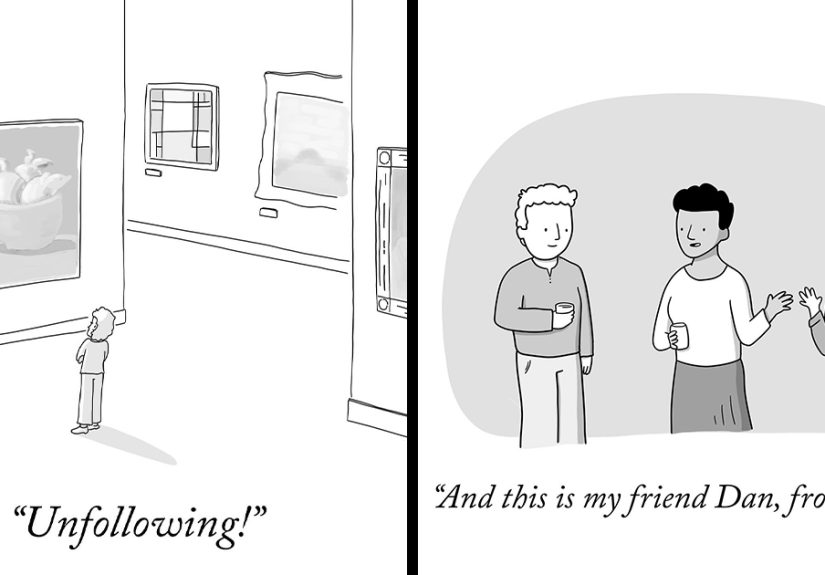
Few modern anxieties are as universal as sending a text, getting a short reply, and immediately building an entire courtroom case in your head. Rusty understands the very specific madness of reading tone into punctuation, response time, or the terrifying thumbs-up reaction. It is funny because it is irrational, and relatable because we have all done it anyway.
-
2. Performing for the internet
His comics about content, posting, or online feedback tap into the exhausting need to package ourselves for strangers. Social media makes everyone part human, part unpaid brand manager. Rusty turns that pressure into comedy by showing how absurd it is that a person can post one thought online and suddenly feel like a minor politician in a badly lit arena.
-
3. Being loud while uninformed
One of the most modern forms of confidence is having no idea what you are talking about and still bringing megaphone energy. Rusty nails that phenomenon beautifully. The joke works because it is not just about ignorance; it is about the strange cultural habit of mistaking volume for wisdom.
-
4. Adulting like a confused substitute teacher
The “now an adult” theme is comedy gold because adulthood is mostly paperwork, mild back pain, and pretending you understand insurance. Rusty captures the disappointment of realizing there is no magical point when you suddenly become serene and competent. You just become older while Googling things like “how long can cooked rice stay in the fridge?”
-
5. Remote work and its weird little delusions
Working from home was supposed to free us. Instead, many of us became people who attend serious meetings while wearing respectable shirts and deeply unserious pants. Rusty’s take on awkward humor in remote life works because it exposes the gap between how productive we imagine ourselves to be and what actually happens between tabs.
-
6. Apologizing in increasingly ridiculous ways
Some people say “sorry” too little. Others say it like it is a subscription service. Rusty’s apology-centered jokes land because they capture the awkward dance of wanting to repair a moment while also making it ten times stranger. It is the emotional equivalent of trying to fix a wobbly chair by adding another wobbly chair.
-
7. Wanting love, but specifically cinematic love
The longing in Rusty’s romance jokes is not the elegant, candlelit kind. It is the very online, slightly desperate, self-aware version of wanting to be adored while still refusing to answer unknown numbers. He finds humor in the gap between our fantasy selves and the messy, insecure people actually showing up to dates.
-
8. Sensitivity as a full-time condition
Whether the joke is about skin, feelings, or plain emotional fragility, Rusty understands that many people move through the world like a bruise in sneakers. His comics treat oversensitivity not as melodrama, but as a hilariously ordinary survival setting. That honesty is part of what makes the material feel comforting rather than just clever.
-
9. Public opinions and private regret
There is a special kind of comedy in saying something with confidence and immediately wishing you could slide under the floorboards. Rusty’s humor often captures that split-second transformation from “Here is my thought” to “Actually, I would like to be a fern now.” It is social awkwardness distilled into its purest form.
-
10. Existential thoughts dressed as animal jokes
A raccoon wondering whether life is just trash is funny because absurdity and truth are standing shoulder to shoulder. Rusty uses animals, surreal figures, and odd little creatures to smuggle in familiar human worries. The joke becomes sillier, and somehow more honest, because the emotion is displaced just enough for us to laugh at it.
-
11. Pets as accidental heroes
A dog solving a cold case is obviously ridiculous, which is exactly why it feels right. People already treat pets like therapists, detectives, soulmates, roommates, and occasionally tiny furry landlords. Rusty understands that once animals enter a joke, human dignity leaves through the side door, and that is usually for the best.
-
12. Dating imaginary versions of real people
The idea of talking to a sketch of a person gets at something painfully modern: many people do not date a person so much as the narrative they build around that person. Rusty is excellent at showing how attraction, projection, and wishful thinking can blur together until reality looks like fan fiction with taxes.
-
13. Herd mentality in nicer clothes
Jokes involving sheep, crowds, or groupthink hit because humans are social copycats with Wi-Fi. Rusty spots the absurdity in how often people adopt opinions, trends, and panic simply because others are doing it. It is less a moral indictment and more a funny reminder that independence is harder than we like to admit.
-
14. Foggy thinking and daily confusion
A person in the fog is not just a visual gag. It is a lifestyle. Rusty captures the dazed mental state of being awake, technically functional, and still no closer to understanding what is happening. It is the mood of every Monday, every long meeting, and every moment after opening an email that begins with “Just circling back.”
-
15. Over-romanticizing nonsense
Whether it is a moon, a butterfly, or some wildly unqualified symbol of meaning, Rusty loves poking fun at the human tendency to narrate our lives as if the universe has appointed us lead actor. We want signs. We want destiny. We want cosmic reassurance. Sometimes all we get is a bug and a weird thought.
-
16. The silent absurdity of background life
Elevator music, office chatter, filler conversation, generic positivityRusty knows that some of the funniest parts of life are the things people stop noticing. He pulls those background details into the spotlight and reminds us how bizarre normal settings really are. Modern life is often surreal; we are just too busy checking notifications to notice.
-
17. Human feelings projected onto nature
Trees talking, animals worrying, landscapes acting emotionally unavailablethis kind of humor works because people project themselves onto everything. Rusty turns that habit into a playground. By giving nonhuman things deeply human concerns, he reveals how dramatic, needy, and over-interpretive people can be.
-
18. Social scenes that look ordinary until they really do not
A park bench conversation or a casual public exchange can become weirdly loaded in Rusty’s hands. That is part of his genius. He understands that the most relatable situations are often the least glamorous ones: overheard conversations, clumsy flirting, weak small talk, or the tiny humiliations people collect while trying to seem chill.
-
19. The twist ending that leaves a tiny emotional bruise
Maybe the strongest thing about Rusty’s comics is that final turn. The joke does not merely surprise you; it exposes a recognizable insecurity, contradiction, or coping mechanism. You laugh first, then realize why you laughed, and sometimes that second part is the sharper one. It is comedy with perfect comic timing and just enough emotional aftertaste.
Why Rusty’s Awkward Humor Feels So Good Right Now
Rusty’s work lands in part because modern life is saturated with performance. We are expected to appear informed, calm, productive, attractive, emotionally intelligent, digitally savvy, socially smooth, and somehow available for brunch. That is already too many jobs for one nervous mammal. Comics that puncture that pressure feel genuinely useful.
His jokes also avoid the trap that ruins a lot of internet humor: meanness disguised as wit. Rusty may be absurd, but he is not trying to crush the people inside the joke. The humor tends to come from shared vulnerability, not cheap superiority. That makes the comics more inviting. Readers are not laughing at some poor fool from a safe distance. They are recognizing themselves and laughing from within the mess.
That is why Rusty comics travel so well online. They fit the pace of the internet, but they do not feel disposable. A single panel can capture the emotional weather of an entire week: insecure, overstimulated, slightly dramatic, and trying very hard to keep it together in public. There is comfort in that recognition.
Experiences That Make Rusty’s Comics Feel Personal
To understand why these comics work, think about the little experiences most people do not put in diaries because they seem too minor, too dumb, or too embarrassingly human. You walk into a store and forget why you came. You reread a text five times before sending it, then immediately notice a typo and consider moving to another state. You wave back at someone who was not waving at you. Congratulations: you have entered the Rusty Extended Universe.
Or maybe you are at work, nodding through a video call while your face freezes in the least flattering expression ever invented. You spend the next 20 minutes wondering whether everyone noticed. Later, you overcompensate by speaking too enthusiastically about a spreadsheet, which somehow makes the whole thing worse. This is not tragedy. This is Tuesday. And that is exactly the territory Rusty mines so well.
Then there is social life, that glorious carnival of self-consciousness. You tell a joke at dinner and one person does not laugh, so naturally you decide the friendship is over, your timing is ruined, and perhaps humor itself has left the building. Ten minutes later, someone else says something half as funny and the table erupts. You smile politely while your ego collapses like a folding chair. Rusty gets that kind of emotional overreaction because it is absurd, yes, but it is also deeply familiar.
Romantic life may be even richer material. You can build an entire future with someone based on three texts, one eye contact event, and a shared opinion about tacos. You can also talk yourself out of replying because you suddenly decide your “Sounds good!” sounds too eager, too distant, too bland, or too alive. Rusty’s dating humor works because it captures that mix of longing and self-sabotage that so many people carry around like a second phone.
Even the quietest moments fit his style. Standing in line. Listening to elevator music. Overhearing strangers say something weirdly profound and wildly stupid in the same breath. Looking up at the sky and briefly convincing yourself the universe is sending a sign, when really you are just tired and need lunch. These are tiny experiences, but they stack up. They make life feel both heavier and funnier than it should.
That is the secret under Rusty’s best jokes: he respects small feelings. He knows a minor embarrassment can dominate a whole afternoon. He knows people are walking around with private absurdities all the time. And he knows that when those absurdities are mirrored back in a comic panel, the reader gets a rare gifta laugh that says, “You are not the only one doing your best with this wonderfully weird human brain.”
Final Thoughts
Rusty’s comics succeed because they do not pretend life makes perfect sense. They assume the opposite, then make that confusion entertaining. In a media landscape crowded with content begging to be meaningful, optimized, and aggressively inspirational, there is something delightful about a cartoonist whose mission is simply to make people laughand who does it by finding the exact point where awkwardness, absurdity, and honesty meet.
That is why a feature like “I Just Want People To Laugh”: 19 Relatable Comics By Rusty That Capture Life’s Awkward And Absurd Side resonates. It is not only a roundup of funny work. It is a reminder that humor still matters, especially the kind built from everyday discomfort, social nonsense, and the strange little lies people tell themselves to get through the day. Rusty turns all of that into something lighter, sharper, and much easier to live with.
And honestly, if a one-panel comic can make you laugh at your own awkward species for a minute, that is doing pretty great work.