Table of Contents >> Show >> Hide
- Why the “Hulk Version” Concept Works So Well
- What Happens When AI Meets Celebrity Recognition
- How I Approached the 40 Celebrity “Hulk” Transformations
- The Different Types of Celebrity Hulk Results
- Why Audiences Love AI Celebrity Transformations
- The Tech Behind the Madness
- The Legal and Ethical Stuff You Cannot Ignore
- What This Trend Says About Online Creativity
- My Experience Creating 40 Celebrity Hulk Versions with AI
- Conclusion
- SEO Metadata
There are two kinds of internet content: the kind you politely scroll past, and the kind that makes you stop, blink, laugh, and whisper, “Why does this weirdly work?” Turning 40 celebrities into their “Hulk” versions using AI belongs squarely in the second category. It is chaotic, ridiculous, strangely impressive, and very online in the best possible way.
On the surface, the idea sounds like pure meme fuel: take famous faces, add gamma-powered muscles, crank the intensity dial until shirts become optional, and let the internet do what it does bestjudge, share, argue, and make everything into a ranking list. But underneath the green skin and comic-book biceps, this trend says something bigger about fandom, digital art, and how generative AI is changing visual storytelling.
This is not just about making celebrities look like they bench-press pickup trucks for breakfast. It is about remix culture, identity, exaggeration, and the strange joy of seeing familiar people reimagined in impossible forms. In other words, it is about taking celebrity culture, tossing it into a gamma chamber, and watching the algorithm smash.
Why the “Hulk Version” Concept Works So Well
The Hulk is one of the easiest pop-culture archetypes to recognize. You do not need a full backstory lecture or a three-hour movie marathon to understand the visual language. Big frame. Furious energy. Unstoppable presence. A look that says, “I missed lunch and now the city is in danger.”
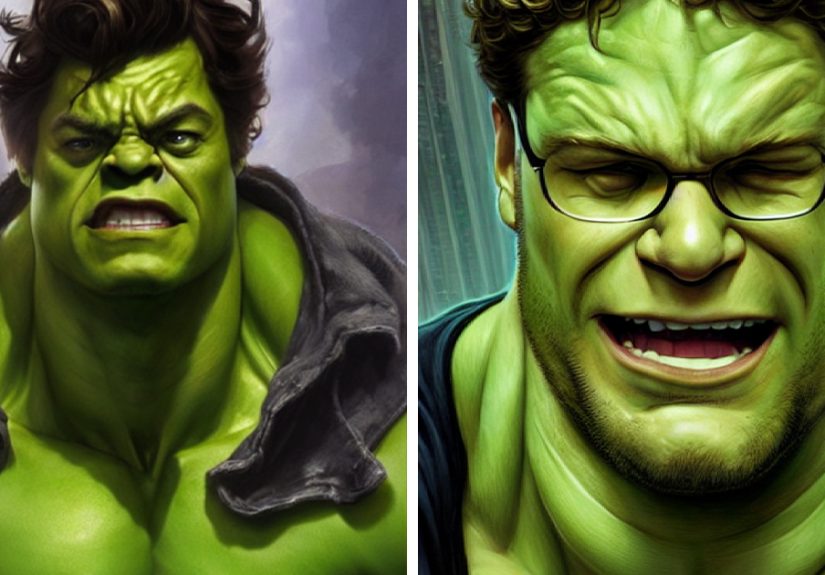
That makes the Hulk formula perfect for AI image transformation. Generative image tools are especially good at taking a familiar structure and amplifying it with exaggerated features: broader shoulders, thicker arms, intense expression, dramatic lighting, ripped clothing, and a color palette that instantly communicates comic-book chaos. You still recognize the person, but you also get the thrill of seeing them turned into a larger-than-life character.
That is the sweet spot. Good AI celebrity art does not erase the original face. It keeps the recognizable landmarksjawline, eyes, smile, hairstyle, posturewhile pushing the rest into fantasy. The result feels half portrait, half alternate-universe casting decision.
And let’s be honest: celebrity culture already runs on exaggeration. Stars are marketed as icons, archetypes, mood boards, and myths with excellent dental care. Turning them into “Hulk” versions is not a massive leap. It is basically the internet saying, “What if charisma had deltoids?”
What Happens When AI Meets Celebrity Recognition
The real magic of this idea is recognition. If you transform a random stock-photo model into a Hulk-like figure, it might look cool. If you transform a globally recognizable actor, singer, athlete, or TV host into a Hulk-like figure, suddenly people have opinions. Lots of opinions. The comments write themselves.
Some celebrity faces fit the transformation almost too well. Action stars already carry a larger-than-life screen presence, so an AI-enhanced “Hulk” version feels like a natural extension. Comedians are funnier because the contrast is the joke: the familiar grin stays the same while the body looks like it was assembled in a superhero factory. Pop stars become surreal fashion monsters, as if a stadium tour got hit by a gamma ray and a couture budget at the same time.
This is why the project of turning 40 celebrities into Hulk versions feels bigger than a one-off gag. The variety creates momentum. Every face unlocks a different style of transformation. Some look heroic. Some look terrifying. Some look like they are about to destroy a red carpet and then apologize beautifully for it.
How I Approached the 40 Celebrity “Hulk” Transformations
The process was part image editing, part visual comedy writing, and part forensic study of cheekbones. The trick was not to ask AI for “a Hulk celebrity” and call it a day. That is how you end up with a generic green bodybuilder who vaguely resembles a famous person if you squint and believe in miracles.
Instead, the best results came from focusing on identity first and monster energy second. A good transformation keeps the celebrity’s signature look intact: a specific smirk, a haircut, a fashion vibe, a stage persona, or the kind of expression that says, “I know exactly where the camera is.” Then the AI can build around that with added muscle, heightened texture, dramatic skin tones, and comic-style intensity.
I also found that “Hulk versions” work best when they reflect the celebrity’s existing public image rather than fight it. A stylish celebrity should still look stylish, even if they now have forearms the size of tree trunks. A serious actor should look like a brooding gamma-powered legend, not a random green gym mascot. A musician known for spectacle should look like they are one power chord away from splitting the Earth in half.
That balance matters because the funniest transformations are not the most extreme ones. They are the ones that feel oddly plausible, like some studio executive somewhere absolutely would pitch this after three coffees and a licensing meeting.
The Different Types of Celebrity Hulk Results
1. The Surprisingly Believable Ones
These are the celebrities who already carry intense screen presence. Their Hulk versions look less like parody and more like a trailer poster for a movie that would absolutely make a billion dollars.
2. The Fashion-Editorial Hulks
Some transformations looked like luxury magazine covers from a universe where couture designers had access to laboratory radiation. The proportions were wild, but the style stayed polished. Think rage, but make it expensive.
3. The Comedy Gold Hulks
This category is pure internet catnip. A familiar funny face on an absurdly overbuilt body is a formula with almost zero failure rate. It is visual punchline territory, and AI is very good at delivering that instant contrast.
4. The “Why Does This Look Awesome?” Hulks
Every project like this has a few accidental masterpieces. You start with a playful prompt and end up with something cinematic, dramatic, and cool enough to make you wonder whether fandom has become its own special effects department.
Why Audiences Love AI Celebrity Transformations
There is a reason content like this performs so well. It combines three internet superpowers in one package: familiarity, surprise, and shareability. People know the celebrity. They do not expect the transformation. And the result is easy to react to in one sentence, one emoji, or one deeply committed comment thread.
It also scratches the same itch as fan casting, mashup posters, and alternate-universe storytelling. Audiences love “what if” scenarios. What if this actor were a villain? What if this singer were a superhero? What if this celebrity looked like they could throw a city bus into low orbit? AI turns that speculative fun into instant visuals.
There is also an accessibility factor. High-end visual effects used to require entire teams, serious budgets, and enough software to frighten a laptop. Now AI-assisted image editing tools can help creators experiment quickly with transformations, concept art, and surreal visual remixes. That does not replace artistic skill, but it does dramatically lower the barrier to making ideas visible.
The Tech Behind the Madness
Modern AI image tools can generate and edit images using prompts, masks, and reference-based changes. That matters for a project like this because celebrity transformations usually need more than one creative move at once. You are not just generating a person. You are preserving identity while changing physique, mood, color, texture, costume details, and visual tone.
That is why the strongest outputs usually come from iterative editing. One pass establishes the structure. Another sharpens likeness. Another adjusts the skin tone or background. Another fixes the hands, because AI still occasionally treats fingers like optional side quests. In practice, “turning 40 celebrities into Hulk versions” is less like pressing a magic button and more like directing a very fast, very literal visual assistant who occasionally needs you to say, “No, not that kind of chaos.”
The result, when it works, feels like a crossover between portrait retouching, character design, and digital collage. It is playful, but it is also a real example of how AI is changing creative workflows.
The Legal and Ethical Stuff You Cannot Ignore
Now for the less glamorous but very important part: just because AI can generate or edit celebrity-inspired images does not mean every use is automatically safe. Public figures still have likeness rights, and many legal and industry conversations now revolve around consent, digital replicas, commercial use, and transparency.
That matters especially when celebrity images move beyond parody or fan art and into advertising, sponsorship, endorsement-style posts, or anything that suggests approval by the person being depicted. The internet loves a joke, but the law tends to become dramatically less amused when money enters the room.
There is also the broader issue of trust. AI-generated celebrity content can be funny, creative, and obviously fictional. It can also become misleading if it is presented as real, intentionally deceptive, or stripped of context. That is why labeling, transparency, and common sense are not boring add-ons. They are part of responsible publishing.
In other words, turning celebrities into “Hulk” versions for entertainment is one thing. Using AI to fake endorsements, impersonate people, or create deceptive content is another thing entirely. One is internet creativity. The other is legal headache with a side of public backlash.
What This Trend Says About Online Creativity
Projects like this sit at the intersection of fandom and experimentation. They are playful, visually sticky, and built for the modern attention economy. But they also reveal something important: people are no longer satisfied with consuming pop culture. They want to remix it, mutate it, personalize it, and throw it back into the feed wearing digital shoulder armor.
That is why “I Turned 40 Celebrities Into Their Hulk Versions Using AI” works as a headline. It promises spectacle, but it also promises interpretation. Readers are not just clicking to see green muscles. They are clicking to see which celebrities translate well into the transformation, which ones become hilarious, and which ones somehow emerge looking cooler than before.
In a strange way, this kind of content is modern fan art with better rendering and faster turnaround. The tools are newer. The impulse is ancient. People have always wanted to reimagine icons. AI just hands them a louder paintbrush.
My Experience Creating 40 Celebrity Hulk Versions with AI
After doing this at scale, I can report that the experience was equal parts creative experiment, comedy show, and extremely specific identity crisis for my image editor. By the tenth transformation, I had learned an important truth: AI does not automatically understand the difference between “cinematic Hulk energy” and “a green refrigerator with eyebrows.” That distinction, unfortunately, is where the craft lives.
The first few attempts were gloriously uneven. Some faces looked fantastic right away, with strong likeness, dramatic lighting, and just enough comic-book intensity to sell the concept. Others came back looking like distant cousins of the celebrity who had recently discovered creatine and vengeance. This is where iteration became everything. Tiny prompt changes made huge differences. A more precise description of facial structure, expression, and style could pull a result back from the brink of “unlicensed vegetable wrestler” into something genuinely striking.
I also noticed that not every celebrity should be transformed the same way. That sounds obvious, but AI loves obvious things right up until it ignores them. A singer known for glamour needed a Hulk treatment that still felt stylish and polished. A dramatic actor looked better with darker shadows, restrained rage, and a more cinematic tone. A comedian needed just enough absurdity to keep the joke alive. If every image got the same muscle template and the same angry snarl, the whole project started to feel like a discount superhero calendar.
The funniest part was watching the transformation exaggerate public personas. Certain celebrities already project so much confidence that the Hulk version looked like a perfectly normal Tuesday. Others became hilarious because the contrast was the whole gag. A sweet, recognizable smile on a body that looked capable of uprooting a freeway sign has a kind of visual comedy that does not need subtitles.
There were also technical surprises. Hair mattered more than I expected. So did posture. Wardrobe cues mattered a lot too. A transformation became more convincing when it kept just enough of the celebrity’s signature styling before pushing the body into fantasy. That detail preserved the “Oh, that is definitely them” moment, which is the entire engine of this concept. Lose the likeness, and the image becomes generic monster art. Keep the likeness, and suddenly it becomes a shareable alternate-universe version of a person everyone knows.
By the time I reached all 40, the project felt less like a random AI stunt and more like a crash course in visual identity. What makes a face readable? What features survive exaggeration? How far can you push fantasy before recognition breaks? Those were the interesting questions hiding underneath the joke. Yes, there were giant green arms. Yes, there were a few results that looked like luxury fitness demons. But the deeper lesson was that AI works best when it is directed with intention, taste, and a willingness to revise.
And honestly, that may be the weird charm of the whole thing. The project started as a fun “what if” experiment and ended up feeling like a study in celebrity branding, fan culture, and digital creativity. Also, it gave me an entirely new respect for jawlines. Some people simply have superhero geometry. The AI noticed. I noticed. The internet would absolutely notice.
If nothing else, turning 40 celebrities into their Hulk versions proved one very modern truth: we are living in an era where a ridiculous idea can become a surprisingly polished piece of visual entertainment in a matter of iterations. The future is not always elegant. Sometimes it is green, overbuilt, and weirdly photogenic.
Conclusion
Turning celebrities into their “Hulk” versions using AI is funny, clickable, and tailor-made for online attention. But it is also more interesting than it first appears. It reveals how generative AI can amplify pop culture, support visual experimentation, and turn simple “what if” ideas into polished digital content. When done well, the transformation is not just about adding muscle and green skin. It is about preserving identity, exaggerating persona, and creating something that feels both familiar and freshly absurd.
That is the real reason this concept lands. It taps into fandom, celebrity obsession, humor, and emerging creative tools all at once. It is visual remix culture with comic-book energy. And in a crowded content landscape, that combination is hard to ignore. The internet may not need 40 gamma-powered celebrities, but once it sees them, it is definitely going to have favorites.