Table of Contents >> Show >> Hide
- 1) What exactly is a natural swimming pool?
- 2) How natural pools stay clear: biological filtration, not magic
- 3) Design choices that change everything (including your maintenance)
- 4) Water quality & health: what “natural” does (and does not) mean
- 5) Maintenance reality check: it’s not “set it and forget it”
- 6) Cost, budget, and what you’re really paying for
- 7) Permits, codes, and safety: calling it a “pond” won’t save you
- 8) Climate and seasonality: yes, natural pools can work across the U.S.
- 9) Pros and cons: who natural pools are best for
- 10) A practical checklist before you build
- Real-world experiences: what owning a natural swimming pool feels like
- The “first spring startup” lesson: biology has a calendar
- The “heat wave reality check”: your pool is not immune to summer drama
- The “party test”: water quality is social, not just technical
- The “fall leaves saga”: you either plan for debris or become debris
- The “mosquito myth” moment: still water is the enemy
- The “long-term joy”: why people keep choosing natural pools anyway
- Conclusion
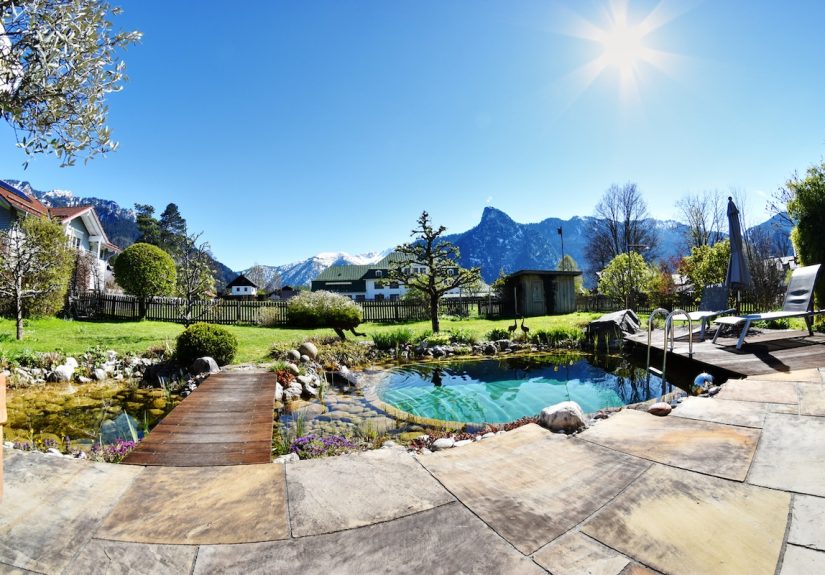
Imagine a backyard pool that feels less like a “chlorine-scented science experiment” and more like a crisp mountain lake
that just happens to have a lounge chair nearby. That’s the dream behind natural swimming pools
(also called swimming ponds or living pools). They use biological filtration and water
circulationrather than a standard chemical routineto keep water clear and swimmable.
But here’s the plot twist: “natural” doesn’t mean “no work,” “no rules,” or “I can fill it with creek water and vibes.”
If you’re considering a chemical-free pool, this guide covers the big realitiesdesign, maintenance, costs, safety, and
what day-to-day ownership actually feels like.
1) What exactly is a natural swimming pool?
At a high level, a natural swimming pool is a pool designed to stay clean without relying on traditional chlorine dosing
or similar common pool chemicals. Instead, it uses continuously circulating water and a biological filter
to manage nutrients, algae, and clarity. Many designs include two distinct zones: a dedicated swimming area and a separate
filtration area (often called a regeneration zone) that acts like a human-made wetland.
Two zones, one goal: clean water you actually want to swim in
Plenty of natural pool builds use a two-zone concept: the swim zone is where you do cannonballs, and the regeneration zone
is where the water does its “get your life together” routine. The regeneration area can be planted (with aquatic plants)
or plant-free (relying more heavily on biofilm and microbial filtration media).
The big idea is not that the water becomes sterileit’s that the system stays in balance. Clean, in this context, is less
“hospital operating room” and more “healthy ecosystem with good circulation.”
2) How natural pools stay clear: biological filtration, not magic
Natural pools are built around a closed-loop circulation concept: water moves from the swimming zone through filtration,
then returns. That filtration is biologicalmeaning it depends on microbes and engineered surfaces/media that support them.
In many systems, plants can play a role too, but the underlying workhorse is microbial filtration.
Think “nutrient management,” not “chemical shock therapy”
In a conventional pool, many “contaminants” are treated as enemies to kill off quickly with disinfectants. In a natural pool,
a lot of that material is treated as nutrients that the biological filter consumes. This is why design is so crucial:
you’re not just installing a poolyou’re installing a water-treatment ecosystem with a swim lane attached.
Common components you’ll see
- Circulation plumbing that moves water between zones
- A pump sized for continuous movement and your expected “nutrient load” (how many swimmers, how often, how much debris)
- Skimmers and debris management (yes, stillleaves do not politely avoid natural pools)
- A biological filter with microbial media (and sometimes plants)
- A dedicated swimming zone separate from the filter area
3) Design choices that change everything (including your maintenance)
Regeneration-zone pools: the “garden-meets-pool” look
If you love the idea of swimming next to lilies, reeds, and a pond-like edge, you’re probably picturing a regeneration-zone build.
These often require more space because the planted filter area must be large enough to handle the system’s nutrient load.
A common rule of thumb is that the regeneration zone can take up a significant chunk of the total footprintsometimes up to
around a third of the overall space set aside for the pool system.
Plant-free biofilter pools: the “sleek modern” option
If your aesthetic is more “minimalist rectangle” than “enchanted lagoon,” a plant-free approach can deliver a more conventional
pool look while still relying on biological filtration. These systems can reduce the footprint devoted to plants, though they
still require serious design expertise to keep water quality stable.
Shape, surfaces, and finishes matter more than you’d expect
Natural pools can be freeform and rocky or crisp and architectural. What matters is that the interior is built to support
the system: the pool vessel needs to be properly sealed, circulation must be consistent, and filtration media needs adequate
surface area for beneficial microbes. A gorgeous design that ignores water dynamics is basically a very expensive science fair
project with floaties.
Placement: don’t put your “living pool” where your yard dumps everything
Site selection is a big deal. Avoid low spots prone to flooding or areas where runoff will enter the pool. Runoff can deliver
nutrients (hello, algae buffet) and other contaminants you don’t want in your carefully balanced system.
4) Water quality & health: what “natural” does (and does not) mean
Let’s be real: swimming is a full-contact sport with… humans. Humans bring sunscreen, sweat, skin cells, and the occasional
“who let the toddler eat three popsicles before getting in?” scenario. Natural pools can produce clear water and a pleasant
swim experience, but they are not automatically safer than a conventional pool just because they’re chemical-free.
“Clear” is not the same as “germ-free”
Public health guidance around recreational water illness exists for a reason. Some germs are tough, and outbreaks linked to
swimming have been associated with pathogens that are tolerant to chlorinemeaning even “properly treated” pools can be a
transmission route if hygiene is ignored. In a natural system that isn’t built around disinfection, user behavior and
monitoring matter even more.
Healthy-swimming habits still apply (maybe even more)
- Don’t swim when you have diarrhea (and follow longer exclusions when advised for specific infections).
- Don’t swallow the wateryour pool is not a sports drink.
- Shower before swimming if possible; it reduces what you introduce into the system.
- Be honest about kids and bathroom breaks. Nature is beautiful. Accidents are not.
Algae and toxins: know when to say “nope”
Harmful algal blooms are mainly discussed for lakes and other open bodies of water, but the advice is still useful as a mindset:
if water looks or smells bad, stay out. Scum, mats, foam, paint-like streaks, or a foul odor are not “rustic charm”they’re a
warning sign.
5) Maintenance reality check: it’s not “set it and forget it”
Natural swimming pools can reduce certain chores (like constantly managing chemical dosing), but they replace them with
ecosystem chores. Think less “chemistry class” and more “very fancy garden pond that you also swim in.”
What weekly upkeep often looks like
- Skimming and debris removal (especially if you have trees nearby)
- Brushing/vacuuming the swim zone to prevent buildup
- Checking circulation (flow issues can mean trouble)
- Quick visual inspection of clarity, surfaces, skimmers, and pump performance
What seasonal upkeep can involve
- Plant care (trimming, thinning, removing dead material, managing invasives)
- Managing leaf loads in fall (a single maple can turn your pool into a soup pot overnight)
- Winterizing depending on climate (some systems keep circulation running at low speed; others require line protection)
One surprisingly useful “health indicator” is consistency: if your water clarity and surfaces stay stable week to week,
your system is likely balanced. If clarity swings wildly, you may be under-filtered, over-nutriented, under-circulated,
or all three (the holy trinity of “why is my pool green?”).
6) Cost, budget, and what you’re really paying for
Natural pools can cost as much asand sometimes more thanconventional pools, especially if you’re building a large regeneration
zone and integrating heavy landscaping. Cost depends on size, materials, complexity, site conditions, and whether you’re doing a
full custom build.
Typical price ranges you’ll see in the U.S.
Many homeowners land in a broad range that can stretch from tens of thousands into the low hundreds of thousands for professional
installations. Some cost guides cite averages around the low six figures and ranges that can extend from about $25,000 up to
$150,000 depending on the build, with rough per-square-foot ranges often around $50–$100. Meanwhile, industry-facing examples for
natural pools frequently cite starting costs around $60,000 and “typical” ranges that can land in the $70,000–$150,000 zone for
many projects.
Operating costs: fewer chemicals, but you’re still running equipment
Ongoing costs can be lower in certain waysno routine chlorine purchases, fewer “shock” products, and potentially less water
replacement if you’re truly operating as a closed-loop system. But you still have a pump, circulation demands, occasional equipment
servicing, and maintenance labor (either yours or someone else’s). Some estimates place monthly maintenance for natural pools in the
low hundreds, depending on scope and service level.
Budget line items people forget (until the invoice reminds them)
- Permits and inspections
- Excavation surprises (hard rock is the villain in many backyard stories)
- Electrical work for pumps, lighting, and controls
- Landscaping and hardscape (paths, edges, boulders, retaining walls)
- Debris strategy (skimmers, covers, netsbecause trees exist)
7) Permits, codes, and safety: calling it a “pond” won’t save you
If it’s intended for swimming, treat it as a swimming pool for safety and regulatory purposes. Many builders and authorities
consider it a pool regardless of the label, which means permitting and safety requirements apply. Translation: “natural” is not a
loophole.
Barriers and drowning prevention are non-negotiable
Safety barriers are strongly recommended for residential pools. Guidance commonly emphasizes that barriers should prevent a child
from getting over, under, or through</em and that fence height and design details matter (including minimizing
footholds and gaps). Practical recommendations often cite fences at least 4 feet high (with 5 feet preferable in many situations),
door alarms if the house forms a side of the barrier, and self-closing/self-latching measures.
Drain safety and entrapment rules
Any pool that uses suction outlets and drains needs to take drain safety seriously. U.S. requirements for certain pool and spa
drain covers and anti-entrapment protections stem from federal law and referenced performance standards. This is not the place to
DIY your way into a hazard.
A “natural pool” still needs normal pool common sense
- Clear rules for kids and guests
- Visible depth markers if the design includes variable depths
- Non-slip edges and safe entry/exit points
- Lighting if anyone will swim at dusk
- Emergency readiness (first aid kit, rescue hook, phone nearby)
8) Climate and seasonality: yes, natural pools can work across the U.S.
Natural swimming pools are built in a wide range of climates. The fundamentalscirculation, filtration capacity, debris control,
and nutrient managementare what matter. Where climate shows up is in season length, winterization strategy, evaporation, and how
aggressively algae tries to audition for the starring role.
Hot, sunny regions
Expect higher evaporation and a greater algae pressure because warm water and sunlight encourage growth. Shade planning, robust
circulation, and thoughtful landscape choices (like reducing fertilizer runoff near the pool) can help keep your system stable.
Cold-winter regions
Winter strategy varies: some systems can tolerate freezing and thawing cycles, while others require more formal winterization.
Plant care also changessome plants can overwinter if properly managed, while tropical varieties need to come indoors.
Mosquito concerns: the myth, the reality
A properly operating natural pool is designed to keep water moving, which makes it inhospitable to mosquito larvae. If you
suddenly notice mosquito issues, treat it as a diagnostic clue: circulation might be failing somewhere, or you may have stagnant
pockets that need redesign or maintenance.
9) Pros and cons: who natural pools are best for
Pros
- Reduced reliance on traditional pool chemicals (appealing for people sensitive to chlorine)
- High-end, landscape-forward aesthetics that blend into the yard
- Design flexibilityfrom “wild pond” to “modern lap pool”
- Potentially lower ongoing chemical costs and fewer routine chemical tasks
Cons
- Specialized design is crucial; general pool contractors may not have the right expertise
- More space for regeneration-zone styles
- Different maintenance (plants, nutrient management, debris strategy)
- Not everyone wants itresale appeal can vary by market and buyer expectations
A quick “Are you the right person for this?” gut-check
You’re a great candidate if you enjoy systems thinking, you’re okay with a pool that behaves like an ecosystem, and you want a
naturalistic (or at least chemical-light) approach. You may be miserable if you want a pool that’s always identical, always
sterile-feeling, and never affected by weather, leaves, or the laws of biology.
10) A practical checklist before you build
- Decide your style: regeneration zone with plants vs. plant-free biofilter
- Audit your yard: leaf load, runoff risk, sun exposure, and drainage
- Talk permitting early: assume pool rules apply
- Plan safety from day one: fencing, gates, alarms, and safe entries
- Budget realistically: include excavation unknowns and landscaping
- Clarify maintenance: who does what, how often, and what “success” looks like
- Set swimmer rules: hygiene and behavior protect water quality
Real-world experiences: what owning a natural swimming pool feels like
The most helpful way to understand natural swimming pools is to listen to what owners and builders commonly report after the
honeymoon phaseafter the grand reveal, after the first party, after the first “wait… is that algae?” moment. The following
vignettes are composite experiences drawn from typical owner stories and contractor feedback, not a single person’s diary,
but they capture the patterns that show up again and again.
The “first spring startup” lesson: biology has a calendar
Many owners say spring feels like waking the system up gently, not flipping a switch. Even if the pool looks fine, the biological
filter needs time to ramp upespecially in regeneration-zone builds where plants are reactivating after winter. People often learn
that patience is part of the maintenance plan: you check circulation, remove early debris, and let the ecosystem stabilize. One
homeowner described it as “more like opening a garden than opening a pool.” That’s a good mindset. You’re not trying to dominate
the water; you’re trying to guide it.
The “heat wave reality check”: your pool is not immune to summer drama
When the first real heat wave hits, owners often discover how quickly nutrient pressure can show up. More swimmers + more sunscreen
+ more warm water = a system that needs strong circulation and consistent skimming. People who planned for shade, minimized nearby
fertilizer use, and stayed on top of debris usually report a smoother summer. People who treated the pool like a regular one
(“We’ll skim later, it’s fine”) tend to get a quicker lesson from algae. The takeaway: your biological filter can do a lot, but it
is not a magical creature that eats infinite sunscreen while you nap.
The “party test”: water quality is social, not just technical
Natural pool owners often become unexpectedly good at hosting rules. Not bossy rulespractical ones. Quick rinse before swimming.
No swimming with stomach bugs. Bathroom breaks for kids. Don’t swallow the water. At first this can feel like overkill, but many
owners say it becomes normal fast, and it pays off. A natural pool can stay beautifully clear through heavy use when swimmers treat
the water respectfully. When they don’t, you notice itsometimes within a day or two. The pool becomes a subtle teacher: it rewards
good habits with clarity and punishes chaos with “Hey, remember me? I’m biology.”
The “fall leaves saga”: you either plan for debris or become debris
If you live anywhere with serious autumn leaves, you’ll hear the same refrain: debris strategy is everything. Owners who
installed strong skimmers, used a cover during peak leaf drop, or scheduled frequent netting tend to report easy fall maintenance.
Owners who didn’t plan often describe a week of heroic skimming that ends with them bargaining with the universe: “If I clean this
up, I promise I’ll buy the cover.” Leaves don’t just look messythey add nutrients that can fuel algae and clog systems. Fall is
when the pool makes you pick a side: proactive or overwhelmed.
The “mosquito myth” moment: still water is the enemy
A common fear is mosquitoes. Interestingly, many owners report that when the system is circulating properly, mosquitoes are a
non-issue. When mosquitoes do show up, it’s often a clue: a stagnant pocket, a circulation dead zone, or a neglected corner in the
regeneration area. Owners who troubleshoot flowsometimes with a protend to see the mosquito issue fade. The bigger lesson is that
a natural pool is a feedback machine. It constantly tells you what’s working. Your job is to listen before the water starts
yelling.
The “long-term joy”: why people keep choosing natural pools anyway
After the learning curve, many owners say the payoff is hard to describe until you’ve experienced it: water that feels gentle,
a backyard that looks like a resort tucked into a landscape, and a swim environment that doesn’t smell like chemicals. People who
love natural pools often love them for emotional reasons as much as practical onesthe sense that their pool is part of the yard,
not a separate plastic-and-chemical zone. If you like the idea of swimming in something that feels alive (in the good way), you
may find that the extra thoughtfulness is worth it.